Money as a couple: How to plan a bachelor or hen party budget everyone can afford
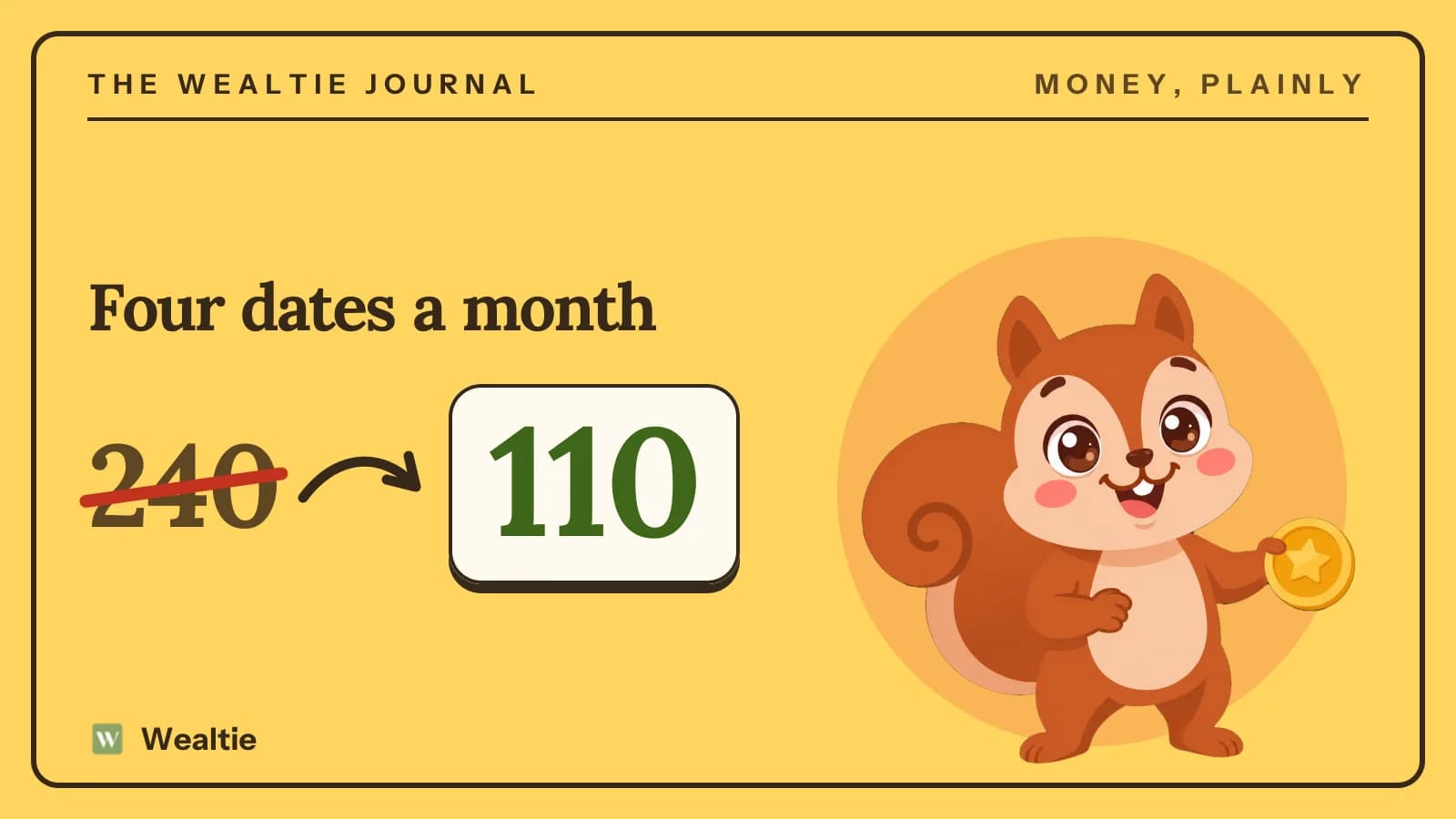
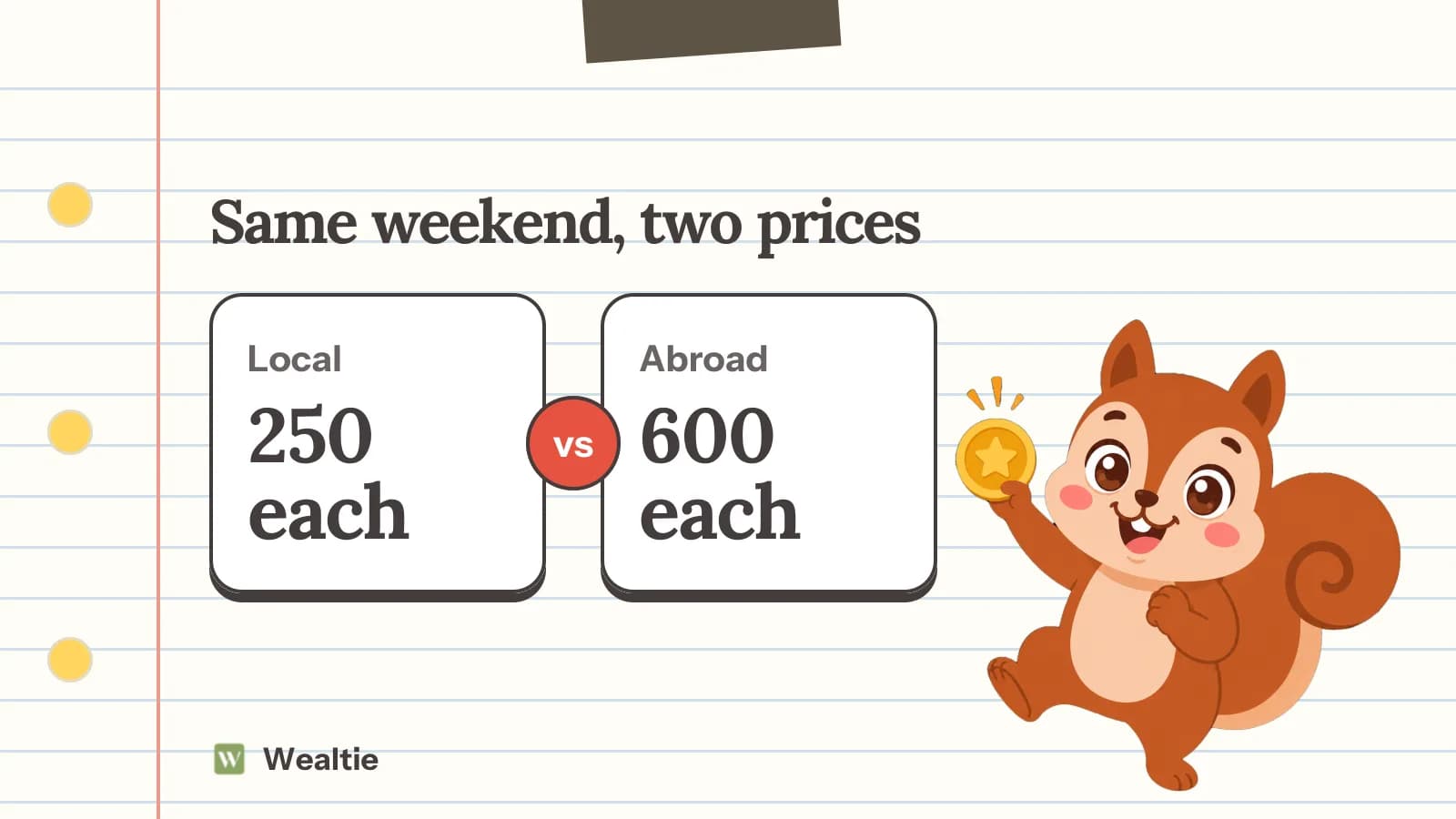
A bachelor party budget works best when you agree a per-person amount before choosing the plan, then build the weekend around it. In a worked example, a local weekend costs about 250 each, against about 600 for a trip abroad.
 By Wealtie Team · 3 min read
Key takeaways
- Agree a per-person amount before choosing the plan, and ask privately what people can afford.
- In a worked example, a local weekend costs about 250 each, against about 600 for a trip abroad.
- Collect money upfront for shared costs, and keep a clear record of what's been paid.
- Offer ways to join for part of it, so nobody has to miss out for money reasons.
How do you plan a bachelor party budget?
Agree the per-person amount first, then plan the weekend to fit it. The usual mistake is choosing an exciting plan and then telling everyone what it costs, which leaves some guests stretched or quietly dropping out. A clear amount from the start means more people can come. The organiser takes on a lot, so agree at the start how decisions are made and who handles payments, and start a few months ahead, since cheap group accommodation goes early.
The same applies to a stag do, a hen party or a bachelorette.
What does a weekend cost?
Here are two plans per person, in round numbers that work in any currency:
| Line | Local weekend | Trip abroad |
|---|---|---|
| Travel | 20 | 180 |
| Accommodation | 100 | 160 |
| Activity | 60 | 80 |
| Food and drinks | 70 | 150 |
| Transfers | 0 | 30 |
| Total | 250 | 600 |
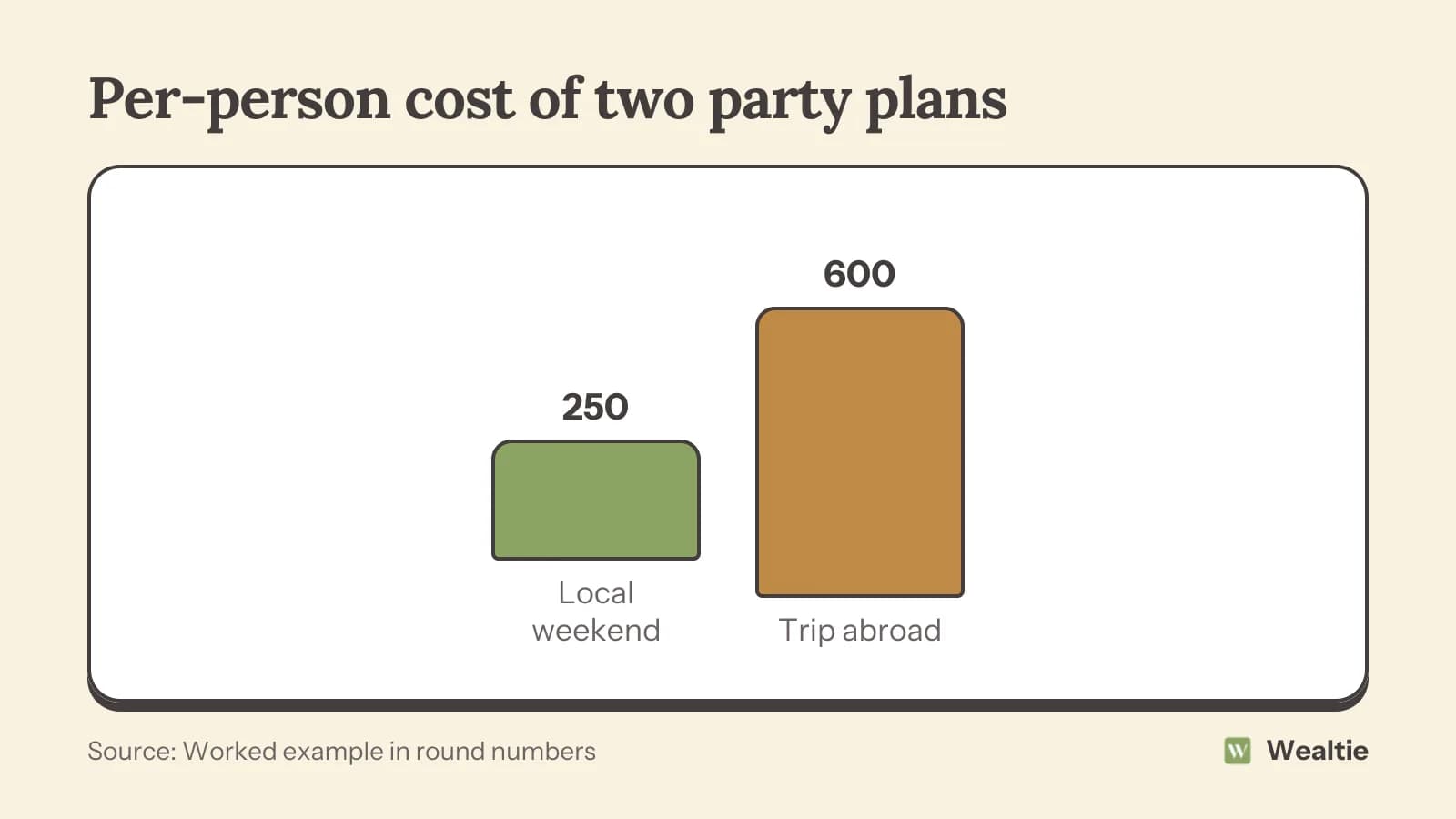
The trip abroad costs more than twice as much, and that's before spending money. Both can be great weekends, and the cheaper one often suits more of the group. Whatever you choose, share the full per-person figure before asking for any deposits.
How do you find out what people can afford?
Ask privately. A quick, anonymous poll with a few price ranges lets people say what works without feeling awkward in front of the group. Give a cost estimate when you first invite people, so they can decide early. Many people won't say they can't afford something publicly, especially if it's a close friend's celebration.
Remember that guests may also be paying for the wedding itself: travel, accommodation, an outfit and a gift. The party is one cost among several. A gift, travel and an outfit for the wedding can add up quickly, so the party shouldn't stretch people too far.
How do you collect money fairly?
Collect shared costs upfront, like accommodation and activities, with a clear deadline. Keep a record of who's paid what, and share it with the group. That way, the organiser isn't left out of pocket. A shared note listing every payment, with a summary sent after the weekend, keeps it clear. Agree too what happens if someone drops out after paying, since some costs, like accommodation, can't be refunded.
Decide how the guest of honour's costs are covered. Many groups split them among everyone else, so include that in the per-person amount from the start.
Splitting travel costs with friends has a system for settling up afterwards. For food and drinks during the weekend, a kitty works well: everyone puts in the same amount, and shared costs come out of it. Anyone who doesn't drink, or eats less, might put in less.
How do you keep costs down?
A few ideas:
- Choose a destination you can reach without flying
- Go outside peak season or on a weekday
- Cook a group meal one night instead of eating out every night
- Pick one main activity instead of several
- Share a large house instead of hotel rooms
The memories usually come from the people and one or two good moments, not from how much was spent. Ask about group discounts for activities and accommodation, too.
How do you include people who can't afford the whole thing?
Offer options. Someone could join for one day instead of the whole weekend, or come to the main activity and skip the expensive dinner. Make it clear these options are welcome, not second best, so nobody feels left out. Planning at least one part of the weekend that's free or cheap, like a picnic, a walk or a games night, means everyone can join that bit.
What surprise costs should you plan for?
Fancy-dress outfits, matching T-shirts, taxis, tips, and activities added on the day. Agree in advance what's included, including whether the group covers the guest of honour's drinks, and avoid adding costs at the last minute. Keep the weekend's plan in one shared message with dates, costs and deadlines. A small buffer in the kitty covers the unexpected, and anything left over can be shared out at the end.
How do you manage the money in Wealtie?
A shared account lets the organiser and guests see what's been paid and what's left, with owner, editor and viewer roles. You can split an expense using current shares or custom amounts, to the cent, and choose pooled or per-person balances. The account owner needs Pro to invite, and others can be on any plan. The shared accounts page has more, and logging costs in your expense categories shows what the weekend came to.
Questions people ask
Whatever the group agrees per person before planning. A worked example comes to about 250 each locally and about 600 for a trip abroad.
Often the rest of the group splits their costs. Include it in the per-person amount from the start.
Stay closer to home, go off-peak, share a house, cook one group meal and pick one main activity.
Offer options, like joining for one day or the main activity, and make it clear those options are welcome.
This article is general information, not financial, tax or legal advice. Your situation is your own; check the numbers that apply to you before you act on them.