Budgeting: How to plan a kids' birthday party budget that stays small
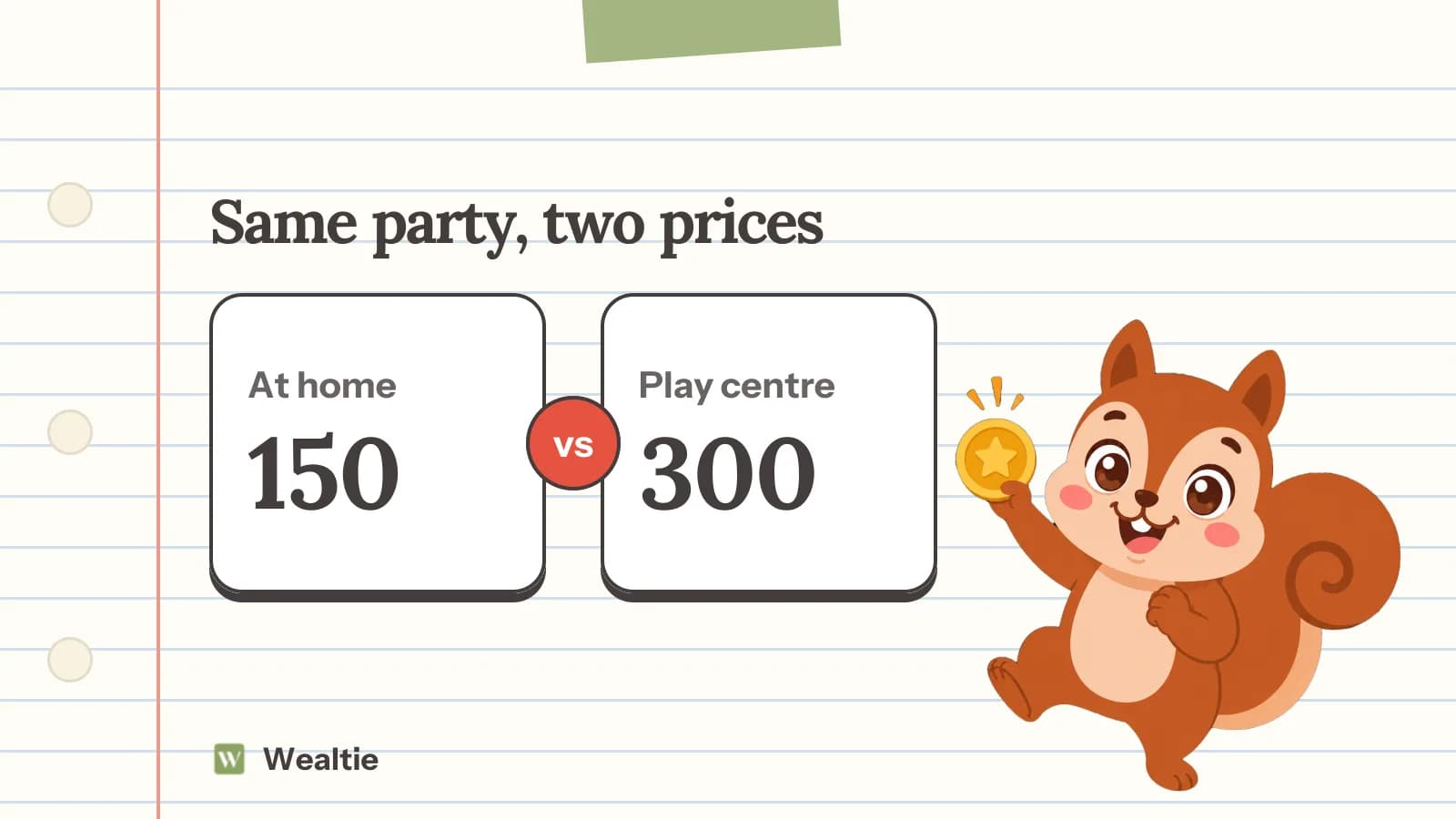
A kids' birthday party budget starts with a total, then the guest list and venue are chosen to fit it. In a worked example, a party for 12 children at home costs about 150, while the same party at a play centre costs about 300.
 By Wealtie Team · 3 min read
Key takeaways
- Set the party's total budget first, then choose the guest list and venue to fit it.
- In a worked example, a party for 12 children costs about 150 at home and about 300 at a play centre.
- The guest list drives most costs, so a smaller party is the biggest single saving.
- Party bags and decorations are easy places to cut without the children noticing.
How do you plan a kids' birthday party budget?
Decide the total first, then plan the party around it. If you start with the venue or the guest list, the cost decides itself, and it's usually more than you'd have chosen. A clear number also makes it easier to say no to the extras, and to explain to your child why the party looks the way it does. Write the number down, with the main lines under it, before you send any invitations.
What does a kids' party cost?
Here's a party for 12 children, in round numbers that work in any currency:
| Line | At home | At a play centre |
|---|---|---|
| Venue and entry | 0 | 240 |
| Food and drinks | 50 | Included |
| Cake | 25 | 25 |
| Decorations | 20 | 0 |
| Games and prizes | 20 | 0 |
| Party bags | 35 | 35 |
| Total | 150 | 300 |
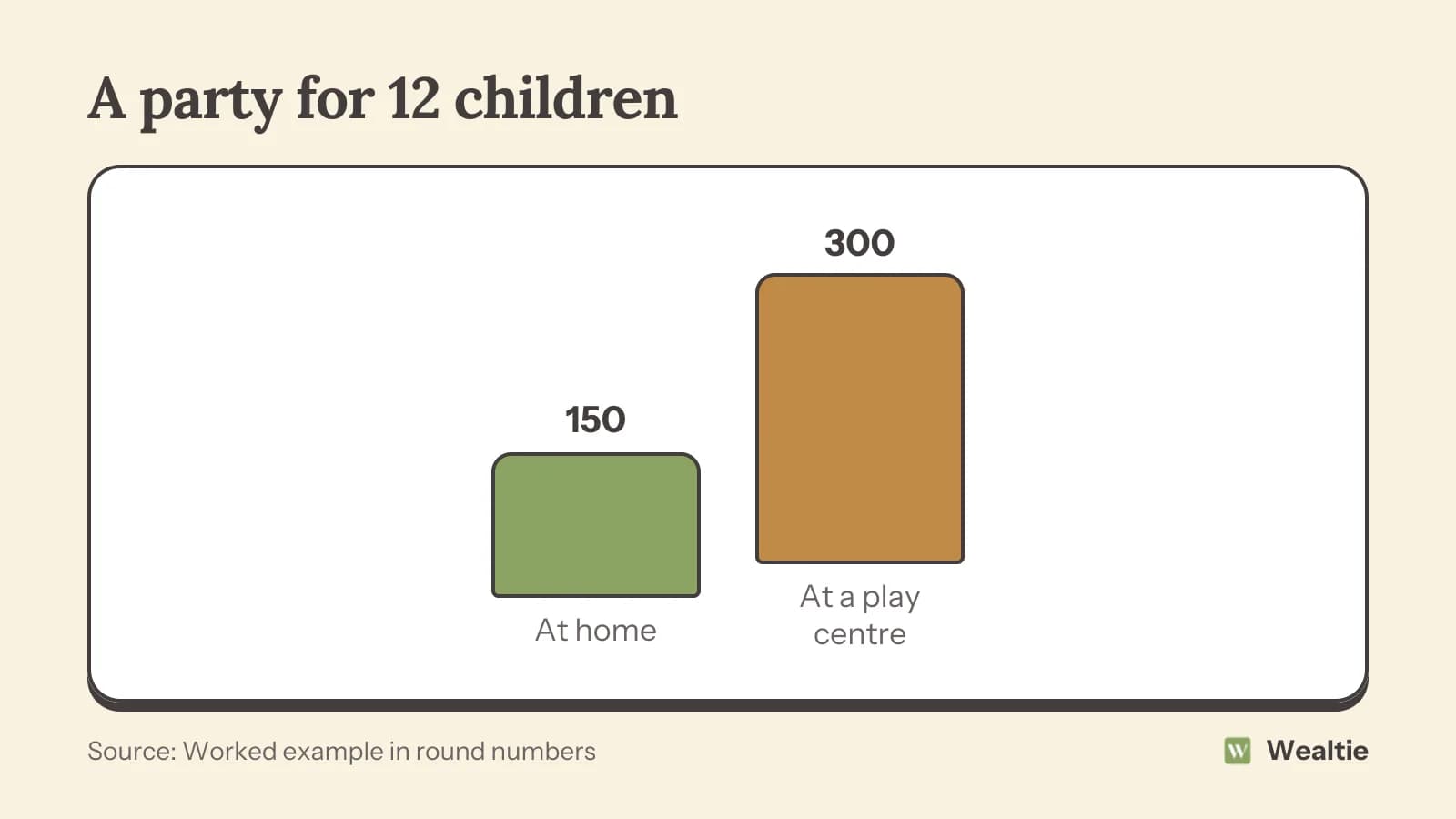
That's 12.50 a child at home and 25 a child at the play centre. The play centre saves you the setup and the clean-up, which can be worth it, but it doubles the cost in this example. If you use a venue, ask what's included, since some cover food, invitations and a host, so you don't pay twice. For an outdoor party, have a backup plan for rain.
What decides the cost most?
The number of guests. Many costs are per child: entry fees, food, party bags. Inviting the whole class instead of a few close friends can double or triple the total.
Ask parents to reply by a set date, so you only buy food and bags for children who are coming. A common rule of thumb is to invite as many children as your child's age, plus one. A six-year-old's party with seven guests is much easier to manage and to pay for than one with thirty. If the class norm is to invite everyone, a simple party at a park can keep the cost down.
Where can you cut without the children noticing?
Party bags and decorations. Children mostly remember the games, the cake and their friends. A few balloons and a homemade banner work as well as a themed set. Borrow what you can, like a speaker, tables or a gazebo, from friends or family.
Keep the food simple and child-sized: sandwiches, fruit and a few snacks. Children tend to eat little at parties because they're busy playing, so overbuying is common. A single activity, like a treasure hunt or a dance competition, often entertains as well as a paid entertainer. A single small gift, like a book or a bubble wand, can replace a bag of plastic toys.
Other ideas:
- A party at a park, with a picnic and games
- A morning or afternoon party, so you're not expected to serve a full meal
- A homemade cake, or a supermarket one you decorate together
- Sharing a party with another child who has a birthday at the same time
- Asking guests not to bring gifts, or to bring a small book
How do you handle expectations?
Talk to your child about what matters most to them, and involve them in the plan, since older children often enjoy helping to make decorations or choose games. They might care more about a particular friend or activity than the size of the party. Offering a choice, like a big party this year or a special day out with one friend, can help. Some families alternate: a bigger party one year and a family day out the next.
If your child's friends have expensive parties, you don't need to match them. Most parents understand, and plenty are relieved when someone keeps things simple.
When should you start saving?
A few months ahead. Divide the total by the months until the party. A 150 party saved over three months is 50 a month. Put it in the same pot as other birthday costs during the year, and if the party's soon, set a lower total instead of borrowing.
What about the gifts your child receives?
Write down who gave what, so thank-you notes are easy. The gifts cost you nothing directly, but they come with the expectation of buying gifts for other parties. A low agreed limit among parents in a class can help everyone. The family budget covers children's costs more broadly.
How do you track party costs in Wealtie?
Log each purchase in a Birthdays category, so your expense categories show the party's full cost against your total. A monthly limit in the budget tracker shows how much is left for the rest of the month, and Budget Health warns you mid-month if your pace would take you over.
Questions people ask
Set a total that fits your budget first. A worked example for 12 children costs about 150 at home and about 300 at a play centre.
Invite fewer children, hold it at home or a park, keep decorations simple and replace party bags with a single small gift.
A common rule of thumb is the child's age plus one. A smaller party is easier to run and costs less.
Often, but they don't need to be big. A single small gift, like a book, works as well as a bag of toys.
This article is general information, not financial, tax or legal advice. Your situation is your own; check the numbers that apply to you before you act on them.