Budgeting: The cost of being single, and how to budget on one income
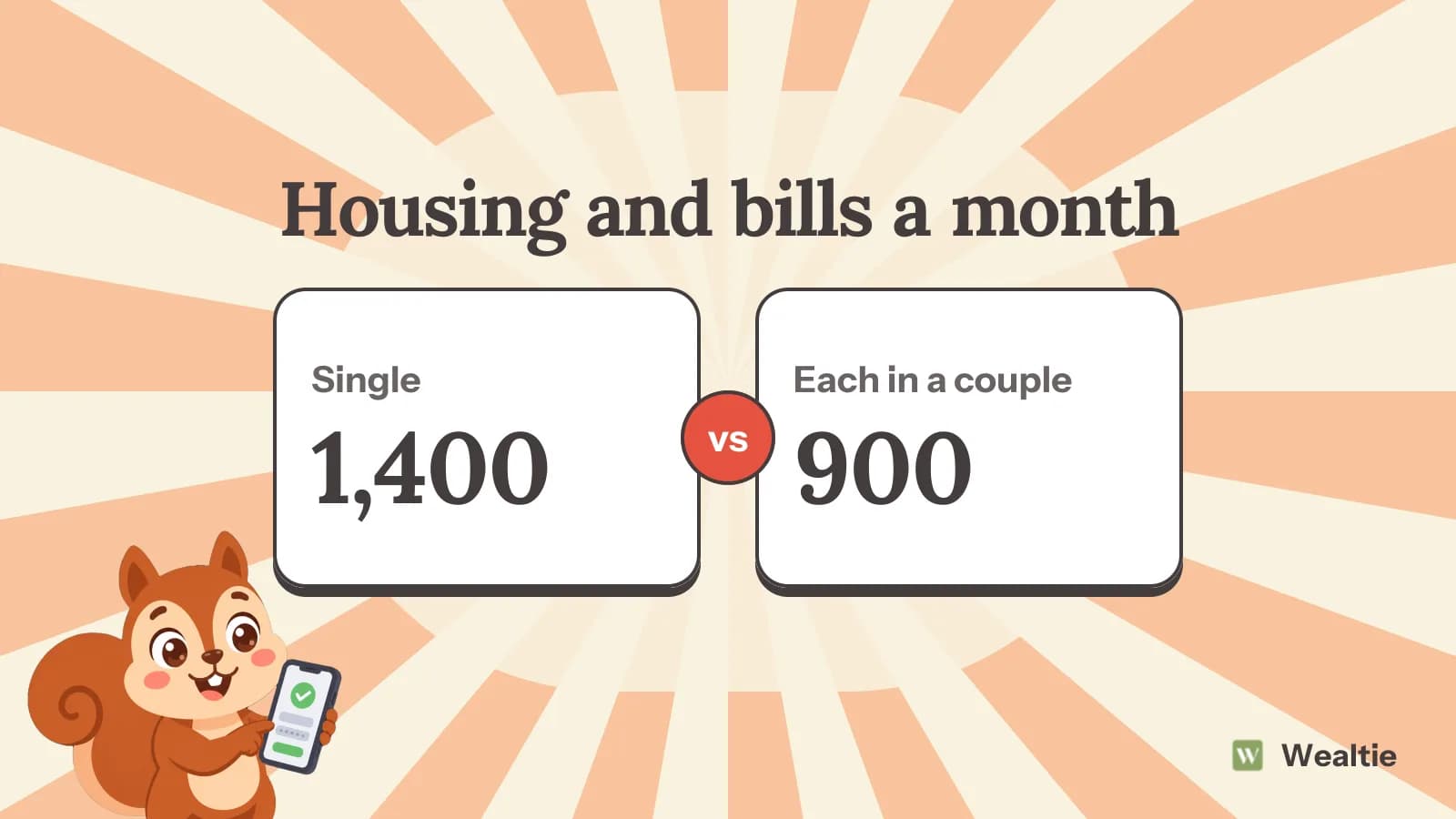
The cost of being single is higher per person, because rent, bills and many everyday costs aren't shared with a partner. In a worked example, a single person pays about 500 a month more for housing and bills than each half of a couple.
 By Wealtie Team · 3 min read
Key takeaways
- The cost of being single is higher per person because costs aren't shared.
- In a worked example, a single person pays about 500 a month more for housing and bills.
- Insurance, holidays and food can cost more for one person too.
- A strong emergency fund and smart sharing help on one income.
What is the cost of being single?
Living alone or managing money on one income often costs more per person than living as a couple. Rent, energy, internet, streaming and council or property taxes are paid by one person instead of two. Food can cost more, since smaller packs are often pricier and cooking for one leads to more waste. Holidays may come with single supplements. Even insurance and some memberships are cheaper per person for couples. None of this means being single is a bad deal, but it does mean budgeting matters.
There's no partner's income to fall back on if something goes wrong, so a buffer is especially important. On the plus side, every decision is yours, and you don't have to negotiate spending with anyone else.
The extra cost isn't only about rent and bills. Social life can cost more too, since single people are often the ones travelling to see friends, paying for their own room on group trips or covering meals out more often. Gifts for friends' weddings, baby showers and birthdays add up over the years. None of these is a reason to stay in, but they're worth planning for, so they don't catch you out. A small monthly amount set aside for social costs makes the busier months easier to manage.
How much more does being single cost?
Here's a worked example of housing and bills, in round numbers that work in any currency:
| Household | Rent | Bills | Each person pays |
|---|---|---|---|
| Single person | 1,100 | 300 | 1,400 |
| Couple | 1,400 | 400 | 900 |
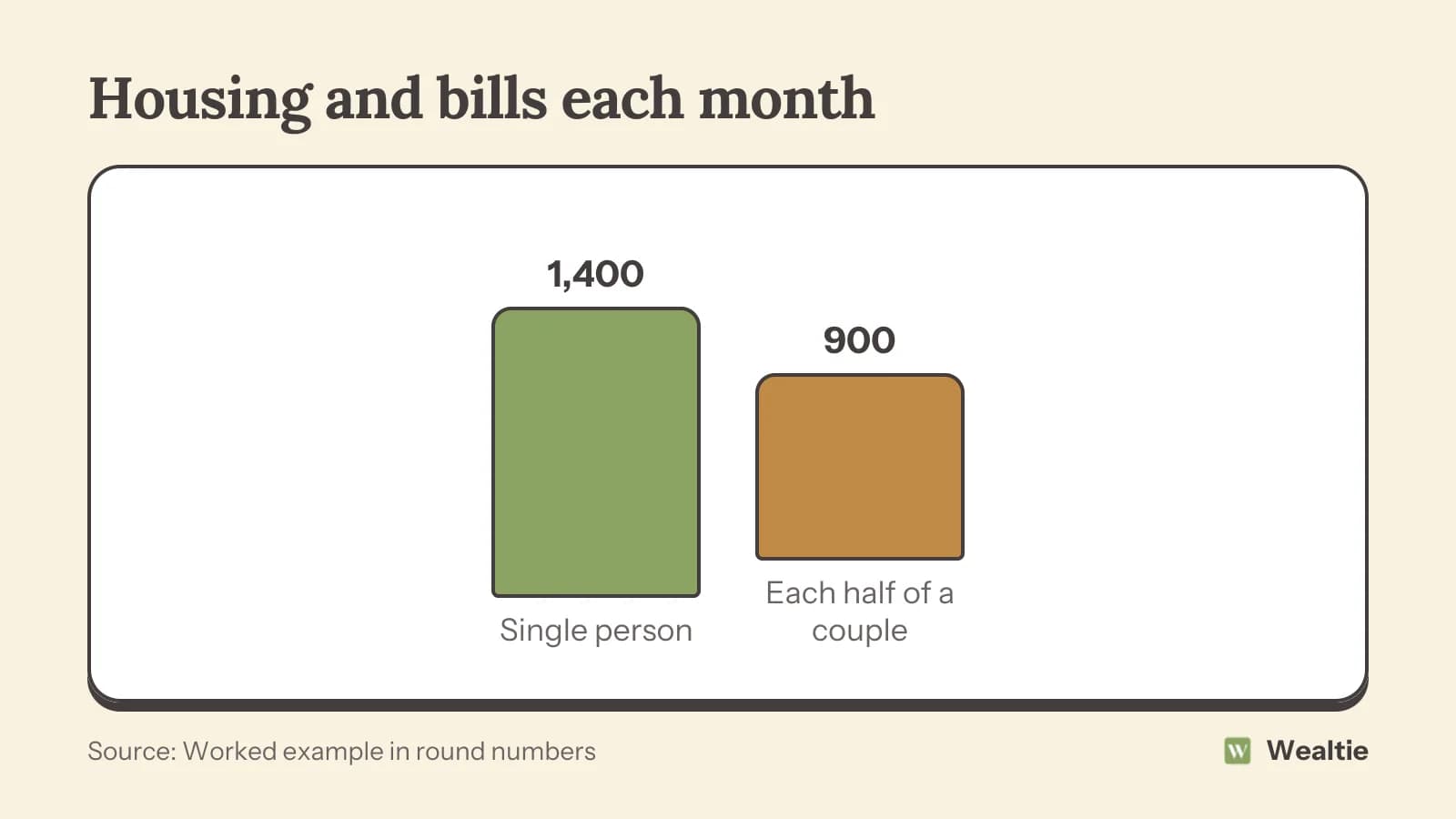
The couple's home is bigger and their bills a little higher, but split between two, each pays 900. The single person pays 1,400, about 500 more each month, or 6,000 a year, just for housing and bills.
Where else does being single cost more?
Food
Buying for one often means smaller packs at higher prices per unit, and food can go off before you finish it. Batch cooking and freezing portions helps. Cooking a big pot of something on a Sunday and freezing single portions gives you cheap, quick meals for busy evenings, and cuts down on both waste and takeaways.
Holidays
Single supplements on hotels and package holidays can add a lot. The solo travel budget covers ways around them.
Insurance and memberships
Joint policies and family memberships often cost less per person. Singles pay the full price, and household policies like contents insurance cost about the same whether one person or two live in the home.
Emergencies
With no second income, a job loss, illness or big repair falls entirely on you. That's why the emergency fund and good insurance matter more when you're on your own.
How do you budget well as a single person?
Build a strong emergency fund
Without a partner's income as backup, an emergency fund matters more. Aim for the higher end of three to six months of essential costs if you can. How to build an emergency fund covers how.
Keep housing costs in check
Housing is usually the biggest cost. A smaller place, a cheaper area or sharing can make a big difference. Living alone vs with roommates compares the options.
Ask about single-person discounts
In some places, people living alone get discounts on local taxes or some bills. Check what applies where you live.
Share where you can
Bulk buying with a friend, sharing subscriptions where allowed, car sharing and lending tools between neighbours all bring some of the savings of a couple.
Plan for the long term
Pensions and savings depend on one income, so it's worth checking you're on track. Life insurance may matter less without dependants, but income protection can matter more.
How do you compare your costs?
Looking at typical costs for one person can show where you're spending more or less than expected. Average monthly expenses for one person gives a picture. Your own budget should come from your own income and costs, though. How to make a budget covers a first budget in five steps.
Enjoy the freedom
Being single means you choose how to spend every unit of money. You can put more into the things you care about without compromise, whether that's travel, a hobby or saving hard for a home.
How do you budget on one income in Wealtie?
Add rent and bills as recurring transactions, so they log themselves on their date. Keep spending in expense categories and set a monthly budget, so you can see where one income goes and where small changes help.
Questions people ask
Rent, bills and many everyday costs aren't shared, so one person pays the full amount. Food, holidays and insurance can also cost more per person.
In a worked example, a single person pays about 500 a month more for housing and bills than each half of a couple.
Keep housing costs in check, ask about single-person discounts, batch cook, share where you can and build a strong emergency fund.
Aim for the higher end of three to six months of essential costs, since there's no second income to fall back on.
This article is general information, not financial, tax or legal advice. Your situation is your own; check the numbers that apply to you before you act on them.