Multi-currency & travel: How to plan a solo travel budget
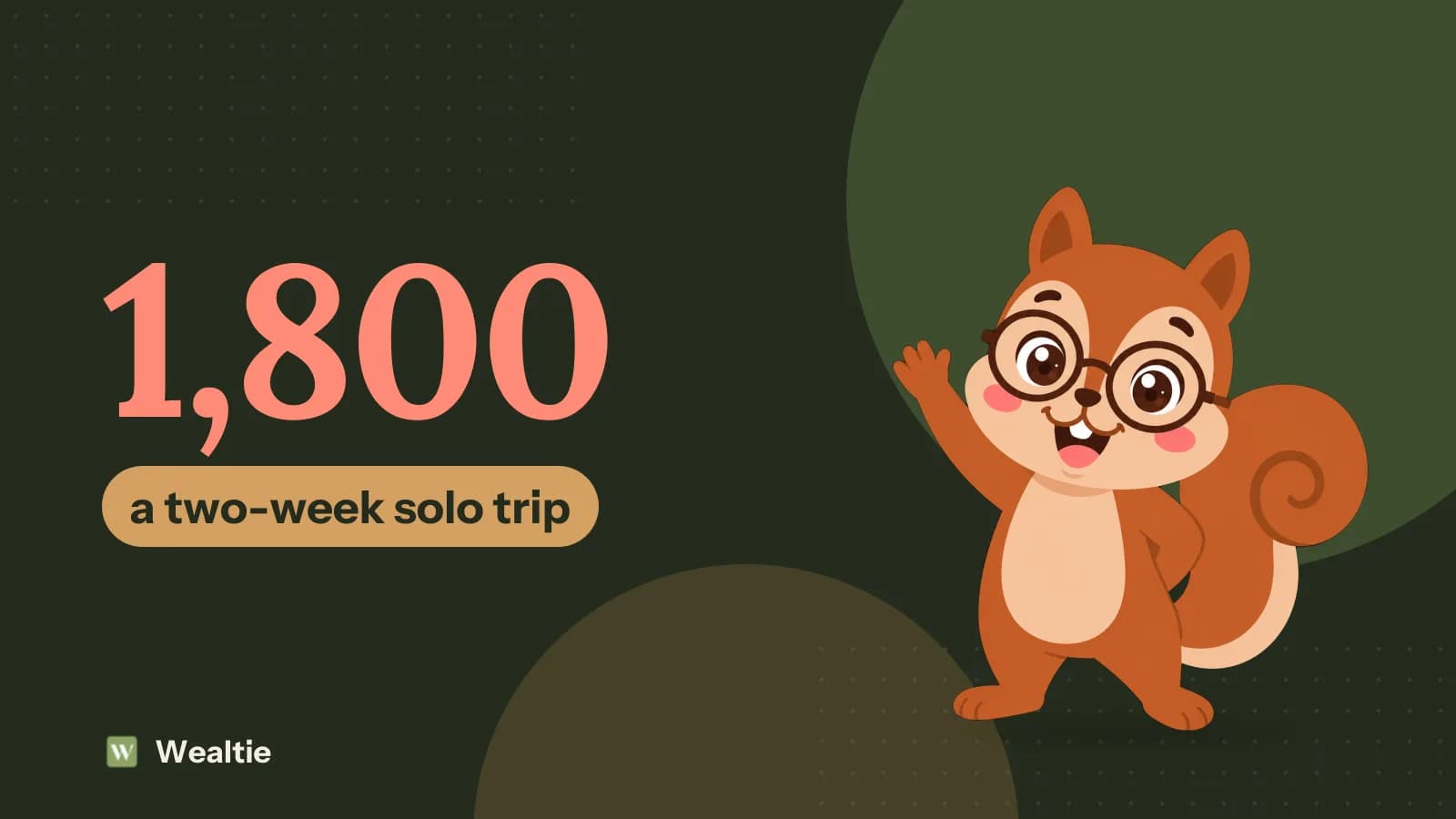
A solo travel budget has to absorb costs that couples and groups split, like rooms and taxis, but solo travellers also have full control over where every bit of money goes. In a worked example, a two-week solo trip costs about 1,800, and hostels, guesthouses and group activities keep costs down.
 By Wealtie Team · 3 min read
Key takeaways
- A solo travel budget has to cover costs that others would usually split, like rooms and taxis.
- In a worked example, a two-week solo trip costs about 1,800.
- Hostels with private rooms, guesthouses and group tours cut costs and help you meet people.
- A small safety buffer for late-night taxis or a better room is worth including.
How do you plan a solo travel budget?
Plan for the costs you can't split, then use the freedom solo travel gives you. Travelling alone means paying the full price of a room, a taxi or a rental car, which others would share. But it also means every choice is yours: where you stay, what you eat and how you spend each day. A solo travel budget that accounts for both lets you enjoy the trip with confidence.
Start with where you'll go, how long you'll stay and the style of travel that suits you.
What does a solo trip cost?
Here's a worked example for two weeks, in round numbers that work in any currency:
| Cost | Amount |
|---|---|
| Accommodation | 700 |
| Flights | 450 |
| Food | 350 |
| Activities and transport | 300 |
| Total | 1,800 |
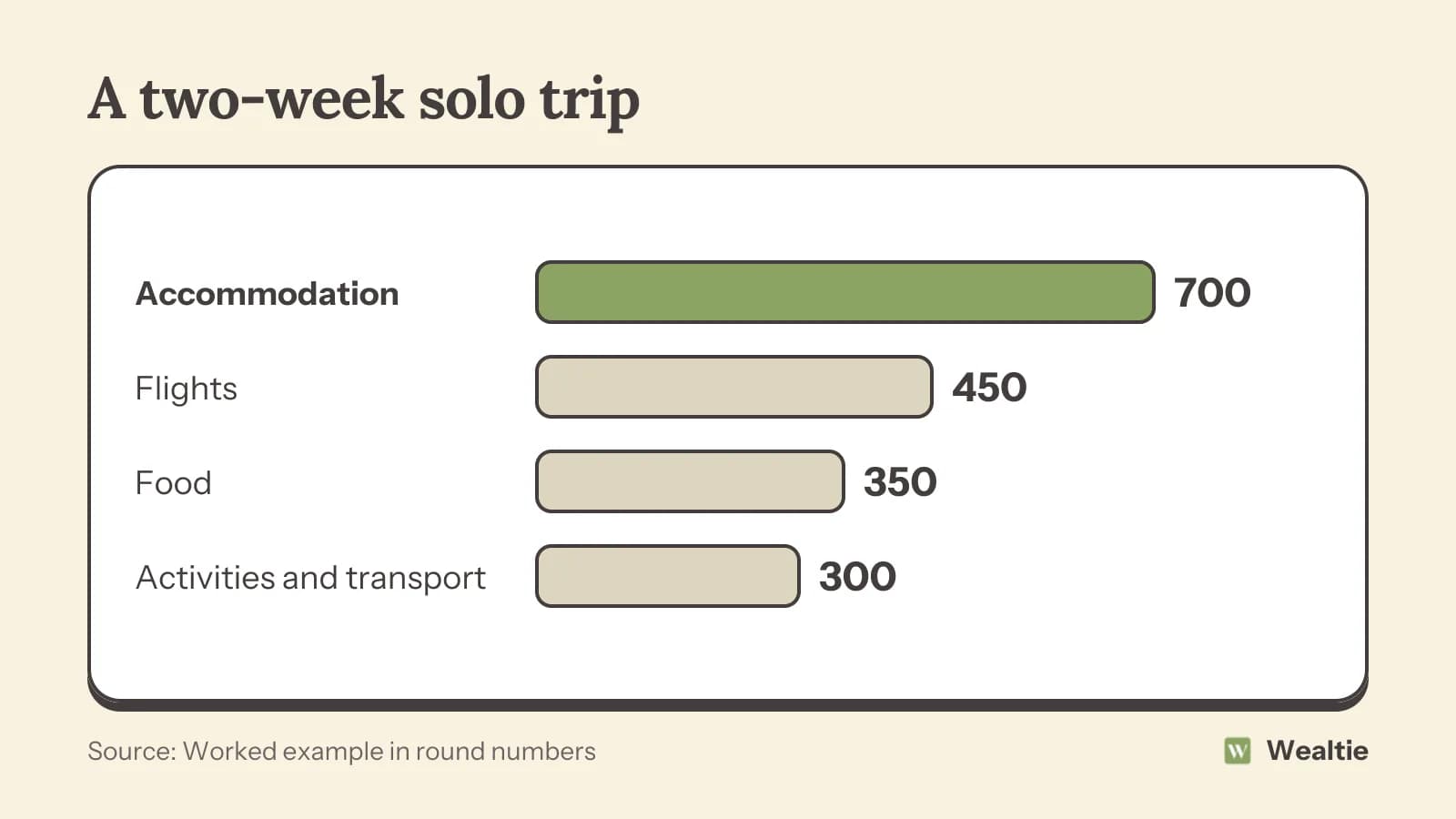
Accommodation is usually the biggest part of a solo budget, since you're paying for a whole room yourself. Your own figures depend on the destination, the season and how you travel.
How do you avoid single supplements?
Single supplements are extra charges for booking a room or a package for one person. They can add a lot to the cost. Ways to avoid them:
- Stay in hostels with private rooms, or dorms if you're comfortable
- Choose guesthouses and small hotels with single rooms
- Look for tour companies that offer no single supplement or room-sharing
- Use holiday rentals designed for one or two people
- Travel in the off-season, when supplements are often dropped
- Look for cruise cabins or tour rooms designed for one
How to save money on hotels has more ways to find good value. Booking places with good reviews from other solo travellers helps you choose safe, friendly options.
How do you save on food when travelling alone?
Eating out alone every meal can add up. Self-catering in a hostel kitchen, buying lunch from markets and choosing street food or casual places all keep costs down. Many solo travellers enjoy cooking in shared kitchens, which is also a good way to meet people. Treat yourself to a nice meal now and then, and budget for it. Lunch menus are often much cheaper than dinner for the same food, which makes a midday meal out a good treat.
Does safety cost more?
Sometimes a little. Solo travellers may choose a more central place to stay, take a taxi rather than walk at night, or pay for a room with better security. These choices are worth making. Including a small safety buffer in your budget, perhaps 100 for a two-week trip, means you never hesitate to spend on feeling safe.
Insurance and backups
Travel insurance is especially important when you're alone, since there's no one to help cover costs if something goes wrong. Keep a backup card and some emergency cash separate from your main wallet, and share your plans with someone at home. Is travel insurance worth it covers what to look for.
How do you meet people without overspending?
Group activities are a cheap way to meet others. Free walking tours, hostel events, cooking classes, group hikes and day trips let you share experiences without the cost of private tours. Sharing a taxi or a day trip with people you meet can split costs too. Some hostels also organise shared dinners, which are cheap and sociable.
The budget advantages of travelling alone
You decide everything. There's no pressure to eat at expensive restaurants or book pricier activities to keep others happy. You can travel slowly, stay longer in cheap places and skip things that don't interest you. Many solo travellers find they spend less than they expected because every choice fits their own priorities. Travelling slowly, with fewer moves, also cuts transport costs.
How do you save for a solo trip?
Divide the total by the months before you go. An 1,800 trip saved over six months is 300 a month. Keeping it in a separate account means it's ready when bookings need paying. How to budget for a trip abroad covers travel money and currency. If you're new to solo travel, a short trip first, like a long weekend, shows you how you like to travel and what you spend.
How do you track a solo trip in Wealtie?
Add an account in the local currency, so spending is recorded in the money you paid in, with totals converted into your display currency. Log costs in expense categories like accommodation, food and activities, and set a limit in the budget tracker. How to track a trip in Wealtie has a step-by-step guide.
Questions people ask
In a worked example, a two-week solo trip costs about 1,800, with accommodation the biggest part.
Stay in hostels or guesthouses with single rooms, choose tours without supplements and travel in the off-season.
Some costs, like rooms and taxis, are higher, but you control every choice, which often keeps total spending down.
Include a small safety buffer for taxis or better rooms, keep a backup card and have good travel insurance.
This article is general information, not financial, tax or legal advice. Your situation is your own; check the numbers that apply to you before you act on them.