Budgeting: The cost of baking as a hobby: equipment, ingredients and savings
The cost of baking as a hobby is mostly ingredients once you have a few basic tins and tools. In a worked example, starter equipment costs about 80 and baking twice a week costs about 40 a month in ingredients.
 By Wealtie Team · 3 min read
Key takeaways
- The cost of baking as a hobby is mostly ingredients once you have basic equipment.
- In a worked example, baking twice a week costs about 40 a month.
- Home baking is usually cheaper than buying, especially bread and cakes.
- Specialist equipment and expensive ingredients add up quickly.
What is the cost of baking as a hobby?
Baking is a hobby you can eat, share and enjoy with family and friends. Once you have a few basic tins and tools, the main cost is ingredients: flour, sugar, butter, eggs and extras like chocolate, fruit and nuts. In a worked example, starter equipment costs about 80, and baking twice a week costs about 40 a month in ingredients.
Home baking is usually cheaper than buying cakes, biscuits and bread from shops, especially from bakeries. But it can also lead to spending on gadgets, fancy ingredients and decorations that add up over time.
It's also a hobby that fits easily around family life. Baking with children teaches measuring, patience and following instructions, and costs far less than many activities outside the home. A rainy afternoon spent making biscuits can be both cheap and memorable.
The best way to keep baking affordable is to master a handful of simple recipes that use everyday ingredients. A basic sponge, a batch of scones, a simple loaf and a tray of flapjacks cover most occasions and rarely need anything special. Once you're confident with these, branching out to more ambitious bakes feels like a treat rather than a necessity. Many keen bakers say their most-made recipes are the simplest ones, because they're quick, cheap and always popular.
What does baking cost?
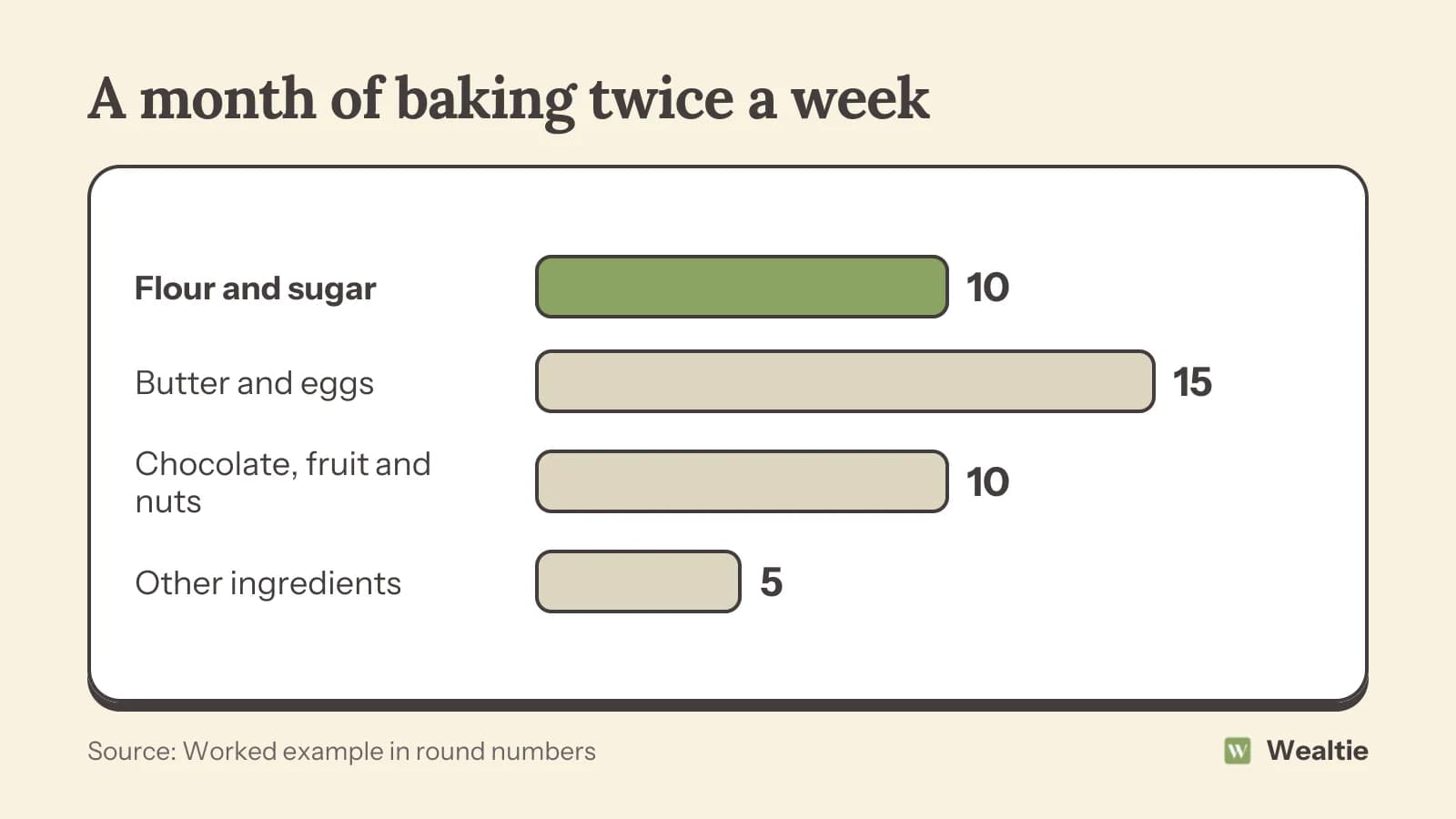
Here's a worked example of a month of baking twice a week, in round numbers that work in any currency:
| Ingredient | A month |
|---|---|
| Flour and sugar | 10 |
| Butter and eggs | 15 |
| Chocolate, fruit and nuts | 10 |
| Other ingredients | 5 |
| Total | 40 |
The starter equipment of about 80 covers mixing bowls, a whisk, scales, a few tins, a cooling rack and baking paper.
What are the main baking costs?
Equipment
Basic equipment lasts years. Mixing bowls, scales, measuring spoons, a wooden spoon, a whisk, a couple of cake tins, a loaf tin, a baking tray and a cooling rack cover most recipes. An electric hand mixer saves effort and is affordable. Charity shops and online marketplaces often have tins and mixers in good condition for a fraction of the new price.
Ingredients
Flour, sugar and butter are the base of most baking. Eggs, milk, chocolate, fruit and nuts add variety. Buying staples in larger bags is cheaper if you bake often.
Extras
Decorations, food colouring, special flours and fancy chocolate cost more. Use them for special occasions rather than every bake. Simple finishes like a dusting of icing sugar, fresh fruit or a drizzle of melted chocolate look lovely and cost very little.
Storing ingredients well also saves money. Flour, sugar and baking powder keep best in sealed containers, and butter and nuts can be frozen. Using up what you have before buying more avoids waste.
What else adds to the cost of baking as a hobby?
A stand mixer is a big purchase that many keen bakers want eventually. Specialist tins for particular cakes, piping sets and decorating tools add up. Oven energy is a small cost per bake, but baking several things at once uses the oven more efficiently. Classes for skills like bread making or cake decorating cost extra but can be fun. Ingredients for show-stopping cakes can cost far more than everyday bakes.
Is baking at home cheaper than buying?
Usually, yes. A homemade loaf might cost about 1 in ingredients compared with about 3 for a bakery loaf in a worked example. Cakes and biscuits are often much cheaper made at home, especially compared with café prices. Baking your own treats for packed lunches and snacks can cut grocery bills. How to save money on groceries and meal planning on a budget cover fitting baking into food spending.
Bake for gifts and gatherings
Homemade cakes and biscuits make thoughtful, cheap gifts and are welcome at gatherings. How to host a dinner on a budget has more ideas for entertaining. Some bakers sell cakes for birthdays and events, which can cover the cost of the hobby. How to earn money selling crafts covers pricing, though selling food usually comes with hygiene rules, so check what applies where you live.
Keep costs down
Buy staples in bulk, bake several things at once, use seasonal fruit and save fancy ingredients for special bakes. How to save money on a hobby has more tips.
How do you track baking costs in Wealtie?
Keep baking ingredients in your groceries category or their own category among your expense categories, and set a budget, so you can see what the hobby costs and how much it saves compared with buying.
Questions people ask
In a worked example, starter equipment costs about 80 and baking twice a week costs about 40 a month in ingredients.
Usually. In a worked example, a homemade loaf costs about 1 in ingredients compared with about 3 for a bakery loaf.
Mixing bowls, scales, measuring spoons, a whisk, a few tins, a baking tray and a cooling rack.
Buy staples in bulk, bake several things at once, use seasonal fruit and save fancy ingredients for special occasions.
This article is general information, not financial, tax or legal advice. Your situation is your own; check the numbers that apply to you before you act on them.