Budgeting: How to plan a home extension budget
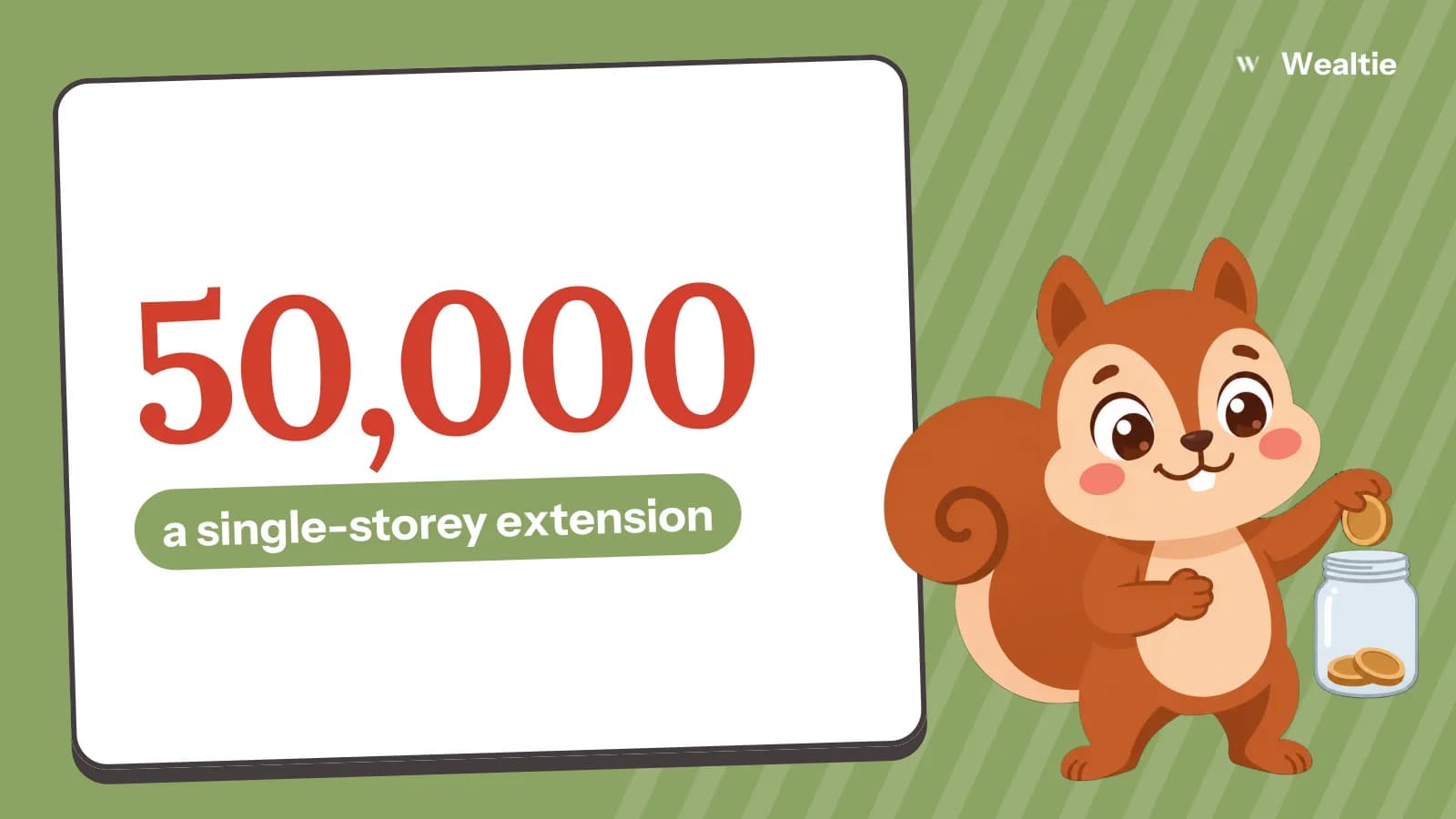
A home extension budget needs to cover design and approvals, the building work, finishing and a contingency for surprises. In a worked example, a single-storey extension costs about 50,000 in total, and fees and finishing often add more than people expect.
 By Wealtie Team · 3 min read
Key takeaways
- A home extension budget covers design and approvals, building work, finishing and a contingency.
- In a worked example, a single-storey extension costs about 50,000 in total.
- Fees and finishing often add more than people expect, so include them from the start.
- Compare the cost of extending with the cost of moving before you commit.
How do you plan a home extension budget?
Start with the full cost, not just the building quote. An extension can give you the extra space you need without the cost and upheaval of moving. But it's one of the largest projects most homeowners take on, and costs come from many directions: design, approvals, building, finishing and fees. A budget that includes all of them, plus a contingency, keeps the project on track.
The rules for approvals and building standards vary between countries and areas, so check what applies to your home early. Starting work without the right approvals can lead to costly changes or problems when you sell.
What does an extension cost?
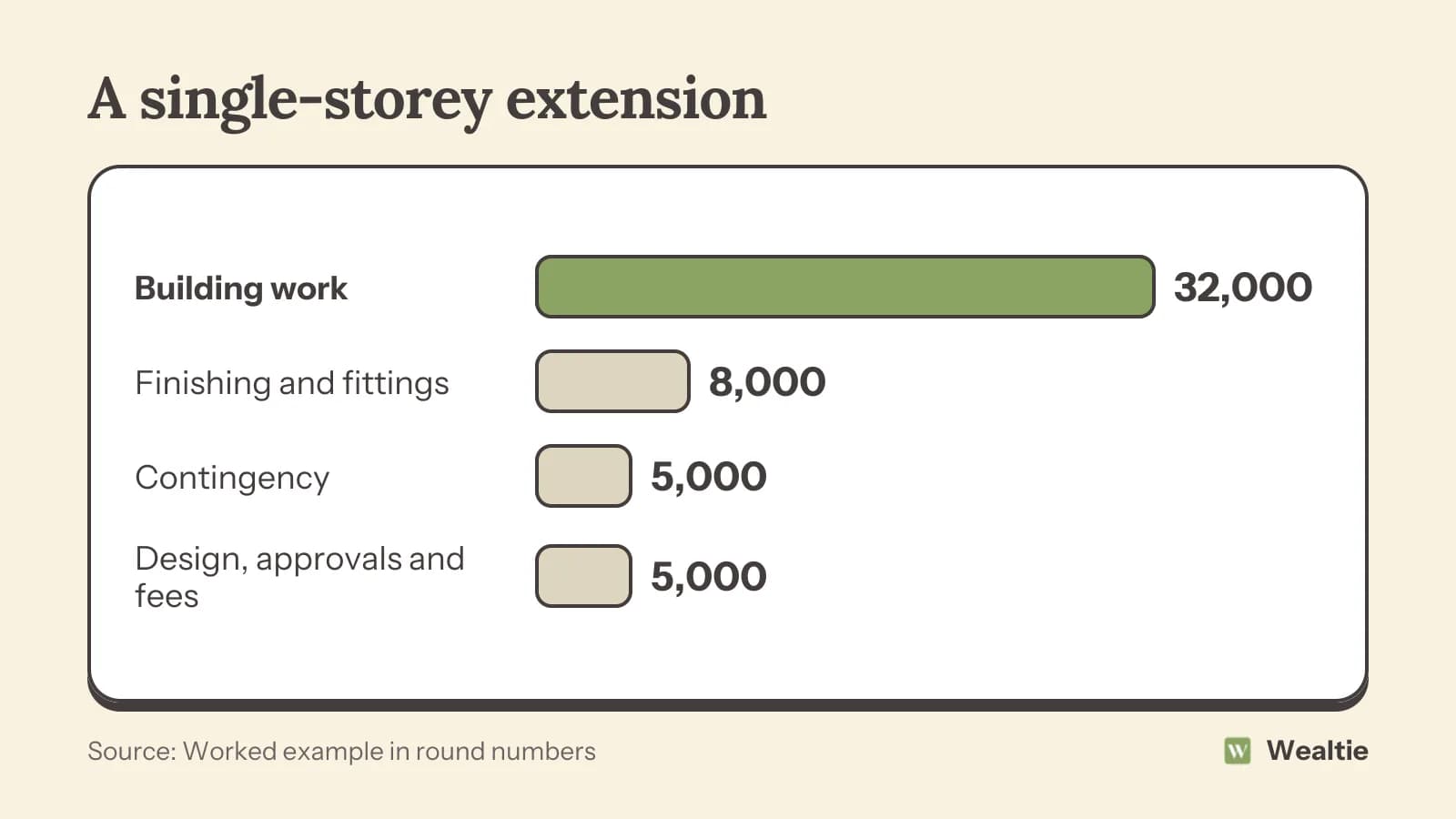
Here's a worked example for a single-storey extension, in round numbers that work in any currency:
| Cost | Amount |
|---|---|
| Building work | 32,000 |
| Finishing and fittings | 8,000 |
| Contingency | 5,000 |
| Design, approvals and fees | 5,000 |
| Total | 50,000 |
Your costs depend on the size, the design, the materials, the ground conditions and where you live. A two-storey extension, a kitchen in the new space or difficult access can cost much more.
What costs do people forget?
Fees and finishing are often underestimated. Beyond the building work, plan for:
- Design: an architect or designer to draw plans
- Approvals: planning applications, building control and inspections
- Surveys: structural engineer calculations or a party wall agreement with neighbours, where needed
- Finishing: flooring, decorating, lighting, heating and doors
- Furniture for the new space
- Moving out, if the work makes the home unliveable for a while
- Skips and storage for waste and furniture during the build
Including these from the start avoids running out of money before the extension is usable.
How do you keep extension costs down?
Keep the design simple. A simple shape with a standard roof costs less than complex angles, large glass walls or unusual materials. Other ways to save:
- Get at least three detailed quotes for the same specification.
- Agree a fixed price where you can, with clear terms for changes.
- Avoid changing the design once work starts, since changes add cost.
- Do some finishing work yourself, like painting, if you have the skills.
- Choose mid-range finishes and fittings.
Ordering materials early can protect you from price rises during a long project, as long as you have somewhere dry to store them.
Paying the builder
Agree a payment schedule tied to stages of the work, like foundations, walls and roof, rather than paying a large amount upfront. Keep a small amount back until any final problems are fixed. A written contract that sets out the work, the price, the schedule and how changes are handled protects both sides.
Why do you need a contingency?
Surprises are common in building work. Ground conditions, hidden pipes, drainage or structural issues can appear once digging starts. A contingency, set aside before you begin, means you can deal with them without cutting the finish or borrowing more. In the worked example, it's 5,000.
Is it cheaper to extend or move?
Compare both. Moving to a bigger home involves the price difference between homes, plus buying and selling costs like agent fees, legal costs, taxes and removals. In a worked example, moving costs 15,000 in fees and a bigger home costs 60,000 more, a total of 75,000, against 50,000 for an extension. But a move may also give you a better location or garden. Rent or buy a house covers the wider costs of buying if you're weighing a move.
How do you pay for an extension?
Many people use savings, a remortgage or a home improvement loan. Saving ahead is cheapest, but for a project this size, borrowing is common. Compare the full cost of borrowing, including interest and fees, and make sure monthly repayments fit your budget comfortably. Keep an emergency fund separate from the project. A sinking fund helps you save for the fees and finishing even if the main build is financed.
Does an extension add value?
It can, but not always as much as it costs. Extending in line with similar homes nearby is usually safer than making your home the most expensive on the street. Build mainly for how you want to live, and treat any added value as a bonus. The home renovation budget covers other improvement projects.
How do you track extension costs in Wealtie?
Add a savings account for the extension and move money into it as a transfer, which isn't counted as spending. Log each payment in a home improvement category in your expense categories, so you can compare spending against your budget at every stage. A monthly limit in the budget tracker keeps everyday spending steady during the project.
Questions people ask
In a worked example, a single-storey extension costs about 50,000, including building, finishing, fees and a contingency.
Design, approvals, surveys, finishing, furniture and sometimes moving out during the work.
Often extending, once buying and selling costs are counted, but compare both for your situation.
Enough to cover surprises like ground or drainage problems. In a worked example, 5,000 on a 50,000 project.
This article is general information, not financial, tax or legal advice. Your situation is your own; check the numbers that apply to you before you act on them.