Saving: The costs of selling a house, and how to plan for them
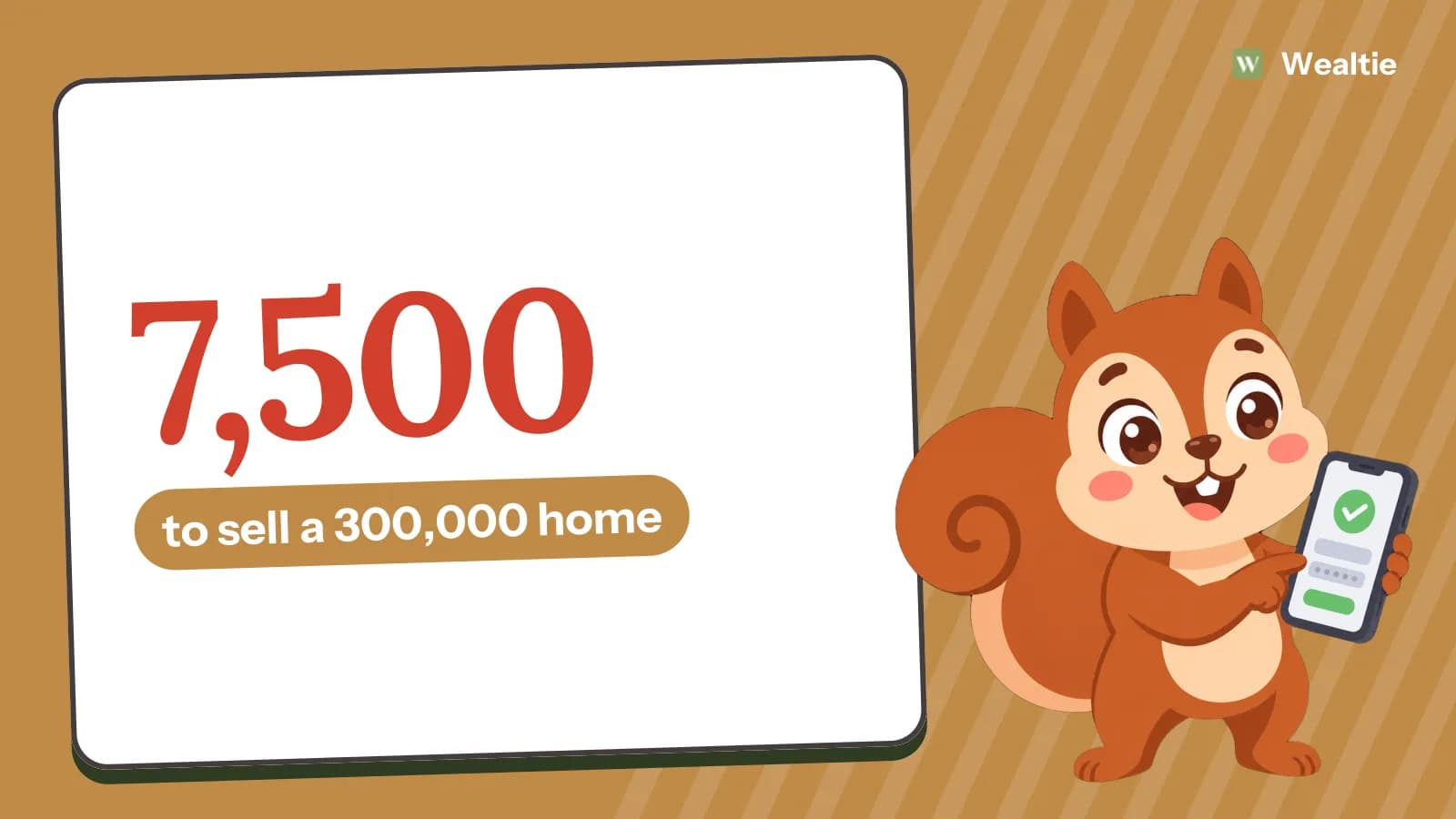
The costs of selling a house include agent fees, legal fees, preparing the home for sale and moving, and they come out of your sale price before you see the money. In a worked example, selling a 300,000 home costs about 7,500, so planning for it helps you know what you'll walk away with.
 By Wealtie Team · 3 min read
Key takeaways
- The costs of selling a house include agent fees, legal fees, preparation and moving.
- In a worked example, selling a 300,000 home costs about 7,500.
- Agent fees are often the biggest cost, and they can be negotiated.
- Work out what you'll walk away with after the mortgage and costs before you buy your next home.
What are the costs of selling a house?
They're the fees and expenses you pay to sell, which usually come out of the sale price before the money reaches you. Selling involves an agent or advertising, legal work, getting the home ready, and moving out. If you're also buying, these costs land at the same time as the costs of your new home. Knowing the costs of selling a house helps you work out what you'll walk away with and plan your next move. Many sellers underestimate them, then find their next deposit is smaller than expected.
Fees and rules vary between countries and regions, so check what's typical where you live.
How much does it cost to sell?
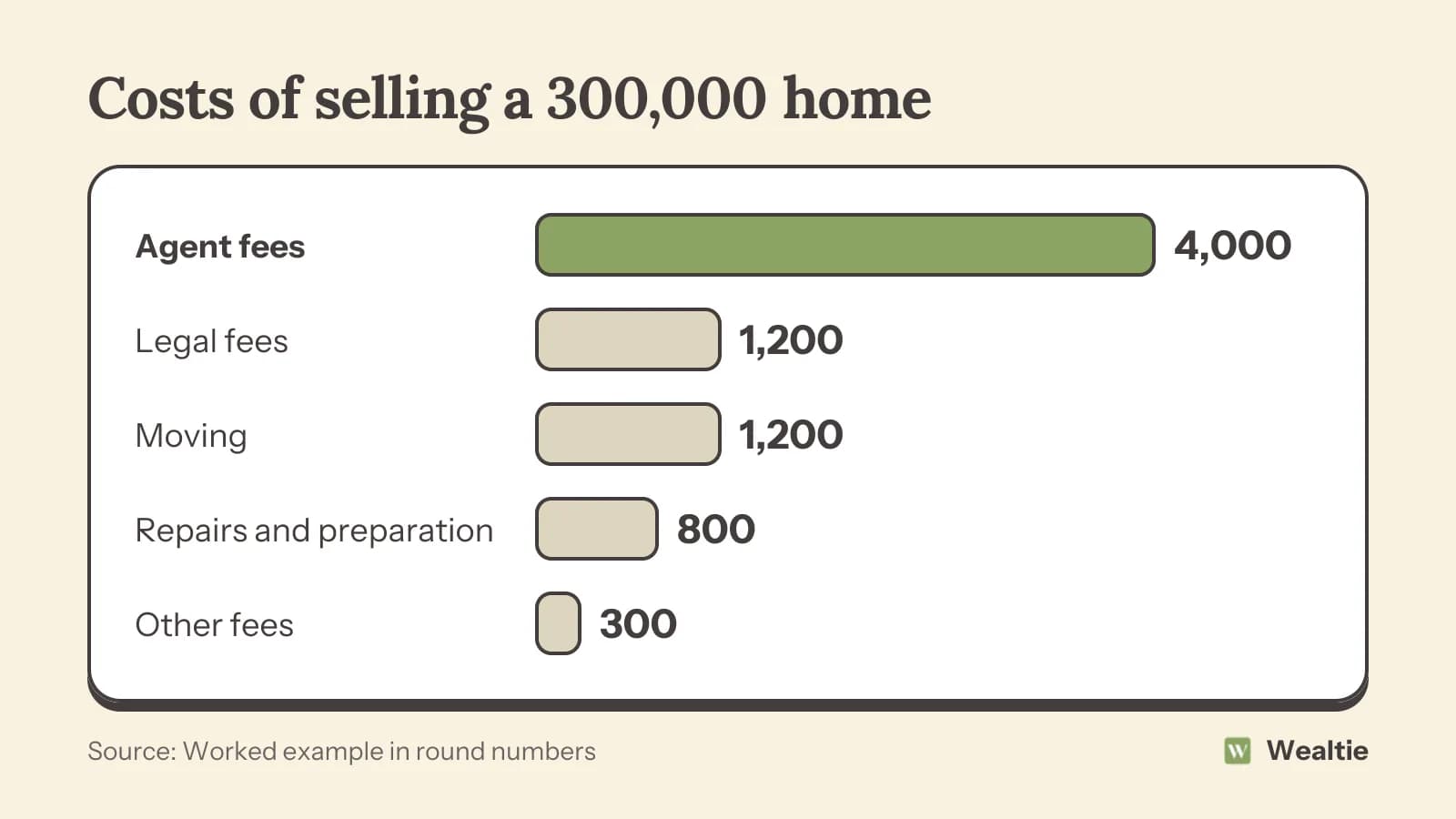
Here's a worked example for selling a 300,000 home, in round numbers that work in any currency:
| Cost | Amount |
|---|---|
| Agent fees | 4,000 |
| Legal fees | 1,200 |
| Moving | 1,200 |
| Repairs and preparation | 800 |
| Other fees | 300 |
| Total | 7,500 |
Your own costs depend on the price, the agent's fee structure and how much work the home needs. If you're buying at the same time, add the buying costs too, since both land close together.
What are the main costs?
Agent fees
Estate agents usually charge a fee for marketing and selling your home, often based on the sale price, sometimes a fixed fee. It's often the biggest cost. Online and fixed-fee agents can be cheaper, though the service differs. Fees are often negotiable, so ask several agents for quotes and compare what's included. Check the contract for how long you're tied in and whether there's a fee if you change agents.
Legal fees
A solicitor or conveyancer handles the legal side of the sale, including contracts and paying off your mortgage. Get quotes and ask about extra charges. Choosing someone early, before you find a buyer, can speed up the sale.
Preparing the home
Small repairs, cleaning, decluttering and fresh paint can help a home sell faster and for more. Some sellers pay for professional photos or staging. Focus on cheap fixes that make a good first impression, rather than big renovations, which rarely pay back in full. A tidy garden, clean windows and a fresh coat of paint in tired rooms often matter most to buyers.
Moving
Removals, packing and any storage between homes add to the cost. If there's a gap between homes, storage or staying with family adds to the cost, so plan for it early.
What about your mortgage?
Selling usually means paying off your mortgage from the sale price. Check whether your lender charges an early repayment fee, which can be significant if you're within a fixed-rate period. Some mortgages can be moved to your next home, avoiding the charge. Ask your lender before you sell.
Taxes on the sale
In some countries, you may owe tax on any gain when selling a home, especially if it isn't your main residence. Check the rules or ask an adviser. Keeping records of improvements you've made can help, since in some places they reduce any tax due.
How much will you walk away with?
Subtract your mortgage and selling costs from the sale price. In a worked example, a 300,000 sale with a 180,000 mortgage and 7,500 of costs leaves 112,500. That's the money available for your next deposit and buying costs. Working this out before you start house-hunting helps you set a realistic budget for your next home. Rent or buy a house covers the bigger picture if you're deciding what to do next.
When the sale falls through
Sales sometimes fall through, and some costs, like legal work already done, may still be due. Keeping a small buffer, and asking your solicitor how fees are charged if the sale doesn't complete, avoids an unpleasant surprise. Choosing buyers who are ready to proceed lowers the risk.
How do you keep more of the sale price?
Negotiate agent fees, compare legal quotes, do small repairs yourself and declutter instead of paying for storage. Pricing realistically from the start often sells faster, which saves on months of extra bills. Asking a few agents for valuations, and looking at what similar homes sold for, helps you set the right price. If you're downsizing, how to downsize to save money covers the wider picture.
How do you track selling costs in Wealtie?
Log agent, legal and moving costs in a home selling line in your expense categories, so you can see the full cost of the sale. Once the sale completes, record the money in a savings account, ready for your next home or goals. A limit in the budget tracker keeps spending steady through the move.
Questions people ask
In a worked example, about 7,500 to sell a 300,000 home, including agent fees, legal fees, preparation and moving.
Often, yes. Ask several agents for quotes and compare what's included.
Some lenders charge early repayment fees, especially in a fixed-rate period. Check before you sell.
Subtract your mortgage and selling costs from the sale price.
This article is general information, not financial, tax or legal advice. Your situation is your own; check the numbers that apply to you before you act on them.