Budgeting: Chimney sweep cost: how often and what you'll pay
Chimney sweep cost is small compared with the risks of a blocked or dirty chimney, and most homes with a fire need sweeping at least once a year. In a worked example, a yearly sweep costs 70, while repairing fire damage could cost thousands.
 By Wealtie Team · 3 min read
Key takeaways
- Chimney sweep cost is a small yearly expense for homes with a fire.
- Most chimneys need sweeping at least once a year, more with heavy use.
- Sweeping reduces the risk of chimney fires and carbon monoxide.
- Some home insurers require proof of regular sweeping.
How much does a chimney sweep cost?
If you have an open fire or a wood-burning stove, the chimney needs regular sweeping to remove soot, tar and blockages like birds' nests. A dirty or blocked chimney can catch fire or stop smoke and gases escaping properly, which can let dangerous carbon monoxide into your home. Chimney sweep cost is modest, and it's one of the most important pieces of home safety maintenance for anyone with a fire.
In round numbers that work in any currency, a standard sweep might cost around 70, depending on where you live, the type of chimney and whether the sweep finds problems that need fixing. Many sweeps also give you a certificate, which some insurers ask for.
Here's a worked example of the yearly costs of running a wood burner:
| Cost | Per year |
|---|---|
| Firewood | 400 |
| Chimney sweep | 70 |
| Kindling and firelighters | 40 |
| Stove glass and rope seals | 30 |
| Total | 540 |
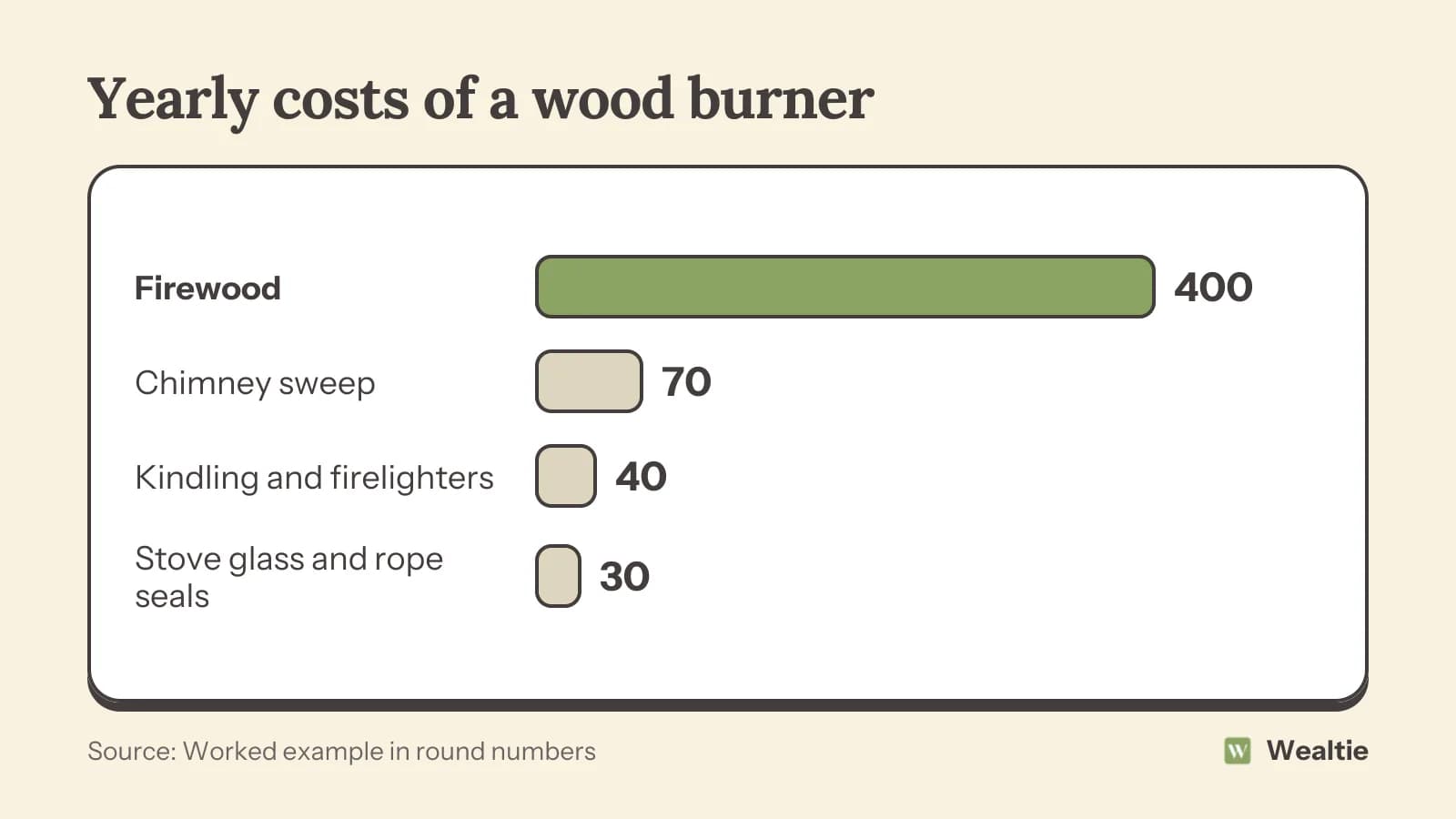
The sweep is a small part of the total, but it keeps the fire safe and efficient. Firewood is usually the biggest cost, and dry, seasoned wood burns hotter and leaves less soot, which helps the chimney stay cleaner between sweeps.
How often should a chimney be swept?
As a general guide, most chimneys used for wood should be swept at least once a year, and sometimes twice if the fire is used heavily through winter. Chimneys used for smokeless fuel or gas may need sweeping less often. Your sweep can advise based on how often you use the fire and what you burn. The best time to book is late summer or early autumn, before the busy season and before you start lighting fires again.
What does a sweep usually include?
Sweeping the flue
Brushes or vacuums remove soot and tar from the inside of the chimney.
Checking for blockages
Sweeps check for nests, debris and anything restricting airflow.
A smoke or draw test
Some sweeps check that smoke is drawn up the chimney properly.
A certificate
Many provide a certificate showing the chimney was swept, which can be useful for insurance or when selling a home.
Spotting problems
Sweeps often point out damage to the chimney, stove or seals that needs repairing.
Why is skipping a sweep expensive?
A chimney fire can damage the chimney and the roof, and in the worst cases spread to the house. Repairs can cost thousands. Some home insurance policies may not pay out for chimney fire damage if the chimney hasn't been swept regularly. How to save money on home insurance covers checking what your policy requires. A blocked chimney can also leak carbon monoxide, which is why a carbon monoxide alarm near any fire is essential.
How do you keep wood burner costs down?
Burn dry, seasoned wood
Wet wood burns poorly, gives less heat and leaves more tar in the chimney. Dry wood is cheaper to burn in the long run.
Buy wood in bulk
Buying a large load in spring or summer is often cheaper than buying small bags in winter. Store it somewhere dry.
Use the fire efficiently
Keeping the stove's air controls set correctly and not over-filling it saves fuel and keeps the chimney cleaner.
Book the sweep early
Sweeps are busiest in autumn. Booking earlier can be easier and sometimes cheaper.
How to save money on heating covers keeping the whole home warm for less.
How do you budget for it?
Add the sweep as a yearly cost in your home maintenance plan, alongside boiler servicing and other checks. How to plan a home maintenance budget covers setting money aside, and how to budget for annual expenses covers spreading yearly costs across the months.
Choosing a sweep is worth a little care. Look for someone experienced with your type of fire and chimney, ask whether they belong to a recognised trade body where one exists, and check that they provide a certificate. A good sweep will lay dust sheets, leave the room clean and explain anything they find. Prices that seem very low can mean a rushed job, which defeats the point of the visit.
Keep a note of when the chimney was last swept and anything the sweep recommended. If they mention a cracked liner, a damaged cowl or worn stove seals, getting those fixed early is usually far cheaper than waiting until the problem gets worse. Some sweeps offer a reminder service, so you never miss the yearly visit.
How can Wealtie help you plan yearly costs?
Add the chimney sweep as a yearly recurring transaction in Wealtie, and log firewood and stove costs in a heating expense category. Seeing the full cost of your fire each year helps you plan for winter.
Questions people ask
In a worked example, a standard sweep cost about 70, though prices vary by area and chimney type.
Most chimneys used for wood need sweeping at least once a year, and sometimes twice with heavy use.
Some policies may not cover chimney fire damage unless the chimney is swept regularly. Check your policy.
Burn dry, seasoned wood, set the stove's air controls correctly and avoid over-filling the fire.
This article is general information, not financial, tax or legal advice. Your situation is your own; check the numbers that apply to you before you act on them.