Saving: Cheap hobbies that cost little or nothing
Cheap hobbies can be just as rewarding as expensive ones, and many need little more than time and curiosity. In a worked example, a set of low-cost hobbies costs about 20 a month, against 120 for a more expensive one.
 By Wealtie Team · 3 min read

Key takeaways
- Cheap hobbies can be as rewarding as expensive ones.
- In a worked example, low-cost hobbies cost about 20 a month, against 120 for a pricier one.
- Libraries, community groups and free online resources make many hobbies almost free.
- Start with what you have before buying equipment.
What are cheap hobbies?
Cheap hobbies are activities that bring enjoyment, learning or relaxation without needing much money. They're especially useful when money is tight, since they give you something rewarding to do that doesn't add to the pressure on your budget. Hobbies matter: they give you something to look forward to, help you relax and can connect you with other people. But some hobbies come with expensive equipment, fees or travel. Plenty of others cost little or nothing and are just as rewarding.
Here's a worked example of monthly hobby costs, in round numbers that work in any currency:
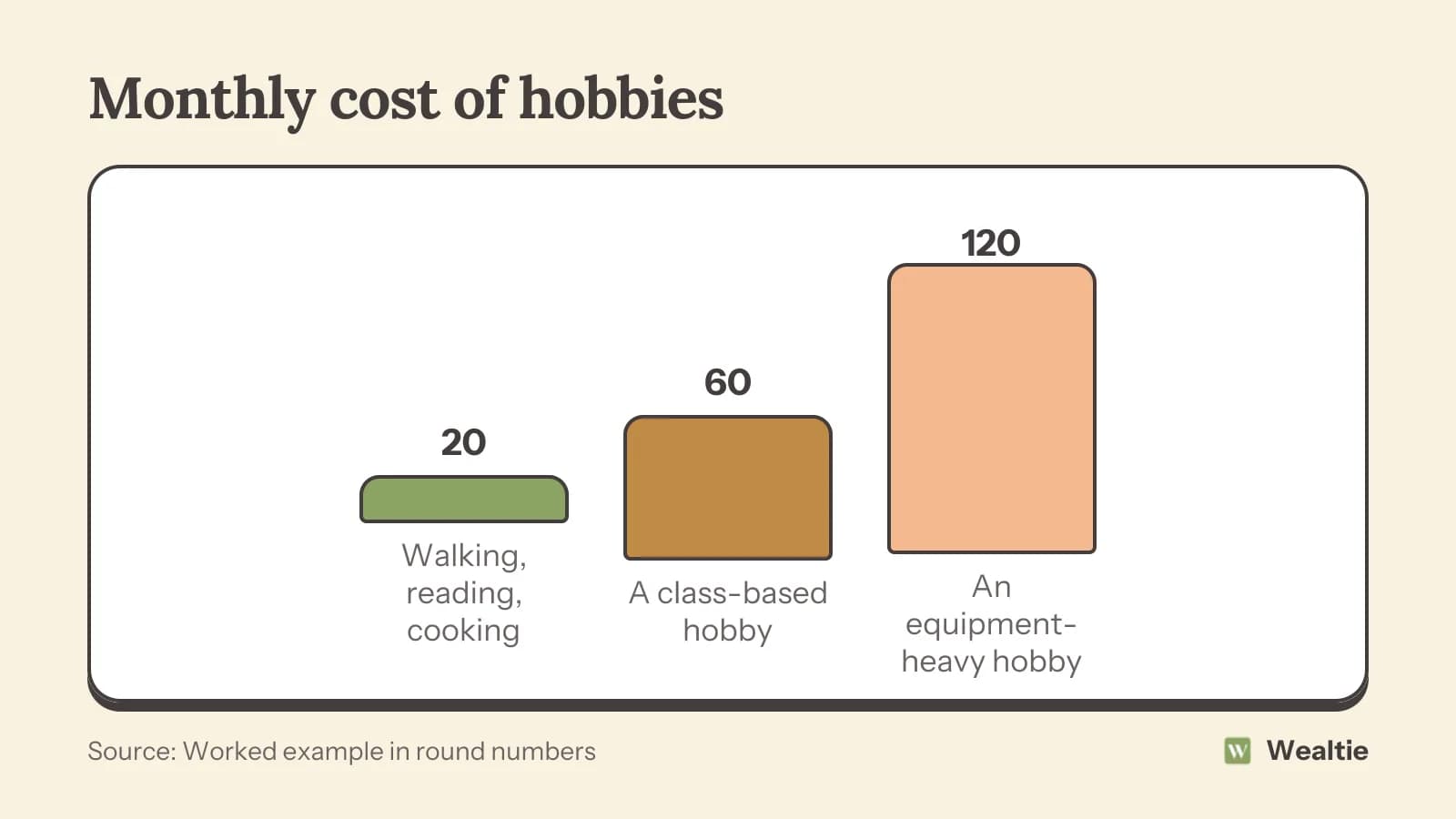
In this example, a mix of walking, reading and cooking costs about 20 a month, while an equipment-heavy hobby costs about 120. Your own costs depend on the hobby and how far you take it. The best hobby is one you'll enjoy and keep up, whatever it costs, but plenty of good ones are almost free.
What are good creative hobbies?
- Drawing or sketching, with a pencil and paper
- Writing, whether journaling, stories or poetry
- Photography, using the phone you already have
- Knitting, sewing or crochet, with cheap yarn or fabric
- Cooking or baking, which you'd do anyway
- Music, with free lessons online and a second-hand instrument
Creative hobbies often need only basic materials to start. You can add better tools later if you stick with it. Online tutorials make it easy to learn the basics without paying for classes.
What are good active hobbies?
- Walking or hiking, using local paths and parks
- Running, with a decent pair of shoes
- Cycling, with a second-hand bike
- Home workouts, using free online videos
- Swimming at public pools, often cheap off-peak
- Free community events, like weekly timed runs
Being active outdoors costs almost nothing and is good for your health and mood. Joining a local walking or running group adds a social side too.
What are good social hobbies?
- Board games or card games with friends, using games you already own
- Volunteering, which costs nothing and helps others
- Book clubs, using library books
- Community gardening
- Local clubs and groups, many free or low-cost
Social hobbies are a great way to meet people, and many are free. Community centres and libraries often have noticeboards listing local groups.
What are good learning hobbies?
- Learning a language with free apps and library resources
- Online courses, many of which are free
- Reading, using the library
- Podcasts and documentaries on topics you enjoy
How to save money on books covers using libraries, which often offer free e-books, audiobooks and online courses.
Hobbies with children
Many cheap hobbies work well as a family: baking, nature walks, drawing, gardening and board games. Doing them together costs little and gives children skills and interests that don't depend on spending. Libraries often run free family activities, especially in school holidays.
How do you start a hobby cheaply?
Start with what you have. Borrow equipment from friends, use library resources and try free classes or taster sessions before buying anything. If you enjoy it after a few weeks, buy basic equipment, ideally second-hand. Trying a few hobbies before settling on one avoids spending on several you'll drop. How to buy second-hand has tips.
Watch for hobby creep
Hobbies can get expensive as you get more into them, with better equipment and more classes. Set a monthly hobby budget, and upgrade only when your current gear is holding you back. How to save money on a hobby has more ideas.
Hobbies that save or make money
Some can. Cooking saves on takeaways, gardening can provide vegetables and herbs, and mending clothes saves on replacements. Some hobbies, like crafts, photography or baking, can even bring in a little income. How to save money on gardening covers one that can pay for itself.
How do hobbies fit your budget?
Give hobbies their own amount in your budget, so you can enjoy them without guilt. Many people find that a cheap hobby replaces more expensive habits, like shopping or eating out, which saves money overall. Filling evenings with a hobby you love can also reduce boredom spending, like late-night online shopping. How to save money on entertainment has more low-cost ideas.
The best cheap hobby is one you'll keep doing. Try a few for a month each before buying anything, and keep the one you look forward to most. A hobby you enjoy every week is good value even if it costs a little.
How do you track hobby spending in Wealtie?
Give hobbies their own line in your expense categories, so you can see what each costs over a month or year. A limit in the budget tracker keeps hobby spending within your plan.
Questions people ask
Walking, reading, cooking, drawing, writing, photography, home workouts, board games, volunteering and learning a language.
Use what you have, borrow equipment, use the library and try free taster sessions before buying.
In a worked example, low-cost hobbies cost about 20 a month, against 120 for an equipment-heavy hobby.
Some can. Cooking, gardening and mending clothes all save money on things you'd otherwise buy.
This article is general information, not financial, tax or legal advice. Your situation is your own; check the numbers that apply to you before you act on them.