Budgeting: How to save money on gardening without losing the garden
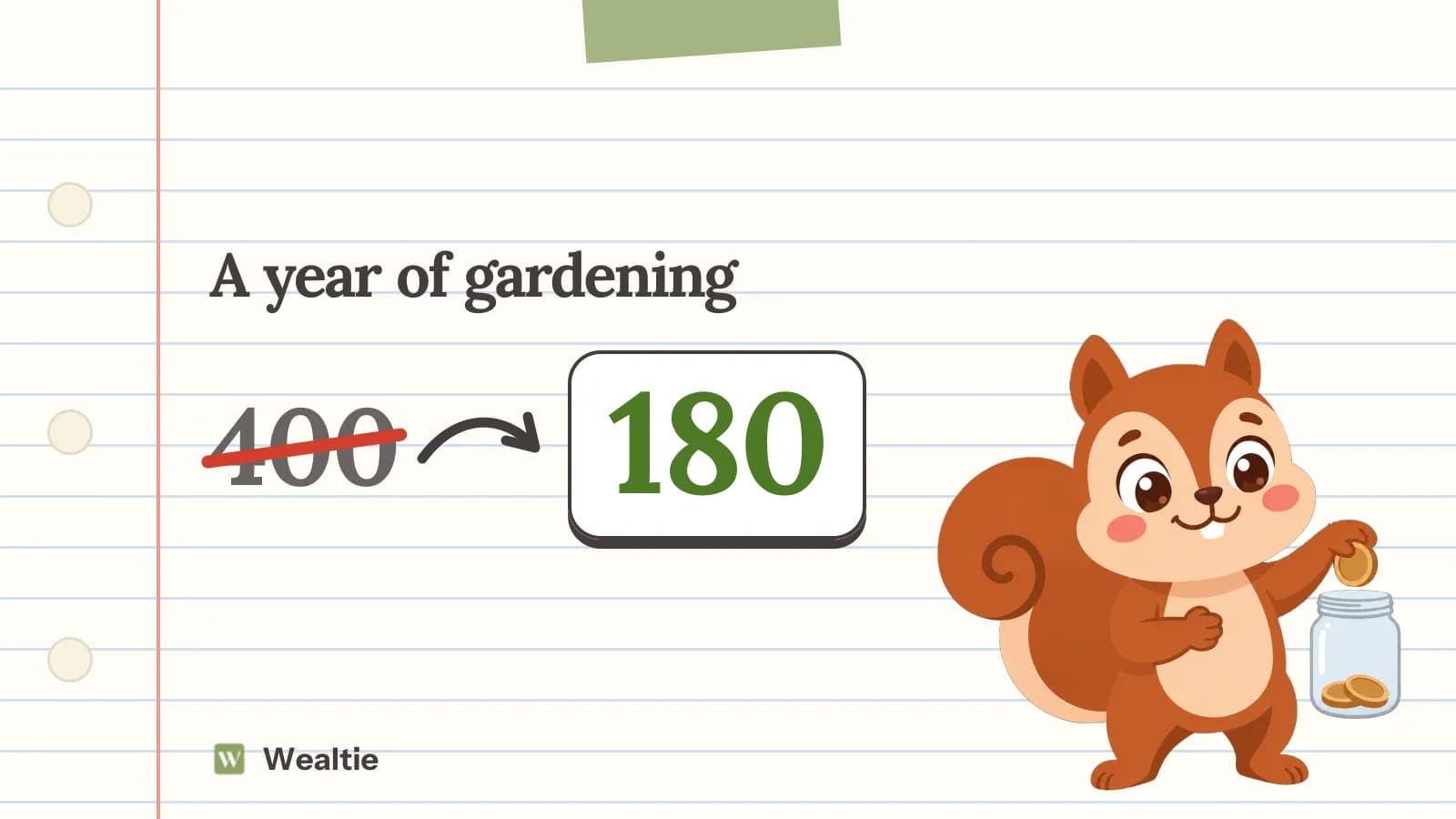
To save money on gardening, grow from seed and cuttings, swap plants with neighbours, buy tools second-hand, collect rainwater and make your own compost. In a worked example, a year of gardening drops from 400 to 180.
 By Wealtie Team · 3 min read
Key takeaways
- Growing from seed and cuttings costs far less than buying established plants.
- In a worked example, a year of gardening drops from 400 to 180.
- Swapping plants and seeds with neighbours and local groups is free and often gives better plants for your area.
- Rainwater and homemade compost cut ongoing costs every year.
How do you save money on gardening?
Grow more from seed, swap rather than buy, and make your own compost. Gardening can be one of the cheapest hobbies, or a surprisingly expensive one if every plant comes from a garden centre. The garden will look just as good either way, and many gardeners find that growing from seed and sharing plants is part of the fun. Patience is the main cost: a garden grown cheaply takes a season or two longer to fill out, but it's yours.
Where does the money go?
Here's a year of gardening, in round numbers that work in any currency:
| Cost | Before | After |
|---|---|---|
| Plants | 200 | 60 |
| Compost and soil | 80 | 30 |
| Tools | 70 | 40 |
| Water and extras | 50 | 50 |
| Total | 400 | 180 |
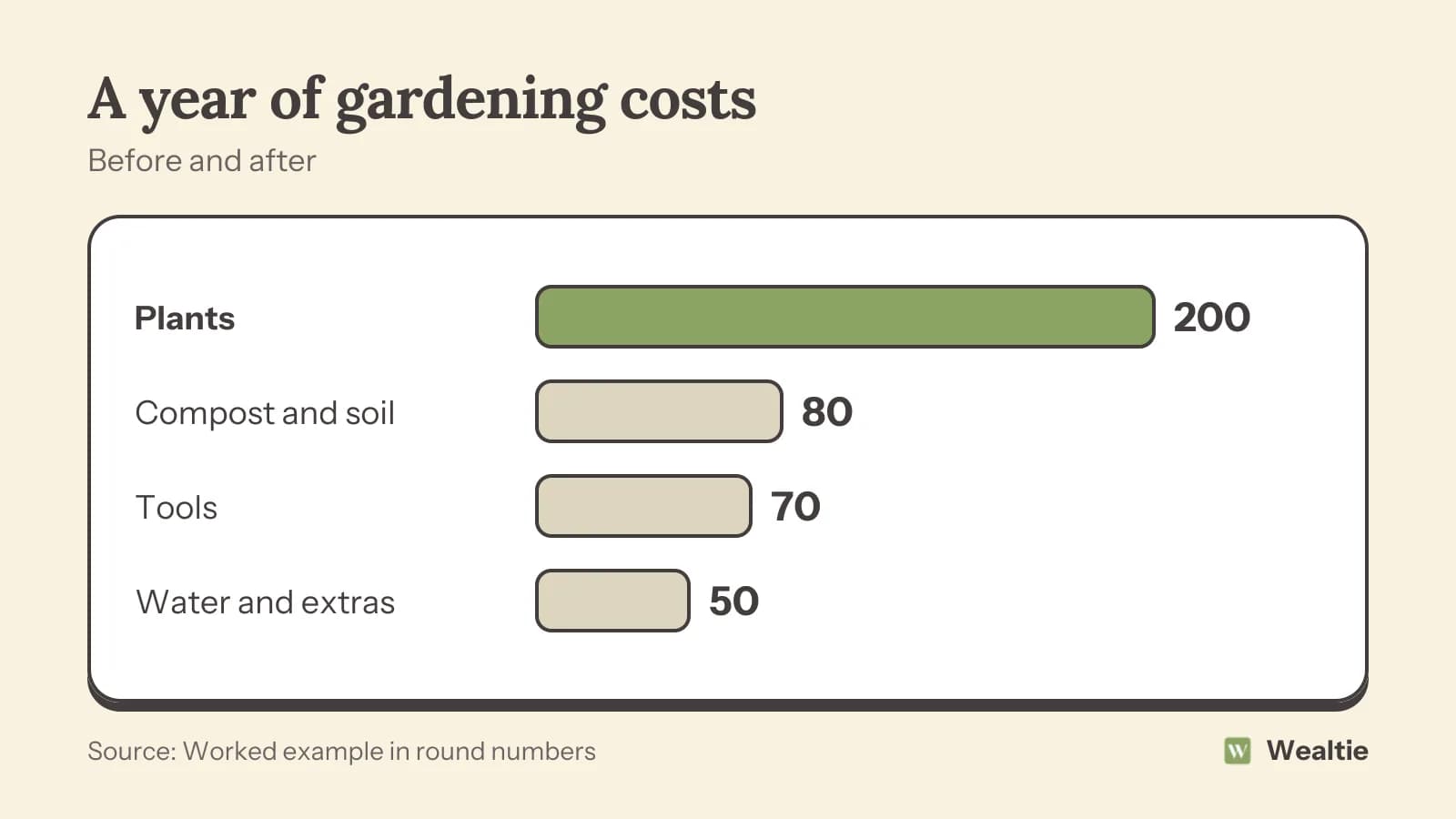
Plants are the biggest line, and the easiest to cut.
How do you get plants for less?
Grow from seed, take cuttings and share. A packet of seeds can produce dozens of plants for the price of one bought pot. Many plants, like herbs, geraniums and many shrubs, grow easily from cuttings taken from a friend's garden.
Other cheap sources:
- Plant and seed swaps run by local groups or libraries
- Dividing perennials you already have into several plants
- Buying small plants and letting them grow, instead of large established ones
- End-of-season sales at garden centres, for plants that just need some care
Perennials come back every year, so they cost less over time than annual bedding you replace each season. Ask neighbours with gardens you admire if you can take a cutting, since most gardeners are happy to share, and reuse old pots, buckets or crates with drainage holes instead of buying new planters.
How do you save on compost and soil?
Make your own. A compost bin or heap turns kitchen scraps, grass cuttings and leaves into free compost in a few months. Leaves collected in autumn make leaf mould, which is excellent for the soil. Some councils offer cheap compost bins or free compost from garden waste schemes. Coffee grounds and cardboard can go in the compost too.
Buying compost in larger bags is usually cheaper per litre if you need it.
How do you save on tools?
Buy second-hand, borrow or share. Good-quality tools last for decades, and many are sold second-hand at a fraction of the new price. Large tools you use once a year, like a hedge trimmer or a lawn scarifier, can be borrowed or hired, or shared with neighbours.
Start with a few basics, like a spade, fork, trowel and secateurs, and add others only when you need them. Look after what you've got: clean and oil tools after use, and sharpen blades. They'll last much longer.
How do you save on water?
Collect rainwater. A water butt connected to a downpipe collects water for free, and plants often prefer it. Water early in the morning or in the evening, so less evaporates, and water the roots rather than the leaves. Mulching the soil helps it hold water, and choosing plants suited to your soil and climate means less watering and fewer losses. How to save money on water bill has more on saving water at home.
What about growing your own food?
It can save money, especially for expensive or perishable crops like herbs, salad leaves, tomatoes and berries. Start small with a few easy crops, since a large vegetable patch takes time and can cost more than it saves if it's not looked after. A few pots on a balcony can supply herbs all summer. Saving seeds from tomatoes, beans and peppers gives you next year's plants for free.
How do you keep gardening costs in check?
Set a yearly amount for the garden and spread it across the seasons. Spring is when most money gets spent, so plan before you go to the garden centre and take a list. Impulse plant buying is easy to do and hard to stop. Write down what thrived and what didn't each year, so you don't keep buying plants that struggle in your garden. Look after what you plant, since a plant that dies is the most expensive one in the garden. Local gardening clubs share tips, seeds and sometimes tools.
How do you track garden spending in Wealtie?
Give gardening its own line in your expense categories, so you can see what the garden costs over a year. A share of your monthly limit in the budget tracker helps in spring, when spending tends to jump.
Questions people ask
Grow from seed and cuttings, swap plants, make compost, buy tools second-hand and collect rainwater.
Usually much cheaper. A packet of seeds can produce dozens of plants for the price of one bought pot.
Take cuttings, divide perennials you already have, and join local plant and seed swaps.
It can, especially for herbs, salad, tomatoes and berries. Start small, since a large plot takes time to look after.
This article is general information, not financial, tax or legal advice. Your situation is your own; check the numbers that apply to you before you act on them.