Saving: How to budget for a career break
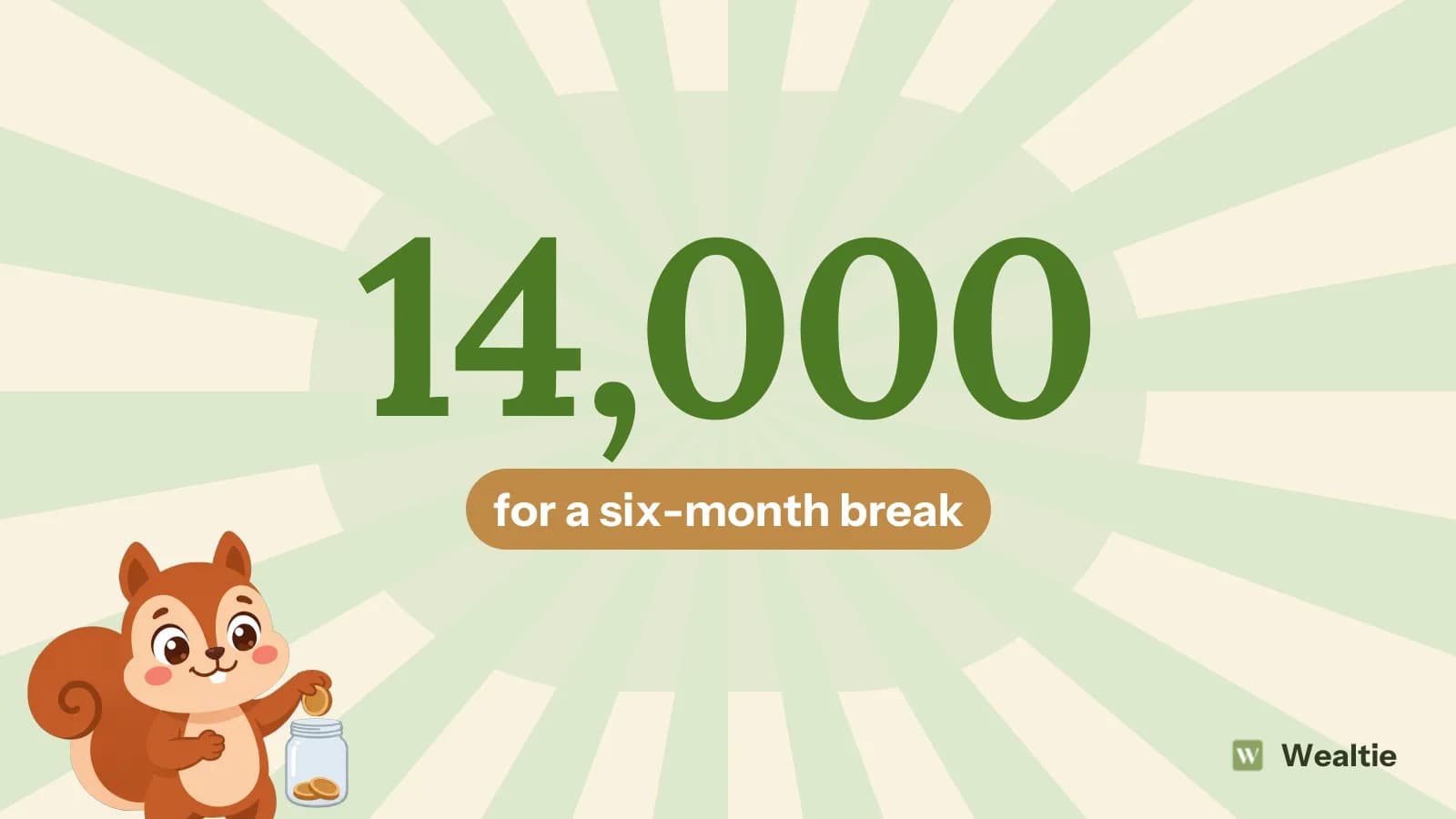
To budget for a career break, add up your monthly costs while you're not earning, multiply by the length of the break and add a cushion for the job search afterwards. In a worked example, a six-month break with costs of 1,800 a month needs about 14,000, including two months to find work on return.
 By Wealtie Team · 3 min read
Key takeaways
- A budget for a career break covers living costs while not earning, plus a cushion for finding work afterwards.
- In a worked example, six months off at 1,800 a month needs about 14,000.
- Check what happens to pension contributions, insurance and benefits while you're off.
- Keep your emergency fund separate from break money.
How do you budget for a career break?
Work out what you'll spend while not earning, then save that amount plus a cushion before you go. A career break, sometimes called a sabbatical, gives you time to travel, study, care for family, recover from burnout or rethink your direction. It can be one of the most valuable things you do, but only if the money side is planned. Running out halfway through, or rushing back to any job, takes away much of the benefit.
Some employers offer paid or unpaid sabbaticals with a job to return to. Others mean resigning. The budget is similar, but a guaranteed job makes the cushion smaller.
How much do you need to save?
Here's a worked example for a six-month break, in round numbers that work in any currency:
| Amount | |
|---|---|
| Monthly costs | 1,800 |
| Living costs, 6 months | 10,800 |
| Job search cushion, 2 months | 3,600 |
| Total | about 14,000 |
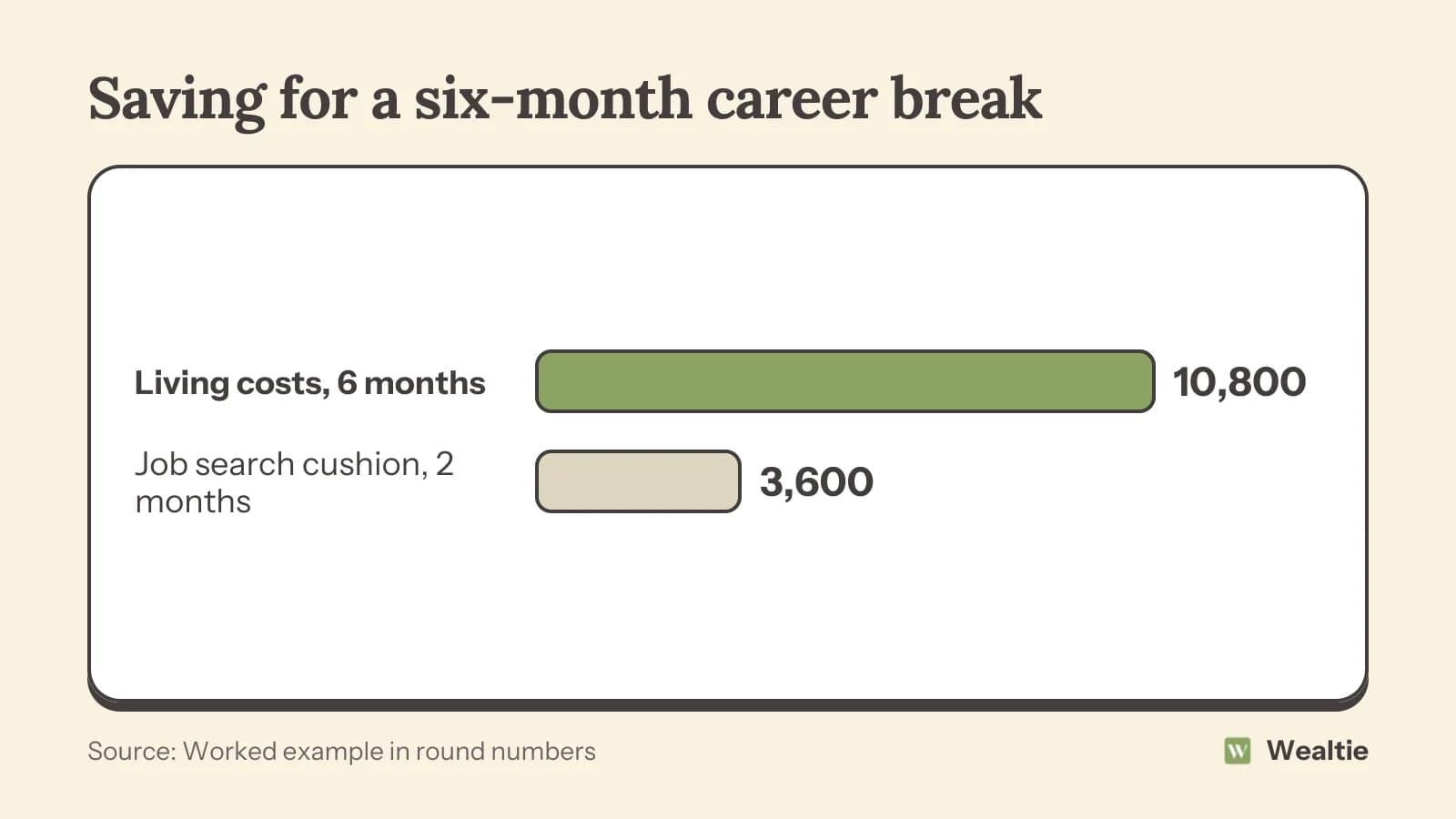
If you're returning to a guaranteed job, you may not need the cushion. If you're changing careers, you might need more. Your monthly costs depend on whether you're staying at home, travelling or studying.
How do you work out your monthly costs?
Start from your current budget and adjust it for the break. Some costs disappear, like commuting and work lunches. Others may appear, like health insurance, study fees or travel. Separate essentials from the extras you want, so you know the minimum you need. The bare-bones budget shows how to find that figure. Many costs fall during a break, but some rise, like heating if you're home all day.
Plan the activities separately
If you're travelling or studying, budget those costs separately from day-to-day living. A trip, a course or a project can cost more than living costs, so give each its own amount. The gap year budget covers travel-focused breaks.
What about rent or a mortgage?
Housing is often the biggest cost to plan for. If you're travelling, you might rent out your home, sublet a room or end a tenancy and store your belongings. Check your mortgage or tenancy terms, and your insurance, before letting your home. If you rent it out, include agent fees, tax on the rental income and a buffer for repairs. If you're staying at home, housing stays in your monthly costs as normal.
What happens to pensions, insurance and benefits?
Check before you go:
- Pension contributions usually stop while you're not working, so consider paying in yourself if you can
- Insurance linked to your job, like health or life cover, may end
- State benefits or credits linked to employment may be affected in some places
- Professional memberships or licences may need to be kept up
Some of these have long-term effects, so it's worth understanding them before you decide how long to take. If you have debts, make sure repayments are in your monthly costs, since lenders still expect payment.
How do you save for a career break?
Give yourself enough time. Divide the total by the months before your break. Saving 14,000 over two years is about 600 a month. Cutting a few regular costs, putting any pay rises or bonuses straight into the fund and selling things you won't need all help. Keep the money in a separate savings account, so it's clear what's for the break. Living on your break budget for a month or two before you go shows whether it's realistic.
Keep your emergency fund separate
Your career break fund is for planned spending. An emergency fund, kept separately, covers the unexpected, like a medical bill or a family emergency, so a surprise doesn't cut your break short. How to build an emergency fund covers the basics.
How do you plan your return to work?
Start before the break ends. Updating your CV and online profiles before you leave, while your achievements are fresh, saves time later. Keep in touch with your network, keep skills up to date and begin looking for work a month or two before your money runs low. The job search cushion means you can be choosy, rather than taking the first offer. If you're returning to a guaranteed job, check the return date and any conditions in writing. How to budget after losing your job has tips for the job search stage if it takes longer than planned.
How do you track a career break budget in Wealtie?
Add a savings account for the break and move money into it each month as a transfer, which isn't counted as spending. During the break, track spending in your expense categories and set a monthly limit in the budget tracker, so you can see how long your fund will last.
Questions people ask
Your monthly costs times the length of the break, plus a cushion for finding work. In a worked example, six months needs about 14,000.
Contributions usually stop while you're not working. Consider paying in yourself if you can.
Saving 14,000 over two years is about 600 a month, so start as early as you can.
Yes. Keep it separate from break money, so a surprise doesn't cut your break short.
This article is general information, not financial, tax or legal advice. Your situation is your own; check the numbers that apply to you before you act on them.