Budgeting: Is a car subscription worth it? The monthly sums
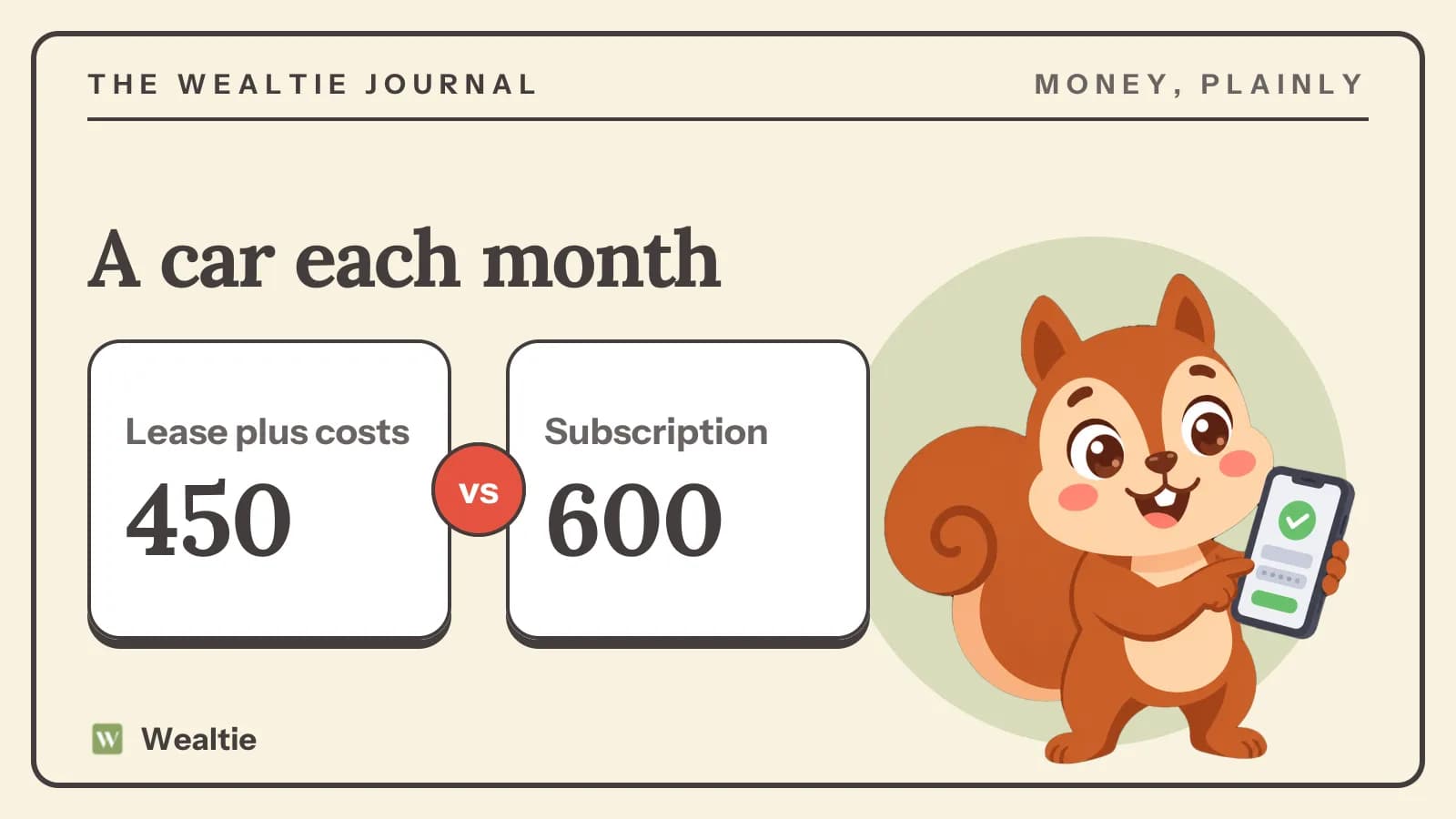
Is a car subscription worth it? It suits people who want flexibility and one monthly price, but in a worked example, it costs 600 a month, against 450 for leasing plus insurance and servicing.
 By Wealtie Team · 3 min read
Key takeaways
- A car subscription bundles the car, insurance and servicing into one monthly price.
- It costs more than leasing or owning, but offers flexibility.
- It suits short-term needs, people new to an area or those testing an electric car.
- Check mileage limits, deposits and cancellation terms.
What is a car subscription?
A car subscription gives you a car for a monthly fee that usually includes insurance, servicing, maintenance, breakdown cover and road tax. You pay one price, often with a shorter commitment than a lease, and some services let you swap cars or cancel with a month or two's notice. It's a bit like a phone contract for a car: convenient and predictable, but not always the cheapest way to drive.
Whether a car subscription is worth it depends on how long you need a car, how much flexibility you want and what the alternatives would cost.
How does a subscription compare with leasing and owning?
Here's a worked example of the monthly cost of a similar car, in round numbers that work in any currency:
| Option | Monthly cost |
|---|---|
| Own a used car | 350 |
| Lease plus insurance and servicing | 450 |
| All-inclusive subscription | 600 |
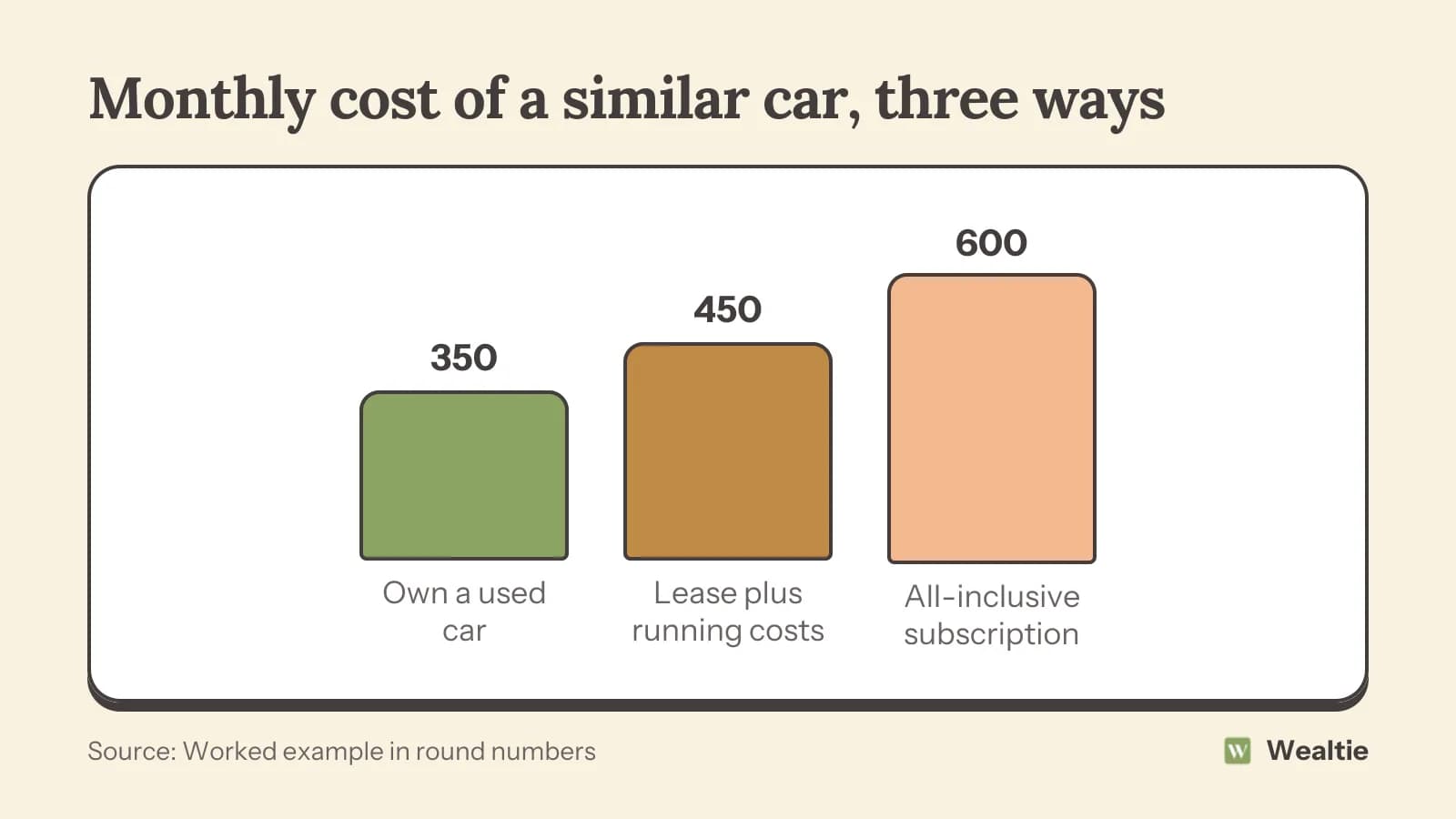
Owning a used car, including depreciation, insurance, servicing and tax, might cost around 350 a month. Leasing a new car at 300, plus insurance and servicing, comes to about 450. A subscription for a similar new car at 600 costs the most, but includes everything and offers more flexibility. Should you lease or buy a car? covers the first two options in detail.
When is a car subscription worth it?
Short-term needs
If you need a car for a few months, perhaps for a temporary job or a new baby, a subscription avoids a long lease or buying and selling.
New to an area or country
If you've just moved and don't have a local driving or insurance history, a subscription can be easier than arranging insurance yourself.
Trying an electric car
Subscriptions let you try an electric car for a few months before committing. Electric car running costs covers what electric cars cost to run.
You value simplicity
One payment for everything makes budgeting easy, with no surprise repair bills.
When is it not worth it?
Long-term driving
Over several years, a subscription usually costs more than leasing or owning.
High mileage
Most subscriptions include a monthly mileage limit and charge for extra miles.
Young drivers
Some subscriptions have age limits or higher prices for young drivers.
You only drive occasionally
If you drive a few times a month, a car club or rentals may be much cheaper. Is a car club worth it? covers that option.
What should you check before signing?
What's included
Confirm insurance, servicing, tyres, breakdown cover and tax are all included, and check the insurance excess.
Mileage limits
Choose a mileage allowance that fits your driving, and check the charge for extra miles.
Deposit and fees
Some subscriptions take a refundable deposit or charge setup and delivery fees.
Cancellation terms
Check the notice period and any fees for ending early.
Damage charges
Find out how wear and tear is assessed when you return the car.
How do you decide?
Work out how long you'll need a car and roughly how many miles you'll drive. Compare the total cost of a subscription over that time with leasing, buying used or using a car club. How much car can you afford? and car finance options cover the other routes.
Think about how your needs might change. A subscription's flexibility is most valuable when your situation is uncertain, like a job that might move, a growing family or plans to live abroad. If you're settled and know you'll need a car for years, the extra cost of flexibility may not be worth paying. Writing down what you expect over the next two or three years helps you decide.
Compare like for like. Some subscriptions use newer, more expensive cars than you'd choose to buy or lease, which makes the monthly price look higher. Comparing a similar car across options gives a fairer picture. Check the insurance excess too, since a high excess can make an accident expensive even with insurance included.
Remember fuel or charging isn't usually included. Add it to the monthly cost when comparing with other options, especially if you drive a lot.
Finally, read reviews of the subscription provider. Delivery times, customer service and how disputes about damage are handled vary, and a smooth experience is part of what you're paying for.
If you're unsure, start with the shortest commitment available. A month or two of a subscription shows how well it fits your life, and you can switch to a lease or buy a car later with a much clearer idea of what you need. That small trial can stop you committing to a long contract that doesn't suit you.
How can Wealtie help you compare?
Add a subscription or lease as a recurring transaction in Wealtie, and log fuel and other driving costs in a transport expense category. Seeing the full monthly cost makes it easy to compare options when your contract ends.
Questions people ask
It suits short-term needs, people new to an area and those trying an electric car. Over several years, leasing or owning usually costs less.
Usually the car, insurance, servicing, maintenance, breakdown cover and road tax, for one monthly price.
Usually not. In a worked example, a subscription cost 600 a month, against about 450 for leasing plus insurance and servicing.
Check what's included, mileage limits, deposits, fees, cancellation terms and how damage is assessed.
This article is general information, not financial, tax or legal advice. Your situation is your own; check the numbers that apply to you before you act on them.