Budgeting: Should you lease or buy a car? Compare the total cost
Whether to lease or buy a car comes down to how long you'll keep it. In a worked example, leasing costs 14,600 over three years against 13,500 for buying, and over six years buying wins by 7,200.
 By Wealtie Team · 3 min read
Key takeaways
- Leasing usually costs more if you'd keep a car for many years, and can cost about the same as buying over a short period.
- In a worked example, a three-year lease costs 14,600, and buying and selling after three years costs 13,500.
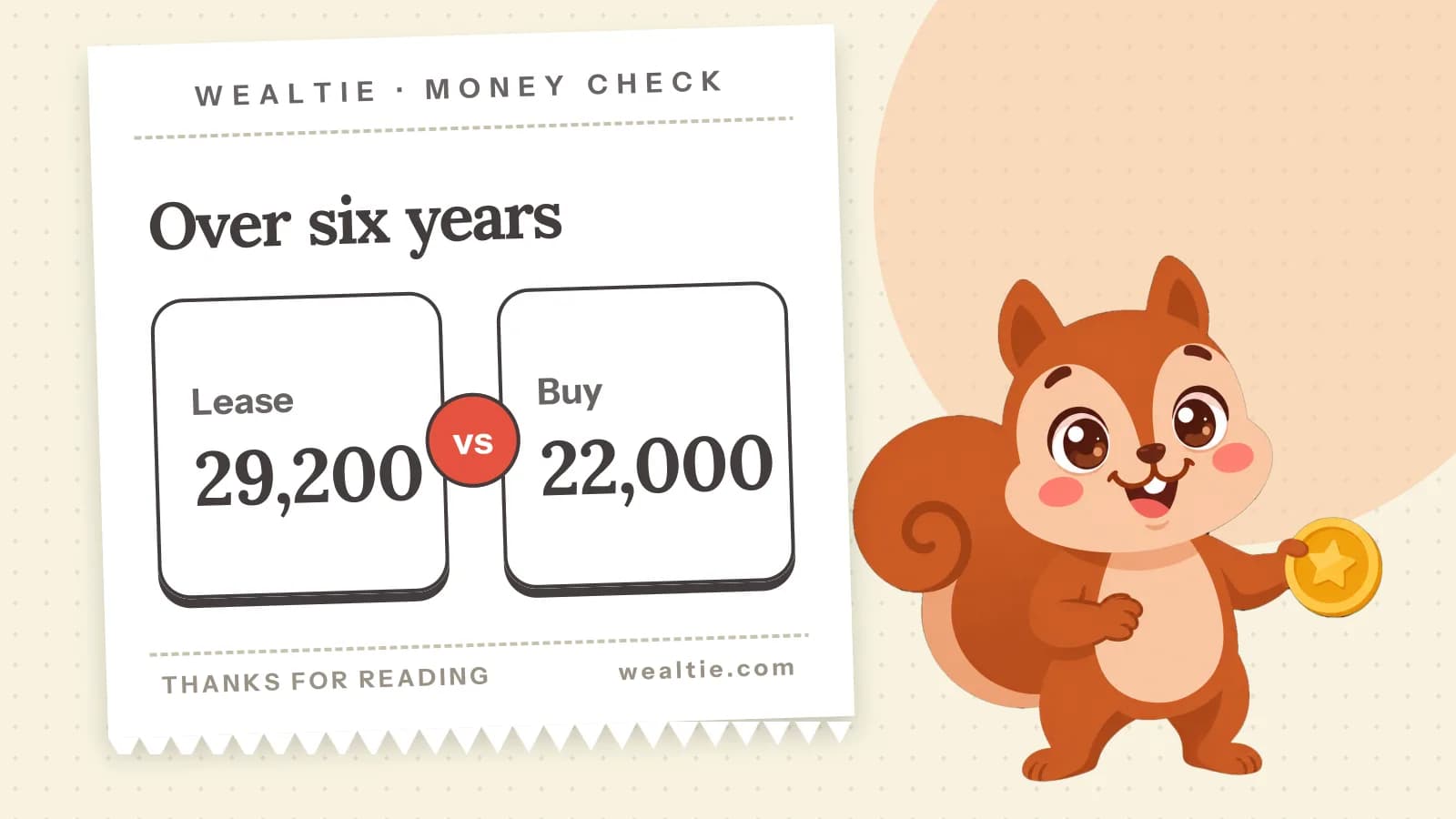
- Over six years, two leases cost 29,200, against 22,000 for buying the same car and keeping it.
- Leases have mileage limits and charges for damage, so count those in before comparing.
Should you lease or buy a car?
Lease if you want a new car every few years and you're happy to keep paying. Buy if you'll keep it for a long time, because once the loan's paid off, the car's yours and the payments stop.
The fair comparison is the total cost over the time you'll have the car. Monthly payments alone make leasing look cheap.
What does each cost over three years?
About the same, in this worked example in round numbers that work in any currency. The car costs 30,000 new.
| Over three years | Lease | Buy, then sell |
|---|---|---|
| Upfront payment | 2,000 | 0 |
| Monthly payments | 350 × 36 = 12,600 | Loan payments |
| Interest on the loan | 0 | 2,500 |
| Value lost (30,000 bought, 19,000 sold) | 0 | 11,000 |
| Total cost | 14,600 | 13,500 |
If you buy, you're paying for the value the car loses while you own it, plus interest. If you lease, you're paying for roughly the same loss, plus the leasing company's costs and margin, spread into monthly payments.
Running costs like insurance, fuel and servicing are left out of both, since they're similar either way.
What happens over six years?
Buying pulls ahead. If you lease twice in a row, you pay for two leases. If you buy and keep the car, the steepest part of the value loss is over, and you stop paying interest once the loan's done.
| Over six years | Lease twice | Buy and keep |
|---|---|---|
| Total cost | 29,200 | 22,000 |
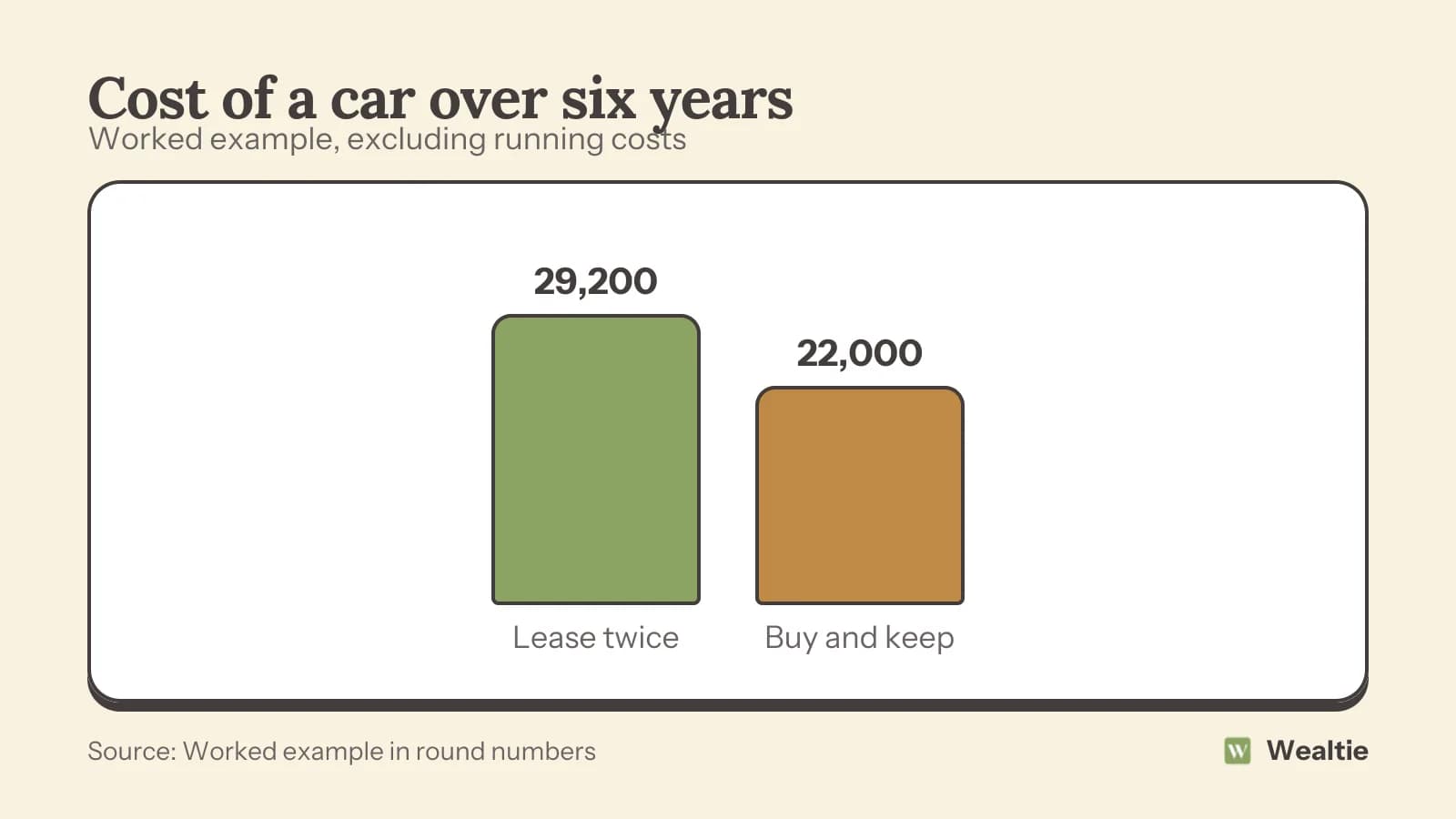
That's 30,000 less a resale value of 11,000, plus 3,000 of interest, for buying. Keep the car for eight or ten years and the gap widens, though repairs tend to rise as a car gets older.
What are the catches with a lease?
Limits and charges that can add up at the end:
- A mileage limit each year, with a charge for every mile or kilometre over it
- Charges for wear and damage beyond what's allowed
- Costs for ending the lease early, which can be large
- Sometimes a requirement to service it at approved garages
If you drive a lot, estimate your yearly mileage honestly before you sign. Paying for extra mileage upfront is usually cheaper than paying for it at the end.
Who does leasing suit?
People who want a new car regularly and value predictable costs. It can also suit people who use a car for business, where the tax treatment can differ, so check your situation.
Leasing tends to suit people less well if they drive far, have children or pets that are hard on the interior, or might need to end the agreement early.
What about buying used?
Often the cheapest option of all. A car that's a few years old has already lost a lot of its value, so you pay less for the part of its life you'll use. Combine that with keeping it for years and the total cost can be far lower than either option above.
A three-year-old version of the 30,000 car in this example might sell for around the 19,000 the first owner got for it. Kept for six years, it would usually lose much less value than it did in its first three, since the steepest drop has already happened.
Get it checked before you buy, and keep money aside for repairs. How much car can I afford has a test for the total cost, and how to save for a car covers paying in cash.
What should you do before deciding?
Run the numbers on your own quotes. For a lease, add the upfront payment and every monthly payment. For buying, take the price, subtract a realistic resale value for when you'd sell, and add the loan interest. Compare over the number of years you'd keep the car.
Then look at your budget. Whichever you choose, the monthly payment, insurance and running costs together should leave room for savings. If the only way to afford a car is a long agreement with a low payment, it might be more car than the budget can carry.
Don't forget the cost of insuring it. Newer and more expensive cars often cost more to insure. How to save money on car insurance has ways to bring it down.
How do you track a car in Wealtie?
Set the lease or loan payment up as a monthly recurring transaction with the bill tracker, so it logs itself on the due date. Give the car its own line in your expense categories for fuel, insurance and servicing, and you'll see the real monthly cost. Free includes one recurring transaction, and Pro has no limit.
Questions people ask
Buying is usually cheaper if you keep the car for many years. Over three years the two can cost about the same, and leasing suits people who want a new car regularly.
Because you keep paying for a new car's steepest value loss every few years, plus the leasing company's margin. If you buy and keep a car, payments stop once the loan's paid.
Mileage limits, charges for wear and damage, and high costs if you end the lease early. You also own nothing at the end.
Usually, because a used car has already lost much of its value. Keeping it for several years makes the difference larger.
This article is general information, not financial, tax or legal advice. Your situation is your own; check the numbers that apply to you before you act on them.



