Budgeting: Car finance options explained: loan, hire purchase or lease
The main car finance options are a personal loan, hire purchase, finance with a large final payment and leasing, and the best one depends on the total cost, not the monthly payment. In a worked example, the same 15,000 car costs between about 16,500 and 18,000 in total, depending on how you pay.
 By Wealtie Team · 3 min read
Key takeaways
- Compare car finance options by total cost, not monthly payment.
- In a worked example, the same 15,000 car costs between about 16,500 and 18,000 depending on the finance.
- Low monthly payments often come with a large final payment or a higher total.
- Saving a bigger deposit, or buying a cheaper car, lowers the cost of any finance.
What are the main car finance options?
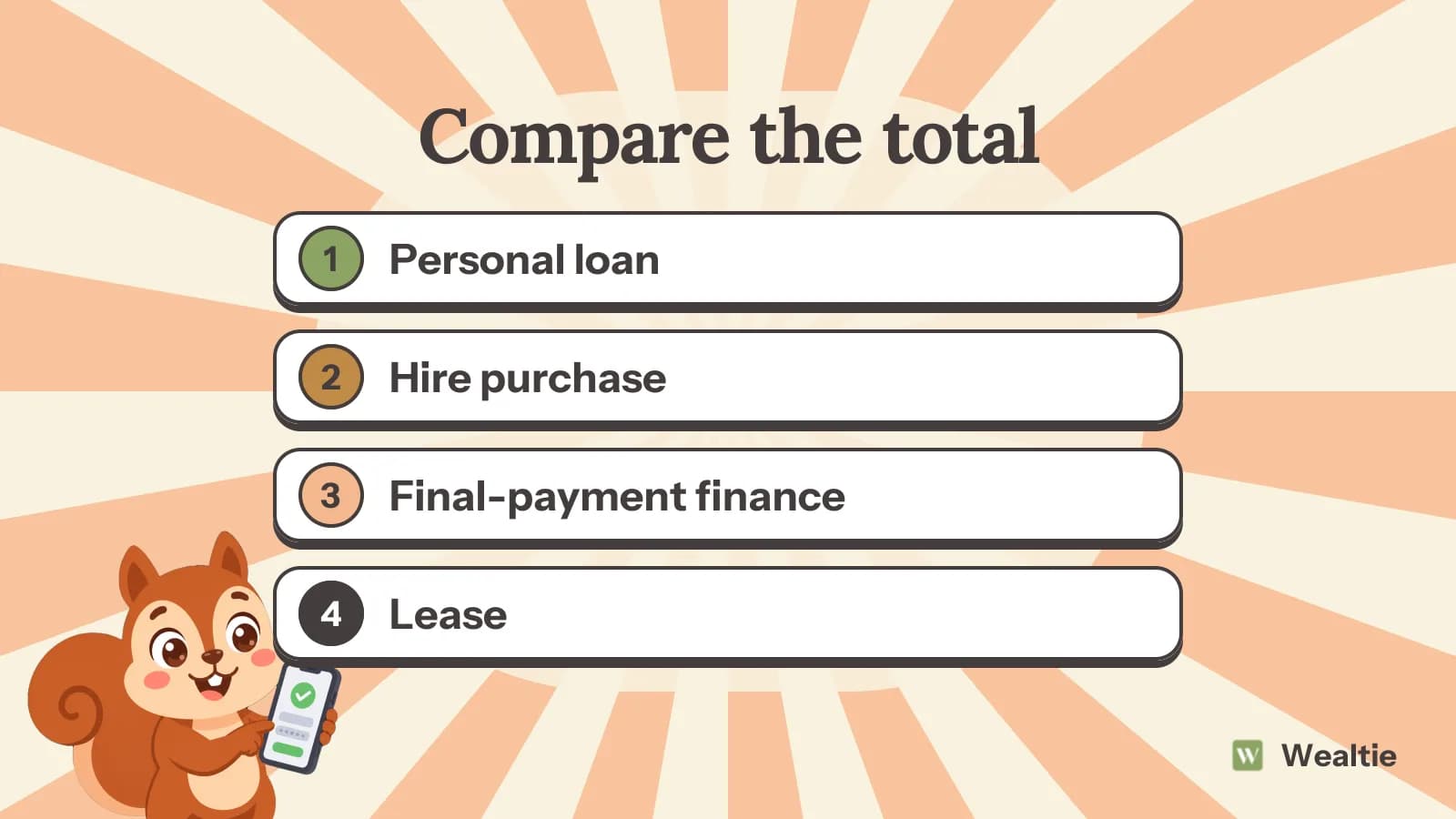
Most car finance falls into four types. Names differ between countries, but the ideas are similar:
- Personal loan: you borrow from a bank or lender, buy the car outright and own it from day one.
- Hire purchase: you pay a deposit and fixed monthly payments, and own the car after the last payment.
- Finance with a large final payment: lower monthly payments, then a big optional payment at the end if you want to keep the car.
- Leasing: you pay monthly to use the car, then hand it back. You never own it.
Each can suit different people. The key is comparing what you'll pay in total, not only what you'll pay each month.
How do the total costs compare?
Here's a worked example for a 15,000 car over four years, in round numbers that work in any currency:
| Option | Total cost |
|---|---|
| Personal loan | 16,500 |
| Hire purchase | 17,000 |
| Final-payment finance, buying at the end | 18,000 |
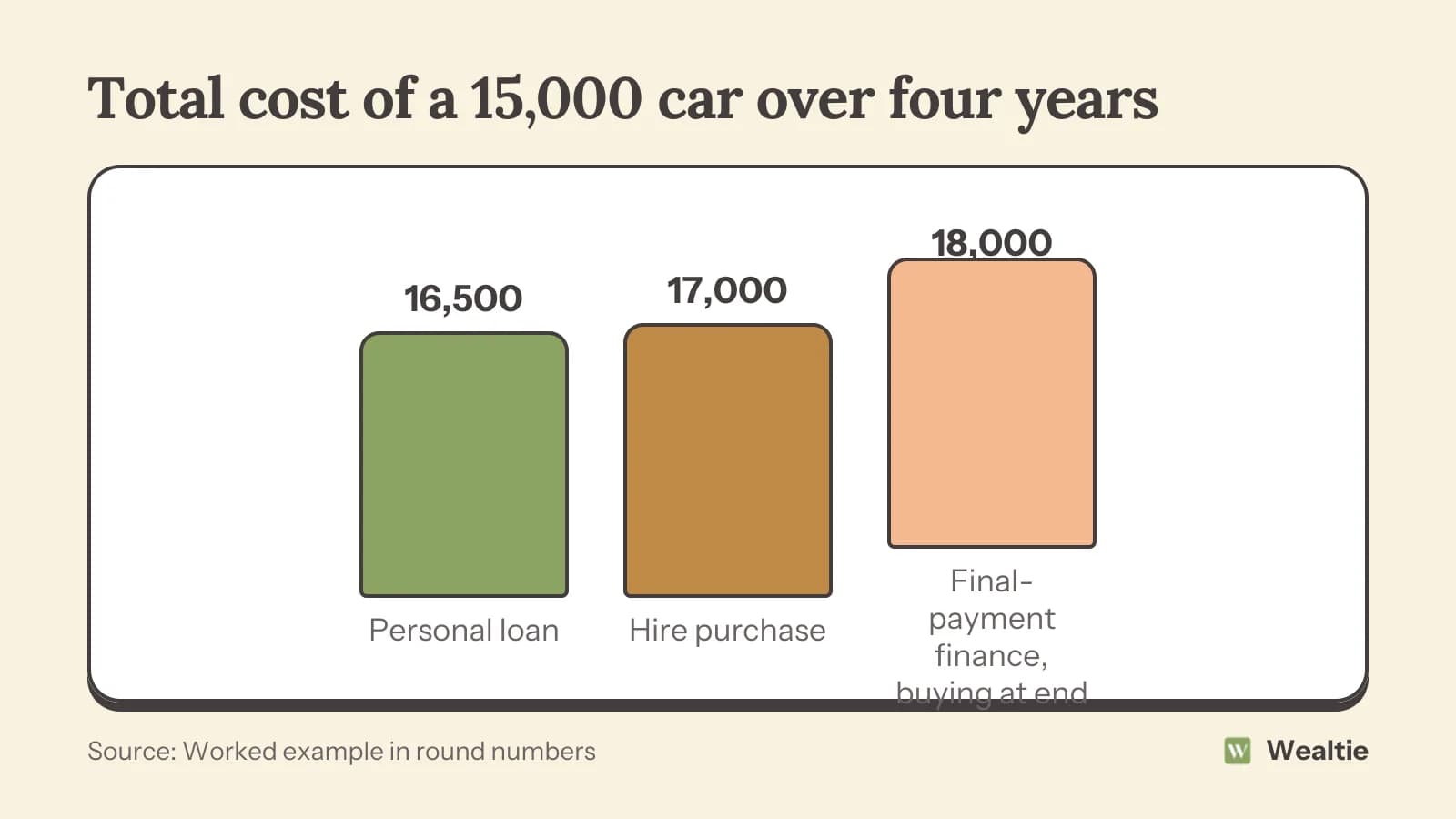
In this example, the loan is cheapest overall, but it needs a good credit record. Final-payment finance has the lowest monthly payments but the highest total if you keep the car. Your own figures depend on the interest rate, deposit, length of the deal and fees.
Why low monthly payments can cost more
A lower monthly payment often means a longer deal, a large final payment or both. That can make a more expensive car feel affordable, while the total cost rises. Always ask for the total amount payable, including fees, before you sign. Negotiating the price of the car first, before discussing finance, keeps the two separate and clearer.
When does each option make sense?
- A personal loan suits people with good credit who want to own the car straight away and may sell it any time.
- Hire purchase suits people who want to own the car and prefer a simple fixed plan.
- Final-payment finance suits people who like to change cars every few years and are happy to hand it back or trade it in.
- Leasing suits people who want a newer car with predictable costs and don't mind never owning it. Lease or buy a car covers this choice in detail.
What should you check before signing?
Read the details carefully:
- The total amount payable, including interest and fees
- The deposit and any final payment
- Mileage limits and excess mileage charges, for leases and final-payment deals
- Charges for damage beyond normal wear when you return the car
- What happens if you want to end the deal early
- Whether you own the car during the deal, which affects whether you can sell it
Comparing quotes from several lenders, not just the dealer, often finds a better deal. Getting a finance quote before you visit the dealer also gives you a figure to negotiate against.
How much car can you afford?
Start from your budget, not the car. Work out a monthly amount that fits comfortably, including insurance, fuel, servicing and tax as well as the finance. How much car can you afford helps you set a sensible limit. A cheaper car, or a good used one, can cut finance costs a lot. How to buy a used car without overpaying covers getting good value.
Can you avoid finance altogether?
Saving and paying cash is the cheapest way to buy a car, since there's no interest. Even saving a larger deposit lowers what you borrow and the total you pay. How to save for a car covers building up the money. Some people buy a cheaper car with cash now and save for a better one later.
How do you plan for the end of the deal?
Know what happens before you start. With final-payment finance or a lease, plan whether you'll pay, hand back or trade in, and set aside money if you might keep the car. With a loan or hire purchase, you'll own the car outright, so you could keep driving it without payments, which is often the best value of all. Keeping a car for a few years after the payments end, and saving what you used to pay, builds the deposit for your next one.
How do you track car finance in Wealtie?
Set up your monthly finance payment as a recurring transaction with the bill tracker, so it's logged on time and you can see the total over the deal. Track fuel, insurance and servicing in your expense categories, so you know the full cost of the car each month.
Questions people ask
Personal loans, hire purchase, finance with a large final payment and leasing.
The one with the lowest total cost for your situation. In a worked example, a personal loan was cheapest overall.
It often means a longer deal or a large final payment, which raises the total you pay.
The total amount payable, deposit, final payment, mileage limits, damage charges and early exit terms.
This article is general information, not financial, tax or legal advice. Your situation is your own; check the numbers that apply to you before you act on them.