Budgeting: Car depreciation: how much value your car loses and why it matters
Car depreciation is the value a car loses as it ages, and for many new cars it's the biggest cost of ownership, even bigger than fuel. In a worked example, a car bought new for 25,000 is worth about 11,000 after five years.
 By Wealtie Team · 3 min read
Key takeaways
- Car depreciation is the value a car loses as it ages.
- In a worked example, a car bought new for 25,000 is worth about 11,000 after five years.
- Cars lose value fastest in the first few years.
- Buying a few years old lets someone else take the biggest drop.
What is car depreciation?
Car depreciation is the drop in a car's value over time. A car is worth less each year because of age, mileage, wear and newer models coming out. You don't pay depreciation as a bill, so it's easy to overlook, but it's real money: it's the difference between what you paid and what you get back when you sell. For many new cars, depreciation is the single biggest cost of ownership, often more than fuel, insurance or servicing.
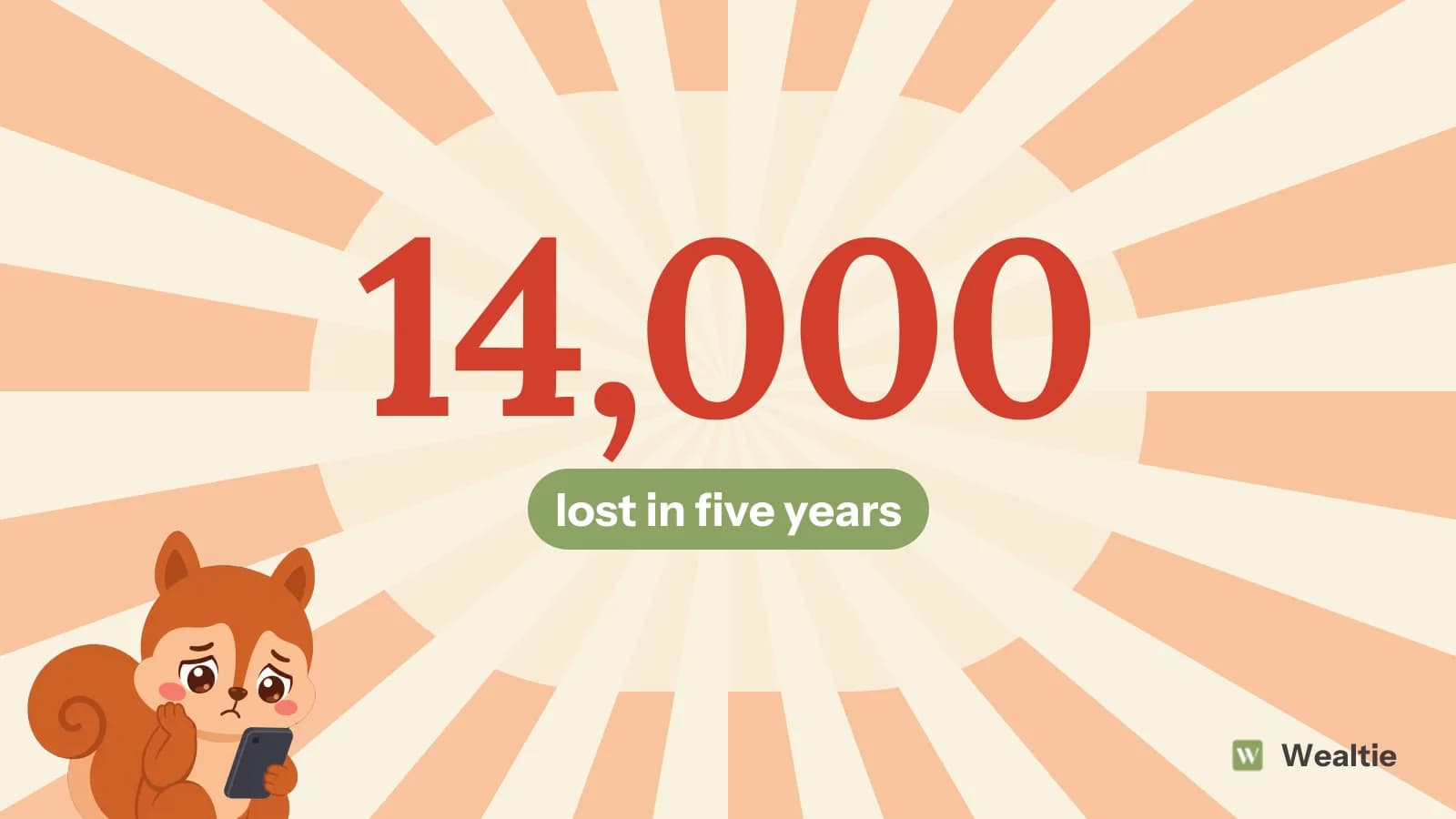
In a worked example, a car bought new for 25,000 is worth about 11,000 after five years. That's 14,000 lost, or about 2,800 a year, roughly 230 a month.
Understanding depreciation helps you make better choices about when to buy, what to buy and how long to keep a car. It's one of the main reasons buying a car a few years old is often much better value than buying new.
Depreciation also explains why changing cars often is expensive. Each time you sell a car after a couple of years and buy a newer one, you take another steep early drop in value. Keeping a reliable car for longer spreads the purchase cost over more years and usually works out far cheaper, even after allowing for higher repair costs as it ages. Many drivers find that keeping a car for six or more years, with good maintenance, gives the lowest cost per year of ownership.
It's worth looking at the value of your current car now and then, using online valuation tools. Knowing what it's worth helps you decide when to sell, and how much you'd need to save for the next one.
How much does a car depreciate?
Here's a worked example of a car bought new for 25,000, in round numbers that work in any currency:
| Age | Value |
|---|---|
| New | 25,000 |
| Year 1 | 20,000 |
| Year 2 | 17,000 |
| Year 3 | 15,000 |
| Year 4 | 13,000 |
| Year 5 | 11,000 |
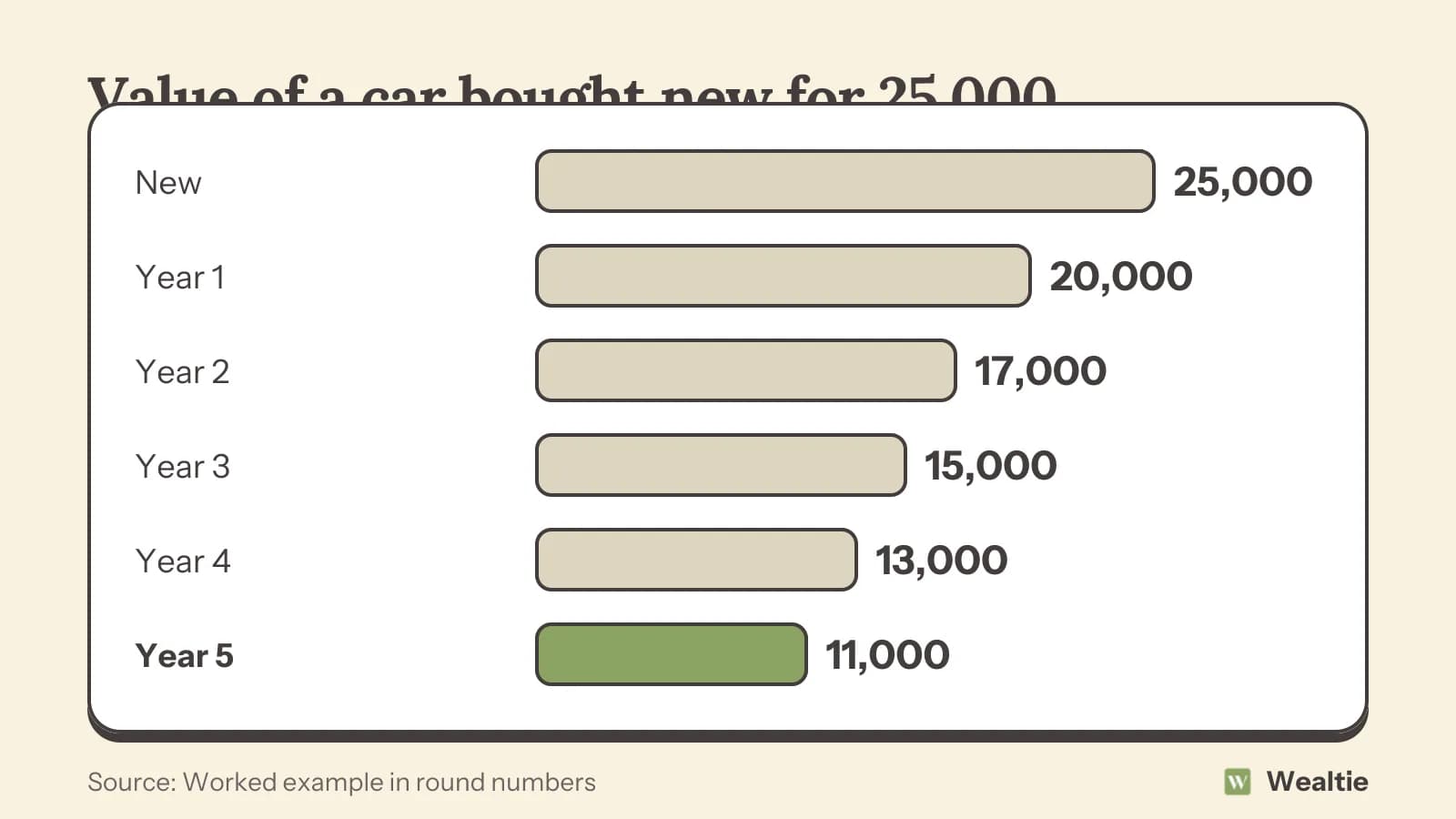
The biggest drop comes in the first year, as soon as the car stops being new. After that, the loss each year gets smaller. Different makes and models depreciate at very different rates, so research the one you're considering.
What affects how fast a car loses value?
Age and mileage
Older cars and higher-mileage cars are worth less. A car driven far more than average loses value faster, so low-mileage cars tend to sell for more.
Make and model
Some brands and models hold their value much better than others, often because they're reliable, popular or in short supply. Colour and options can matter too, since common colours tend to be easier to sell.
Condition and history
Scratches, dents, a messy interior and a missing service history all lower the value. A full service history and a well-kept car hold value better.
Demand and fuel type
Changes in fuel prices, rules and fashions affect demand for certain types of car, which shifts their value.
How can you lose less to depreciation?
Buy a few years old
Buying a car that's two or three years old lets the first owner take the biggest drop. In the worked example, buying the car at three years old for 15,000 and keeping it five years means losing far less than buying new. How to buy a used car without overpaying covers what to check.
Keep it longer
The longer you keep a car, the smaller the yearly loss becomes, since the steepest drops are behind you.
Choose a model that holds value
Research which models depreciate slowly before buying.
Look after it
Keep the service history complete, fix small damage and keep the interior clean. It pays off when you sell. How to sell your car covers getting the best price.
How does depreciation affect leasing and finance?
With leasing and some finance deals, the monthly payments are largely based on expected depreciation. A car that holds its value well can have lower monthly payments. Lease or buy a car compares the options, and how much car can I afford? covers including depreciation in your running costs. If you're weighing up a second car, is a second car worth it? shows how depreciation adds to the cost.
How do you track a car's value in Wealtie?
Add your car as an account with its current value, and update the balance once or twice a year to see your net worth reflect its depreciation. Keep running costs in a car category among your expense categories and set a budget for them.
Questions people ask
Car depreciation is the value a car loses as it ages, the difference between what you paid and what you'd get back when selling.
In a worked example, a car bought new for 25,000 is worth about 11,000 after five years, with the biggest drop in the first year.
Buy a car a few years old, keep it longer, choose a model that holds its value and keep it in good condition with a full service history.
Yes. It lowers what the car is worth, which affects your net worth and what you'll get when you eventually sell or trade in.
This article is general information, not financial, tax or legal advice. Your situation is your own; check the numbers that apply to you before you act on them.