Saving: How to sell your car for the best price
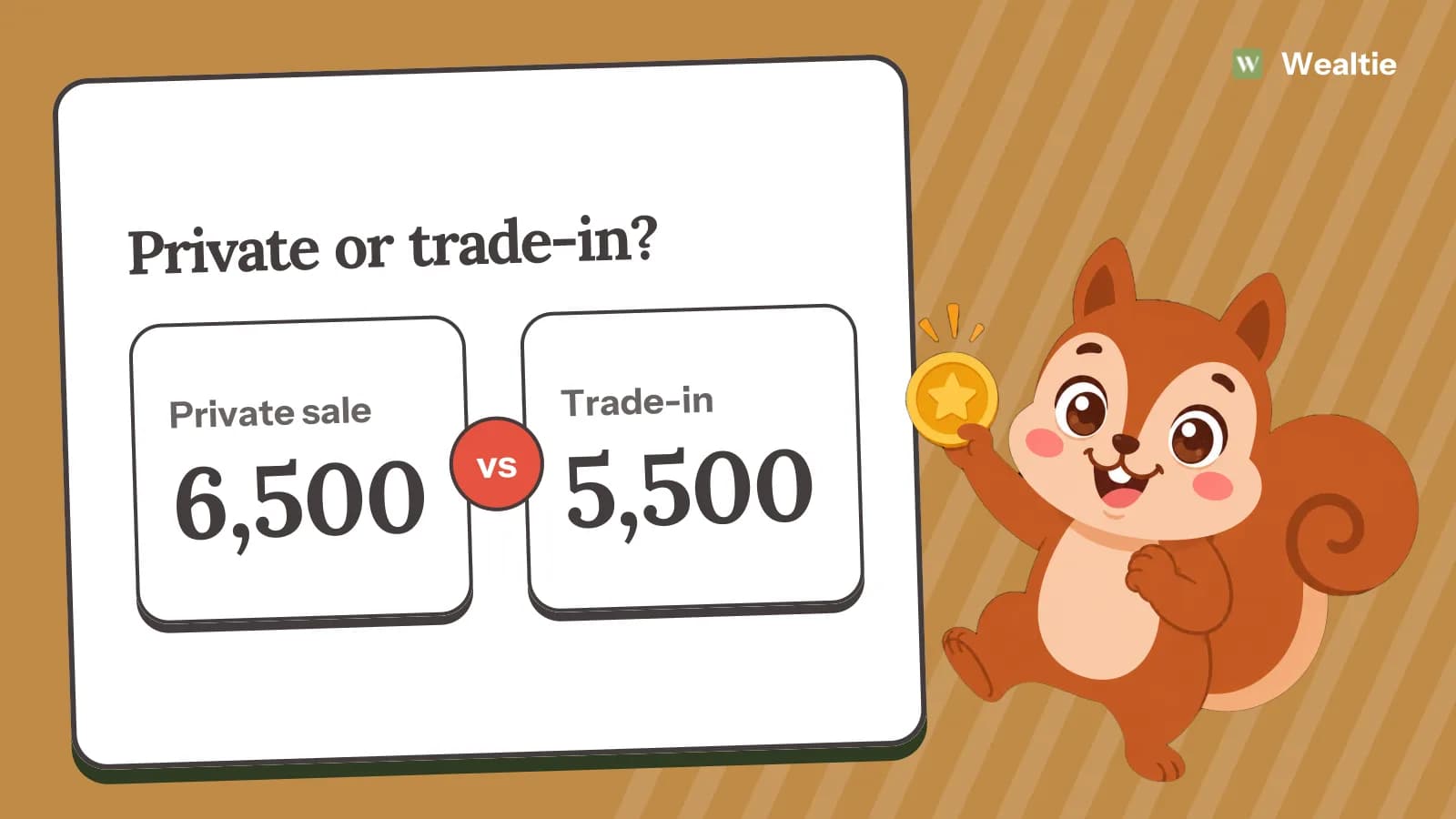
To sell your car for the best price, compare a private sale with trade-in and buying-service offers, prepare the car well and price it from real listings. In a worked example, a private sale brings 6,500 against a 5,500 trade-in, a gain of 1,000 for some extra effort.
 By Wealtie Team · 3 min read
Key takeaways
- To sell your car for the best price, compare private sale, buying services and trade-in.
- In a worked example, a private sale brings 1,000 more than a trade-in.
- Cleaning, small repairs and a full service history can raise the price.
- Stay safe: accept payment only once it has cleared, and never hand over keys first.
How do you sell your car for the best price?
Compare your options, prepare the car well and price it realistically. When you sell your car, the way you sell can make a bigger difference than almost anything else. A private buyer usually pays the most, but it takes time and effort. A dealer or buying service is faster and easier, but usually offers less. Knowing what each would pay lets you decide whether the extra money is worth the extra work.
What are your options?
Here's a worked example of offers for the same car, in round numbers that work in any currency:
| Option | Offer |
|---|---|
| Private sale | 6,500 |
| Car buying service | 5,800 |
| Dealer trade-in | 5,500 |
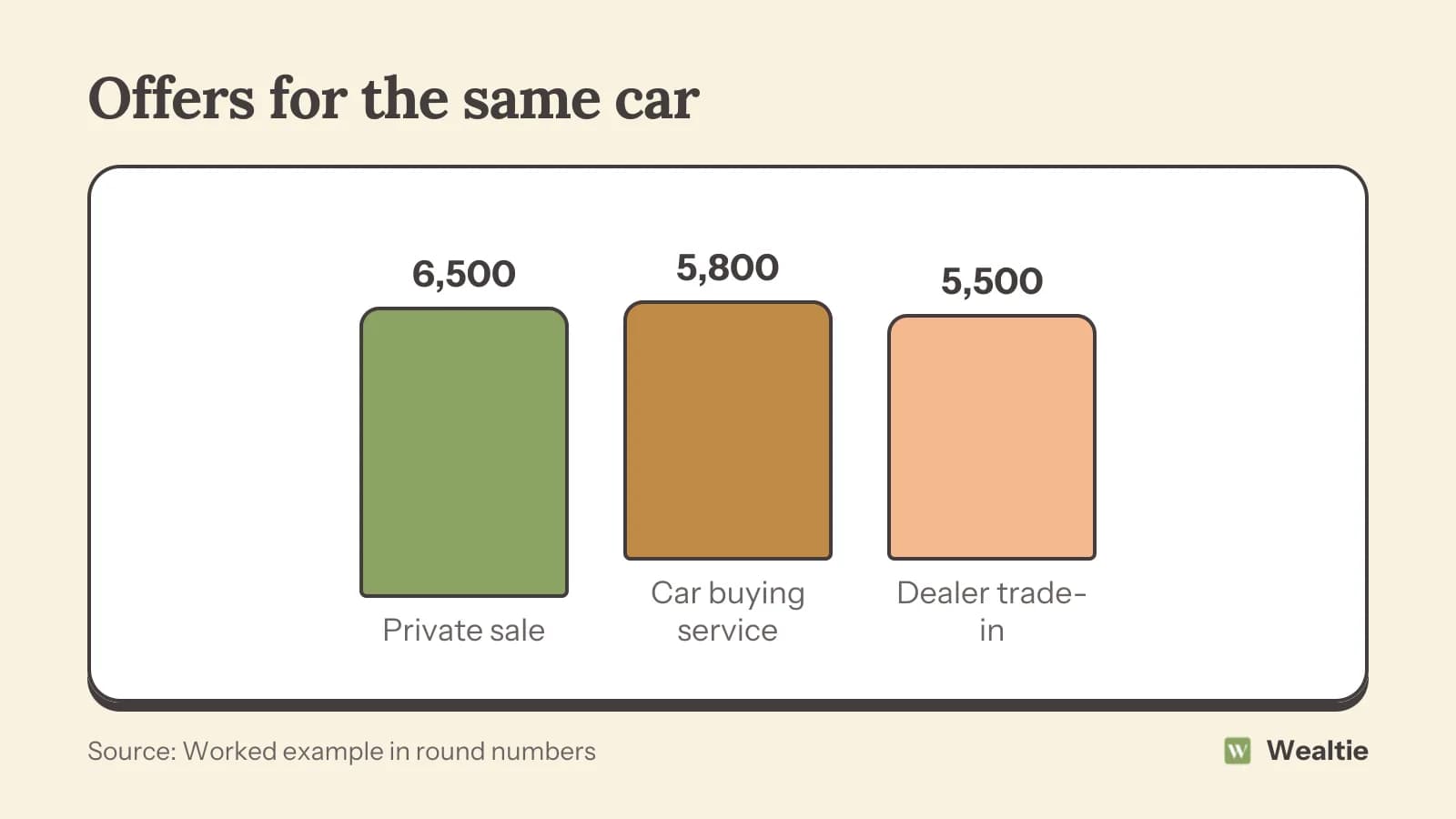
In this example, a private sale brings 1,000 more than a trade-in. A buying service sits in the middle, with a quick sale and little effort. Your own offers depend on the car, its condition and local demand.
Trade-in can still make sense
If you're buying another car from the same dealer, a trade-in is convenient, and sometimes the dealer offers a better overall deal on the new car. Compare the trade-in value with a buying service offer, and negotiate the price of the new car separately.
How do you price your car?
Look at real listings. Search for cars of the same make, model, age, mileage and condition near you, and note the asking prices. Online valuation tools give a guide, but real listings show what buyers see. Price a little above what you'd accept, to leave room for negotiation, but not so high that buyers skip your advert. Selling in spring or summer, when demand is often higher, can help too, though it depends on the type of car.
How do you prepare the car?
Small efforts raise the price:
- Clean it inside and out, or pay for a valet, which might cost about 100
- Fix small, cheap problems, like bulbs or wiper blades
- Gather the service history, receipts and any spare keys
- Make sure any required safety test or inspection is current
- Take clear photos in good light from several angles
A car that looks cared for sells faster and for more. Don't spend on big repairs unless they'll clearly add more than they cost. Getting a quote for any known fault lets you tell buyers what it would cost, which builds trust.
How do you write a good advert?
Be clear and honest. Include the make, model, year, mileage, service history, number of owners and any faults. Mention recent work, like new tyres or a service. Honest adverts attract serious buyers and avoid disputes later. Listing on more than one site reaches more buyers, and replying quickly to messages keeps interested people engaged. How to sell things you don't use has general tips for selling online.
How do you stay safe when selling privately?
Take sensible precautions:
- Meet buyers at your home or a public place in daylight, and have someone with you
- Check the buyer's licence and insurance before a test drive, and go with them
- Accept payment only once it has fully cleared in your account
- Be wary of overpayments, refunds or unusual payment methods
- Never hand over keys or documents until you've been paid
Complete any official paperwork to transfer ownership, so you're not responsible for the car after the sale. Rules vary, so check what's required where you live. Write a simple receipt with the date, price and both names, and keep a copy.
What do you do with the money?
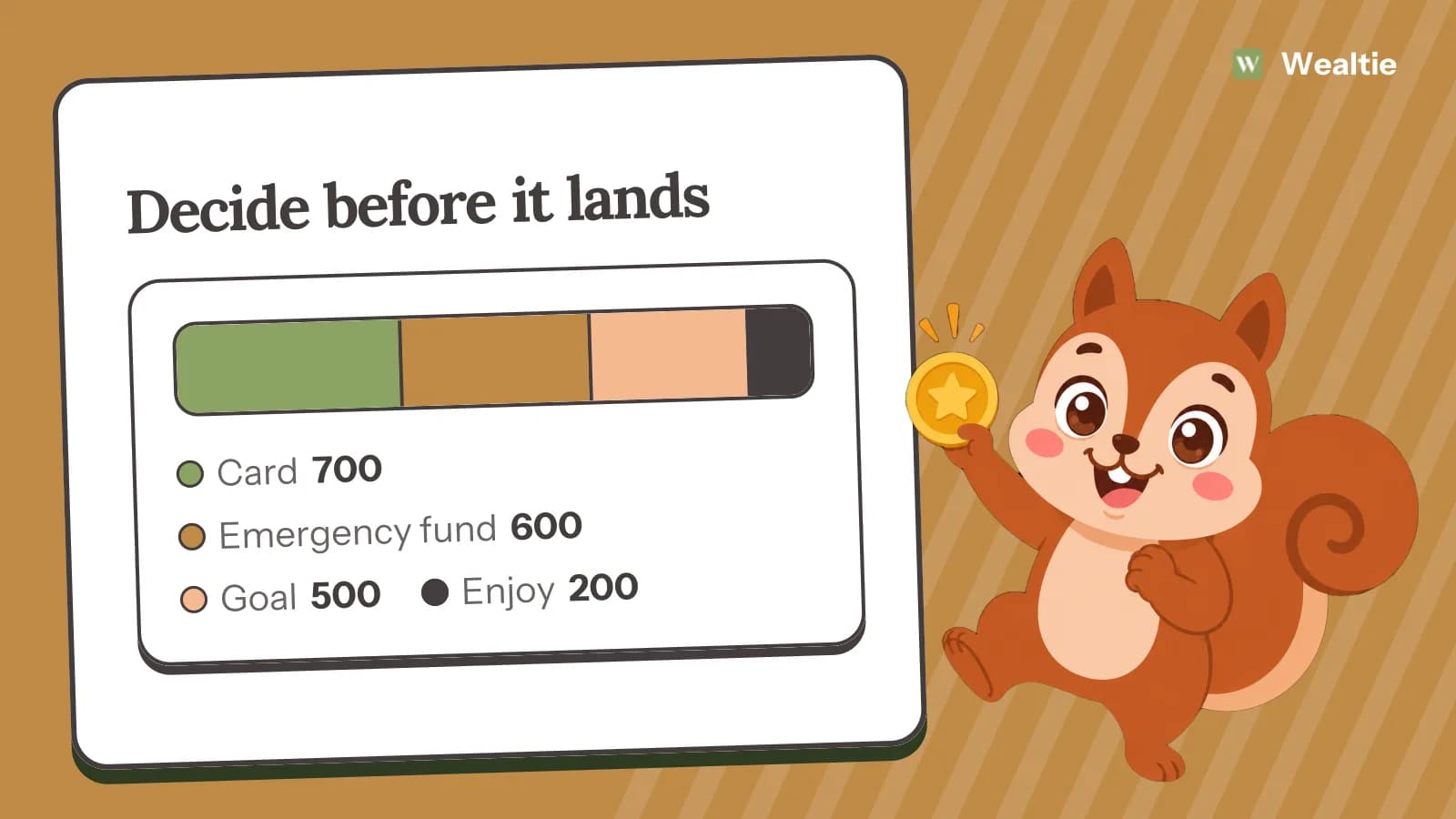
Decide before the sale. If you're buying another car, the money might go straight into it. If you're giving up a car, put it towards savings, debt or a goal. How to save for a car helps if you're saving for the next one, and how to buy a used car without overpaying helps you spend it well.
Cancel related costs
After selling, cancel or update insurance, road tax, parking permits and any breakdown cover. Some can be refunded for the unused period. If you still owe finance on the car, settle it before or as part of the sale, since you may not be able to sell it otherwise.
How do you track a car sale in Wealtie?
Record the sale money in the account it lands in, and log any selling costs, like a valet or advert, in your expense categories. If you're giving up a car, comparing your transport spending before and after shows how much you're saving each month. A monthly limit in the budget tracker helps the money from the sale reach its goal.
Questions people ask
Private sales usually bring more. In a worked example, 1,000 more than a trade-in, but they take more time and effort.
Look at real listings for the same make, model, age and mileage near you, and price a little above what you'd accept.
Clean it, fix small problems, gather the service history and take good photos.
Meet in safe places, check the buyer's licence and insurance, and hand over keys only once payment has cleared.
This article is general information, not financial, tax or legal advice. Your situation is your own; check the numbers that apply to you before you act on them.