Budgeting: Do you need a second car? How to decide
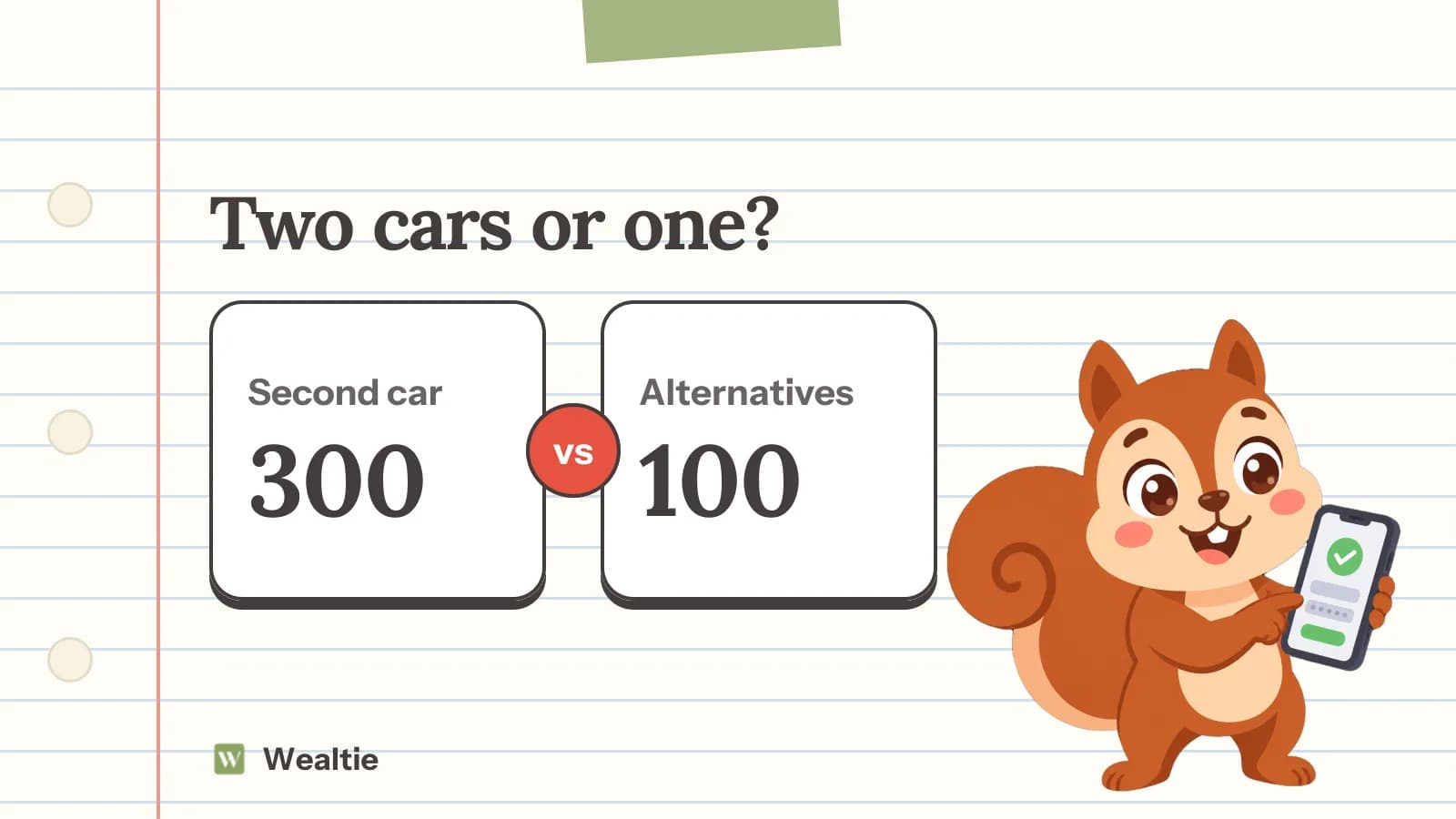
Do you need a second car? Only if it saves enough time or makes life possible in ways the alternatives can't, and in a worked example a second small car costs about 300 a month against about 100 for sharing one car plus rentals and a bike.
 By Wealtie Team · 3 min read
Key takeaways
- A second car is worth it only if the alternatives can't meet your household's needs.
- In a worked example, a second car costs about 300 a month, against about 100 for alternatives.
- Count depreciation, insurance and servicing, not just fuel.
- Try a few weeks with one car before deciding.
Do you need a second car?
It depends on how your household gets around, but many families find they can manage with one. A second car brings convenience: two people can travel to different places at the same time without planning. But it also brings a second set of insurance, tax, servicing, fuel and depreciation. Before buying, or before keeping one you have, it's worth adding up what it costs and what the alternatives would be. Households often add a second car gradually, without ever comparing it with other options.
What does a second car cost?
Here's a worked example for a second small car, in round numbers that work in any currency:
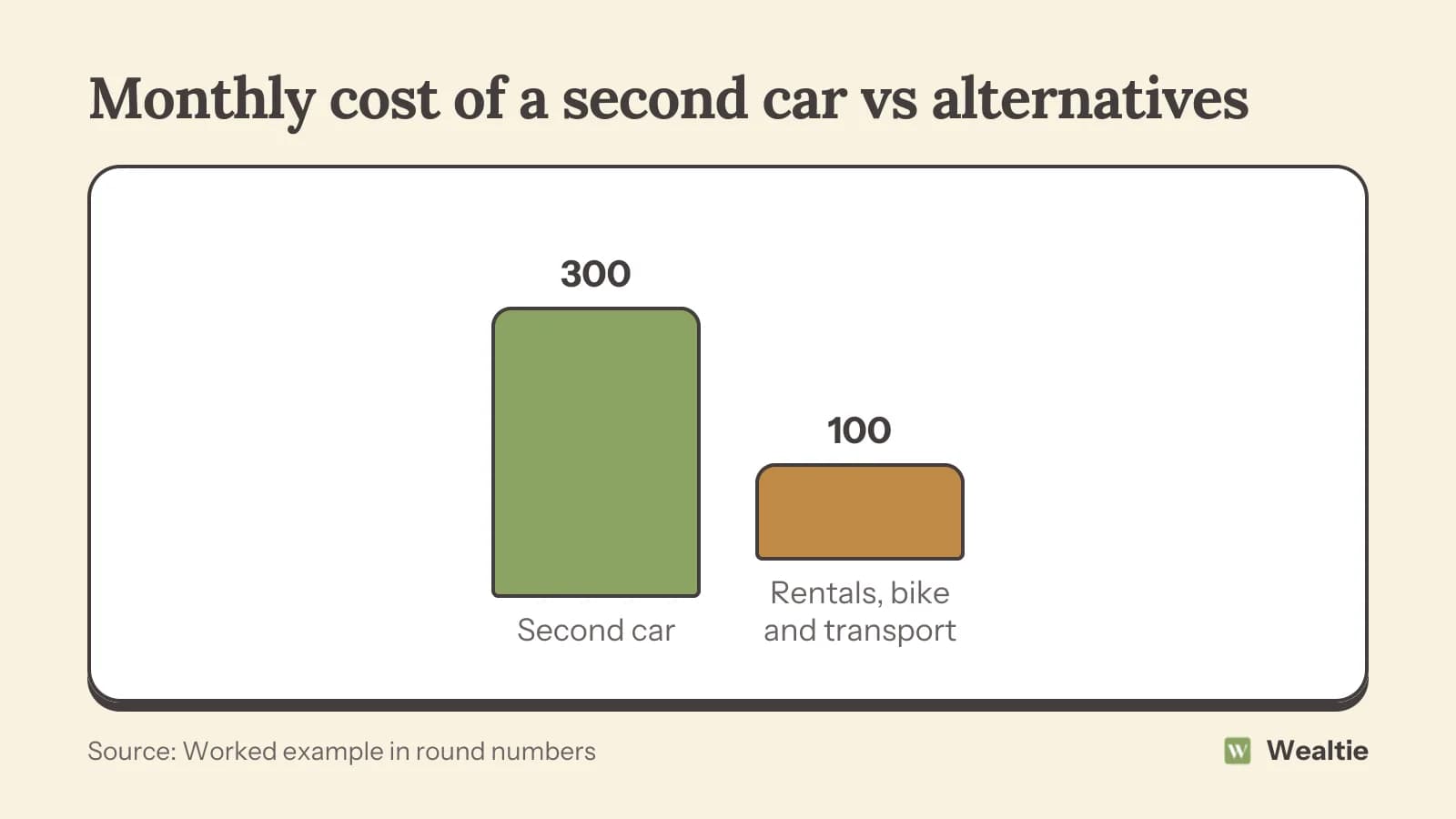
In this example, the second car costs about 300 a month, including depreciation, insurance, tax, servicing and fuel. Sharing one car, with occasional rentals, a bike for short trips and public transport, costs about 100. The difference is 200 a month, or 2,400 a year. Your own numbers depend on the car and how much it's used. If the second car is old and fully paid off, the monthly cost may be lower, though repairs can rise with age.
Count every cost
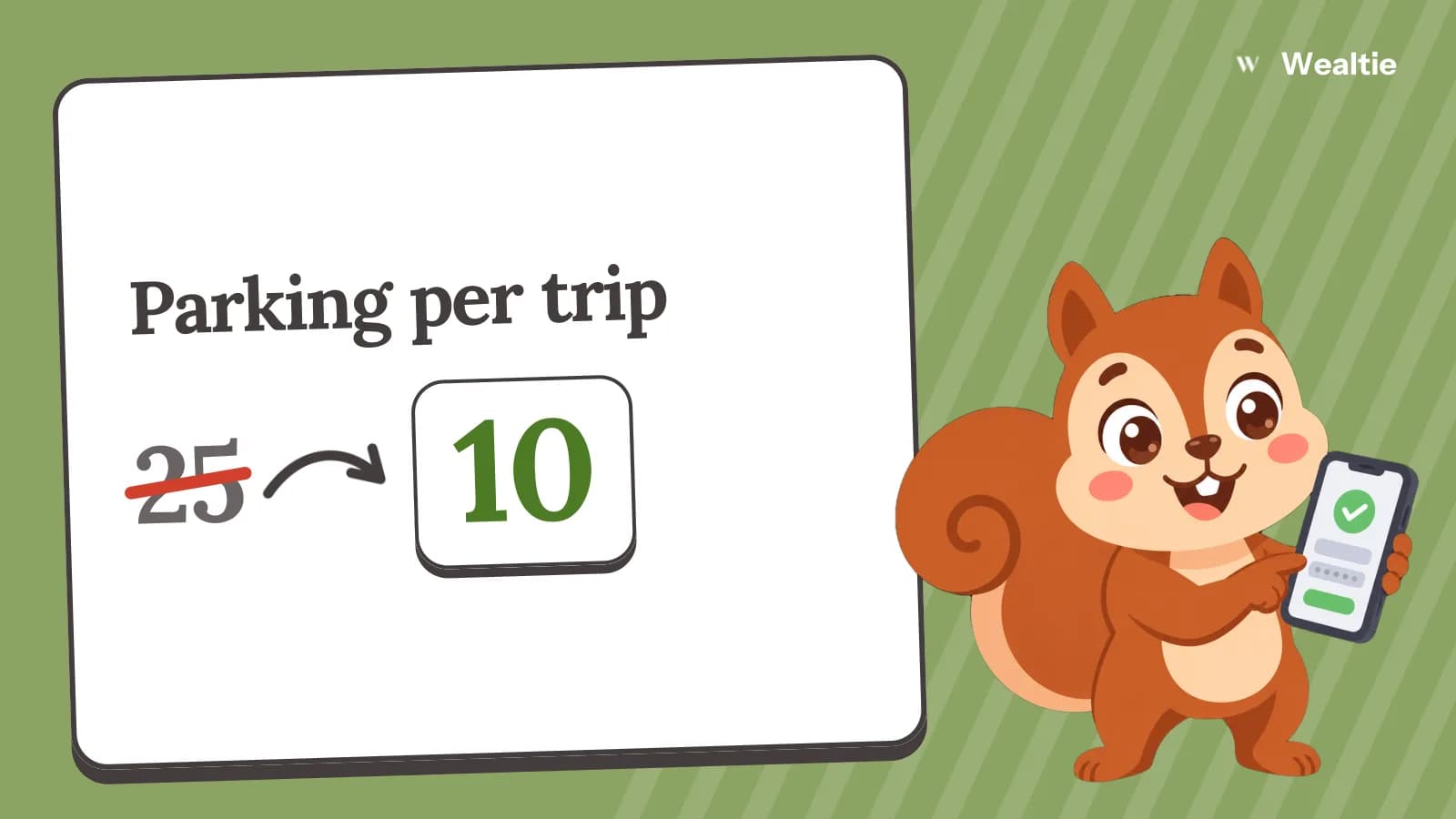
Fuel is the cost people notice most, but insurance, tax, servicing, tyres, parking and depreciation often add up to more. A second car that sits on the drive most of the week still costs money every month. Dividing its yearly cost by the number of trips it makes often shows a surprisingly high cost per trip.
When is a second car worth it?
A second car often makes sense when:
- Both partners commute to places public transport doesn't reach
- Work hours make sharing impossible
- Children's school and activities need two drivers at the same time
- You live in a rural area with few alternatives
- One partner needs a car for work, like visiting clients
If two or more of these apply, a second car may save time and stress worth more than its cost. Even then, a smaller, older and cheaper second car can cover the need for much less.
What are the alternatives?
Before buying, consider:
- Sharing one car with a little planning, like a shared calendar
- Public transport for one partner's commute
- A bike or electric bike for shorter journeys
- Car clubs or rentals for the occasional day when you need two cars
- Lift-sharing with colleagues or other parents
- Working from home on some days, if possible
How to cut commuting costs covers these options. Combining two or three of them, like a bike for one commute and a car club for the odd clash, often covers almost every situation.
How do you test managing with one car?
Try it for a few weeks. Park the second car, or don't buy it yet, and use the alternatives. Keep a note of the costs and of the times it was hard. If the problems are rare, rentals or taxis on those days are probably cheaper than a second car. If it's hard most days, a second car may be the right choice. Talk about it as a household, since the person who'd change their routine most should have a say.
If you keep a second car, how do you keep costs down?
Choose a small, cheap-to-run car, perhaps used. Compare insurance carefully, since adding a second car to a multi-car policy can sometimes be cheaper. Use the cheaper car for most journeys. Keeping the second car well maintained avoids surprise repairs that wipe out any saving. How to save money on car insurance has more tips, and how much car can you afford helps you choose a car that fits your budget.
What could you do with the savings?
If you decide against a second car, the savings can go towards a goal. In the worked example, 2,400 a year could build an emergency fund, pay off debt or fund a family holiday. Setting up an automatic transfer for the amount you'd have spent makes sure the saving is real. Selling an existing second car can also release a lump sum for a bigger goal.
How do you track car costs in Wealtie?
Log fuel, insurance, servicing and parking for each car in your expense categories, so you can see what each one costs. Comparing the second car's costs with how often it's used shows whether it's earning its place. A monthly limit in the budget tracker keeps transport costs in line with your plan.
Questions people ask
Only if alternatives like sharing, public transport, a bike or rentals can't meet your household's needs.
In a worked example, about 300 a month including depreciation, insurance, tax, servicing and fuel.
Sharing one car, public transport, a bike, car clubs or rentals, lift-sharing and working from home some days.
Try a few weeks with one car, track costs and difficulties, and see whether rentals or taxis on hard days are cheaper.
This article is general information, not financial, tax or legal advice. Your situation is your own; check the numbers that apply to you before you act on them.