Budgeting: How to buy a used car without overpaying
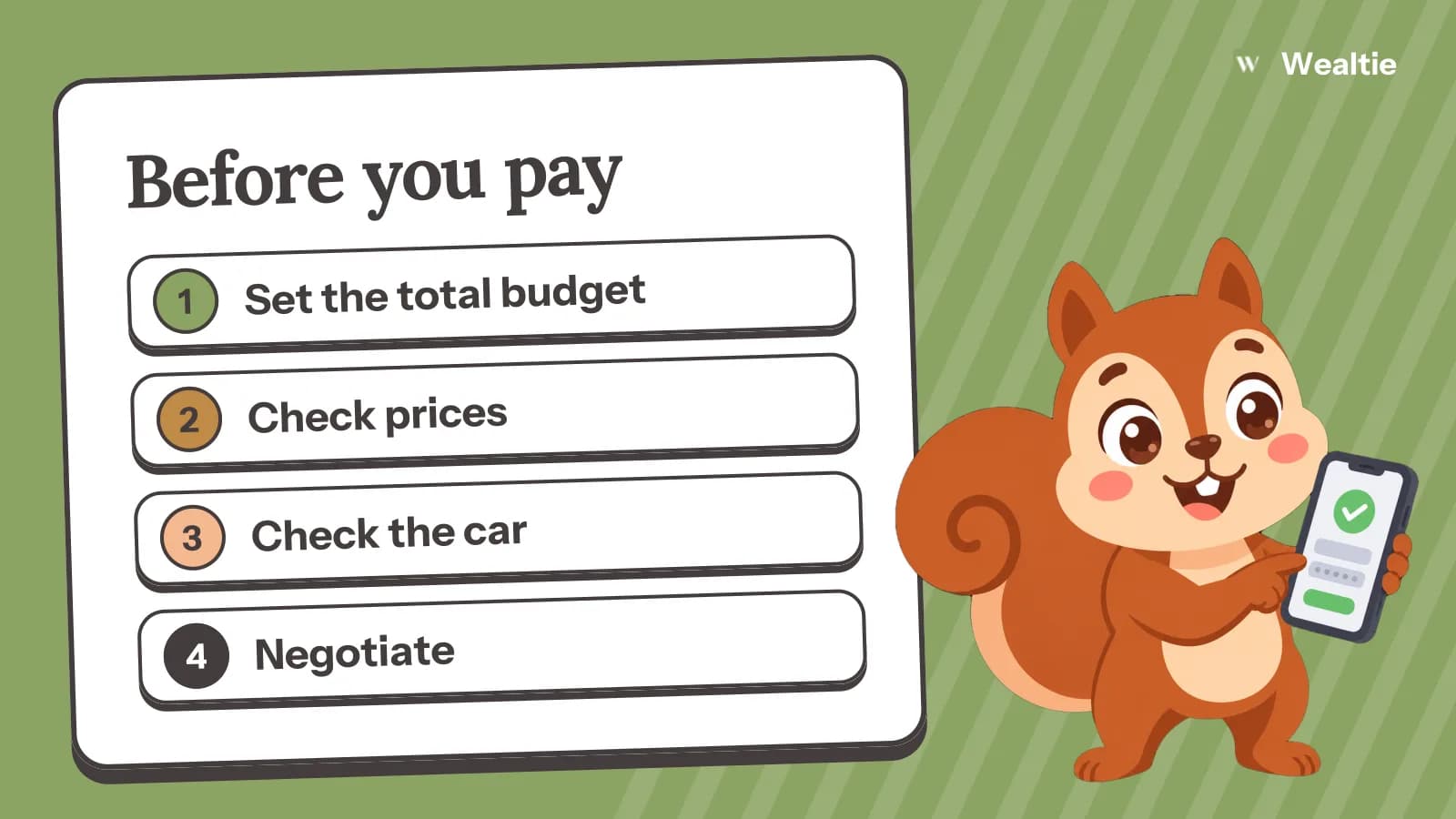
To buy a used car without overpaying, set a total budget including insurance and running costs, research what similar cars sell for, check the car and its history carefully, and negotiate using what you've found. A few hours of checks can save hundreds.
 By Wealtie Team · 3 min read
Key takeaways
- Set a total budget that includes insurance, tax and a repair cushion, not just the price.
- Research what similar cars, with similar mileage and age, have sold for.
- Check the car's history and condition, and get an independent inspection for anything expensive.
- Negotiate using faults you've found and prices you've seen, and be ready to walk away.
How do you buy a used car without overpaying?
Know your total budget, know the market price, check the car properly and negotiate with facts. Most overpaying happens when buyers fall for a car before checking it, or don't know what similar cars sell for. A little preparation puts you in a much stronger position. Decide on two or three models that suit you before you look, so you're comparing like with like and not swayed by the first shiny car.
What should your total budget include?
More than the price. Here's a worked example in round numbers that work in any currency:
| Cost | Amount |
|---|---|
| Car | 6,000 |
| Insurance, first year | 600 |
| Tax or registration | 150 |
| Cushion for first-year repairs | 500 |
| Total | 7,250 |
Get an insurance quote for the specific model before you buy, since it can vary a lot between cars. How much car can I afford has a test for the total cost.
How do you know what a car's worth?
Look at what similar cars, of the same model, age, mileage and condition, are listed and sold for. Check several sources and note the range. A car priced well below the range might have a problem, while one well above it gives you room to negotiate.
Mileage, service history and the number of previous owners all affect value. Running costs differ too, so check fuel economy and typical repair costs for the model. A full service history usually adds value and reduces risk.
What should you check on the car?
Look carefully and take your time:
- Bodywork for dents, rust or mismatched paint, which can suggest repairs
- Tyres for tread and even wear
- Inside for damp, smells or warning lights on the dashboard
- Under the bonnet for leaks
- That all features work, like windows, lights and air conditioning
Take it for a test drive of at least 15 minutes, on different roads. Listen for odd noises and check the brakes, steering and gears.
View the car in daylight and in dry weather, since rain can hide scratches and dents. For anything expensive, an independent inspection by a mechanic costs a small amount compared with the price, and can save you from a costly mistake.
What paperwork should you check?
The car's history and documents. Depending on your country, you can check whether the car has outstanding finance, has been written off or stolen, and whether its mileage matches records. Check that the seller's name and address match the registration documents, and that the vehicle identification number matches the paperwork.
Ask for the service history and any receipts for recent work, and check when the next big service or replacement is due, since that's a cost you'll soon face.
How do you negotiate the price?
Use what you've found. If the tyres need replacing soon, get a rough price and ask for that off. If similar cars sell for less, show the seller. For example, if a car's listed at 6,000 and needs tyres costing about 300, offering 5,700 is reasonable.
Be polite, stay calm, and be ready to walk away. Agree the price before talking about extras, like a warranty or accessories, so the numbers stay clear. There are always other cars. A seller who won't move at all on a car with clear faults might not be the right seller.
Should you buy from a dealer or a private seller?
Both can work. Dealers usually charge more, but may offer a warranty and more legal protection. Private sellers can be cheaper, with fewer protections. Whichever you choose, do the same checks.
How should you pay?
With money you've saved, if you can, since finance adds to the cost. If you're trading in your old car, research its value separately, so a generous-looking trade-in isn't hiding a high price. Arrange insurance before you drive the car away. If you do take finance, compare the total cost, not the monthly payment. Avoid paying large amounts in cash without a receipt, and get a signed receipt showing the car's details, the price and the date. How to save for a car has a plan for saving the full price.
How do you track car costs in Wealtie?
Give the car its own line in your expense categories, and log the purchase, insurance, fuel and repairs there. You'll see the real yearly cost. Add a repair fund as its own account and move money into it each month, so the net worth tracker shows it growing.
Questions people ask
Research what similar cars sell for, check the car and its history carefully, get an inspection for expensive cars and negotiate using faults and prices you've found.
Bodywork, tyres, interior, leaks, warning lights and a test drive, plus the history for outstanding finance, write-offs and mileage.
Start from what similar cars sell for, then subtract the cost of any faults you've found, like tyres that need replacing.
Dealers usually charge more but may offer a warranty and more protection. Private sellers can be cheaper with fewer protections.
This article is general information, not financial, tax or legal advice. Your situation is your own; check the numbers that apply to you before you act on them.