Saving: What to do with a budget surplus at the end of the month
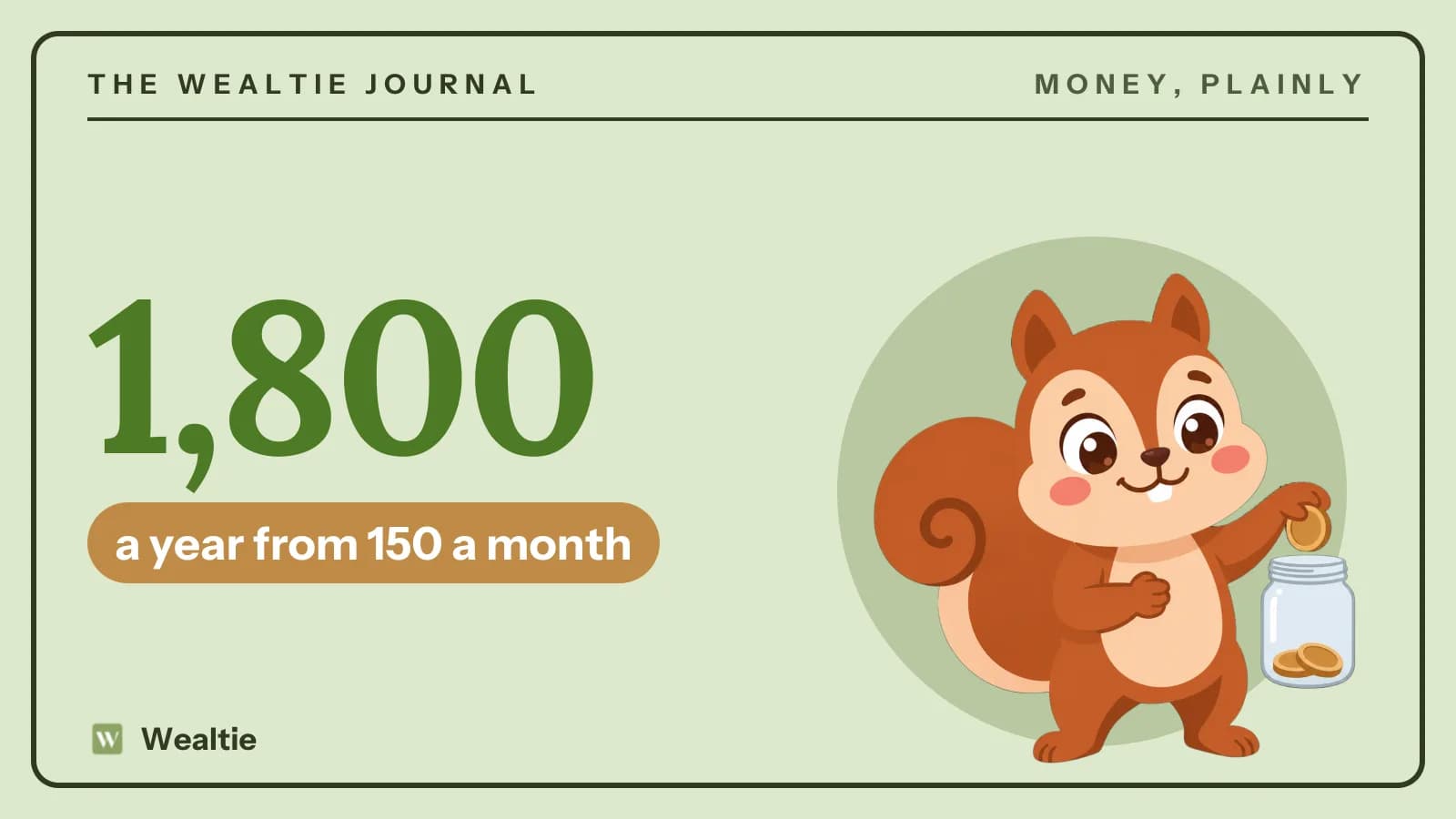
A budget surplus is money left over at the end of the month after everything is paid, and giving it a job straight away stops it vanishing into next month's spending. In a worked example, a regular surplus of 150 a month builds 1,800 a year when it's moved into savings.
 By Wealtie Team · 3 min read
Key takeaways
- A budget surplus is money left after all spending and saving for the month.
- In a worked example, saving a 150 monthly surplus builds 1,800 a year.
- Move the surplus at the end of each month, or it tends to get spent.
- Use a simple order: emergency fund, high-interest debt, goals, then a small treat.
What is a budget surplus?
A budget surplus is the money left over at the end of a month after your bills, spending and planned savings are covered. It might come from spending less than planned on groceries, a quiet month socially, or having more income than costs. It's a good sign: your budget is working.
The trouble is that a surplus left sitting in your current account tends to disappear, because a bigger balance makes the next month feel richer than it is. It quietly gets spent the next month, and you're left wondering where it went.
How much can a regular surplus add up to?
Here's a worked example of a household with a surplus of 150 a month, in round numbers that work in any currency:
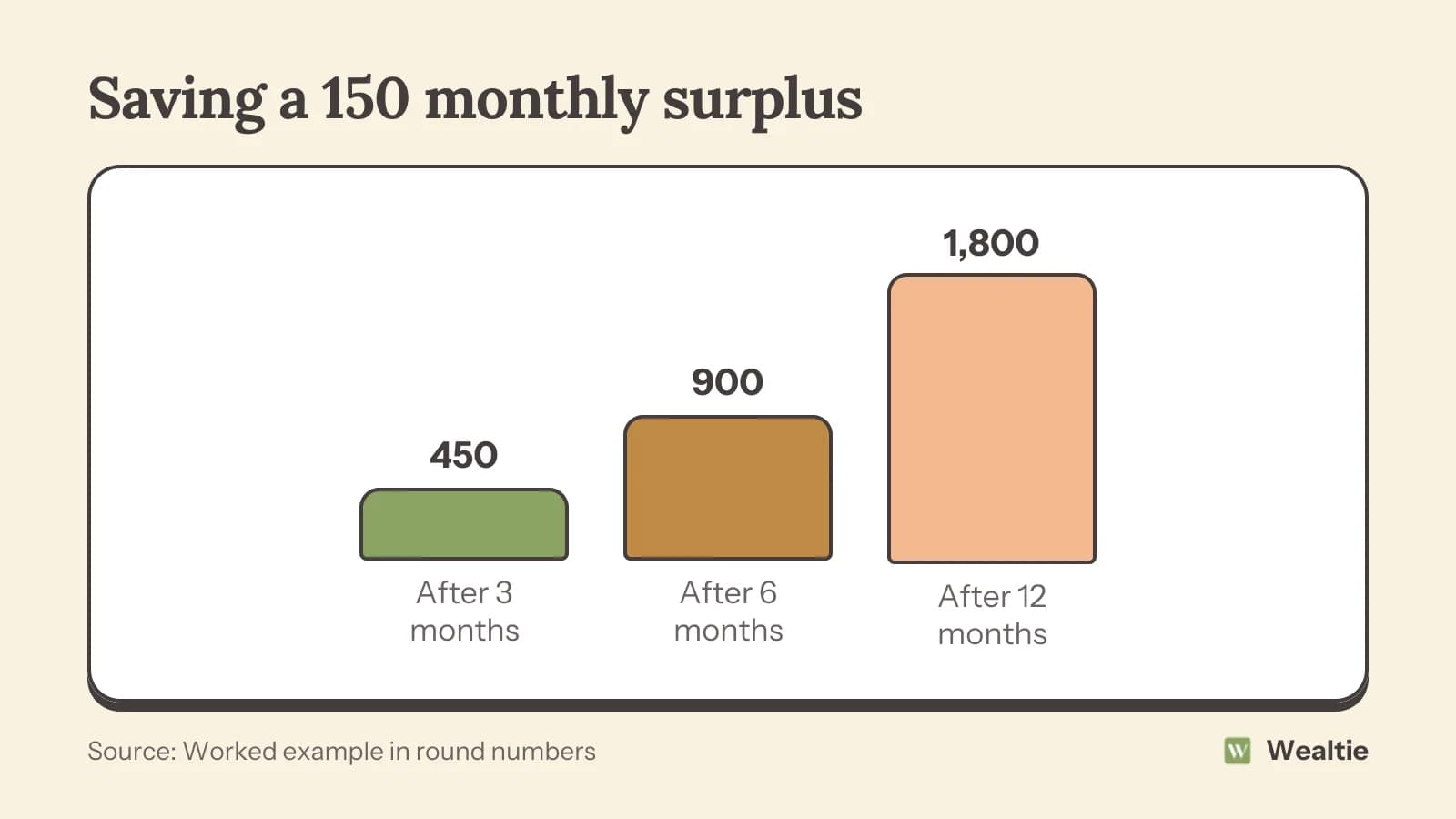
If they move it into savings each month, it grows to 1,800 in a year. If they leave it in their current account, much of it is likely to drift into everyday spending. The difference between the two is a single transfer each month.
Where should a surplus go?
A simple order works for most people:
- Emergency fund, if you don't yet have a few months of essentials saved
- High-interest debt, like credit cards, which costs more than savings earn
- Savings goals, like a holiday, a car or a home deposit
- Retirement or investing, once the basics are in place
- A small treat, as a reward for staying on budget
Should you pay off debt or save helps you decide between the first two, and how to build an emergency fund covers the first step.
Split it
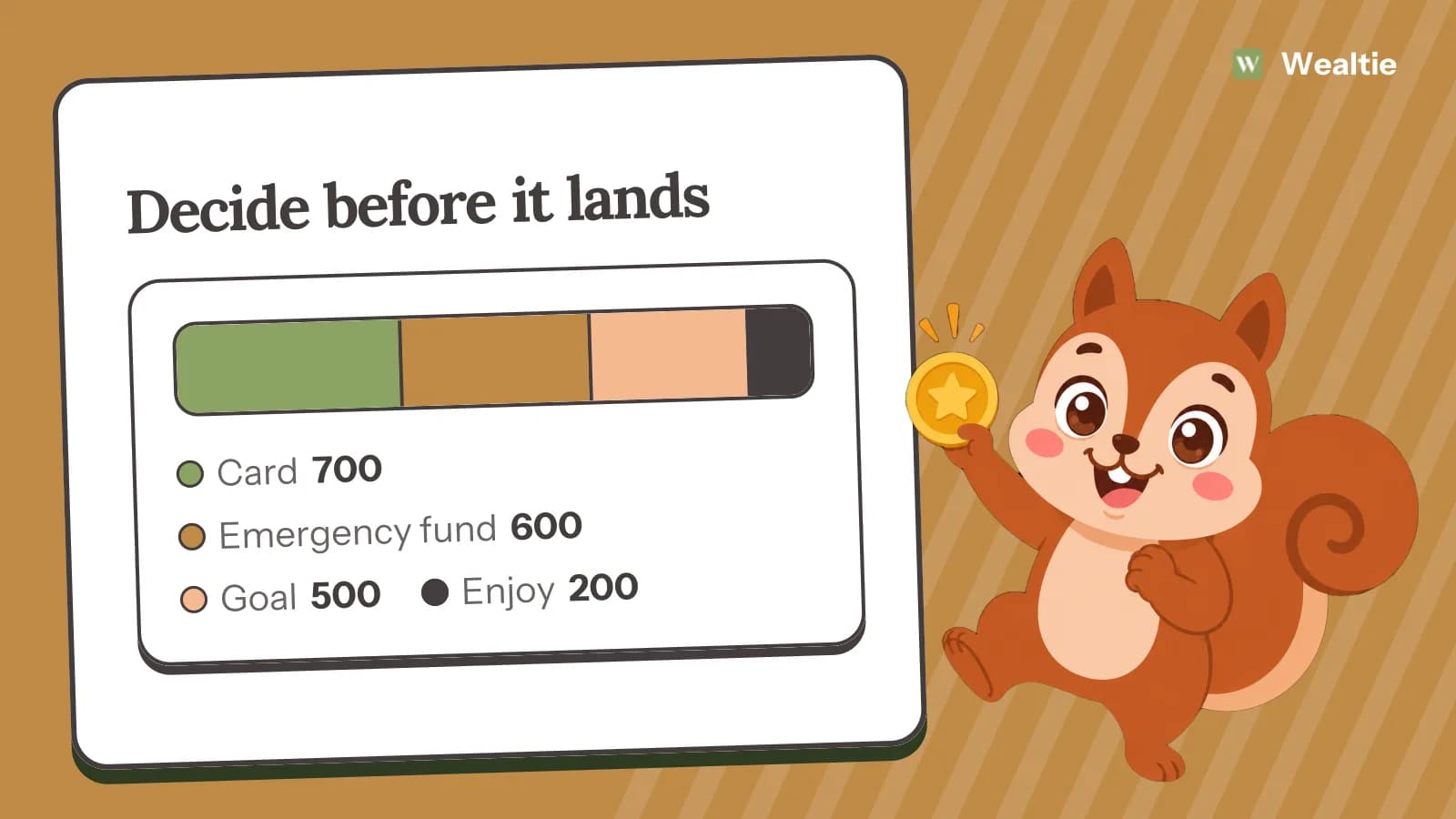
You don't have to put it all in one place. Some people split a surplus: most to savings or debt, and a little for something enjoyable. In the worked example, 100 might go to savings and 50 to a treat. A small reward makes it easier to keep up the habit. Deciding the split in advance, rather than each month, saves thinking about it.
When should you move it?
At the end of each month, or on payday before the new month's spending starts. Leaving a small buffer in your current account, like 50, avoids moving too much and dipping into an overdraft before payday. Choose a regular day and make it a routine, like checking your balance after your last bill and moving whatever's left. Some people move a set amount on payday instead, and treat any extra at month end as a bonus. Pay yourself first explains why moving savings early works well. If you're in the habit of having a surplus most months, consider raising your regular savings amount instead.
What if your surplus changes each month?
That's normal. Some months have more costs, like birthdays or car repairs, and others are quieter. A changing surplus is a reason to plan for irregular costs. Moving a little of each surplus into a fund for those costs means a heavy month doesn't turn into a deficit. How to set financial goals helps you decide what each surplus is for. Naming each savings pot, like Car repairs or Summer holiday, makes it more likely the money stays put.
What about a big one-off surplus?
A large amount, like a tax refund or bonus, can follow the same order. Putting most of it towards your biggest priority, and enjoying a small part, is a balance many people find works.
Make the surplus visible
Checking your balance before moving the surplus, and writing down the amount each month, turns it into a small win you can see. Over a year, the list shows how much you've built just from money that would otherwise have slipped away. Many people find this encourages them to look for a bigger surplus the next month.
What if there's never a surplus?
If every month ends at zero or below, your spending matches or exceeds your income. Look at where the money goes, set limits for flexible categories and check whether any bills could be cheaper. Even a small planned surplus, like 25 a month, builds the habit and gives you breathing room. Over time, as bills are trimmed or income rises, that small surplus can grow.
How do you track a budget surplus in Wealtie?
A monthly limit in the budget tracker, with Budget Health, shows during the month whether you're heading for a surplus. At month end, move what's left into a savings account as a transfer, which isn't counted as spending, and track where your money went in your expense categories.
Questions people ask
Money left over at the end of the month after bills, spending and planned savings are covered.
Move it out of your current account to an emergency fund, high-interest debt, savings goals, then a small treat.
In a worked example, saving 150 a month builds 1,800 in a year.
At the end of each month or on payday, as a regular routine.
This article is general information, not financial, tax or legal advice. Your situation is your own; check the numbers that apply to you before you act on them.