Budgeting: How to plan a long weekend budget without overspending
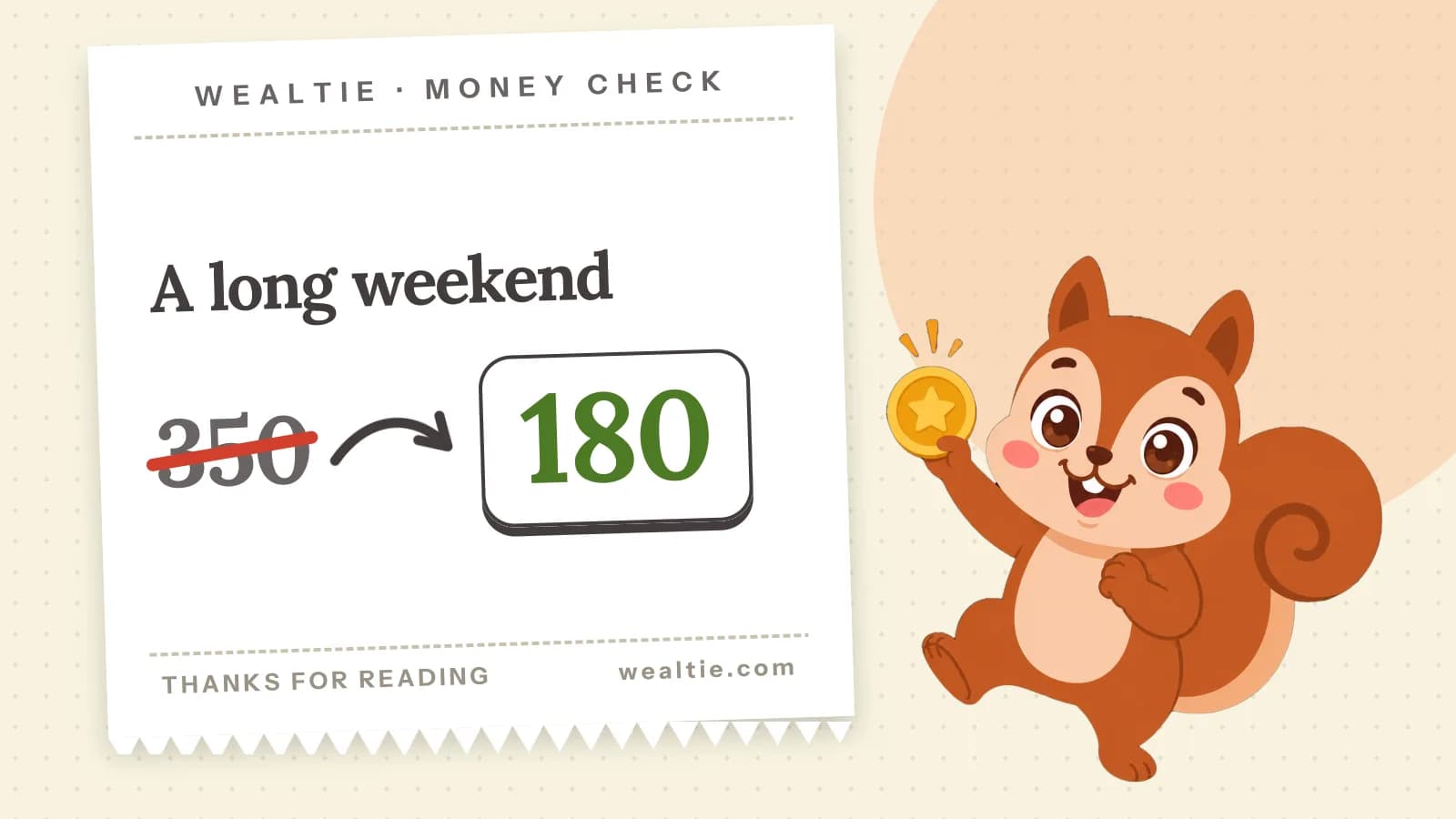
A long weekend budget stops an extra day off from becoming an extra day of spending on trips, takeaways and treats. In a worked example, an unplanned long weekend costs 350, while a planned one costs 180.
 By Wealtie Team · 3 min read
Key takeaways
- A long weekend budget stops an extra day off becoming an extra day of spending.
- Planning one paid outing and free activities keeps costs down.
- Takeaways, travel and shopping are where unplanned weekends cost most.
- Booking ahead avoids peak prices on popular days.
Why plan a long weekend budget?
A long weekend, like a bank holiday or public holiday weekend, is a welcome break. It can also be expensive. With an extra day off, it's easy to fill the time with days out, meals out, takeaways, shopping and treats, and the spending adds up without any single purchase feeling big. Popular attractions, travel and accommodation often cost more on these weekends too, since everyone is off at the same time.
A long weekend budget doesn't mean staying home doing nothing. It means deciding in advance what you want to do and how much you want to spend, so the weekend feels like a treat rather than a drain on next month.
How much can a long weekend cost?
Here's a worked example for a family, in round numbers that work in any currency:
| Weekend | Cost |
|---|---|
| Unplanned | 350 |
| Planned | 180 |
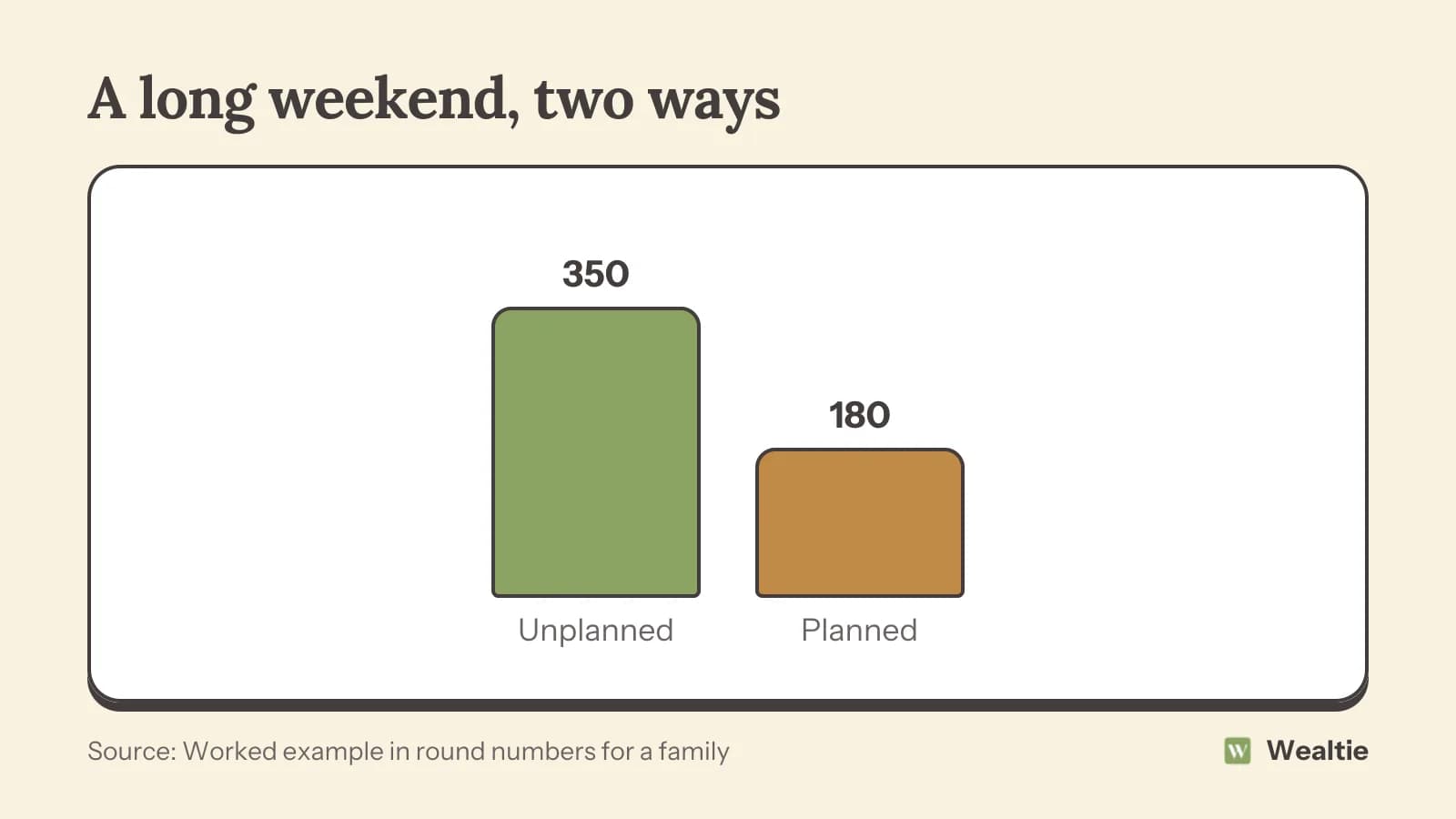
The unplanned weekend includes a pricey day out, two takeaways, a shopping trip, coffees and snacks on the go and fuel, coming to 350. The planned weekend has one paid outing, one takeaway, a picnic, a free activity and a small treat, coming to 180. Both are enjoyable, but one costs nearly half as much.
How do you plan the weekend?
Choose one paid highlight
Pick one paid activity you're excited about, like a day trip, a show or a meal out, and plan the rest around free or cheap options.
Fill the rest with free activities
Parks, walks, beaches, museums with free entry, local events and bike rides cost nothing. Many towns hold free events on public holidays.
Plan food in advance
Takeaways and meals out are where unplanned weekends cost most. Doing a shop before the weekend and planning a few easy meals, plus one treat meal, keeps food costs down.
Pack picnics and snacks
Taking food and drinks on days out avoids expensive cafés and kiosks.
Book ahead
If you're going somewhere popular, booking tickets online in advance is often cheaper than paying on the day. How to plan a theme park budget covers one example.
How do you avoid the extra-day spending trap?
Set a weekend budget
Decide a total for the whole weekend before it starts, and keep track as you go.
Watch the shopping trips
Long weekends are often sale weekends. Going shopping to pass the time can lead to buying things you don't need. Stick to a list if you do go.
Limit takeaways
Choose one takeaway night instead of ordering every evening.
Use what you have
Board games, films at home, garden time and hobbies you already have cost nothing and can be just as fun.
What about trips away?
A long weekend away can be a lovely break but often costs more because of peak prices. Going somewhere less popular, staying with friends or family, or taking a day trip instead of an overnight stay can help. How to plan a staycation budget covers enjoying time off close to home, and how to save money on entertainment has more ideas for cheap fun.
How do you make long weekends easier to afford?
If you know when public holidays fall, add a small amount to each month's budget for them, or keep a fun fund for weekends and days out. That way, the spending is planned rather than a surprise. How much should you spend on groceries? can help you plan the food side.
Involve everyone in planning. Asking each family member to choose one activity, with at least one free option on the list, makes the weekend feel shared and helps children understand that fun doesn't have to cost money. Older children can even help plan the budget, which is a useful money lesson in itself.
Watch the weather and have a backup plan. A rainy long weekend can push families towards expensive indoor attractions or shopping centres. Having a few cheap indoor ideas ready, like a library visit, a home cinema night or a baking afternoon, avoids last-minute spending.
If you're travelling to see family, share the cost of meals and petrol, and offer to bring food rather than eating out. Visiting relatives can be a lovely, low-cost way to spend a long weekend.
Finally, think about the days after. A long weekend can be followed by a short week, and a few extra treats can leave the rest of the month tight. Keeping the weekend within budget means you start the next week without worrying about money.
Over a year, there may be several long weekends, so the savings from planning each one add up to a meaningful amount.
How can Wealtie help you plan a long weekend?
Set a budget for the weekend and log spending in expense categories like eating out, days out and shopping. Checking your total on Sunday evening shows whether you're on track and helps you plan the next long weekend.
Questions people ask
In a worked example, an unplanned long weekend cost a family 350, while a planned one with one paid highlight cost 180.
Choose one paid highlight, fill the rest with free activities, plan meals in advance and pack picnics for days out.
Extra time off leads to more days out, takeaways and shopping, and popular attractions and travel often cost more on public holidays.
Add a small amount to each month's budget or keep a fun fund, so long weekends are planned rather than a surprise.
This article is general information, not financial, tax or legal advice. Your situation is your own; check the numbers that apply to you before you act on them.