Budgeting: How to plan a theme park trip budget
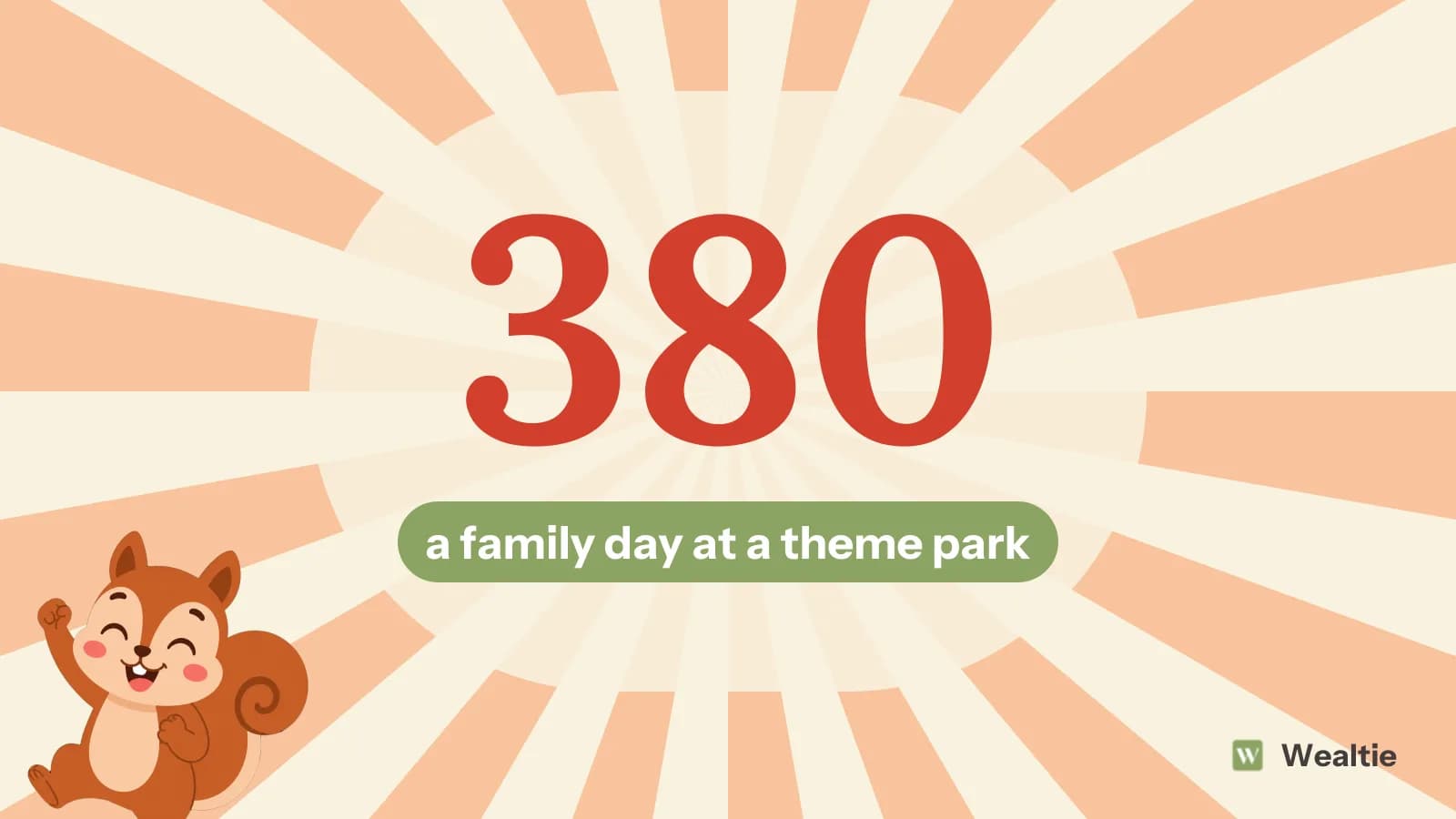
A theme park trip budget needs to cover tickets, travel and parking, food, and extras like photos, games and fast-track passes. In a worked example, a day out for a family of four costs about 380, and buying tickets early and bringing food can cut that a lot.
 By Wealtie Team · 3 min read
Key takeaways
- A theme park trip budget covers tickets, travel and parking, food and extras.
- In a worked example, a day out for a family of four costs about 380.
- Buying tickets online and in advance usually costs less than at the gate.
- Bringing your own food and setting a limit for extras are the biggest savings on the day.
How do you plan a theme park trip budget?
Count the whole day, not just the tickets. A theme park is an exciting day out, especially for children, but it's also one of the more expensive ones. Tickets are only part of the cost. Food, parking, photos, games and souvenirs can add up quickly once you're inside, where everything is priced for a captive audience.
A theme park trip budget planned before you go lets everyone enjoy the day without watching every purchase.
What does a theme park day cost?
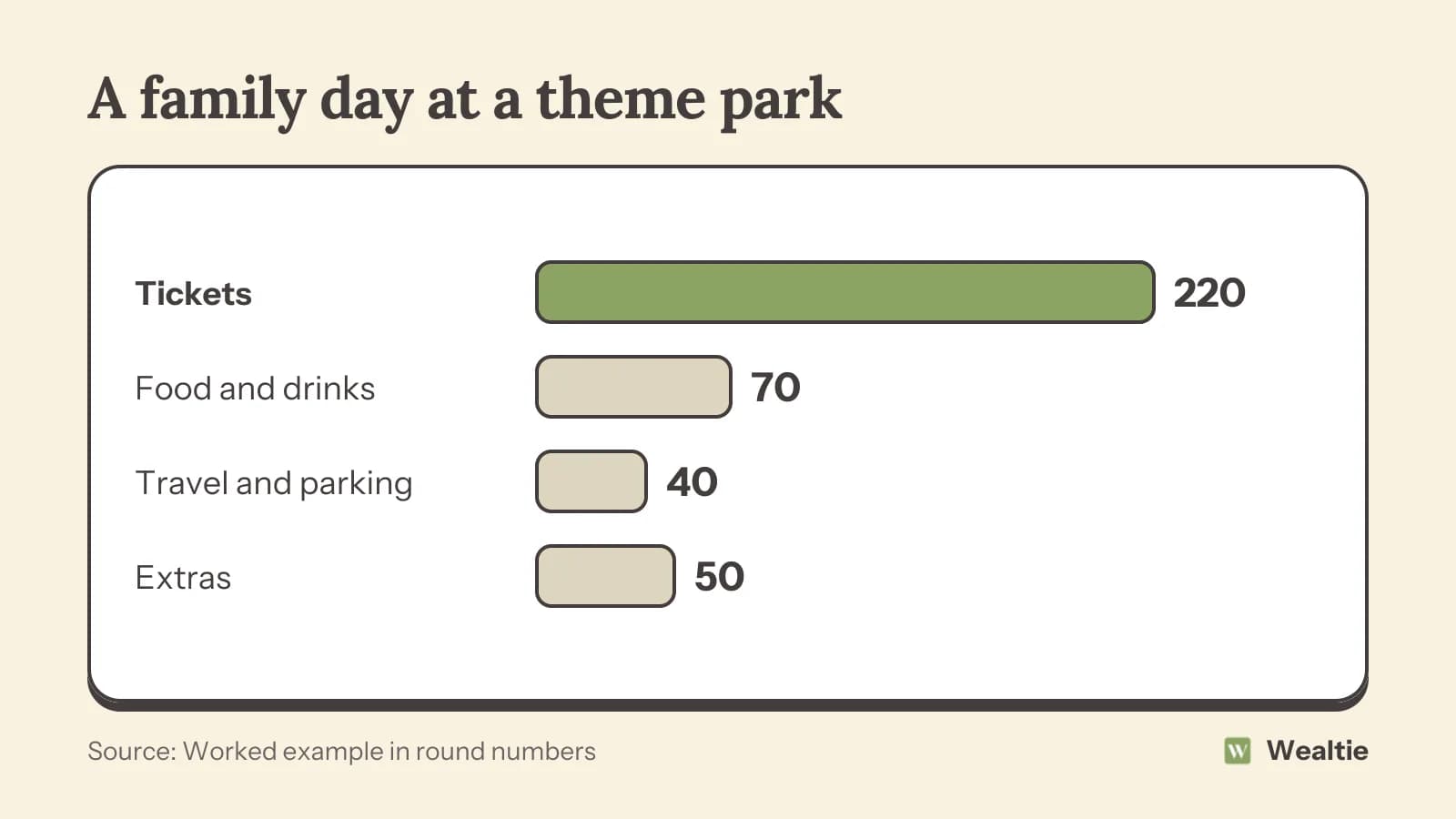
Here's a worked example for a family of four, in round numbers that work in any currency:
| Cost | Amount |
|---|---|
| Tickets | 220 |
| Food and drinks | 70 |
| Travel and parking | 40 |
| Extras, like photos, games and souvenirs | 50 |
| Total | 380 |
Your figures depend on the park, the time of year and how far you travel. A multi-day trip with a hotel costs much more, while a small local park can cost much less.
How do you save on tickets?
Book online and in advance. Many parks charge less for tickets bought online than at the gate, and less again for specific dates booked early. In the worked example, buying ahead could save about 40.
Other ways to save on tickets:
- Visit on weekdays or outside school holidays, when prices are often lower.
- Look for family tickets, which can cost less than buying separately.
- Check whether an annual pass is cheaper if you'll visit more than once or twice.
- Look for offers through partners, like supermarkets or travel companies.
- Check whether young children go free.
Only buy tickets from the park or trusted sellers, since fake tickets are a risk.
How do you save on food?
Bring your own, where allowed. Food and drinks inside parks are usually expensive, and a family can spend a lot on lunch, snacks and drinks. Packing a picnic, refillable water bottles and snacks can save about 50 in the worked example. Check the park's rules first, since some don't allow outside food. If you do buy food, look for meal deals or plan one treat meal rather than several snacks. A cool bag with frozen water bottles keeps a picnic fresh through a hot day.
How do you handle extras?
Set a limit before you go. Photos of you on rides, games where you win prizes, souvenirs and fast-track passes are designed to be hard to resist on the day. Deciding together, before you arrive, what you'll spend on extras avoids constant negotiations and disappointment.
Pocket money for children
Giving each child a set amount to spend on souvenirs or games lets them choose what matters most to them. It also takes the pressure off parents, since the answer to "can I have that?" becomes "if it fits your money". It's a good, practical money lesson too.
Fast-track passes
Fast-track passes let you skip queues for an extra fee, which can be worth it on very busy days. But they can cost almost as much as a ticket. Visiting on quieter days, arriving early and planning your route around popular rides can reduce queues without paying more.
How do you save on travel and parking?
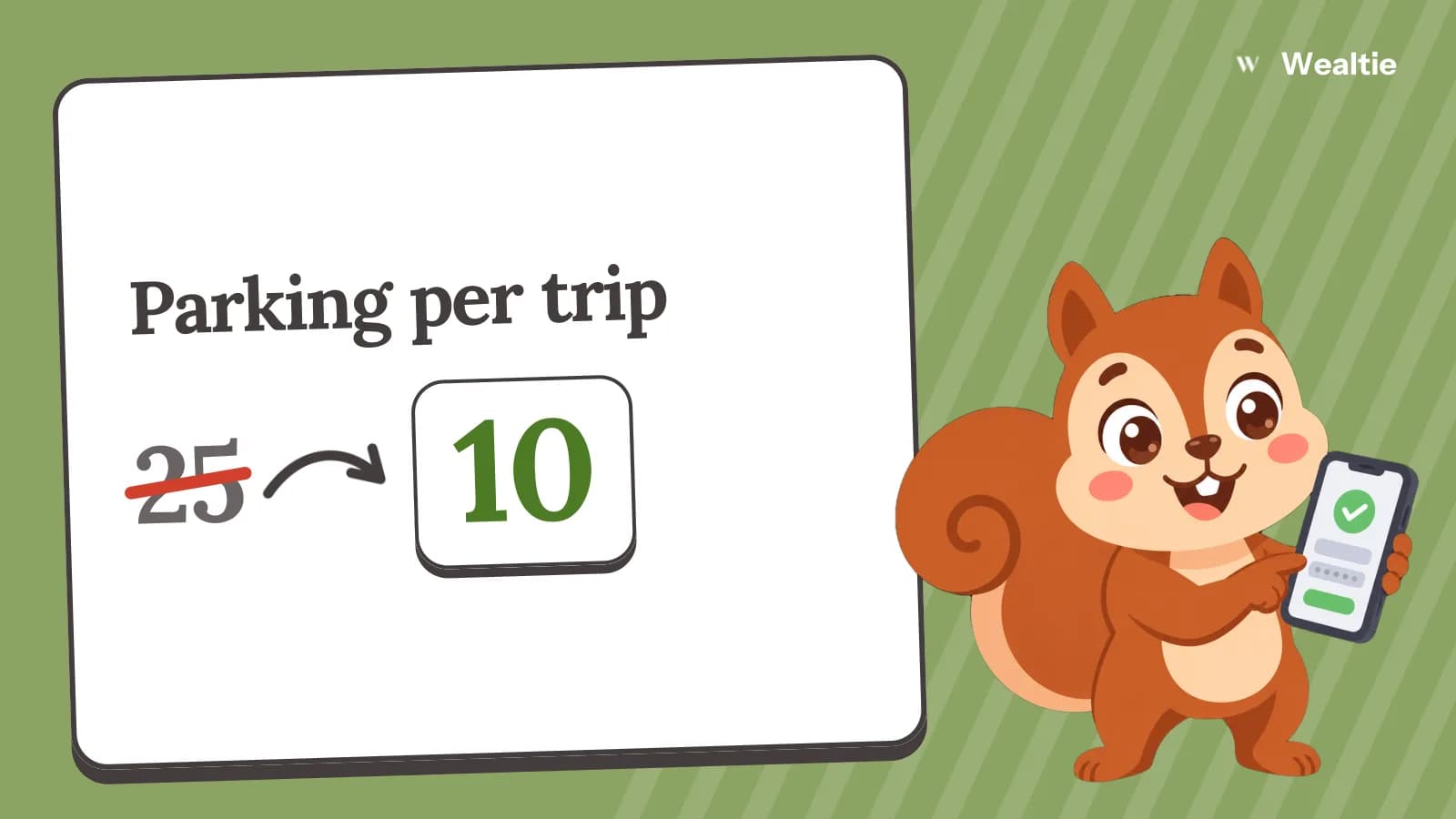
Parking at theme parks can be expensive. Check whether pre-booking is cheaper, or whether public transport goes to the park. Some parks offer combined train and entry tickets. If you're travelling far, compare the cost of a long day trip with staying nearby overnight, which can let you arrive early and beat the queues.
Is an annual pass worth it?
If you live nearby and will visit several times, it can be. Compare the price of an annual pass with the cost of the visits you'd make. Passes sometimes include parking or discounts on food, which add to the value. But count only the visits you're sure to make, not the ones you might.
How do you save for a theme park trip?
Divide the cost by the months until the trip and set that aside each month. A 380 day out saved over four months is 95 a month. Saving ahead means the day feels like a treat rather than a stretch. A sinking fund keeps the money separate until you need it. The summer holidays budget covers planning the rest of the school break.
How do you track a theme park trip in Wealtie?
Add a savings account for days out and move money into it each month as a transfer, which isn't counted as spending. Log tickets, food and extras in a leisure category in your expense categories, so you can see what the day cost. A monthly limit in the budget tracker keeps the rest of the month on track.
Questions people ask
In a worked example, a day out for a family of four costs about 380, covering tickets, food, travel, parking and extras.
Book tickets online in advance, visit on quieter days, bring your own food where allowed and set a limit for extras.
On very busy days they can be, but they're expensive. Visiting on quieter days and arriving early cuts queues for free.
Only if you'll visit enough times to beat the cost of single tickets. Count only the visits you're sure to make.
This article is general information, not financial, tax or legal advice. Your situation is your own; check the numbers that apply to you before you act on them.