Budgeting: Baby nursery budget: what you need and what you don't
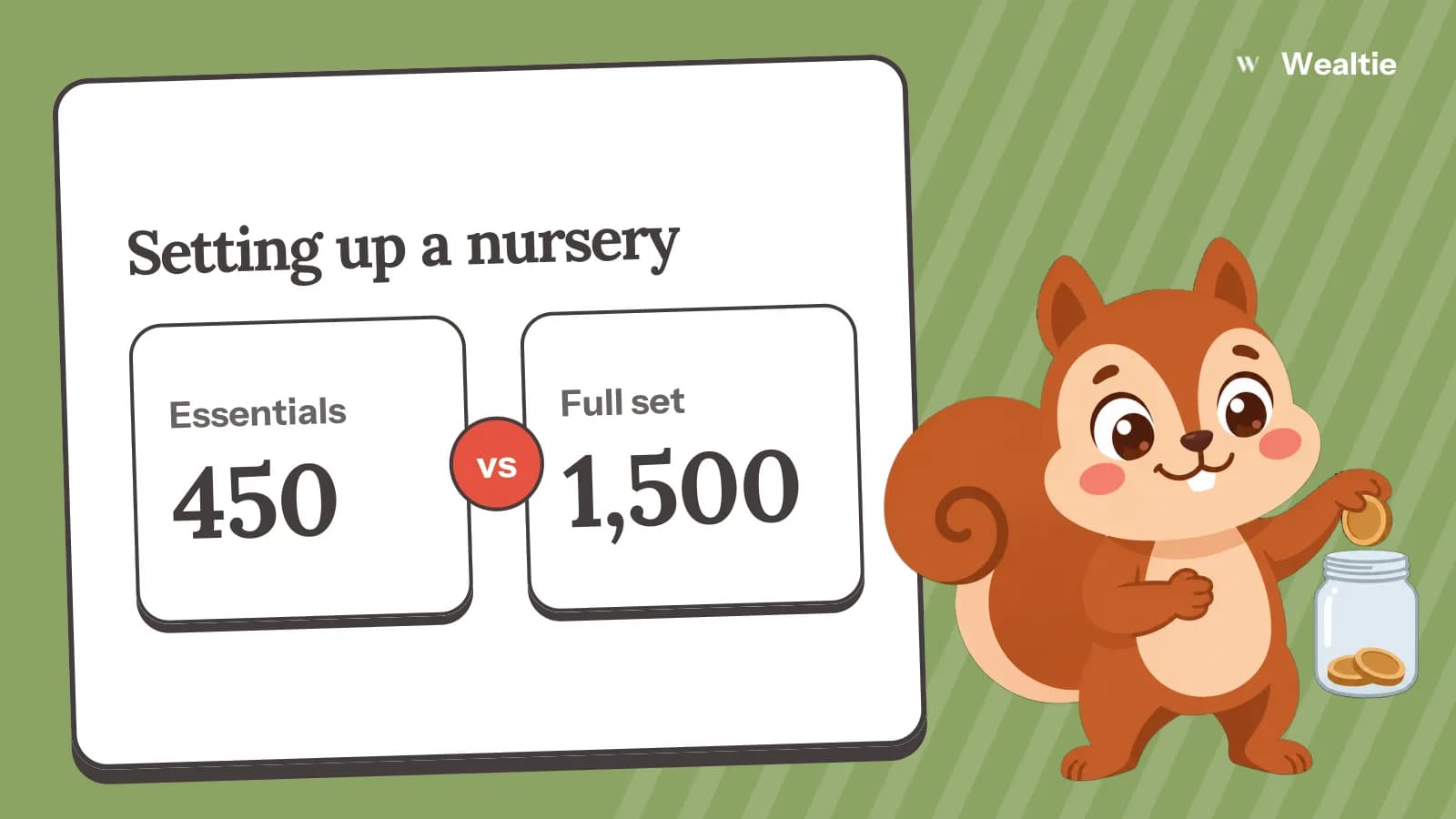
A baby nursery budget can stay modest if you focus on safe sleep, storage and a few essentials rather than matching furniture and decor. In a worked example, an essentials nursery costs 450, against 1,500 for a full matching set.
 By Wealtie Team · 4 min read
Key takeaways
- A baby nursery budget can stay modest by focusing on safe sleep and storage.
- A new mattress is worth buying, while much else can be second-hand.
- Matching furniture sets and decor are optional extras.
- Babies often sleep in their parents' room at first, so there's time to plan.
What does a baby nursery budget cover?
Getting a nursery ready is one of the exciting parts of preparing for a baby, and it's easy to get carried away with matching furniture, themed decor and gadgets. A baby nursery budget helps you focus on what your baby needs: a safe place to sleep, somewhere to change nappies and storage for clothes and supplies. Everything else is optional.
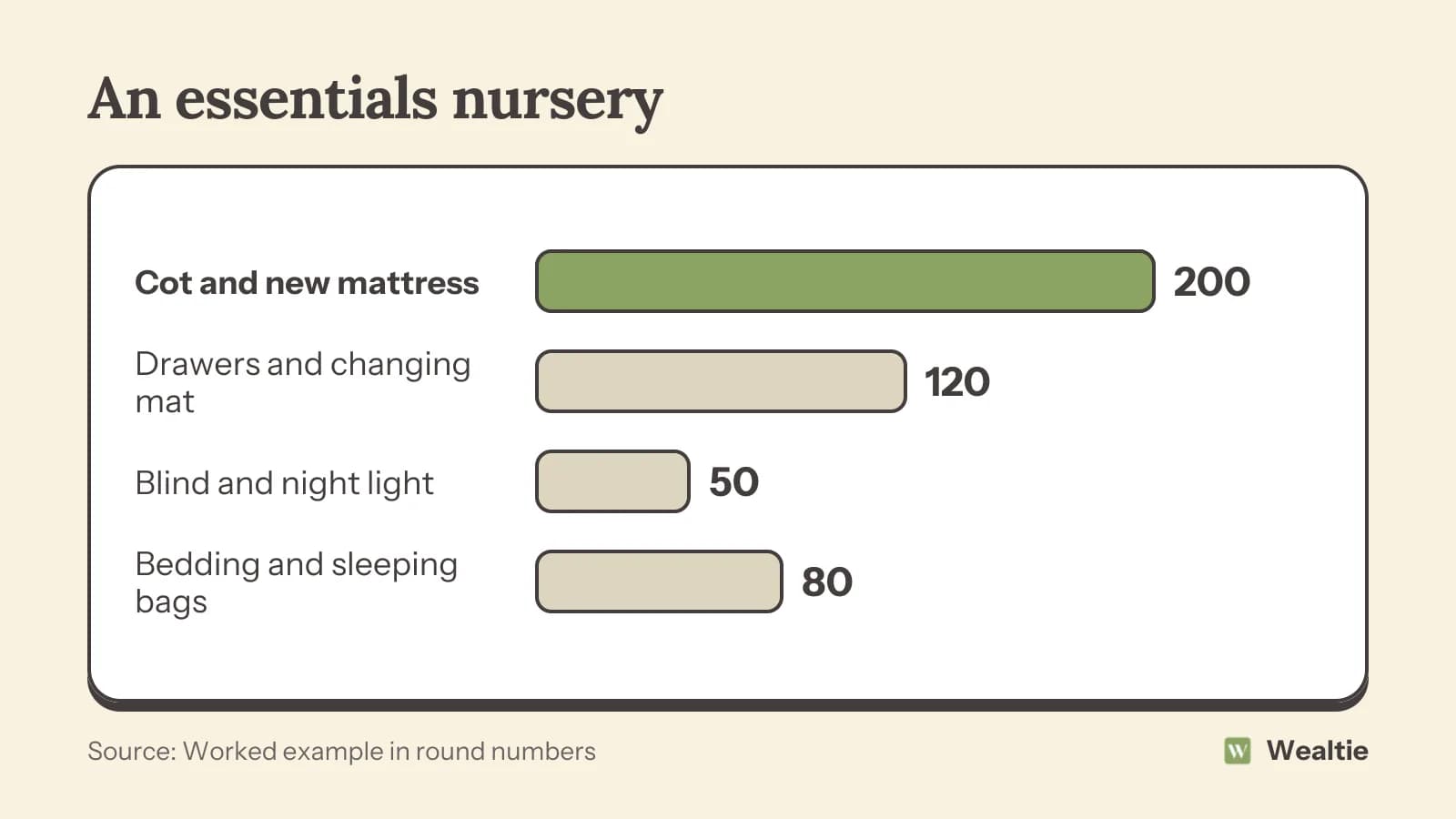
Here's a worked example of an essentials nursery, in round numbers that work in any currency:
| Item | Cost |
|---|---|
| Cot and new mattress | 200 |
| Chest of drawers and changing mat | 120 |
| Blackout blind and night light | 50 |
| Bedding and sleeping bags | 80 |
| Total | 450 |
A full matching nursery set with a cot bed, wardrobe, changing unit, nursing chair and decor might cost 1,500 or more. The essentials version does the same job for much less.
What does a baby need in a nursery?
A safe cot and mattress
A cot that meets safety standards and a firm, well-fitting mattress are the most important items. Many experts recommend buying a new mattress for each baby. Follow local safe sleep advice for bedding and positioning.
Storage
A chest of drawers holds clothes, nappies and supplies. Many people use one with a changing mat on top instead of a separate changing unit.
Blackout blinds
They help babies sleep during the day and on light summer evenings.
A night light
A dim light makes night feeds and changes easier without fully waking the baby.
What can wait or be skipped?
Matching furniture sets
Furniture doesn't need to match. Pieces you already own, or second-hand items, work just as well.
A nursing chair
A comfortable chair you already have can do the job.
Gadgets
Wipe warmers, bottle prep machines and smart monitors are optional. Buy only if you find you need them.
Themed decor
Babies don't notice the theme. Simple decor you can change as they grow saves money. How to save money on decorating has ideas.
Where can you save?
Buy second-hand
Drawers, cots (checked for safety), blinds and decor are often available second-hand in excellent condition. Is buying second-hand worth it? covers what to check.
Accept hand-me-downs
Friends and family often have nursery items they no longer need.
Choose a cot bed
A cot bed converts into a toddler bed, so you won't need to buy another bed soon.
Wait before decorating
Many babies sleep in their parents' room for the first months, which gives you time to plan and spread the cost.
How to save money on baby basics covers other ways to cut early baby costs.
How does the nursery fit into the wider baby budget?
The nursery is one part of the costs of a new baby, alongside a pram, car seat, clothes, nappies and feeding. How to budget for a baby covers the full picture, and how to budget for a second child covers reusing items when your family grows.
Think about how the room will grow with your child. Furniture that adapts, like a cot bed or drawers that can later hold toys and clothes, saves buying new pieces as your baby becomes a toddler. Neutral walls and simple decor make it easy to update the room with a few new accessories rather than redecorating.
Gifts can cover a lot of the nursery. If friends and family ask what you need, a short list of useful items, like sleeping bags, a night light or storage baskets, helps them give something practical. Some parents create a simple online list so gifts don't duplicate each other.
Safety should guide every choice. Secure tall furniture to the wall, keep cords from blinds out of reach and follow safe sleep guidance for the cot. These steps cost little but matter more than any decoration.
If you're short on space, a nursery doesn't need a separate room. A corner of your bedroom with a cot, a small set of drawers and a changing mat works well for the first months.
Finally, set a budget before you shop and keep a running list of what you've bought. It's easy to add small extras that quickly add up, especially when shopping for a baby feels exciting.
Many parents find that the things they used most in the first year were simple: a safe place to sleep, a good supply of sleeping bags, easy-to-reach storage for nappies and wipes, and a dim light for night feeds. The beautiful extras often go unused. Starting with the basics and adding only what you find you need is the easiest way to keep the nursery affordable, and it leaves more money for the costs that keep coming, like nappies and childcare.
If you have older children, involve them in getting the room ready. Choosing a soft toy or helping arrange books can make them feel part of welcoming the baby, at no extra cost.
How can Wealtie help you plan for a baby?
Set a budget for the nursery and log each purchase in its own expense category. Seeing the total as you go helps you stick to essentials and avoid last-minute extras.
Questions people ask
In a worked example, an essentials nursery cost about 450, compared with 1,500 for a full matching set.
A safe cot and new mattress, storage for clothes and supplies, a changing mat, blackout blinds and a night light.
Many experts recommend a new mattress for each baby. Other nursery items can often be second-hand.
There's no rush. Many babies sleep in their parents' room for the first months, which gives you time to plan.
This article is general information, not financial, tax or legal advice. Your situation is your own; check the numbers that apply to you before you act on them.