Budgeting: Artificial grass cost vs real lawn over ten years
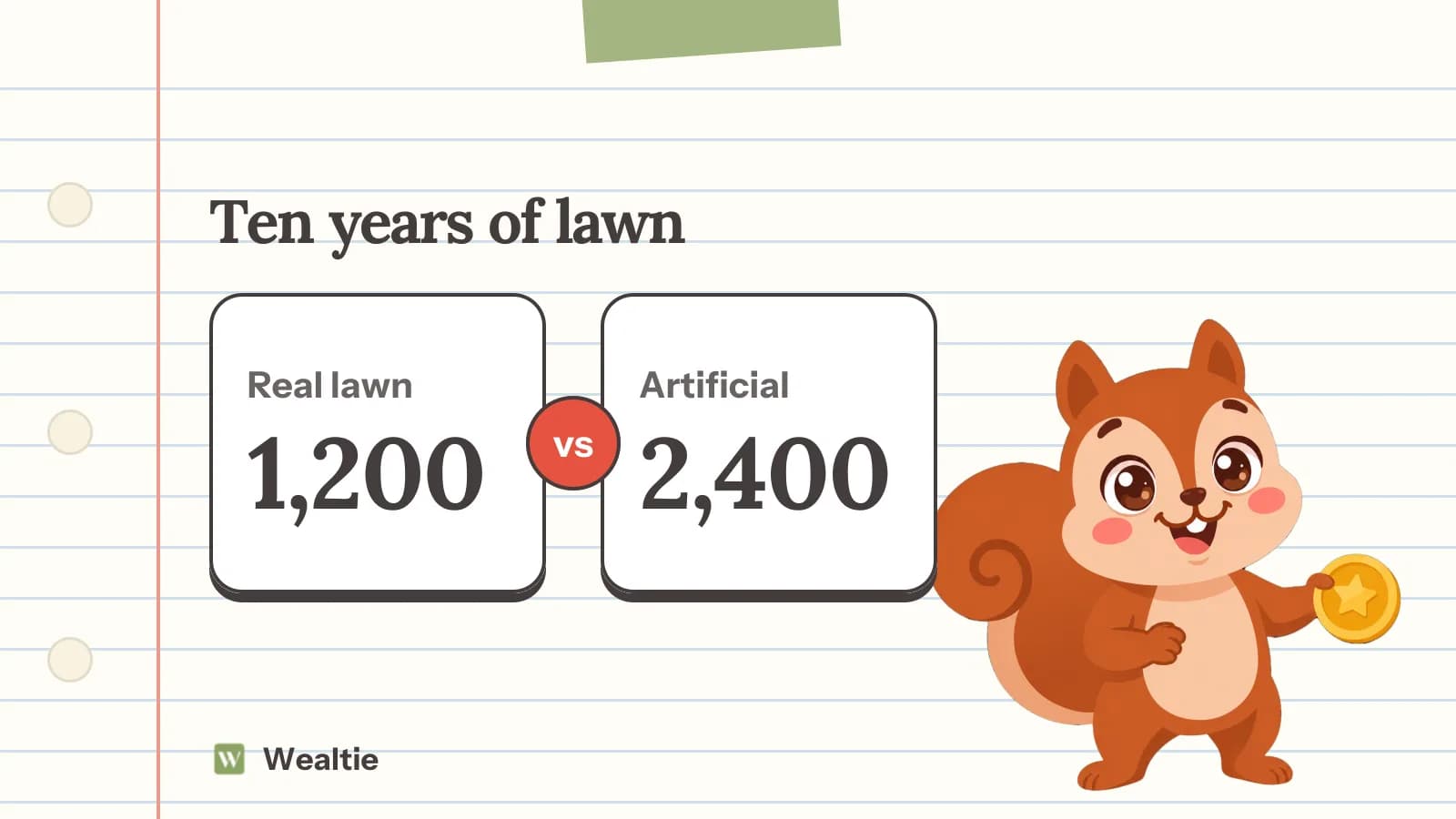
Artificial grass cost is high upfront, while a real lawn costs little to lay but needs ongoing care. In a worked example, a 40-square-metre artificial lawn costs 2,400 fitted, against 1,200 for ten years of a real lawn.
 By Wealtie Team · 3 min read
Key takeaways
- Artificial grass cost is mostly upfront, while a real lawn costs more over time in care.
- Over ten years, a real lawn is often still cheaper.
- Artificial grass saves time, water and mowing.
- Consider drainage, heat, wildlife and replacement after many years.
How much does artificial grass cost?
Artificial grass promises a green lawn all year with no mowing, watering or muddy patches. It's popular with busy households, families with young children and people with small or shady gardens where real grass struggles. But artificial grass cost is high upfront, and it doesn't last forever, so it's worth comparing with a real lawn over the long term.
Here's a worked example for a 40-square-metre lawn over ten years, in round numbers that work in any currency:
| Option | Ten-year cost |
|---|---|
| Real lawn: turf, mower and upkeep | 1,200 |
| Artificial grass fitted | 2,400 |
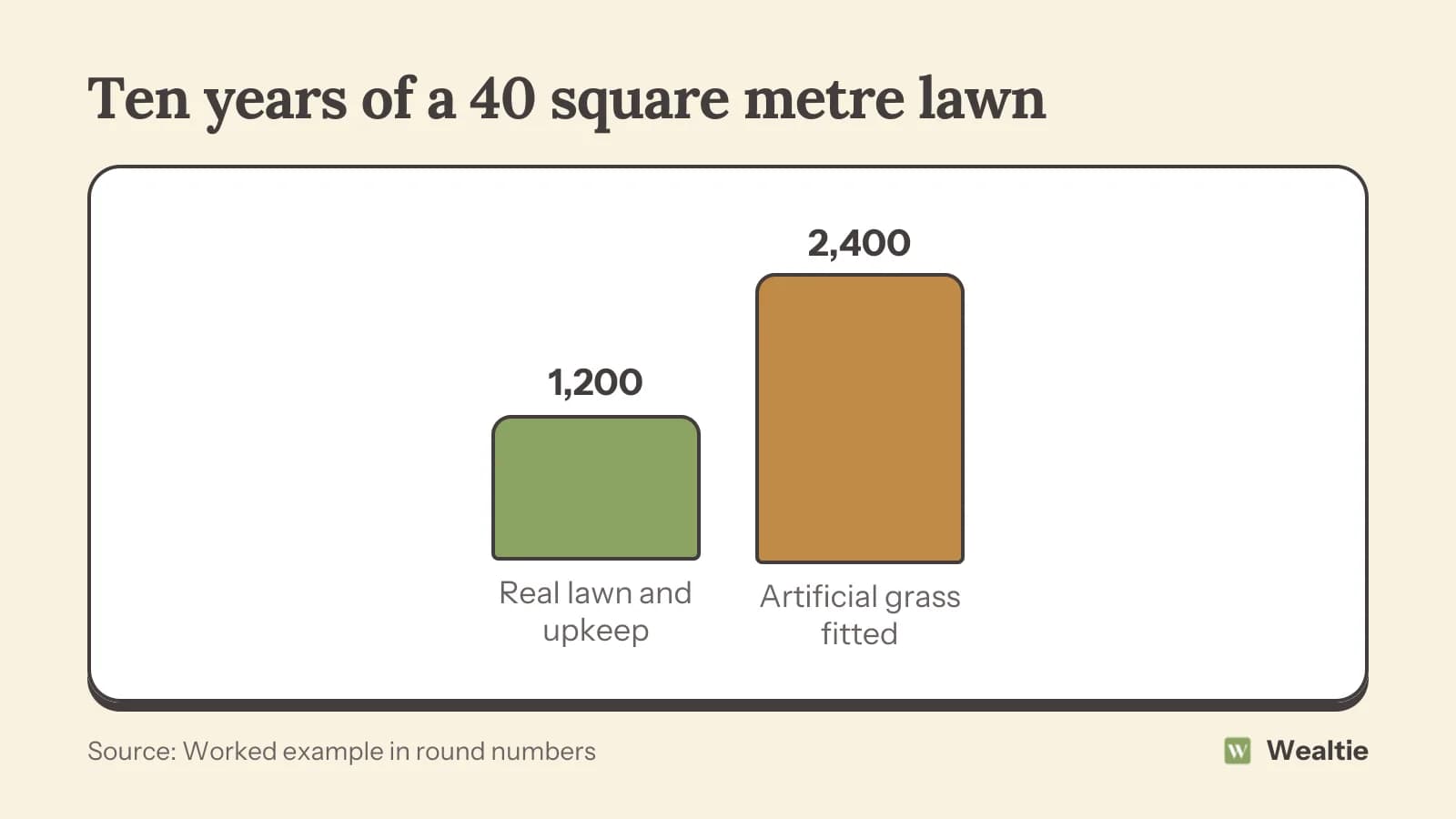
Artificial grass at around 60 per square metre fitted costs 2,400. A real lawn, with turf at 300, a mower at 150 and about 75 a year for feed, seed and water, costs around 1,200 over ten years. Artificial grass usually lasts around ten to fifteen years before it needs replacing, depending on quality and use.
What affects the cost of artificial grass?
Quality
Thicker, more realistic grass costs more but looks better and lasts longer.
Groundwork
Removing the old lawn, levelling and laying a sub-base for drainage is a big part of the cost.
Size and shape
Larger areas cost more, and awkward shapes create more waste.
DIY or professional fitting
Fitting it yourself saves labour but takes time and care to get a good finish.
When is artificial grass worth it?
You have little time
If mowing and lawn care feel like a chore, the time saved may be worth the cost.
Real grass won't grow well
Shady, very small or heavily used areas where grass keeps dying can be good candidates.
You want a mud-free play area
Families with young children or dogs often like the clean, even surface, though dog owners need to clean it regularly.
What are the downsides?
Upfront cost
It costs much more to install than laying turf or seed.
Heat
Artificial grass can get very hot in strong sun.
Wildlife
It doesn't support insects, worms or birds the way a real lawn does.
Replacement
After many years, it will need replacing, which means paying again and disposing of the old grass.
Cleaning
It still needs brushing, removing leaves and occasional cleaning.
How do you keep a real lawn cheap?
A real lawn can cost very little if you mow it yourself, use seed instead of turf, leave clippings to feed the grass and water only during dry spells. How to save money on gardening covers keeping garden costs low, and how to save money on your water bill covers watering wisely.
How do you decide?
Compare the cost per year of each option, including your time. Cost per use is a helpful way to think about it. If you'll use the lawn daily and hate mowing, artificial grass may be worth the higher price. If you enjoy gardening or want to keep costs low, a real lawn is usually cheaper. Planning lawn upkeep as part of a home maintenance budget helps either way.
If you're unsure, consider using artificial grass for just part of the garden. A small artificial area for a play space or a shady corner where grass won't grow, with real lawn elsewhere, can give you the benefits of both. It also costs less than covering the whole garden and leaves room for plants and wildlife.
Drainage is important. Artificial grass needs a well-prepared base that lets rain drain away, or it can become waterlogged and smelly. Cheap installations that skip proper groundwork often look worse and wear out faster. Asking installers how they prepare the ground, and what guarantee they offer, helps you avoid paying twice.
Think about how you'll use the garden. If you have a barbecue, fire pit or sun loungers, check how heat-resistant the grass is, since some types can melt. Pets need their area rinsed regularly to keep it clean and fresh.
For a real lawn, choosing a hard-wearing grass seed suited to your conditions, and avoiding over-watering and over-feeding, keeps costs low and the lawn healthy.
Finally, ask about recycling options for the old artificial grass when it eventually needs replacing, since disposal can add to the long-term cost.
Before committing, get at least three quotes and ask each installer what is included, from removing the old lawn to the sub-base, edging and disposal. Comparing like for like shows where a cheap quote may be cutting corners, and a slightly higher price for proper groundwork often means the grass lasts years longer, which lowers the true cost per year.
How can Wealtie help you plan garden costs?
Log garden spending in its own expense category and set a yearly budget for the garden. Comparing a few years of lawn costs makes it easier to decide whether a bigger upfront spend is worth it.
Questions people ask
In a worked example, a 40-square-metre artificial lawn cost about 2,400 fitted, at around 60 per square metre.
Not usually over ten years. In a worked example, a real lawn cost about 1,200 over ten years, compared with 2,400 for artificial grass.
Usually around ten to fifteen years, depending on the quality and how much it's used.
It's expensive upfront, can get hot, doesn't support wildlife, still needs cleaning and eventually needs replacing.
This article is general information, not financial, tax or legal advice. Your situation is your own; check the numbers that apply to you before you act on them.