Budgeting: The 80/20 budget rule: save a fifth and stop tracking the rest
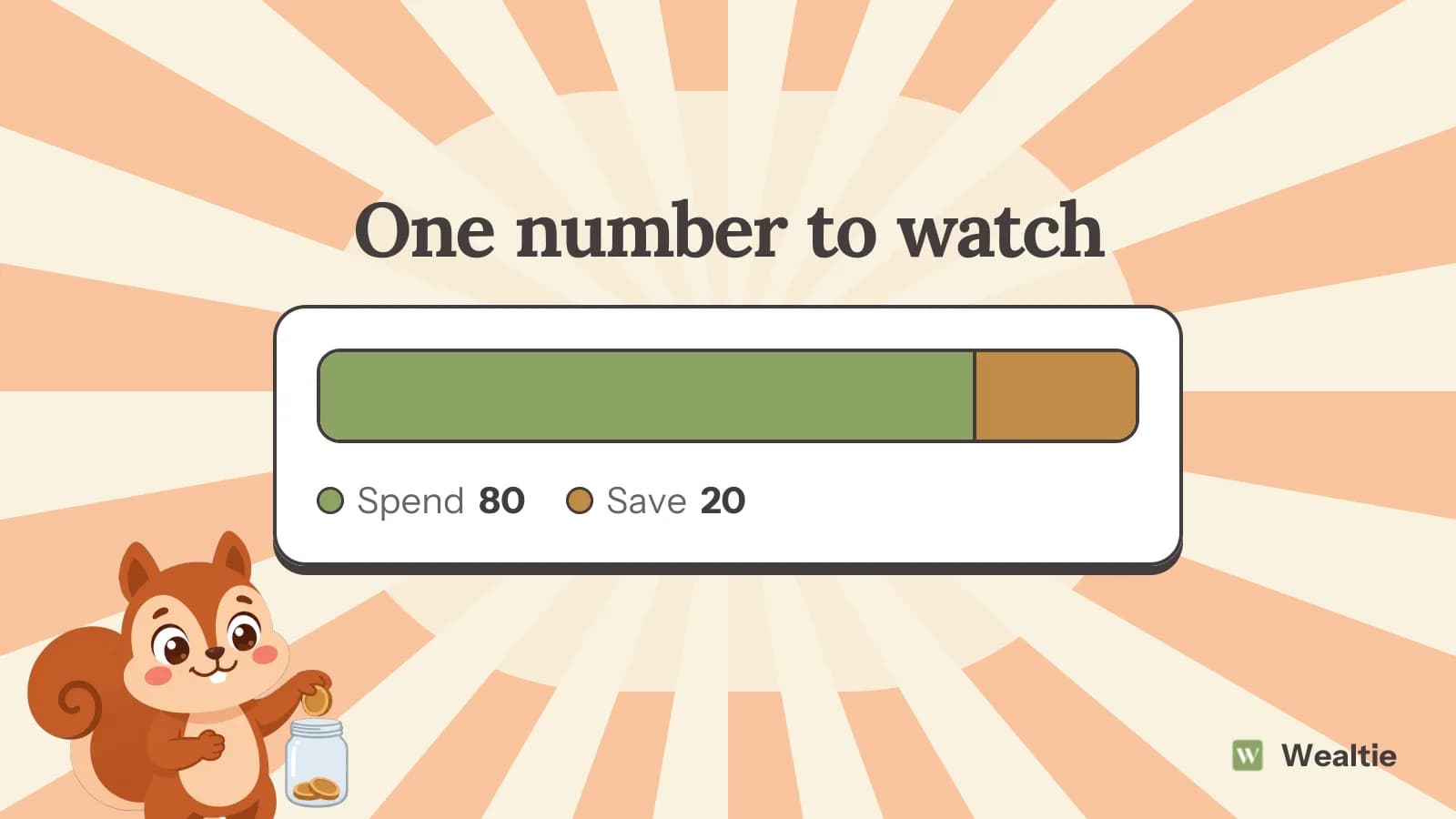
The 80/20 budget rule says to save a fifth of your take-home pay first and spend the other four-fifths however you like. On 3,000 a month, that's 600 saved and 2,400 for everything else.
 By Wealtie Team · 3 min read
Key takeaways
- The 80/20 budget rule puts a fifth of take-home pay into savings first and leaves the rest to spend without categories.
- On take-home pay of 3,000, that's 600 saved and 2,400 for everything else.
- It works best if your essentials are well under half your pay and you don't have costly debt.
- Debt repayments above the minimum can count toward the 20.
What is the 80/20 budget rule?
Save a fifth of your take-home pay as soon as it arrives, and spend the other four-fifths on whatever you need and want. There are no categories to track. It's the simplest budget that still gets you saving.
It's a close relative of pay yourself first, with a set share attached.
How does the 80/20 budget rule work in practice?
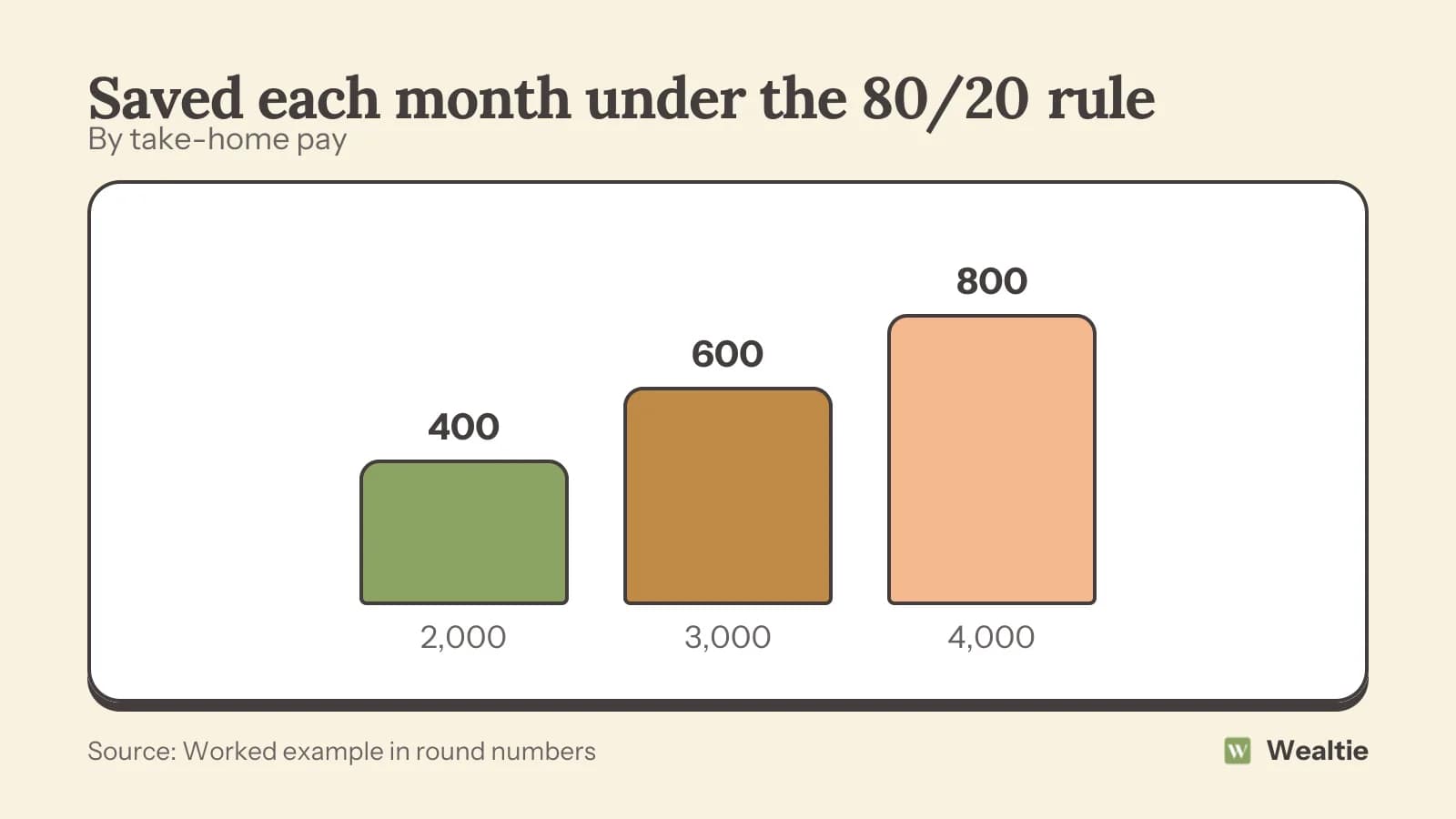
Work out a fifth of your take-home pay and set up an automatic transfer for payday. In round numbers that work in any currency:
| Take-home pay | Save | Left to spend |
|---|---|---|
| 2,000 | 400 | 1,600 |
| 3,000 | 600 | 2,400 |
| 4,000 | 800 | 3,200 |
Then spend what's left without keeping score. If your account hits zero before payday, the 80 was too much for how you've been living, and you'll need to look closer.
The saving comes first because money that's left over at the end of the month often doesn't exist. Moving it on payday means you make that decision once.
How is it different from the 50/30/20 rule?
The 50/30/20 rule splits the spending part into needs and wants. The 80/20 leaves that to you.
| 50/30/20 | 80/20 | |
|---|---|---|
| Saving | A fifth | A fifth |
| Needs | Half | Not specified |
| Wants | Three-tenths | Not specified |
| Tracking | By type of spending | Only the saving |
If you've tried a detailed budget and given up, this one's easier to keep going. If you need to know where your money's going, it won't tell you. The budget calculator can show you the three-way split for comparison.
Who does it suit?
People with some room in their budget and no pressing debt. It tends to work well when:
- Your rent and bills take up well under half of your take-home pay
- You spend reasonably without a detailed plan
- You've tried tracking every category and stopped
It suits people less well if you've got high-interest debt, because paying that off beats saving. It's also a poor match if your rent takes up most of your pay. In a high-rent city, a fifth might not be possible, and setting a target you can't reach is a good way to drop the whole thing.
If your income varies from month to month, take a fifth of each payment as it arrives. There's more in the guide on how to budget on irregular income.
Where should the 20 go?
Down this list, in order. Stop when you run out of money:
- A small cushion, so surprises don't go on a credit card
- Debt with a high interest rate, above the minimum payments
- A full emergency fund
- Bills you know are coming, in a sinking fund
- Goals, then longer-term saving
Extra debt payments count toward the 20, since they improve your position in the same way saving does. The minimum payments belong in the 80. How much of your income should you save looks at what people manage in practice.
What if you can't save a fifth?
Start with what you can and raise it. A tenth is a good start, and so is a twentieth if that's what fits. The habit's more important than the number in the first year.
Raise the share by a little each time your pay goes up. If you get a rise, sending half of it to savings means you get more to spend and more saved at the same time. What to do with a pay rise goes into that.
If you still can't get anywhere near it, your fixed costs are probably the issue. Look at rent, transport and debt payments first.
How do you know it's working?
Check two numbers once a month: did the transfer go through, and did you reach payday without dipping into savings or a credit card? If both are yes, it's working, and you don't need to do anything else.
If you keep pulling money back out of savings, the transfer's too big, or your spending needs a closer look. Try a lower share for a few months, and track your spending for one month to see what's going on. Do that a few times a year and your budget will stay roughly in shape.
The risk of any low-effort budget is drift. Spending can creep up without you noticing, so it's worth a look at the end of each quarter.
How do you run an 80/20 budget in Wealtie?
Add a savings account and move the 20 into it as a transfer on payday, which isn't counted as spending. Then set your monthly limit in the budget tracker to the 80, and Budget Health will warn you mid-month if your pace would take you over. You don't need categories for this to work, though you can add them later if you want to see more detail.
Questions people ask
Save a fifth of your take-home pay first and spend the rest without tracking categories. On 3,000 a month, that's 600 saved and 2,400 left to spend.
For people who hate tracking, yes, because you only watch one number. If you need to control what you spend on needs and wants, 50/30/20 gives you more detail.
Payments above the minimum can count toward the 20. Minimum payments belong in the 80.
Start with a smaller share, such as a tenth, and raise it when your pay goes up. The habit matters more than the number in the first year.
This article is general information, not financial, tax or legal advice. Your situation is your own; check the numbers that apply to you before you act on them.



