Saving: Is a 3D printer worth it for home use?
Is a 3D printer worth it? It is if you'll print regularly for a hobby, repairs or small projects, and in a worked example, a 300 printer plus filament costs 420 in the first year.
 By Wealtie Team · 3 min read

Key takeaways
- A 3D printer is worth it if you'll print regularly for a hobby or practical projects.
- Running costs are low, but setup and learning take time.
- Online print services or library makerspaces suit occasional prints.
- Repairs and replacement parts printed at home can save money.
Is a 3D printer worth buying?
Home 3D printers build objects layer by layer from plastic filament, using designs you download or create yourself. They've become much cheaper and easier to use, and people print everything from toys, organisers and plant pots to replacement parts, cosplay props and models. For some, a 3D printer becomes a favourite hobby and a handy tool. For others, it's an exciting gadget that ends up unused after a few months.
Here's a worked example of a first year of home printing, in round numbers that work in any currency:
| Cost | Amount |
|---|---|
| Printer | 300 |
| Filament | 80 |
| Spare parts and tools | 30 |
| Electricity | 10 |
| Total | 420 |
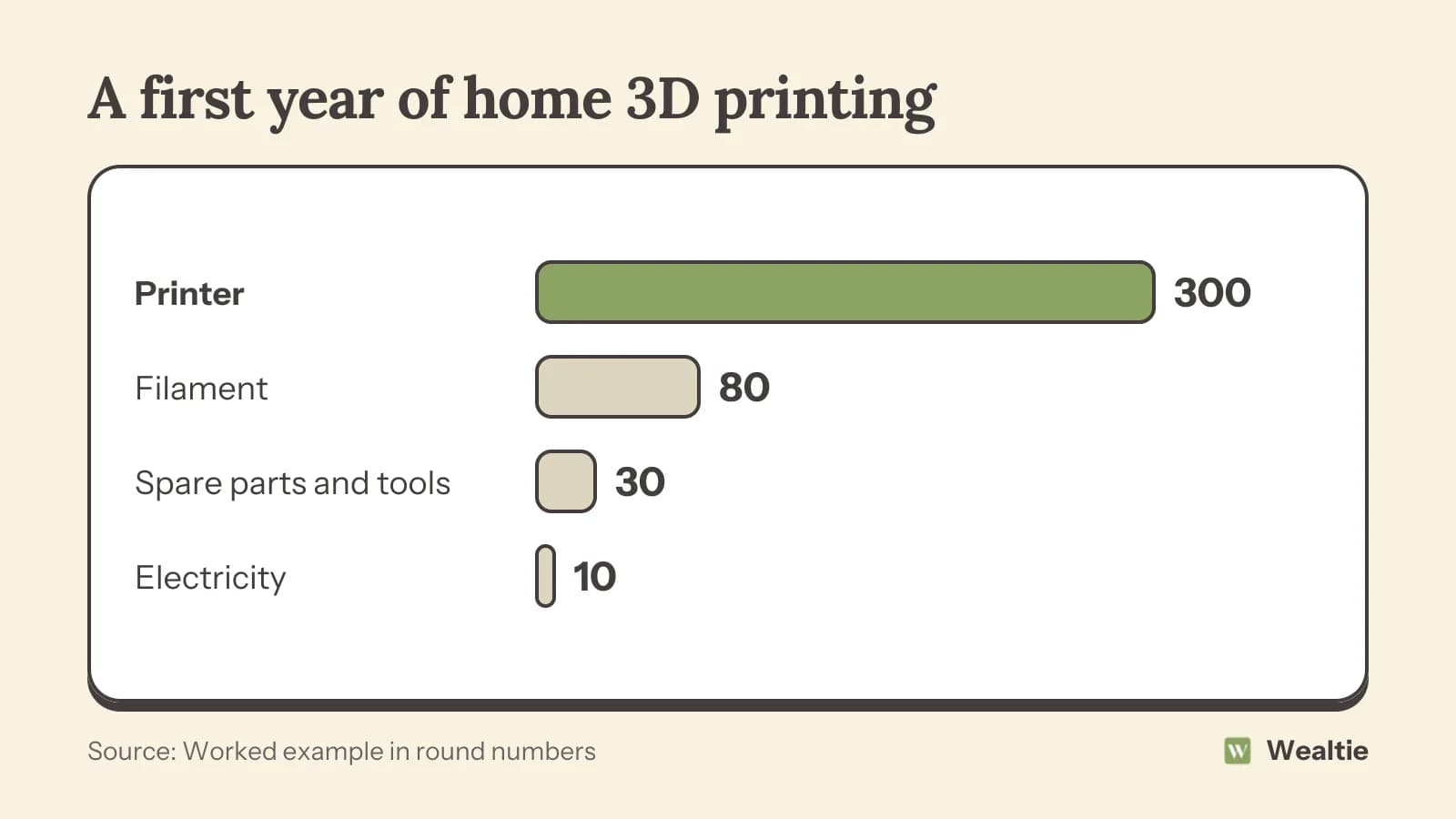
After the first year, the main ongoing cost is filament, with occasional spare parts like nozzles. Running costs are low, but the printer itself is a significant upfront cost, so it's worth thinking about how often you'll use it.
What do people use home 3D printers for?
Replacement parts
A broken knob, clip, bracket or battery cover can often be printed for a small amount of filament. Printing a part for around 0.50 instead of buying one for 15 is one of the most practical savings. Repair or replace covers deciding when fixing makes sense.
Organisers and household items
Hooks, cable holders, drawer dividers and small storage items are popular, though many can be bought cheaply too.
Hobbies
Tabletop gaming miniatures, model making, cosplay and crafts are common uses. For many people, printing is part of the fun of the hobby.
Gifts and small projects
Personalised gifts, toys and decorations can be made for little cost once you have the printer.
Small businesses
Some people sell printed items online. Treat this as a business, with costs, time and quality to consider.
When is a 3D printer worth it?
You'll print regularly
A printer used every week for projects, repairs or a hobby is good value over its life. Cost per use is a useful check.
You enjoy tinkering
3D printing involves learning, adjusting settings and fixing problems. People who enjoy that get the most out of it.
You need custom parts
If you often need parts that aren't sold anywhere, a printer can save time and money.
When might it not be worth it?
You only need a few prints
For occasional prints, an online print service or a library or community makerspace is often cheaper. A service might charge around 15 per item, which is cheaper than a printer if you only need a handful.
You don't have space or ventilation
Printers need a stable surface and somewhere with good airflow. Some materials give off fumes while printing.
You want something that just works
Printers have improved, but they still need occasional maintenance and troubleshooting.
How do you keep costs down?
Start with a reliable beginner model
A popular, well-reviewed beginner printer usually has lots of community help and cheap spare parts.
Buy filament in multi-packs
Filament is cheaper in larger quantities, and basic materials are fine for most household prints.
Use free designs
Thousands of designs are available free online. You only need paid designs for special projects.
Join a community
Online groups and local makerspaces offer advice, troubleshooting and sometimes spare filament or parts. How to save money on a hobby has more ideas.
Sell it if you stop using it
Used printers sell well. If the novelty fades, selling it soon recovers more of the cost. How to sell things you don't use covers how.
Expect a learning curve. Your first prints may fail, warp or come out messy while you learn about settings, bed levelling and materials. That's normal, and it's part of the hobby. Following beginner guides and printing simple test models first saves filament and frustration. Many people find that once they've printed a few dozen items, it becomes easy and rewarding.
Think about safety and space, too. Printers get hot, and some materials release fumes, so keep the printer in a well-ventilated room away from children and pets, and never leave it running unattended for long periods when you first start.
If you're buying a printer as a gift, especially for a teenager interested in design or engineering, it can be a great way to learn practical skills. Pairing it with a few spools of filament and a beginner's project makes it more likely to be used.
Finally, keep a short log of what you print and what you'd have paid to buy those items. After a year, it shows whether the printer has paid its way.
How can Wealtie help you track hobby costs?
Log the printer, filament and parts in a hobby expense category, and set a monthly budget for it. Seeing what you spend, and what you save on printed repairs, shows whether the printer is earning its place.
Questions people ask
It's worth it if you'll print regularly for a hobby, repairs or projects. For occasional prints, a print service is often cheaper.
Running costs are low. In a worked example, the first year cost 420 including a 300 printer, with filament as the main ongoing cost.
It can, mainly by printing replacement parts and household items cheaply, but only if you use it regularly.
Online print services, libraries and community makerspaces often offer 3D printing for a small fee.
This article is general information, not financial, tax or legal advice. Your situation is your own; check the numbers that apply to you before you act on them.