Budgeting: Young driver insurance cost: how to bring it down
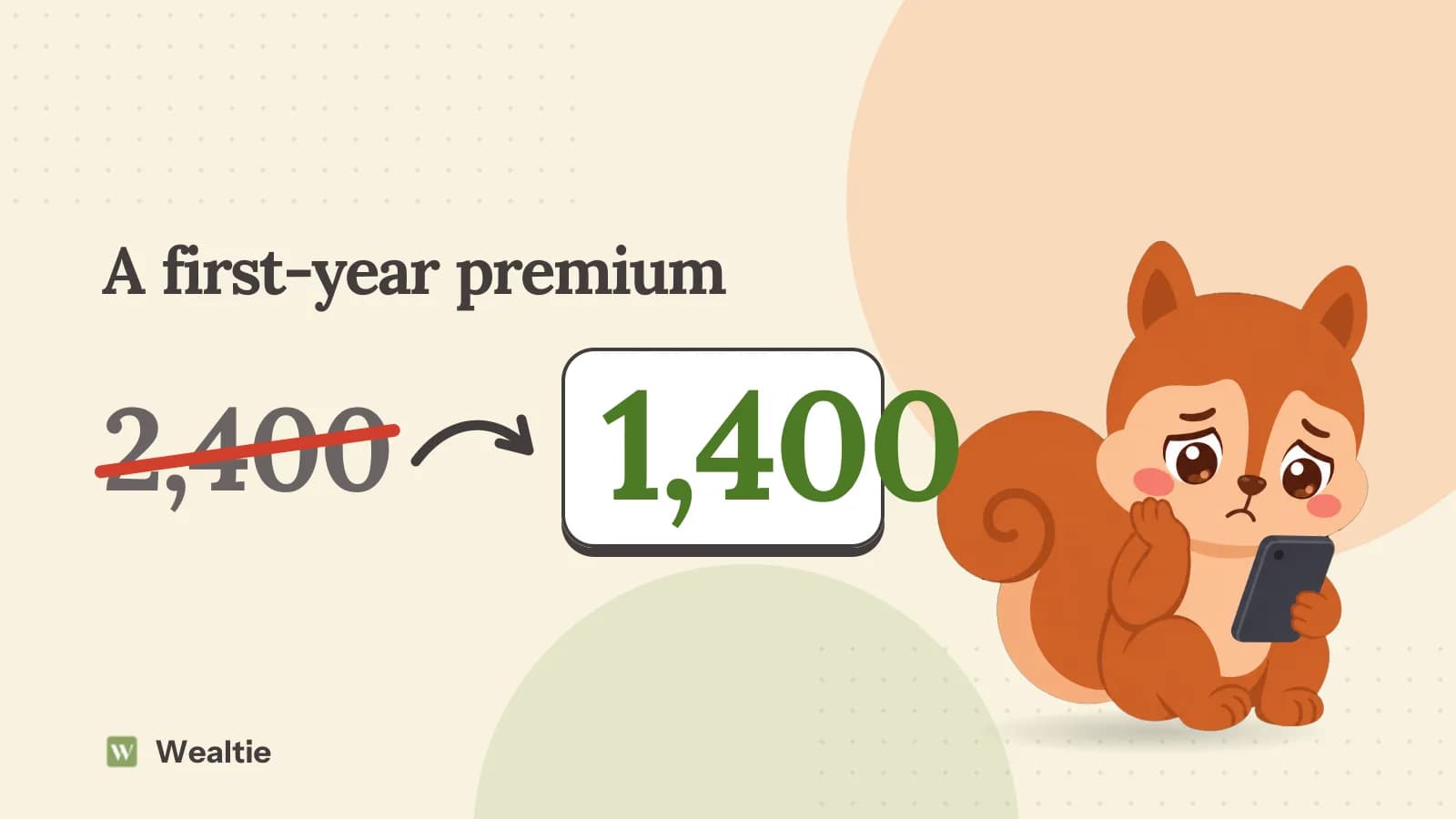
Young driver insurance cost is high because new drivers are seen as higher risk, but the right car and policy can cut it a lot. In a worked example, a first-year premium drops from 2,400 to 1,400 with a smaller car and a black box policy.
 By Wealtie Team · 3 min read
Key takeaways
- Young driver insurance is expensive because new drivers are seen as higher risk.
- Choosing a small, low-insurance-group car cuts the premium most.
- Black box policies reward careful driving with lower prices.
- Building a claim-free record brings costs down each year.
Why is young driver insurance so expensive?
Insurers set prices based on risk, and statistics show that new and young drivers are more likely to have accidents. That makes young driver insurance one of the biggest costs of starting to drive, often more than the car itself in the first year. The good news is that the premium usually falls each year as you gain experience and build a record without claims, and there are several ways to bring it down from the start.
Here's a worked example of cutting a first-year premium, in round numbers that work in any currency:
| Change | Premium |
|---|---|
| Starting quote | 2,400 |
| Smaller, lower-group car | 1,900 |
| Black box policy | 1,600 |
| Higher voluntary excess | 1,500 |
| Paying yearly, not monthly | 1,400 |
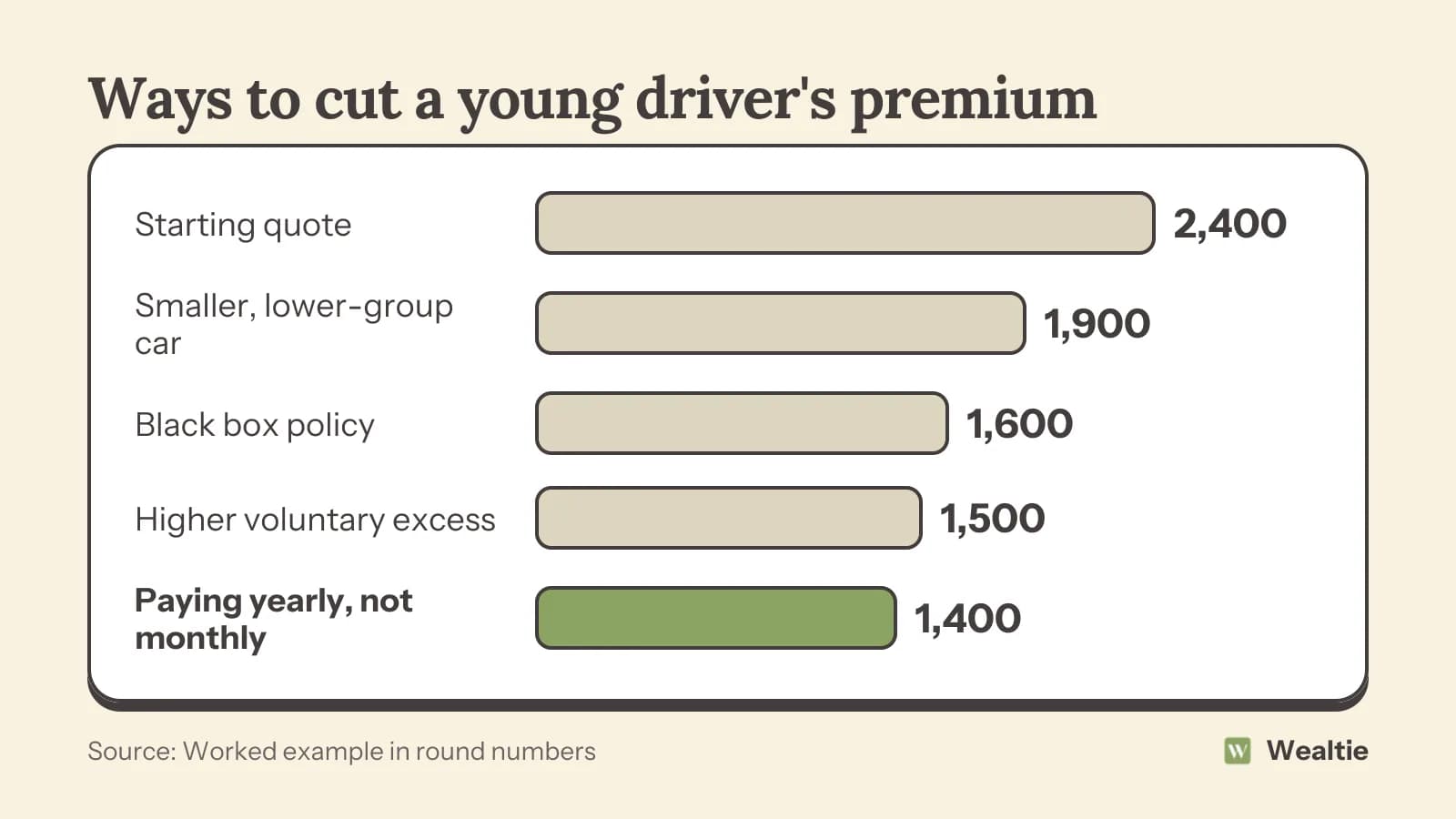
Together, these changes cut the premium by 1,000. Your own savings depend on where you live, the car and the insurer, but each step tends to help.
How do you cut young driver insurance costs?
Choose the right car
Small cars with modest engines and low insurance groups are much cheaper to insure. Check insurance quotes before you buy a car, not after. How to buy a used car without overpaying covers choosing a sensible first car.
Try a black box policy
Telematics or black box policies use a device or app to record how you drive. Careful, smooth driving at sensible times can earn lower prices. Some policies have curfews or mileage limits, so check the terms.
Add an experienced named driver
Adding a parent or experienced driver as a named driver on your policy can sometimes lower the price, as long as you're the main driver. Never put a parent as the main driver of a car you mostly drive. That's called fronting, and it's illegal and can void the policy.
Choose a higher voluntary excess
Agreeing to pay more towards a claim lowers the premium, but only choose an amount you could afford. Your total excess includes the compulsory part too.
Pay yearly if you can
Paying in monthly instalments often costs more in total. Saving up to pay the year upfront can save money.
Take an advanced driving course
Some insurers offer discounts for extra training after passing your test.
Drive fewer miles and park safely
Lower mileage and parking off the road or in a garage can lower the price.
Should young drivers be added to a parent's policy?
Being a named driver on a parent's car can be a cheap way to gain driving experience, as long as the parent is the main driver. It can also help build a record, though some insurers give no-claims history only to the main policyholder. Check how it works with your insurer.
How does the cost change over time?
Each year without a claim usually brings the premium down, and many insurers reward a no-claims record with bigger discounts as it grows. By the time you have a few years of experience, the cost can be a fraction of the first year. How to save money on car insurance covers keeping premiums down in later years.
How do you budget for a first car?
Insurance is one of several costs of a first car, alongside the car itself, fuel, tax, servicing and parking. How much car can you afford? covers adding them all up, and how to budget for driving lessons covers the cost of learning.
Shop around every year rather than renewing automatically. Insurers price new customers differently, and comparing quotes at renewal can save a lot, especially as your no-claims record grows. Comparison sites are a quick starting point, but some insurers don't appear on them, so it's worth checking a few directly too.
Be honest on your application. Leaving out details like modifications, where the car is kept overnight or who drives it most can make insurance cheaper on paper, but it can also mean a claim is refused when you need it most. Accurate answers protect you and keep your policy valid.
Parents can help in other ways too, like paying for an advanced driving course, helping save for the yearly premium or letting a new driver gain experience as a named driver on the family car before buying their own.
Finally, drive carefully. Every year without a claim makes the next year cheaper, and a single claim can push premiums up for several years. Careful driving is the best long-term saving of all.
How can Wealtie help young drivers budget?
Log insurance, fuel and car costs in a transport expense category, and add monthly insurance payments as a recurring transaction. Seeing the full monthly cost of driving helps young drivers plan their budget and save towards paying next year's premium in one go.
Questions people ask
Insurers see new and young drivers as higher risk, since they're more likely to have accidents, so premiums start high.
Choose a small, low-group car, try a black box policy, add an experienced named driver, raise your excess and pay yearly.
Fronting is when a parent is listed as the main driver of a car that a young driver mostly uses. It's illegal and can void the policy.
Yes. Premiums usually fall each year as you gain experience and build a record without claims.
This article is general information, not financial, tax or legal advice. Your situation is your own; check the numbers that apply to you before you act on them.