Budgeting: How to set a yearly gift budget and stick to it
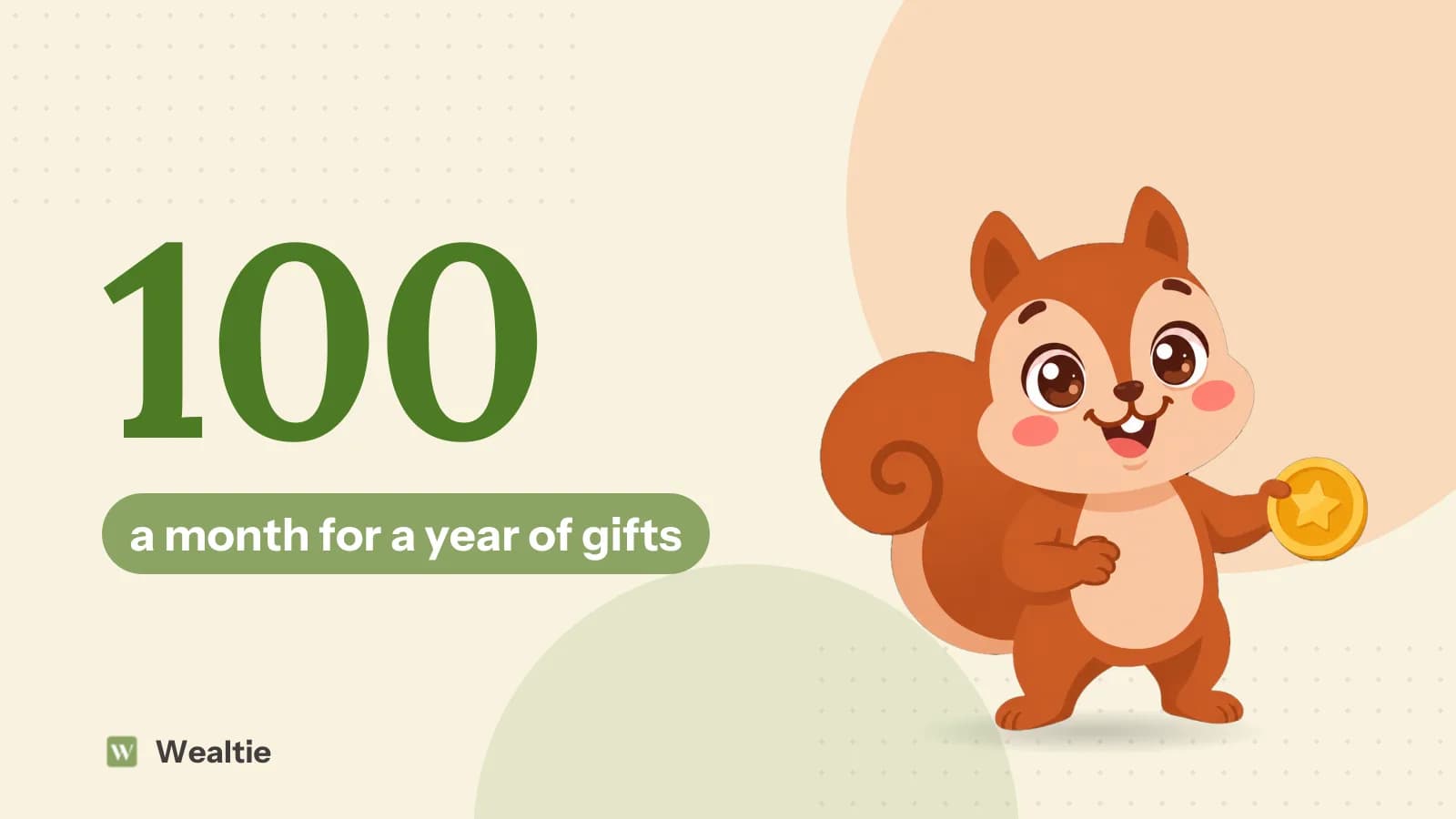
A yearly gift budget lists every birthday, holiday and celebration in advance, so gifts stop surprising your monthly budget. In a worked example, a household's gifts come to 1,200 a year, or 100 a month.
 By Wealtie Team · 3 min read
Key takeaways
- A yearly gift budget plans every gift occasion in advance.
- Saving a set amount monthly spreads the cost evenly.
- Set an amount per person so you don't overspend on any one gift.
- Track what you spend so next year's budget is more accurate.
Why set a yearly gift budget?
Gifts are one of those costs that feel small each time but add up to a lot over a year. Birthdays, holidays, weddings, new babies, teachers, hosts and thank-yous all come along, often in clusters, and many people end up paying for them from whatever's left that month or on a credit card. December is the classic squeeze, but a month with three birthdays can be just as tight.
A yearly gift budget fixes this by planning every occasion in advance. You decide how much you want to spend in total, divide it into a monthly amount and save it steadily. When a birthday comes up, the money is already there, and you can enjoy choosing a gift instead of worrying about the cost.
How much does a year of gifts cost?
Here's a worked example for a household, in round numbers that work in any currency:
| Occasion | Yearly amount |
|---|---|
| Christmas or main holiday | 450 |
| Family birthdays | 300 |
| Friends' birthdays | 150 |
| Weddings and babies | 200 |
| Teachers, hosts and thank-yous | 100 |
| Total | 1,200 |
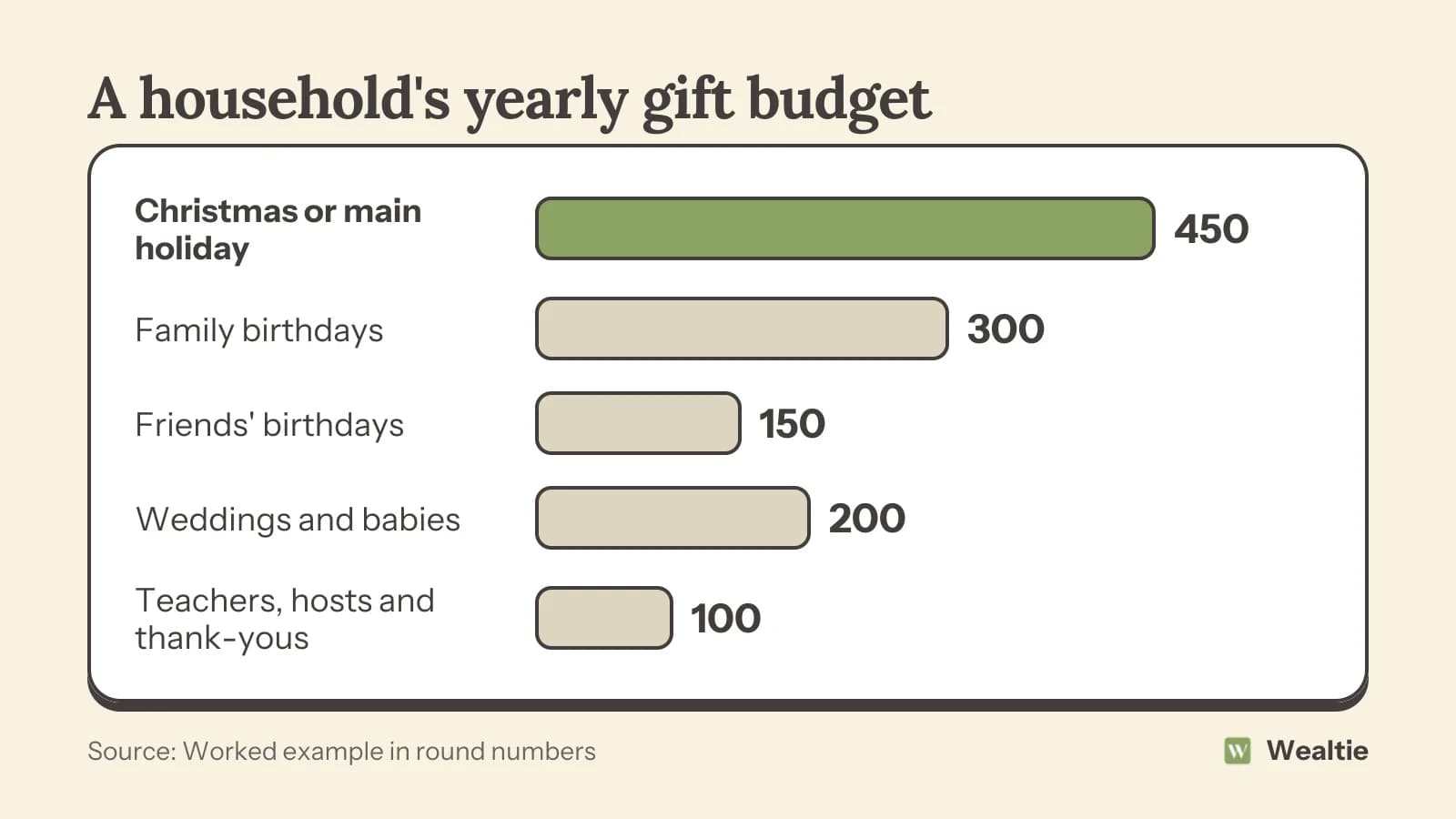
That's 1,200 a year, or 100 a month. Many people are surprised by the total when they add everything up, and that's the reason to do it. Your total depends on your family, friends, traditions and budget. There's no right amount, only what fits your finances.
How do you build a yearly gift budget?
List every occasion
Go through the year month by month and write down every birthday, holiday, anniversary and celebration you usually buy for. Add known events, like weddings or a friend's baby due date, and leave room for a few surprises.
Set an amount per person
Decide roughly how much you'll spend on each person or occasion. Close family might get more, friends and colleagues less. How much to spend on a birthday gift covers a sensible way to decide.
Add it up and divide by twelve
The total divided by twelve is your monthly saving. If the total feels too high, adjust the amounts per person until it fits.
Save it in a separate pot
Move the monthly amount into a separate savings pot or account on payday. A sinking fund keeps gift money apart from everyday spending.
Plan for the big months
If most of your gifts fall in December, saving evenly all year means the money is ready when you need it. How to plan a Christmas budget covers the busiest season in detail.
How do you keep gift spending under control?
Use a running list
Keep a note on your phone of gift ideas as they come up through the year. When an occasion arrives, you already have ideas and won't panic-buy.
Buy in sales
If you see something perfect in a sale months early, buy it and store it. Just make sure it's within the amount for that person.
Suggest a family gift swap
For big families, a Secret Santa where each person buys for one other can cut costs a lot. How to plan a Secret Santa budget covers setting a fair limit.
Give experiences or homemade gifts
Baking, a handwritten card, a day out together or an offer of help can mean more than something bought.
Agree limits with friends
Many friends are relieved when someone suggests a spending limit or a no-gift agreement. It takes pressure off everyone.
What about weddings and big celebrations?
Weddings, milestone birthdays and new babies can cost more than a usual gift, especially if travel is involved. Keep a separate line for these in your budget. How much to spend on a wedding gift covers that occasion in detail.
How do you make next year's budget easier?
Track what you spend on each gift through the year. At the end of the year, compare your plan with what happened. Some lines will have been too generous, others too tight. Adjusting next year's budget with real numbers makes it more accurate every year. How to budget for annual expenses covers planning for other yearly costs the same way.
If money is tight this year, it's fine to scale back. Tell close family early that you're keeping gifts small, or suggest drawing names so each person buys for one other. Most people understand, and many will be glad of the chance to spend less themselves. A smaller, planned gift budget you can afford is far better than a generous one paid for on a credit card in January.
How can Wealtie help you plan gifts?
Create a gifts expense category in Wealtie and set a monthly budget for it. Logging each gift shows how much is left for the rest of the year, and the year's total helps you set next year's budget.
Questions people ask
Spend what fits your budget. In a worked example, a household's gifts came to 1,200 a year, or 100 a month.
List every occasion, set an amount per person, add it up, divide by twelve and save that amount each month in a separate pot.
Agree limits with friends and family, try a Secret Santa, give homemade or experience gifts and buy in sales from a running list.
Yes. Keeping it in a separate pot means the money is there when an occasion comes up and doesn't get spent on other things.
This article is general information, not financial, tax or legal advice. Your situation is your own; check the numbers that apply to you before you act on them.