Budgeting: Is a water softener worth it? Costs and savings
Is a water softener worth it? In very hard water areas it can be, since it protects appliances and cuts spending on cleaning products, though it costs a fair amount to buy and run.
 By Wealtie Team · 3 min read
Key takeaways
- A water softener can be worth it in very hard water areas.
- It costs upfront and needs salt and servicing every year.
- Savings come from longer-lasting appliances and less cleaning product.
- Cheaper options like descaling and filters suit softer water areas.
Is a water softener worth it?
Hard water contains a lot of dissolved minerals, mainly calcium and magnesium. It isn't harmful to drink, but it leaves limescale on taps, showers, kettles and inside appliances like washing machines, dishwashers and boilers. Over time, limescale can make appliances less efficient and shorten their lives. A water softener removes those minerals before water reaches your taps.
Whether a water softener is worth it depends mostly on how hard your water is. In very hard water areas, the savings and convenience can be worthwhile. In areas with moderately hard or soft water, the costs may outweigh the benefits.
What does a water softener cost?
In round numbers that work in any currency, a fitted softener might cost around 1,000, and running it, with salt and occasional servicing, might cost around 80 a year. Here's a worked example of the yearly costs of hard water compared with running a softener:
| Yearly cost | Amount |
|---|---|
| Softener salt and servicing | 80 |
| Extra cleaning products and descaler | 60 |
| Shorter appliance life, per year | 90 |
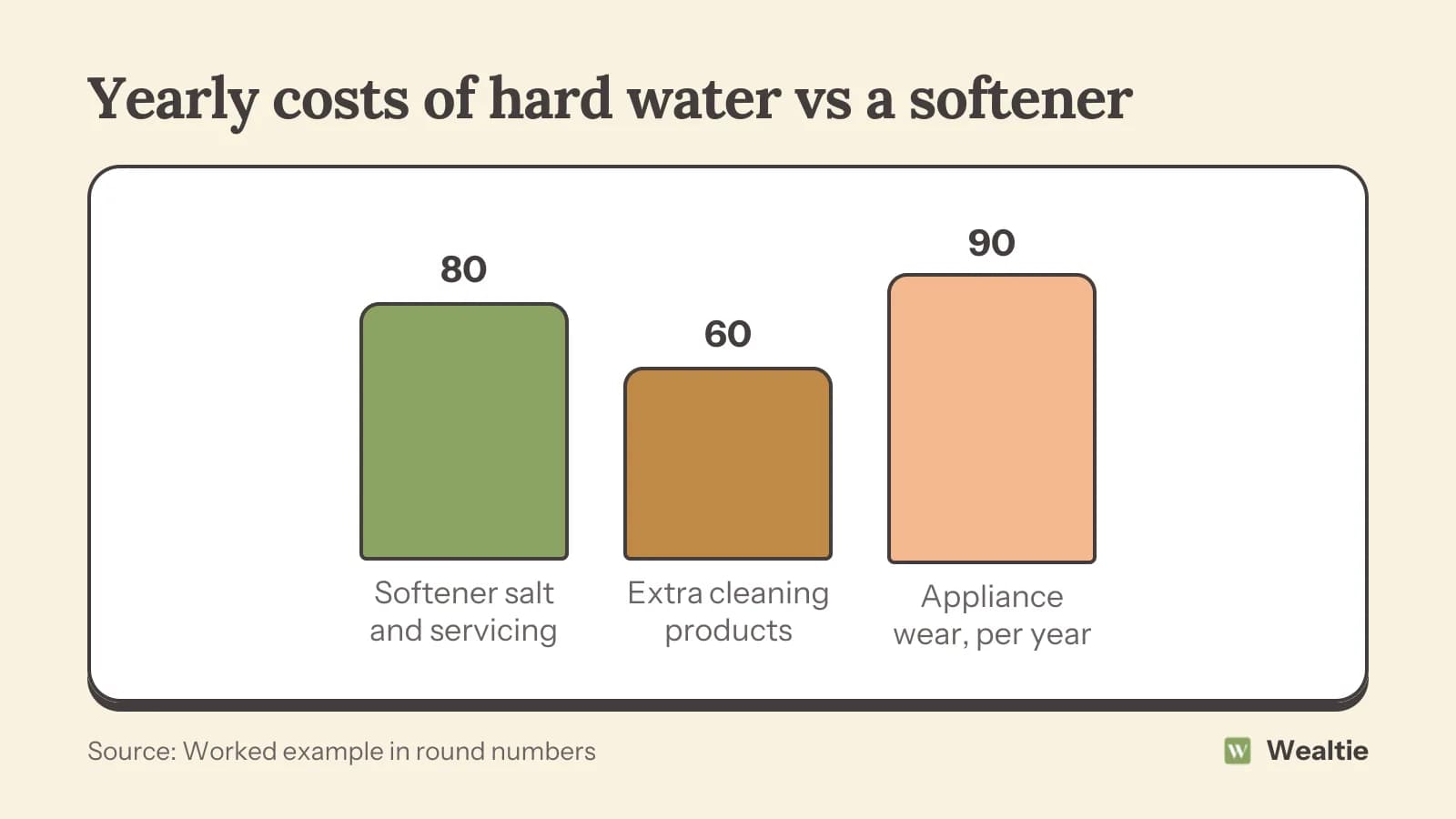
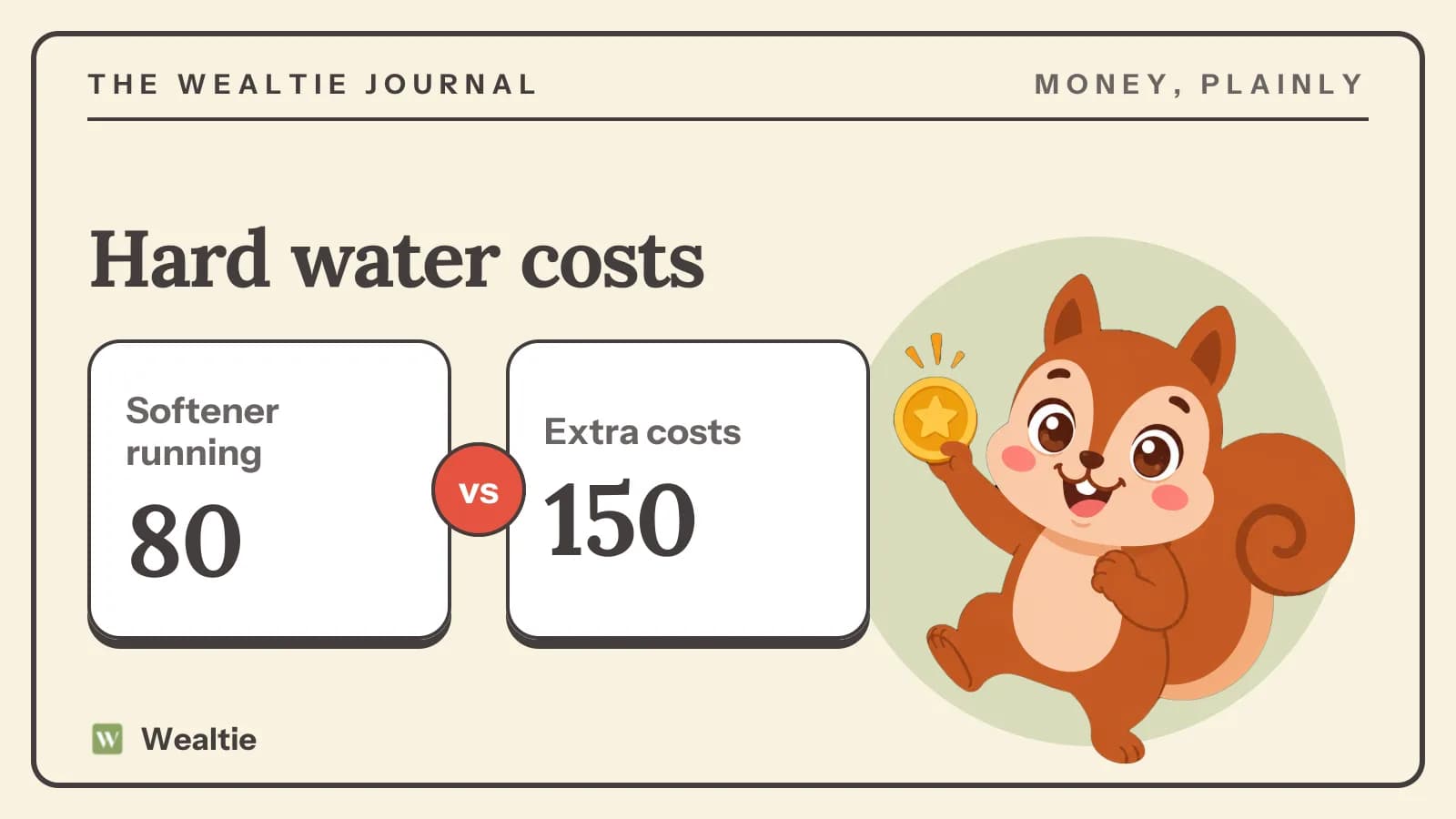
In this example, hard water costs about 150 a year in extra cleaning products and appliance wear, while running a softener costs 80. That's a saving of around 70 a year, so the softener takes many years to pay for itself on money alone. Many owners also value softer skin and hair, less cleaning and a shinier bathroom, which aren't easy to put a price on.
Where do the savings come from?
Appliances last longer
Limescale build-up makes heating elements work harder and can lead to early breakdowns in washing machines, dishwashers, kettles and boilers.
Less cleaning product
Soft water lathers more easily, so you use less soap, shampoo and detergent, and need fewer limescale removers.
Less time cleaning
Taps, showers and glass screens stay clearer for longer.
More efficient heating
Limescale in boilers and hot water cylinders can reduce efficiency. Softer water helps them run as designed.
What are the downsides?
Upfront cost
Buying and fitting a softener is expensive.
Ongoing salt and servicing
Most softeners need salt topping up regularly and occasional servicing.
Space and plumbing
A softener needs space, usually under a sink or in a garage, and plumbing work to install.
Drinking water
Many people keep one tap with unsoftened water for drinking and cooking. Ask the installer about this.
What are cheaper alternatives?
Regular descaling
Descaling kettles, showerheads and taps with cheap products or vinegar keeps limescale under control.
Washing machine and dishwasher care
Using the right amount of detergent, dishwasher salt and occasional cleaning cycles helps appliances cope with hard water. How to save money on laundry has more tips.
Shower filters and jug filters
Small filters can reduce limescale in specific places for much less than a whole-home softener.
Scale inhibitors
Some devices reduce scale build-up without removing minerals. Results vary.
How do you decide?
Check how hard your water is, which your water supplier often lists online, and think about how often you replace appliances or buy descalers. If you live in a very hard water area and plan to stay for many years, a softener may be worth it. If not, regular descaling is usually cheaper. Repair or replace covers deciding what to do when an appliance struggles, and cost per use helps weigh the price against the benefits.
If you decide to buy, compare installers carefully. Ask about the size of softener your household needs, how much salt it uses, how often it needs servicing and what the warranty covers. An oversized unit costs more to buy and run, while an undersized one may struggle to keep up. Some installers offer rental or monthly plans, which spread the cost but usually cost more in total.
Think about how long you'll stay in your home. A softener is a long-term investment, and the savings build up over many years. If you're likely to move soon, cheaper ways to manage limescale may make more sense, though some buyers see a softener as a bonus.
Remember that some appliances, like dishwashers, already have built-in softening that uses dishwasher salt. Keeping that topped up is an easy, cheap way to protect them, whether or not you have a whole-home softener.
Finally, keep the manual and service records, since regular maintenance keeps the softener working well and protects its warranty.
How can Wealtie help you compare?
Log descalers, cleaning products and appliance repairs in a household expense category for a year, and set a yearly budget for household upkeep. Seeing what hard water costs you makes it easier to decide whether a softener would pay off.
Questions people ask
In very hard water areas, it can be, since it protects appliances and cuts cleaning costs. In softer water areas, it may not pay off.
In a worked example, a fitted softener cost about 1,000, plus around 80 a year for salt and servicing.
Many people keep one tap with unsoftened water for drinking and cooking. Ask your installer for advice.
Regular descaling, dishwasher salt, shower and jug filters and scale inhibitors all cost less than a whole-home softener.
This article is general information, not financial, tax or legal advice. Your situation is your own; check the numbers that apply to you before you act on them.