Saving: Is a warehouse club membership worth it?
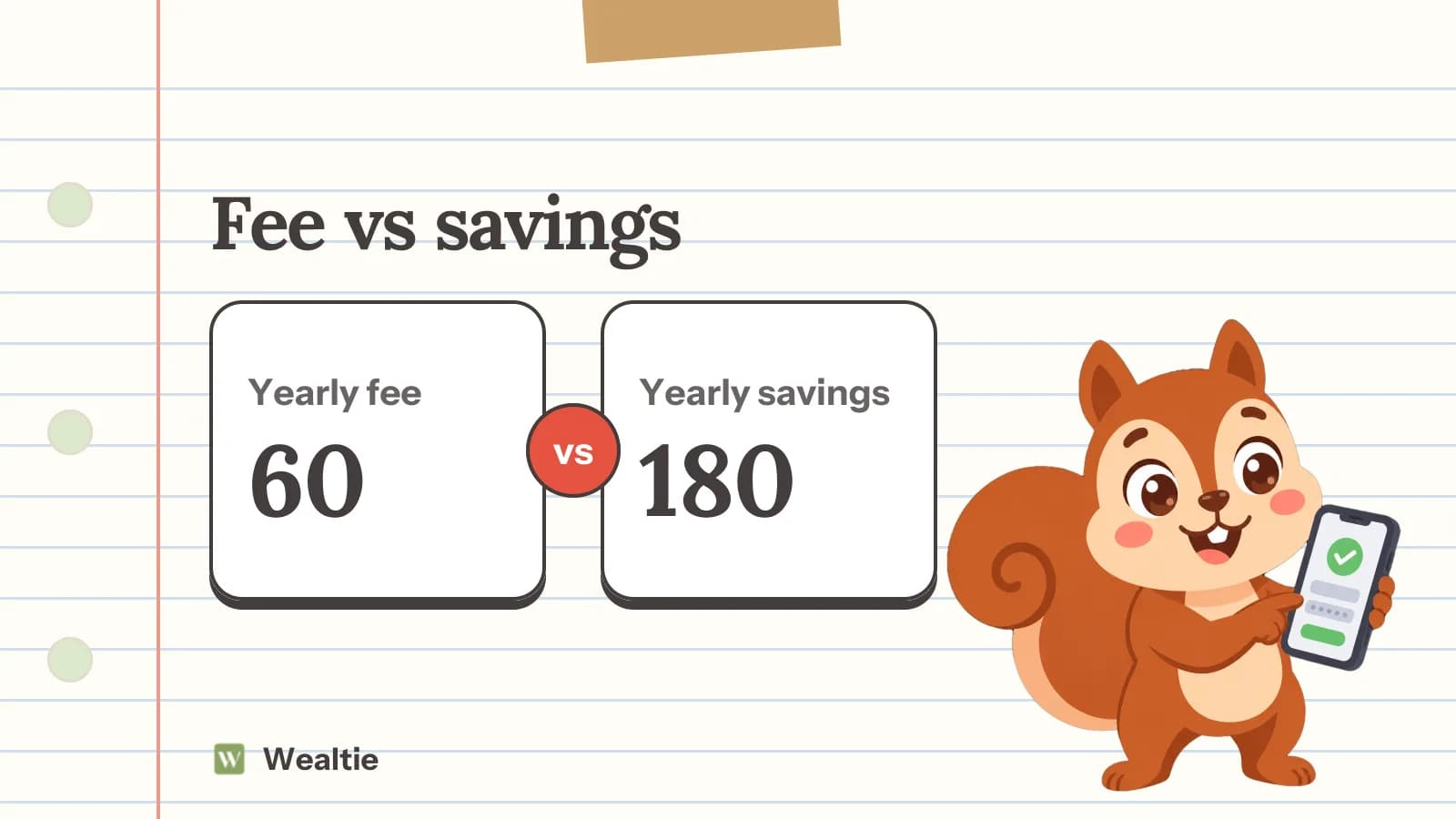
Is a warehouse club membership worth it? Only if your savings on things you'd buy anyway beat the yearly fee, and in a worked example a 60 membership saves a family 180 a year, while a household that overbuys can end up spending more.
 By Wealtie Team · 3 min read
Key takeaways
- A warehouse club membership is worth it only when savings on your usual shopping beat the fee.
- In a worked example, a 60 membership saves a family 180 a year on things they'd buy anyway.
- Impulse buys and food that goes off can wipe out the savings.
- Shop with a list and compare unit prices with your usual supermarket.
Is a warehouse club membership worth it?
It can be, if you buy enough of the right things in bulk and avoid buying extra. Warehouse clubs charge a yearly fee for access to large packs at lower unit prices. For a big household that uses a lot of the same products, the savings can easily beat the fee. For a small household, or someone prone to impulse buys, the membership can end up costing more than it saves. Bulk buying also ties up money upfront, so it works best when your budget has room for larger, less frequent shops.
Warehouse clubs aren't available everywhere, but the same thinking applies to any shop that sells in bulk.
How do you work out whether it pays?
Compare the fee with what you'd save on items you already buy. Here's a worked example for a family, in round numbers that work in any currency:
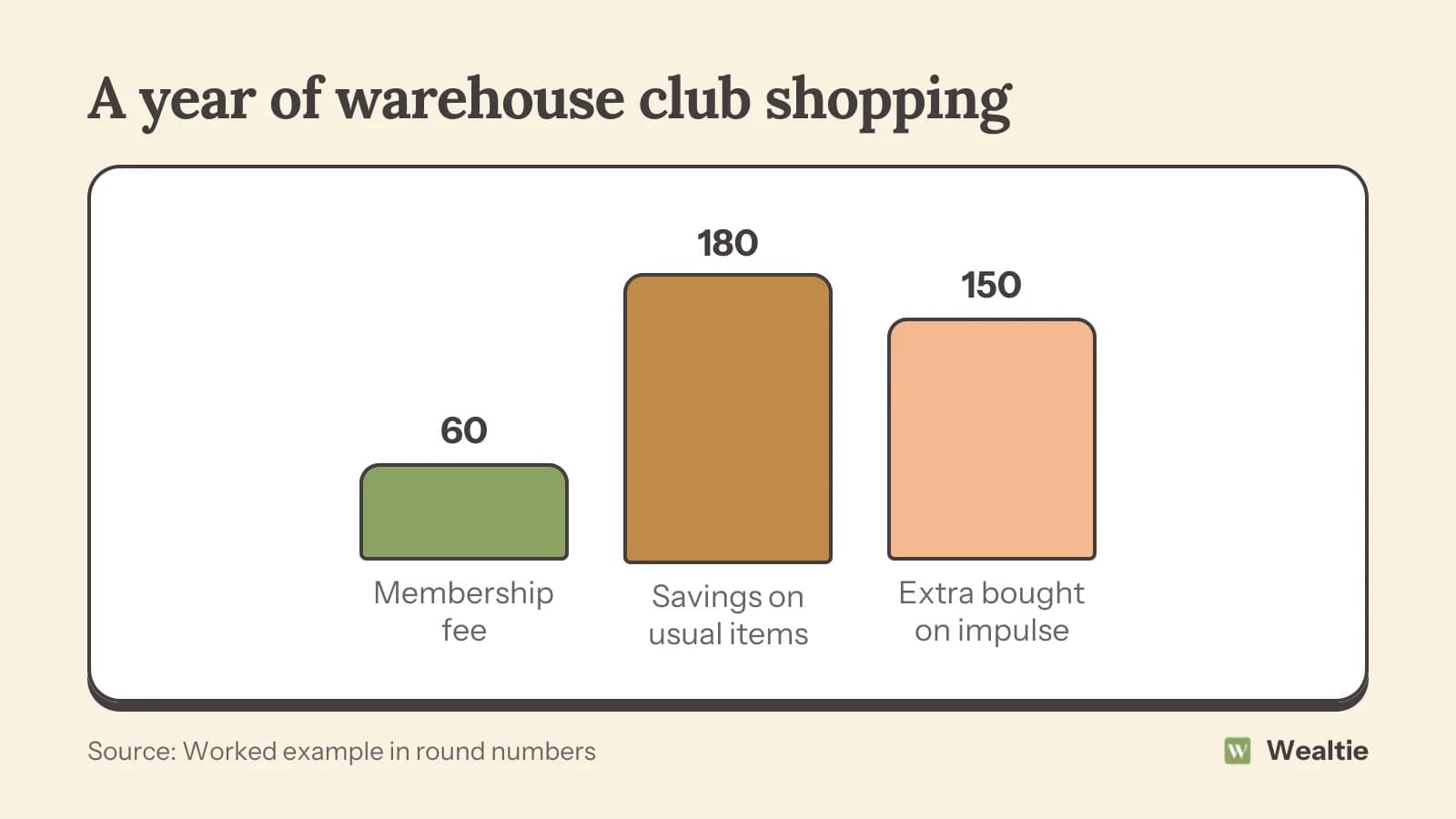
In this example, the family saves 180 a year on their usual items, against a 60 fee, so they're 120 ahead. But if they also buy 150 of things they wouldn't otherwise have bought, they end up 30 behind. The value depends far more on how you shop than on the prices.
Compare unit prices
Bulk packs aren't always cheaper. Check the price per unit, like per kilo, litre or item, and compare it with your usual supermarket, including its offers and own-brand ranges. How to save money on groceries covers comparing prices. Taking a photo of shelf prices at your usual shop makes the comparison quick.
Which items are worth buying in bulk?
Things that keep well and that you use steadily:
- Toilet roll, kitchen roll and cleaning products
- Washing powder and dishwasher tablets
- Tinned food, rice, pasta and other dry goods
- Toiletries you always use
- Nappies, for families with young children
- Frozen food, if you have freezer space
How to save money on household essentials has more on stocking up sensibly.
What are the traps?
A few common ones:
- Impulse buys, since big shops are full of tempting items you didn't plan to buy
- Food waste, when large packs of fresh food go off before you finish them
- Bigger baskets, where the total feels normal because everything is large
- Storage, since bulk buying needs space you may not have
- Travel, if the club is far away and needs a car
If any of these sound familiar, they can cancel out the savings. Watch for large packs of things you'd normally buy small, like sauces or snacks, since having more at home often means using more. How to stop impulse buying has ways to resist.
How do you shop smartly at a warehouse club?
Go with a list, and stick to it. Set a budget for each trip. Buy fresh food only in amounts you'll use, or split large packs with a friend or neighbour. Freeze what you can, and keep track of what you have at home so you don't double up. Eating before you go also helps, since shopping hungry in a big store makes impulse buys more likely.
Share the membership
Some clubs allow a second cardholder, and some people split a membership and the bulk packs with family or friends. Sharing large packs makes bulk buying work for smaller households. Agree in advance how you'll split costs and who stores what, so the arrangement stays simple.
Who is a membership most worth it for?
Large families, households that use a lot of the same products, people with space to store bulk items and small businesses tend to get the most value. Households that shop for older relatives or host often can also benefit. Single people or small households with little storage often do better with a regular supermarket and its offers. Some memberships also include discounts on fuel, travel or other services, which can add value if you'd use them.
How do you test it before committing?
Some clubs offer a trial day or a short trial membership. Before your first visit, list what you buy each month and its price at your usual shop. On the trip, compare unit prices for those items. After a few months, add up what you saved against the fee, and decide whether to renew. Setting a reminder a month before renewal gives you time to do the sum.
How do you track warehouse club savings in Wealtie?
Log warehouse club shopping in your grocery and household expense categories, and compare your monthly totals before and after joining. A monthly limit in the budget tracker, with Budget Health, shows whether bulk trips are lowering your spending or quietly raising it.
Questions people ask
Only if your savings on things you'd buy anyway beat the fee. In a worked example, a 60 membership saves a family 180 a year.
Items that keep well and that you use steadily, like toilet roll, cleaning products, dry goods and toiletries.
Yes. Impulse buys and food waste can wipe out the savings, as in a worked example where extras leave a family 30 behind.
Often not, unless you can share a membership and split bulk packs with others.
This article is general information, not financial, tax or legal advice. Your situation is your own; check the numbers that apply to you before you act on them.