Income & freelancing: How much to charge for tutoring, and how to budget the income
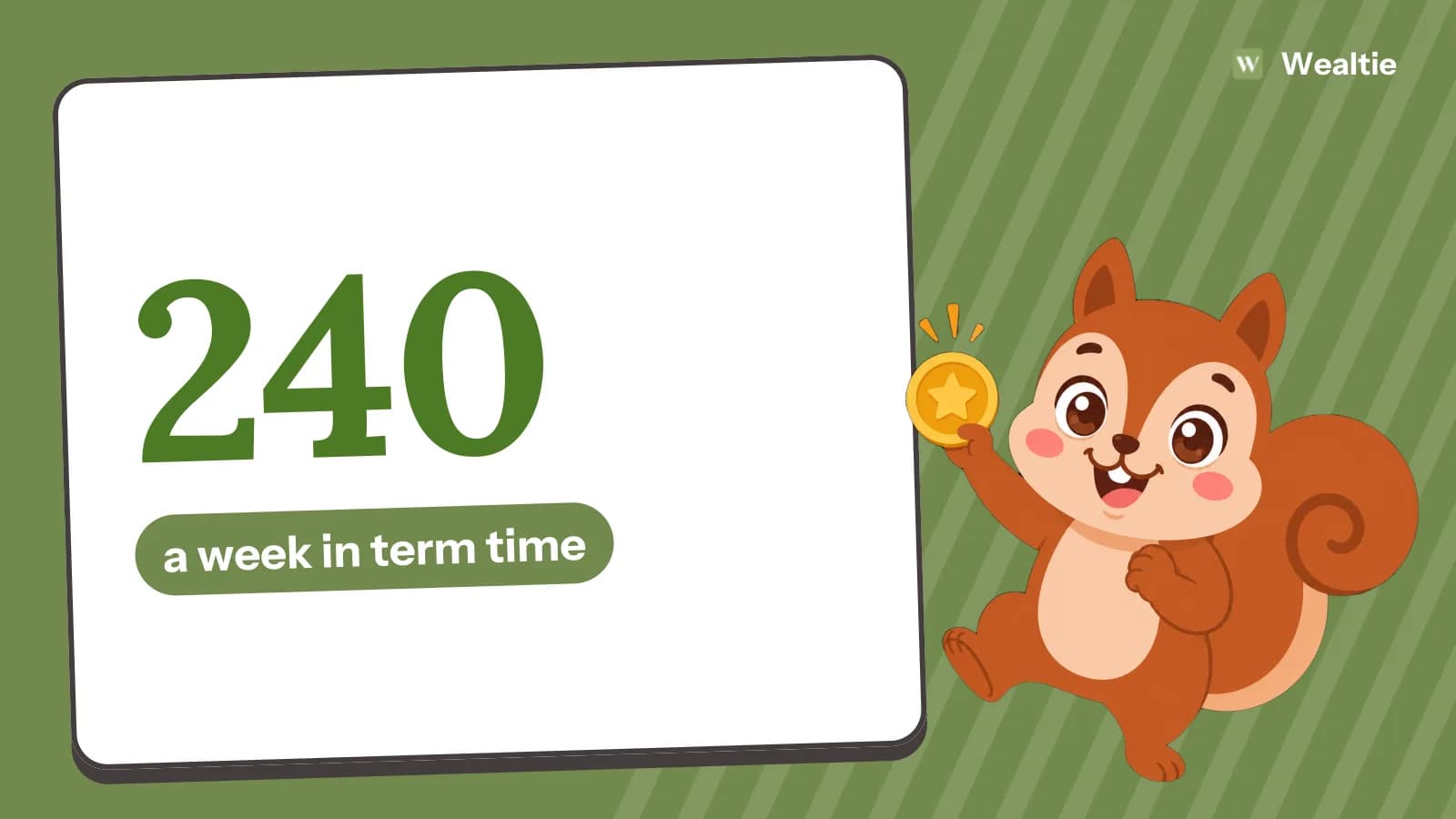
How much to charge for tutoring depends on your subject, experience and local prices, and your rate should cover preparation and travel as well as the lesson. In a worked example, a tutor charging 30 an hour for eight lessons a week earns about 240 a week in term time, and much less in holidays.
 By Wealtie Team · 3 min read
Key takeaways
- How much to charge for tutoring depends on the subject, your experience and local prices.
- Your rate should cover preparation and travel time, not just the hour of teaching.
- In a worked example, eight lessons a week at 30 an hour bring in about 240 a week in term time.
- Tutoring income rises and falls with school terms, so plan your budget around the quiet weeks.
How much should you charge for tutoring?
Set a rate based on your subject, your experience and what other tutors charge near you, then check it covers the time you spend outside the lesson. Tutoring is a flexible way to earn, whether as a student, a teacher, a retired professional or someone with a skill to share. But the price you set shapes whether it's worth your time.
What affects tutoring rates?
A few things push rates up or down:
- Subject and level. Exam preparation and specialist subjects usually earn more than general homework help.
- Experience and qualifications. Qualified teachers and tutors with strong results can charge more.
- Location. Rates are often higher in cities and areas where tutoring is common.
- Format. Online lessons save travel, while in-person lessons may be priced higher to cover it.
- Group size. Small groups can cost each student less while earning you more per hour.
Look at what other tutors in your area and subject charge, and position yourself based on your experience. Starting a little below the average and raising your rate as you build reviews and results is a common approach.
Raising your rate
Review your rate once a year, or when you gain a qualification or a full timetable. Give existing students notice before a rise, often a term ahead, and keep the increase modest. If you're fully booked with a waiting list, that's a sign your rate may be lower than it could be.
Does your rate cover your real time?
Count everything, not just the lesson. A one-hour lesson often comes with preparation, marking, messages to parents and travel. If you charge 30 for an hour's lesson but spend another 30 minutes preparing and 30 minutes travelling, your real rate is 15 an hour.
Grouping lessons in the same area, or teaching online, cuts travel time. Reusing lesson plans and materials across students cuts preparation. Freelance rate to salary shows how to work out what a rate is worth once all the hours are counted.
How much can you earn from tutoring?
Here's a worked example for a tutor charging 30 an hour, in round numbers that work in any currency:
| Week | Lessons | Income |
|---|---|---|
| Term week | 8 | 240 |
| Exam season week | 12 | 360 |
| Holiday week | 2 | 60 |
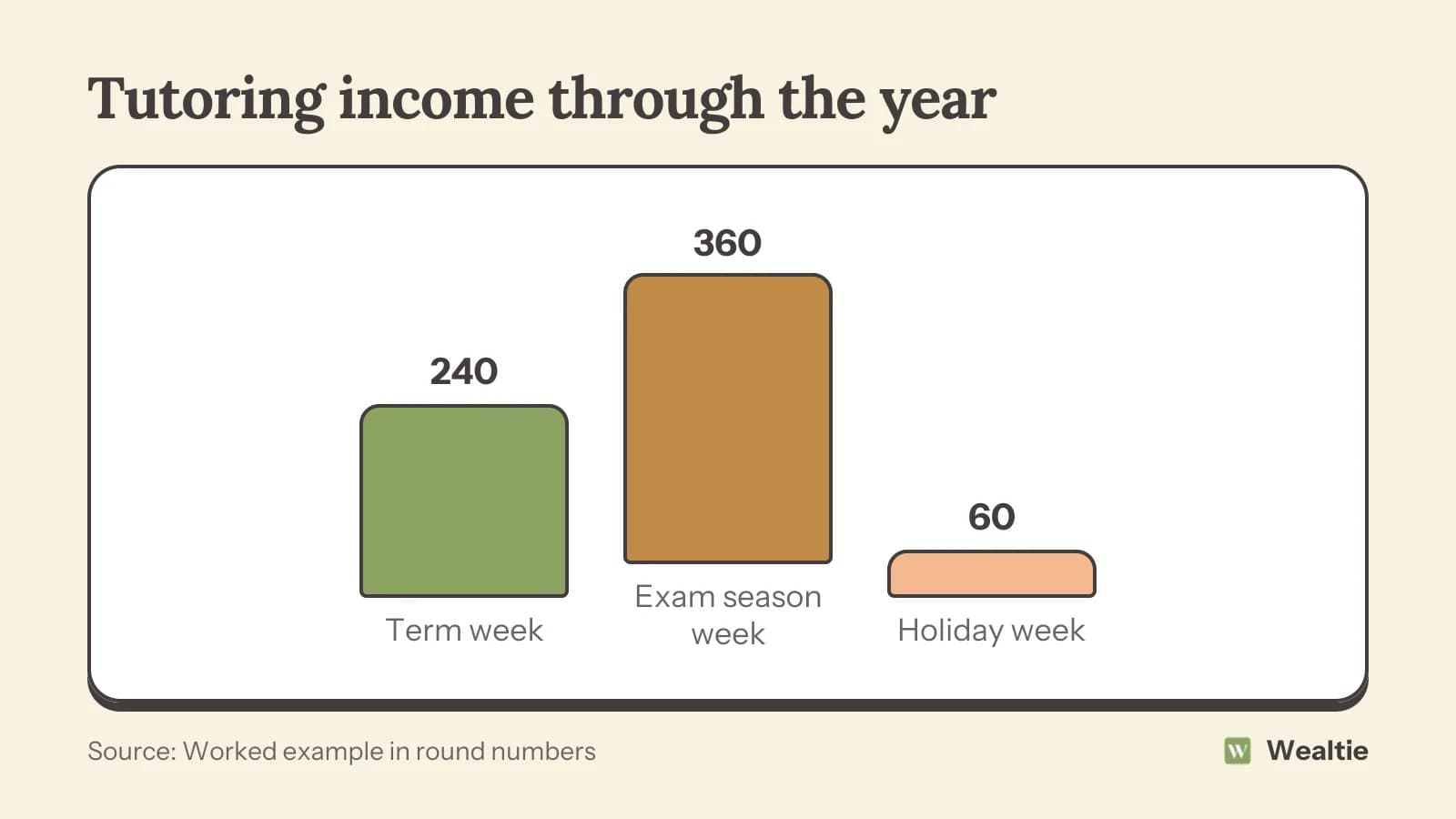
The pattern matters as much as the totals. Income is higher in term time and during exam season, and drops sharply in school holidays when many families pause lessons. Spreading lessons across after-school hours and weekends lets you fit more in without very late evenings, and weekend mornings are often popular with families.
How do you budget an income that changes with the school year?
Plan around the quiet weeks. Look at what tutoring brings in over a full year, then divide by twelve to find a monthly figure you can rely on. In busy months, put the extra aside to cover holidays. How to budget with seasonal income has a step-by-step method.
If tutoring is extra income on top of a job, decide in advance what it's for, like savings, a goal or paying off a card, so it doesn't disappear into everyday spending.
Filling the quiet weeks
Some tutors offer holiday revision courses, intensive sessions before exams or lessons for adults, whose schedules don't follow the school year. Others use quiet weeks to prepare materials that save time in busy months.
How do you handle cancellations and payment?
Set clear terms from the start. Many tutors ask for notice of cancellation, like 24 hours, and charge for lessons cancelled later. Asking for payment in advance, or in blocks of lessons, smooths out your income and cuts down on chasing missed payments. Write your terms down and share them with every new student or family. Sending a short summary to parents after each lesson, covering what was done and what to practise, helps families see the value of the lessons and keeps students coming back.
Do you need to pay tax on tutoring income?
In many countries, yes, once it passes a certain amount. Keep a record of what you earn and any costs, like materials, travel or online tools, from the first lesson. Books, printing and subscriptions add up over a year, so keep receipts. How to declare side hustle income covers the general steps, and a local tax office or adviser can confirm what applies to you.
How do you track tutoring income in Wealtie?
Log each payment in the income tracker, and give tutoring costs their own line in your expense categories. A monthly income goal shows how term time and holidays compare against your target, and Pro adds income analytics to see the pattern across the year.
Questions people ask
Set a rate from your subject, experience and local prices. Then check it still pays well once preparation and travel are counted.
In a worked example, eight lessons a week at 30 an hour bring in 240 a week in term time, but much less in holidays.
Work out the yearly total, divide by twelve for a reliable monthly figure and save extra from busy months for the holidays.
Many tutors charge for cancellations without notice, like 24 hours. Set clear terms in writing from the start.
This article is general information, not financial, tax or legal advice. Your situation is your own; check the numbers that apply to you before you act on them.