Income & freelancing: How to compare a freelance rate to a salary, with the sums
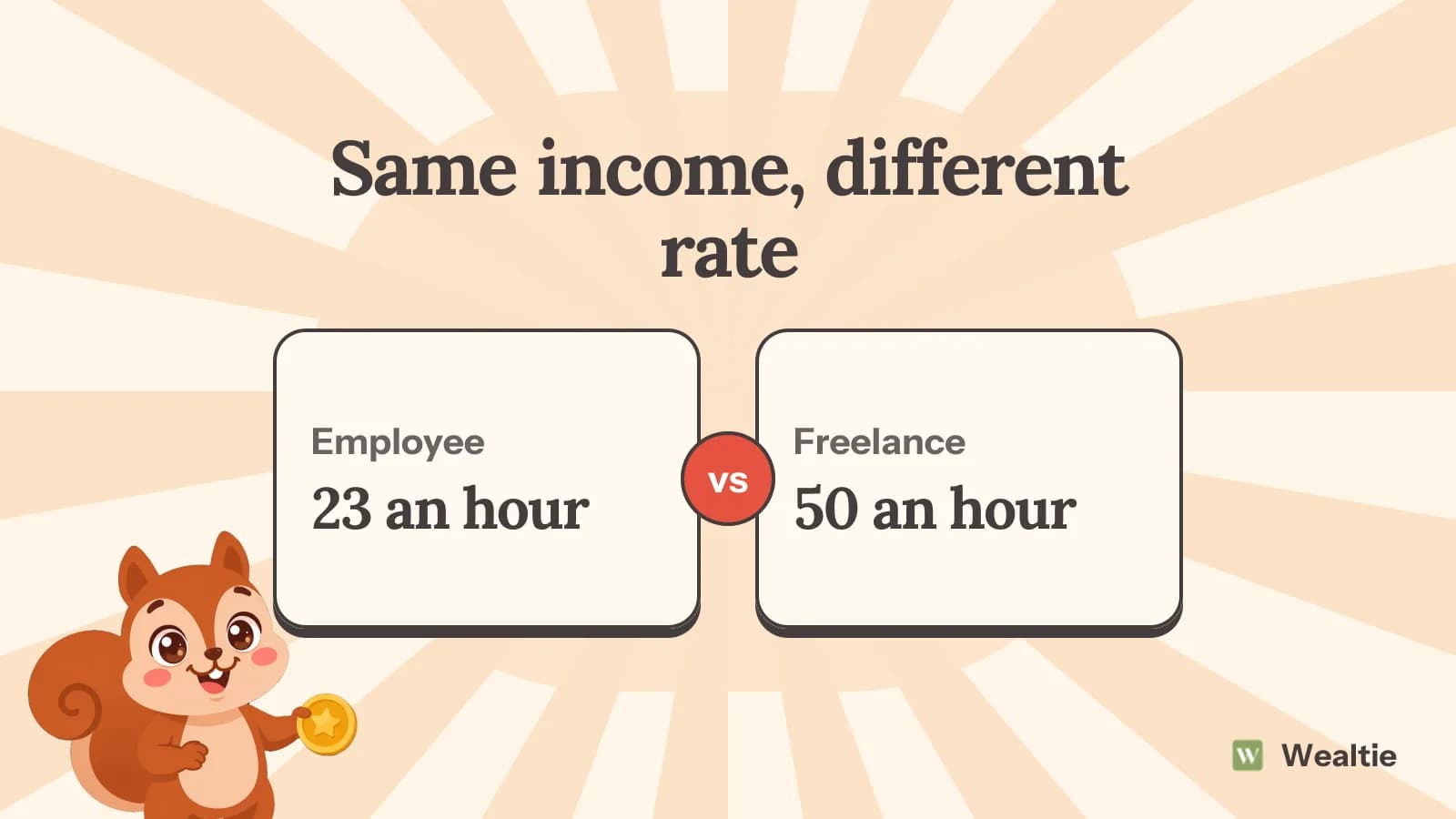
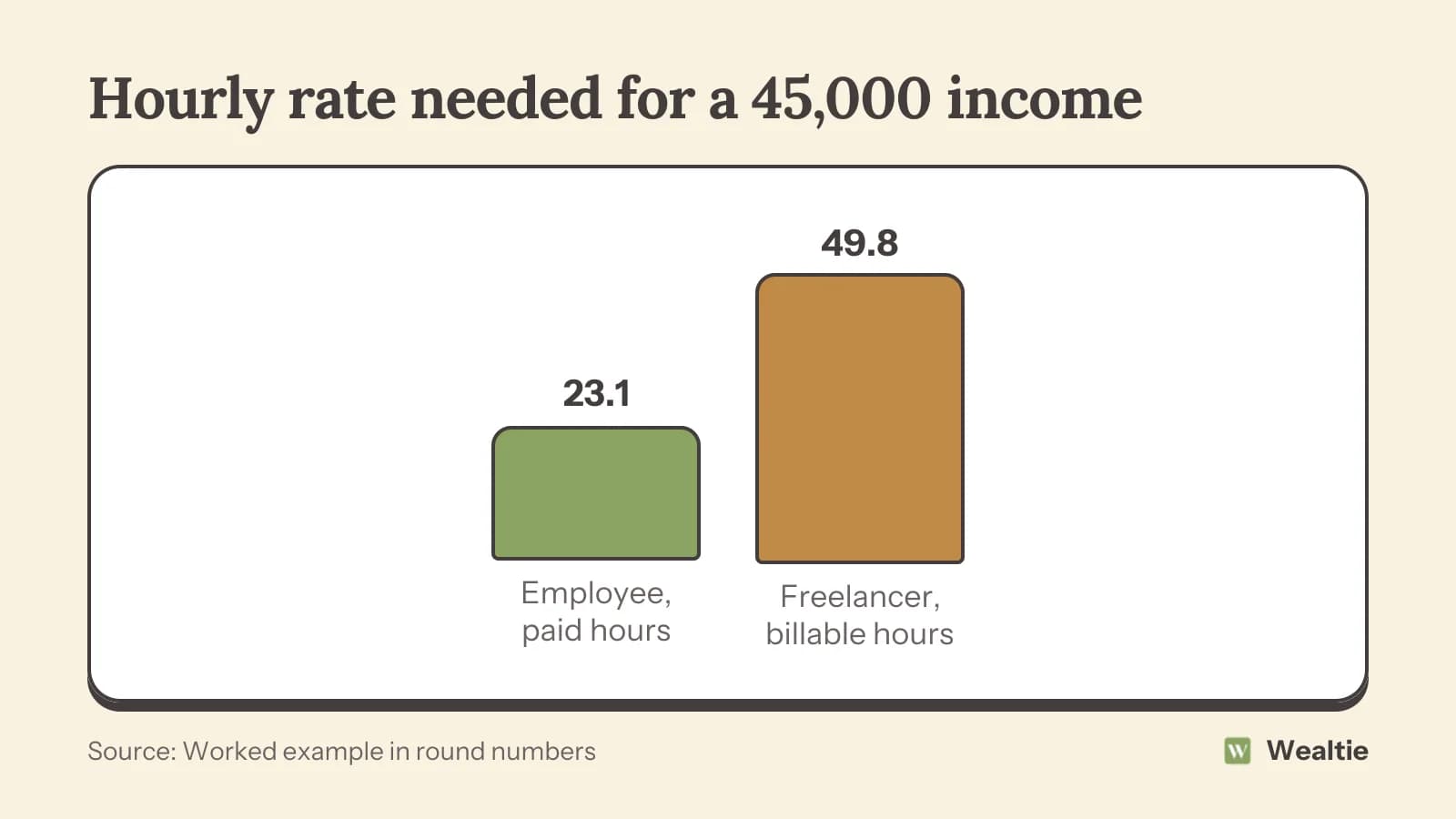
Converting a freelance rate to salary terms means adding what an employer pays for besides wages, then dividing by the hours you can bill. A 45,000 salary works out at about 23 an hour, but matching it as a freelancer takes about 50.
 By Wealtie Team · 3 min read
Key takeaways
- An employee's hourly pay understates what a freelancer must charge, because employers also pay for holidays, pension, benefits and equipment.
- A 45,000 salary over 1,950 paid hours is about 23 an hour.
- Matching it as a freelancer needs about 57,250 of revenue over 1,150 billable hours, or about 50 an hour.
- A rough check is that a freelance rate needs to be about twice the employee hourly equivalent.
How do you compare a freelance rate to a salary?
Count everything the employer pays for, then divide by the hours a freelancer can bill. Comparing the salary divided by working hours with a freelance hourly rate makes freelancing look far more lucrative than it is.
What is a salary worth per hour?
Less than people think, once you look at paid hours. Take a salary of 45,000, in round numbers that work in any currency. An employee is paid for 52 weeks at 37.5 hours, which is 1,950 hours, including holidays and sick days.
45,000 divided by 1,950 is about 23 an hour.
What does a freelancer need to match it?
The salary, plus what the employer was covering:
| Line | Per year |
|---|---|
| Salary to match | 45,000 |
| Pension contributions the employer made | 2,250 |
| Health cover, sick pay, insurance | 3,000 |
| Business costs: equipment, software, accountant | 4,000 |
| Extra tax and contributions as self-employed | 3,000 |
| Revenue needed | 57,250 |
The last line depends a lot on your country and how you're set up, so use your own figure.
Then divide by billable hours, not working hours. With 46 weeks of work, five days a week and five billable hours a day, that's 1,150 hours. The rest goes on holidays, admin, invoicing and finding the next client.
57,250 divided by 1,150 is about 50 an hour.
Why is the gap so big?
Two reasons pull in the same direction. The freelancer has more costs to cover, and fewer hours to cover them with. The employee's 1,950 hours include paid holidays and sick days. The freelancer's 1,150 don't, and they also leave out all the unpaid work of running a business.
So a rough check: a freelance rate needs to be about twice the employee hourly equivalent to land in the same place. It's not exact, but if a client offers you a rate close to your old hourly pay, you'll know it's a pay cut.
What else should you count?
Things that don't show up on a payslip but matter:
- Paid parental leave, if your employer offered more than the statutory minimum
- Training your employer paid for
- A bonus or profit share
- Job security and notice periods
- The time it takes to get paid, since clients may pay weeks after the work
Put a value on the benefits you'd lose by checking what they'd cost to buy yourself. A health plan, an income protection policy and a pension contribution all have prices you can look up, and those prices go in the table above. If your employer offered generous parental leave or a company car, add those too. Then redo the sum after your first year, using your real billable hours.
Some go the other way. Freelancers can often deduct business costs, choose their clients, and charge more as they get established. How to set your freelance rate goes through building a rate from scratch.
How do you compare two specific offers?
Put both on a yearly basis. For a contract, multiply the day rate by the days you'd realistically work in a year, not 260. For a job, add the salary to the value of benefits.
Say a job offers 45,000 with good benefits, and a contract offers 400 a day. At 200 billable days, the contract brings in 80,000. Subtract business costs, extra tax, pension and insurance, and the gap narrows. Then think about how many of those 200 days you can count on. If there's a two-month gap between contracts, it's 160 days and 64,000.
What if you're doing both?
If you've got a job and freelance on the side, the comparison is different: your benefits are covered, so a lower rate can still be worth it. Work out your real hourly rate after costs and tax, as how much a side hustle should make explains, and compare it with what overtime would pay.
How do you plan a variable freelance income?
Set yourself a monthly salary from your revenue target. If you aim to take home what 45,000 gave you, pay yourself that each month from a business account, and leave good months' surplus there for slow ones. The guide on how to budget on irregular income has the method.
How do you track freelance income in Wealtie?
Set a monthly income goal and log each payment as it arrives. The income tracker shows how close you are, kept separate from your budget tracker. On Pro, income analytics show your sources, a stability score and a projection, which help when clients pay unevenly.
Questions people ask
Add the salary to what the employer pays for, like pension, insurance and equipment, plus your extra tax and costs. Divide by your billable hours. A 45,000 salary needs about 50 an hour in a worked example.
Because they cover costs an employer would, and they can bill far fewer hours than an employee is paid for. Holidays, admin and finding clients are all unpaid.
Roughly, in a worked example with 1,150 billable hours and typical costs. Your own figure depends on your tax, costs and how many hours you can bill.
Usually far fewer than an employee's 1,950 paid hours. A worked example of 46 weeks at five billable hours a day gives 1,150.
This article is general information, not financial, tax or legal advice. Your situation is your own; check the numbers that apply to you before you act on them.