Budgeting: What is your real hourly wage after work costs?
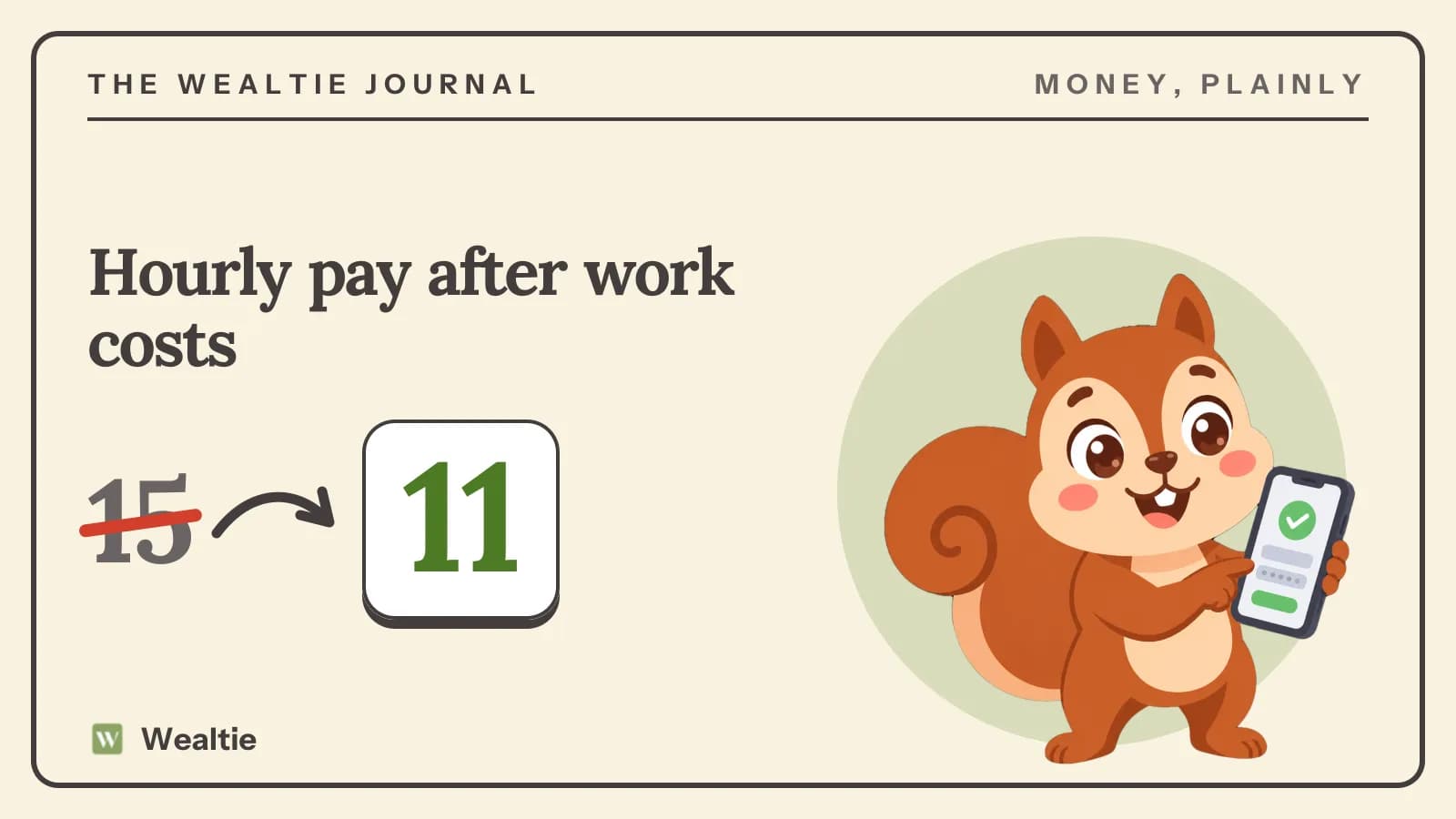
Your real hourly wage is what you earn for every hour work takes from you, after commuting, unpaid time and work costs. In a worked example, a job paying 15 an hour works out at about 11 an hour once those are counted, which changes how a 110 purchase looks.
 By Wealtie Team · 3 min read
Key takeaways
- Your real hourly wage counts commuting, unpaid time and the costs of working.
- In a worked example, a 15 hourly rate works out at about 11 an hour.
- Converting prices into hours of work helps you judge whether a purchase is worth it.
- Cutting work-related costs or commuting time raises your real hourly wage.
What is your real hourly wage?
Your real hourly wage is what you earn for every hour that work takes from your life, after the costs of working. Your contract might say 15 an hour, but that doesn't count the time you spend commuting, unpaid preparation, or money spent on travel, lunches and work clothes. Getting ready for work, travelling and winding down afterwards all take time that pay doesn't cover. Once you include those, the figure is usually lower. Knowing your real hourly wage helps you make clearer decisions about spending and work. It also shows how much of your working life goes on costs you might be able to cut.
How do you work it out?
Start with your weekly take-home pay, subtract the costs of working, and divide by all the hours work takes. Here's a worked example, in round numbers that work in any currency:
| Amount | |
|---|---|
| Weekly take-home pay | 560 |
| Commuting fares | 40 |
| Lunches and coffees bought because of work | 20 |
| Left after work costs | 500 |
| Paid hours | 37.5 |
| Commuting time | 7.5 |
| Unpaid preparation and messages | 1 |
| Total hours | 46 |
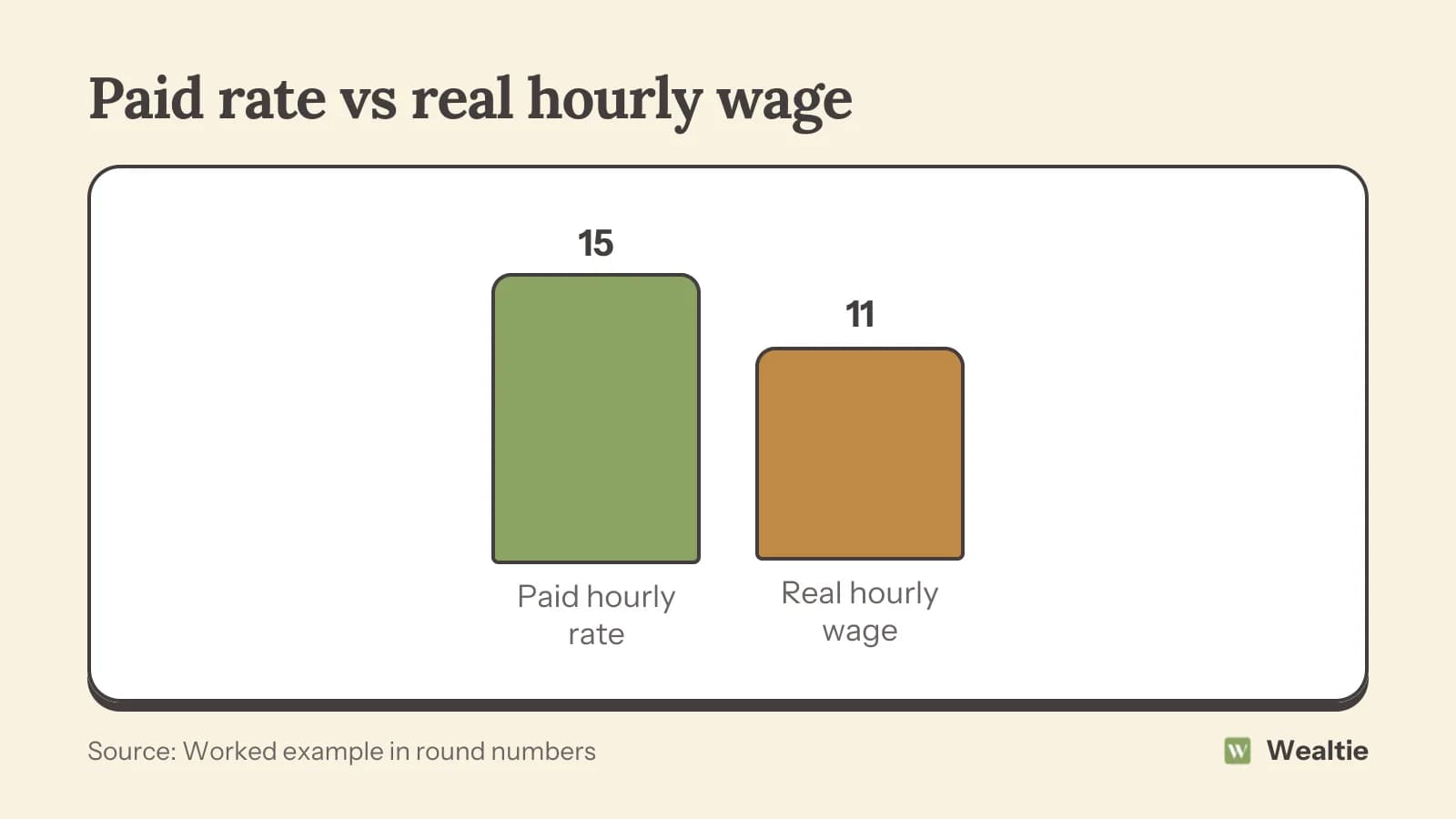
Dividing 500 by 46 hours gives about 11 an hour, against a paid rate of 15. Your own figure depends on your job, commute and habits. Gross vs net income helps with the take-home pay part.
What counts as a work cost?
Anything you spend because you work:
- Commuting fares, fuel and parking
- Work clothes, uniforms and dry cleaning
- Lunches and coffees you buy because you're at work
- Childcare needed so you can work
- Equipment, software or professional fees you pay yourself
- Convenience spending, like takeaways on tiring days
Some of these are hard to separate from normal life, so a rough estimate is fine. Tracking work-related spending for a month gives you a more accurate figure.
How does it change how you see purchases?
Converting prices into hours makes them more concrete. In the worked example, a 110 purchase costs about 10 hours of real work. Asking "is this worth ten hours of my life?" can make it easier to decide. It doesn't mean you shouldn't buy things, but it helps you spend on what matters most. Many people find that big purchases they value pass the test easily, while impulse buys don't. Cost per use is another way to judge value.
Small habits in hours
A daily coffee bought at work might cost a couple of hours of real work each week. Seeing habits this way often helps people decide which ones to keep. Some habits are worth every minute; others are easy to drop once you see the cost.
How does it help with job choices?
Two jobs with the same pay can have very different real hourly wages. The difference often comes from commuting, which can add hours each week and a large monthly cost. A job closer to home, with fewer unpaid hours or lower work costs, can be worth more than a higher-paid one with a long commute. If you work from home some days, your real hourly wage rises, since commuting time and costs fall. How to cut commuting costs covers one of the biggest factors. When comparing jobs, working out the real hourly wage for each makes the comparison much fairer.
It's not only about money
Your real hourly wage is a money measure, but the hours behind it matter too. Long commutes and unpaid evenings affect sleep, health and time with family. Thinking about both the money and the time helps you choose work and habits that suit the life you want, not just the highest headline rate.
How do you raise your real hourly wage?
Raise pay, cut work costs or cut work time. Ways to do it:
- Bring lunch and coffee from home
- Find a cheaper or shorter commute, or work from home where possible
- Limit unpaid hours and checking messages after work
- Ask for a pay rise, or look for better-paid work
- Buy work clothes second-hand and look after them
Each change lifts the real value of every hour you work. Even saving 20 a week on lunches raises the figure noticeably over a year.
Does this apply to freelancers?
Yes, and it matters even more. A freelancer's rate can look high until unpaid hours are counted. Freelancers often have unpaid time for admin, finding clients and invoicing, plus business costs. Freelance rate to salary covers working out what a freelance rate is worth.
How do you track it in Wealtie?
Log your pay in the income tracker, and give work-related costs, like commuting and lunches, their own lines in your expense categories. Comparing them each month shows your real earnings and whether changes, like working from home, are making a difference.
Questions people ask
What you earn for every hour work takes, after commuting, unpaid time and the costs of working.
Take weekly take-home pay, subtract work costs and divide by all the hours work takes, including commuting.
Because commuting time, unpaid hours and work costs aren't counted in the pay rate.
Cut work costs and commuting time, limit unpaid hours and look for higher pay.
This article is general information, not financial, tax or legal advice. Your situation is your own; check the numbers that apply to you before you act on them.