Budgeting: The cost of collecting trading cards, and how to set limits
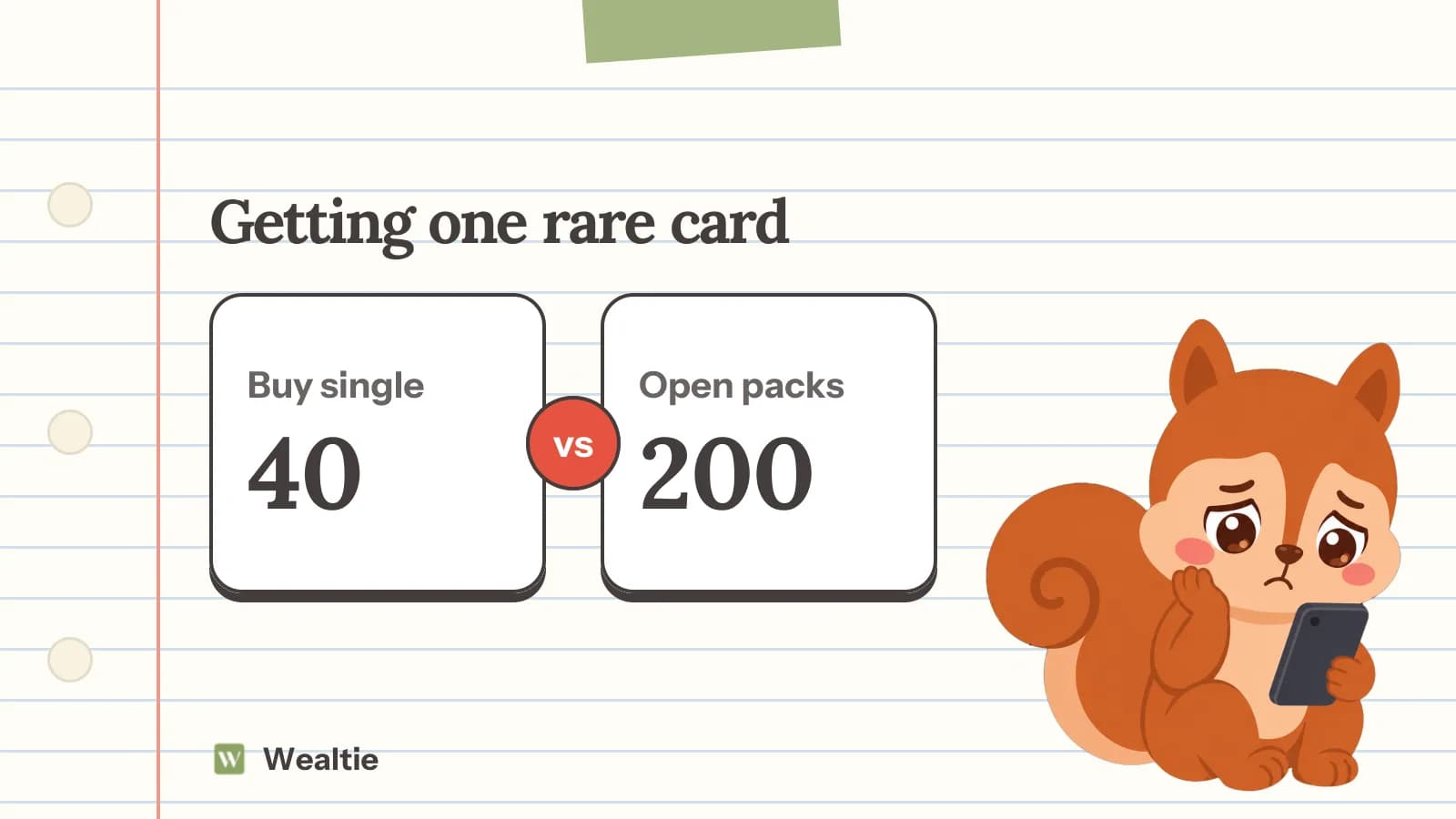
The cost of collecting trading cards can climb quickly, because buying packs to chase rare cards costs far more than buying the cards you want directly. In a worked example, chasing one rare card through packs costs 200, against 40 to buy it as a single.
 By Wealtie Team · 3 min read
Key takeaways
- Collecting trading cards gets expensive when chasing rare cards in packs.
- Buying single cards directly is usually far cheaper.
- Set a monthly limit, especially for children and teenagers.
- Don't treat cards as an investment you can count on.
What does collecting trading cards cost?
Trading cards, from sports cards to collectible card games, are a hugely popular hobby for children and adults. Opening packs is exciting, playing games with friends is fun and finding a rare card feels great. But collecting trading cards can become expensive, because cards are sold in random packs and the rare ones are, by design, hard to find.
Here's a worked example of getting one rare card you want, in round numbers that work in any currency:
| Approach | Cost |
|---|---|
| Buy the single card | 40 |
| Open packs until it appears | 200 |
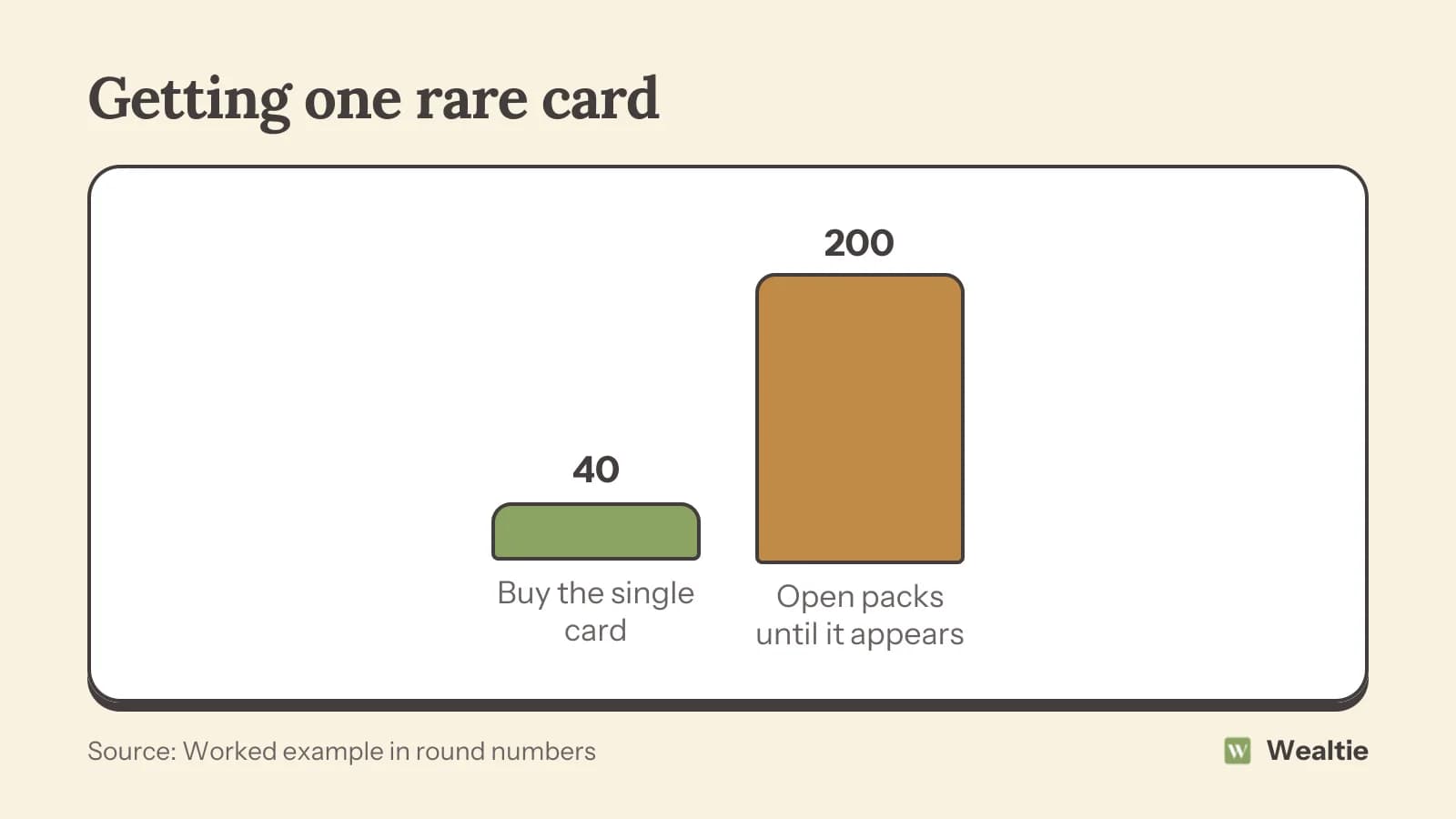
At 5 a pack, it might take 40 packs or more before the card you want turns up, costing 200 or more. Buying that exact card from a shop or another collector might cost 40. Opening packs is part of the fun, but as a way to get specific cards, it's usually much more expensive.
Why do packs cost so much in the long run?
Random contents
Each pack contains a random mix, with rare cards appearing only occasionally. You can't choose what you get.
Chasing complete sets
Trying to collect every card in a set means buying many packs and ending up with lots of duplicates.
New sets keep coming
New releases come out regularly, which makes it easy to keep buying.
The thrill of opening
The excitement of opening packs can make it hard to stop, similar to other games of chance. It's worth being aware of that, especially with children.
How do you collect on a budget?
Buy singles for the cards you want
If you want specific cards, buy them directly from shops, collector websites or other collectors. It's usually much cheaper than opening packs.
Set a monthly limit
Decide how much you'll spend each month, like 20, and stick to it. For children, linking card spending to pocket money helps them learn to budget. Pocket money by age covers setting amounts.
Trade duplicates
Swapping duplicates with friends or at local game shops helps complete collections without spending more.
Play with what you have
For card games, building decks from cards you own, or using budget deck guides, keeps the game fun without chasing expensive cards.
Sell cards you don't need
Selling spare or unwanted cards can fund new ones. How to sell things you don't use covers selling online.
Are trading cards a good investment?
Some rare cards have sold for large sums, which gets a lot of attention. But most cards don't rise in value, prices can fall quickly and condition matters a lot. Buying cards mainly as an investment is risky. Collect because you enjoy it, and treat any rise in value as a bonus.
How can parents help children manage card spending?
Talk about how packs work and why buying singles is cheaper. Agree a monthly limit and let children decide how to spend it. It's a good way to teach budgeting, patience and the value of money. How to budget as a teenager and how to stop impulse buying cover these skills more widely.
Protecting your cards matters if you care about their condition or might sell them one day. Sleeves, binders and storage boxes cost little and help keep cards in good shape. Storing them away from damp, heat and direct sunlight also helps. For valuable cards, rigid holders give extra protection, though most cards don't need special treatment.
Local game shops are a great resource. Many run free or cheap events where players can trade, play and learn, and staff can help you find singles at fair prices. Online marketplaces have more choice, but it's worth checking seller reviews and comparing prices, since prices for the same card can vary a lot.
For card games, it helps to decide what kind of player you want to be. Casual players can enjoy the game with affordable decks, while competitive play often needs expensive cards that change as new sets are released. Knowing which suits you helps set a realistic budget.
If you notice that opening packs is becoming hard to stop, or spending is creeping up beyond what you planned, take a break and look at your total spending over the last few months. Seeing the real number can help reset the habit.
Finally, enjoy the community side. Trading and playing with friends often brings more lasting enjoyment than chasing the rarest cards.
How can Wealtie help you track card spending?
Log packs, singles and accessories in a hobby expense category, and set a monthly budget. Seeing the total each month makes it easier to keep the hobby fun and under control.
Questions people ask
It varies widely. In a worked example, chasing one rare card through packs cost about 200, compared with 40 to buy it directly.
Buying single cards is usually much cheaper if you want specific cards. Packs are random, so you may open many before getting the one you want.
Not reliably. Most cards don't rise in value, and prices can fall quickly. Collect for enjoyment rather than profit.
Agree a monthly limit linked to pocket money, explain how packs work and encourage trading duplicates.
This article is general information, not financial, tax or legal advice. Your situation is your own; check the numbers that apply to you before you act on them.