Budgeting: How to budget as a teenager with your first money
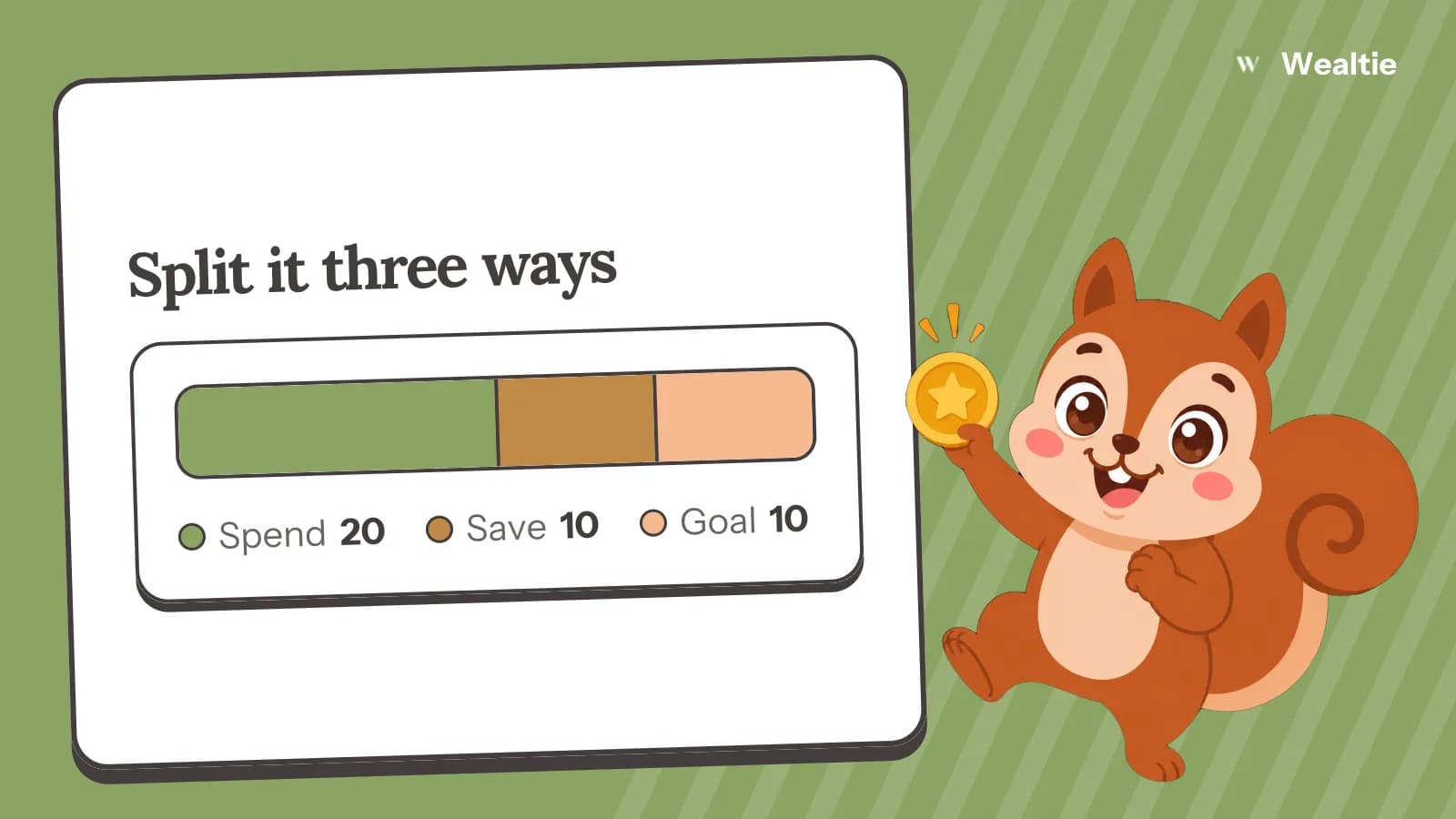
Here's how to budget as a teenager: split any money you get into three parts: some to spend, some to save and some for a goal. On 40 a week from a part-time job, that might be 20 to spend, 10 to save and 10 toward something you want.
 By Wealtie Team · 3 min read
Key takeaways
- Split your money into spending, saving and a goal as soon as you get it.
- On 40 a week, a split of 20 to spend, 10 to save and 10 toward a goal works well.
- Track what you spend for a few weeks to see where it goes.
- The habits you build now, like saving first and waiting before you buy, make money much easier later.
How do you budget as a teenager?
Split your money as soon as you get it, decide what each part is for, and keep track of where it goes. That's all a budget is. Whether your money comes from pocket money, a part-time job or birthdays, the same simple plan works, and it's a skill that pays off for the rest of your life.
How should you split your money?
Into three parts: spending, saving and a goal. Here's 40 a week from a part-time job, in round numbers that work in any currency:
| Part | Amount | What it's for |
|---|---|---|
| Spend | 20 | Food out, going out, things you want now |
| Save | 10 | Money you don't touch, for later or emergencies |
| Goal | 10 | Something specific, like headphones or a trip |
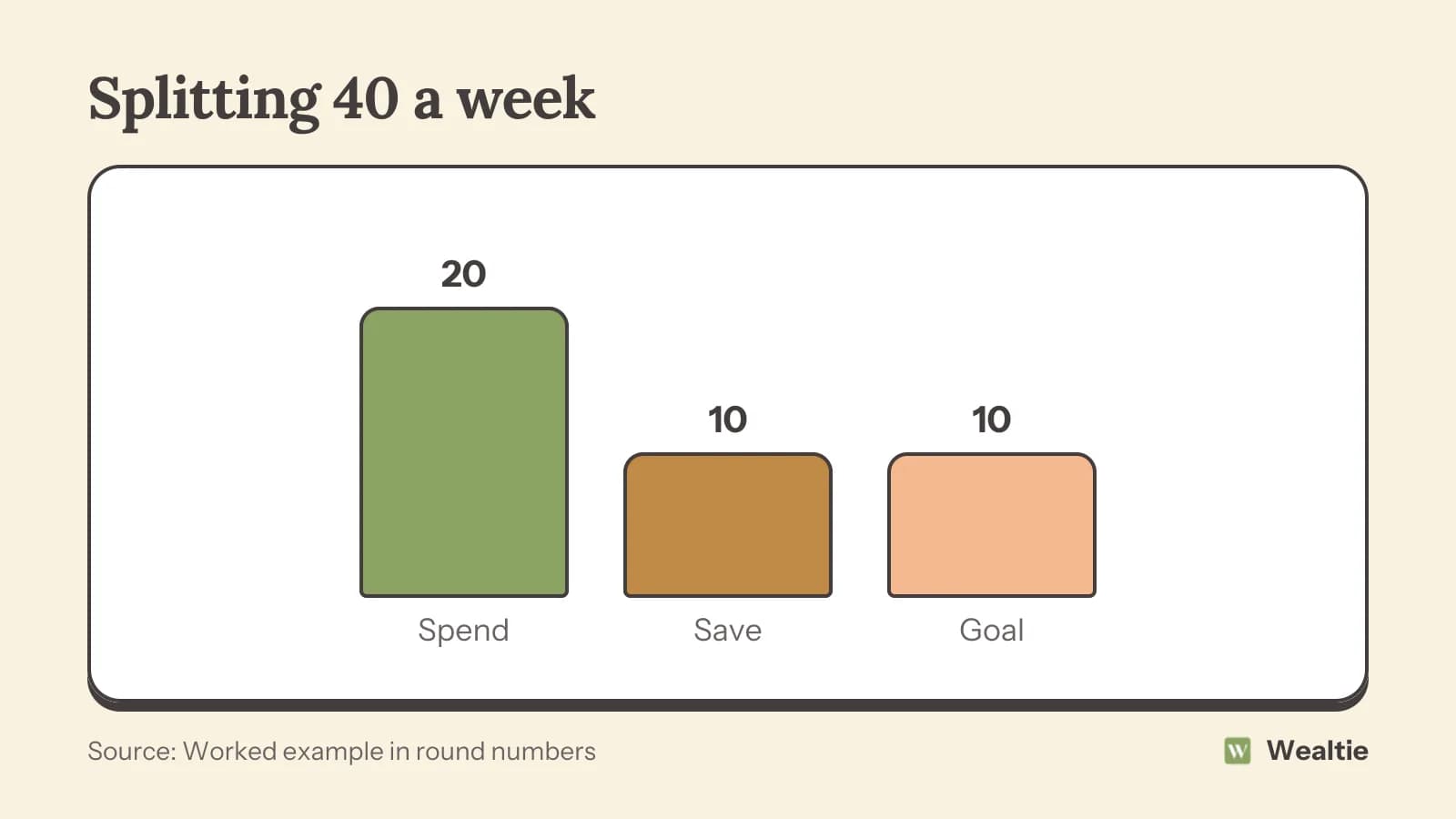
You can change the split. If there's a big goal, put more toward it. The important part is deciding before you start spending, not after. If your money comes from different places, like a job and birthdays, the split works the same for each.
Why save when you don't have bills?
Because it's the easiest time in your life to build the habit. Saving 10 a week for a year gives you 520. That money can pay for something big, help when you start university or work, or cover an emergency like a broken phone.
People who learn to save a part of every payment early find it much easier when the money and the bills are bigger. Pay yourself first explains why saving first works. Some banks offer accounts for young people with no fees, and a parent or guardian can help you choose one.
How do you save for something you want?
Pick a goal, find the price and work out how long it'll take. Headphones that cost 200, at 10 a week, take 20 weeks. Writing that down, or keeping a picture of what you're saving for, makes it easier to keep going.
Tell someone what you're saving for, so they can encourage you. When you get money as a gift, like a birthday, put some of it toward the goal. It can cut weeks off the wait.
How do you keep track of your money?
Write down what you spend for a few weeks, or use an app. You'll probably be surprised where some of it goes. Snacks, drinks and small online purchases add up fast. Once you know, you can decide whether that's how you want to spend it. An expense tracker app can do the adding up for you, though a note on your phone works too.
If you have a bank account with a card, check the balance regularly. Knowing how much you've got stops you running out before your next pay or pocket money.
How do you avoid spending everything?
A few habits help:
- Wait a day or two before buying anything that isn't planned
- Keep your savings in a separate account, so it's not easy to spend
- Be careful with in-app purchases and subscriptions, which can add up without you noticing
- Don't feel you have to keep up with friends who spend more
If friends often want to go out, suggest cheaper plans now and then, like a film night at someone's house. Get into the habit of checking two or three shops before buying something you want, which saves money for life. If you buy something and regret it, that's OK. Mistakes with small amounts now are much cheaper than mistakes with big amounts later. It's one of the best ways to learn what's worth it to you.
What should you know about earning money?
If you're paid in cash for babysitting or similar jobs, put part of it in your savings straight away. If you start working, check your payslip so you understand what you've earned and anything taken off. Learn the difference between what you earn and what reaches your account. Gross vs net income explains it.
Talk to a parent or guardian about money too. Asking what the family's food shop or bills cost gives you a better idea of what living on your own will be like.
What comes next?
The same plan scales up. When you leave home, the spending part becomes rent, bills and food, and the saving part becomes an emergency fund. How to make a budget shows how it works with bigger numbers, the budget calculator shows how a first salary might split between needs, wants and savings, and parents can find age-by-age ideas in pocket money by age.
Questions people ask
Split it into spending, saving and a goal as soon as you get it. On 40 a week, that might be 20 to spend, 10 to save and 10 toward a goal.
Whatever you can manage reliably, even a small amount each week. Saving 10 a week adds up to 520 in a year.
Pick a goal, put part of every payment and gift toward it, and wait a day or two before any unplanned purchase.
It can help, because it lets you keep savings separate and check your balance. Talk to a parent or guardian about the options.
This article is general information, not financial, tax or legal advice. Your situation is your own; check the numbers that apply to you before you act on them.