Budgeting: How to plan a Thanksgiving dinner budget for a crowd
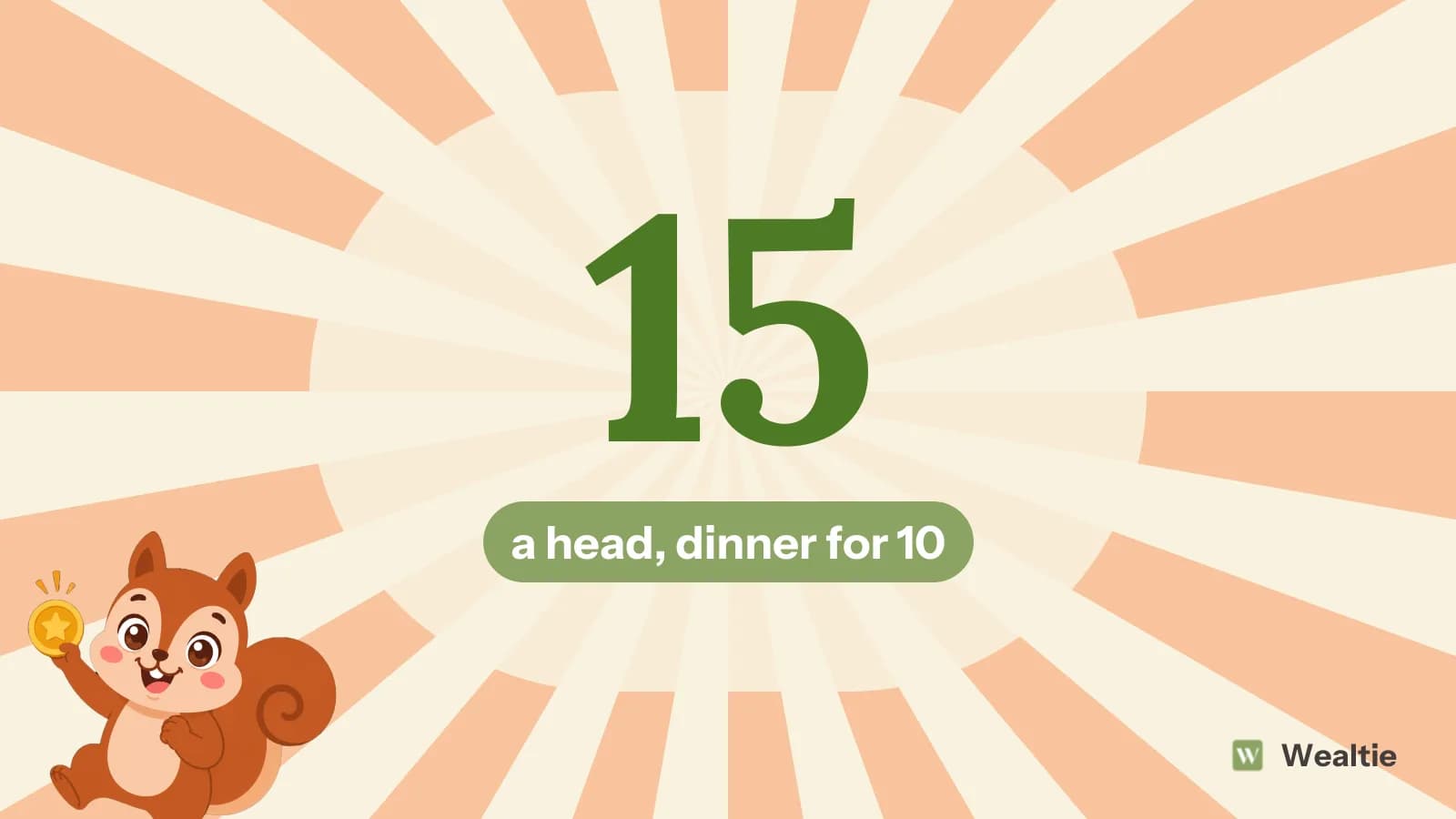
A Thanksgiving dinner budget starts with a total, then a menu built around one main dish and simple sides, with guests bringing dishes. In a worked example, dinner for 10 costs about 150 when shared, or 15 a head.
 By Wealtie Team · 3 min read
Key takeaways
- Set a total for the dinner before planning the menu.
- In a worked example, dinner for 10 costs about 150, or 15 a head, with guests bringing some dishes.
- Asking each guest to bring one dish spreads the cost and the work.
- Planning portions and leftovers stops a lot of food from being wasted.
How do you plan a Thanksgiving dinner budget?
Decide the total, plan the menu around it, and share the cooking. Thanksgiving dinner can get expensive when one person buys and cooks everything for a big table. With a clear number and a little help from guests, it can be generous and affordable.
What does Thanksgiving dinner cost?
Here's a worked example for 10 people, in round numbers that work in any currency:
| Line | Amount |
|---|---|
| Main dish | 50 |
| Sides | 40 |
| Desserts | 25 |
| Drinks | 25 |
| Napkins, foil and extras | 10 |
| Total | 150 |
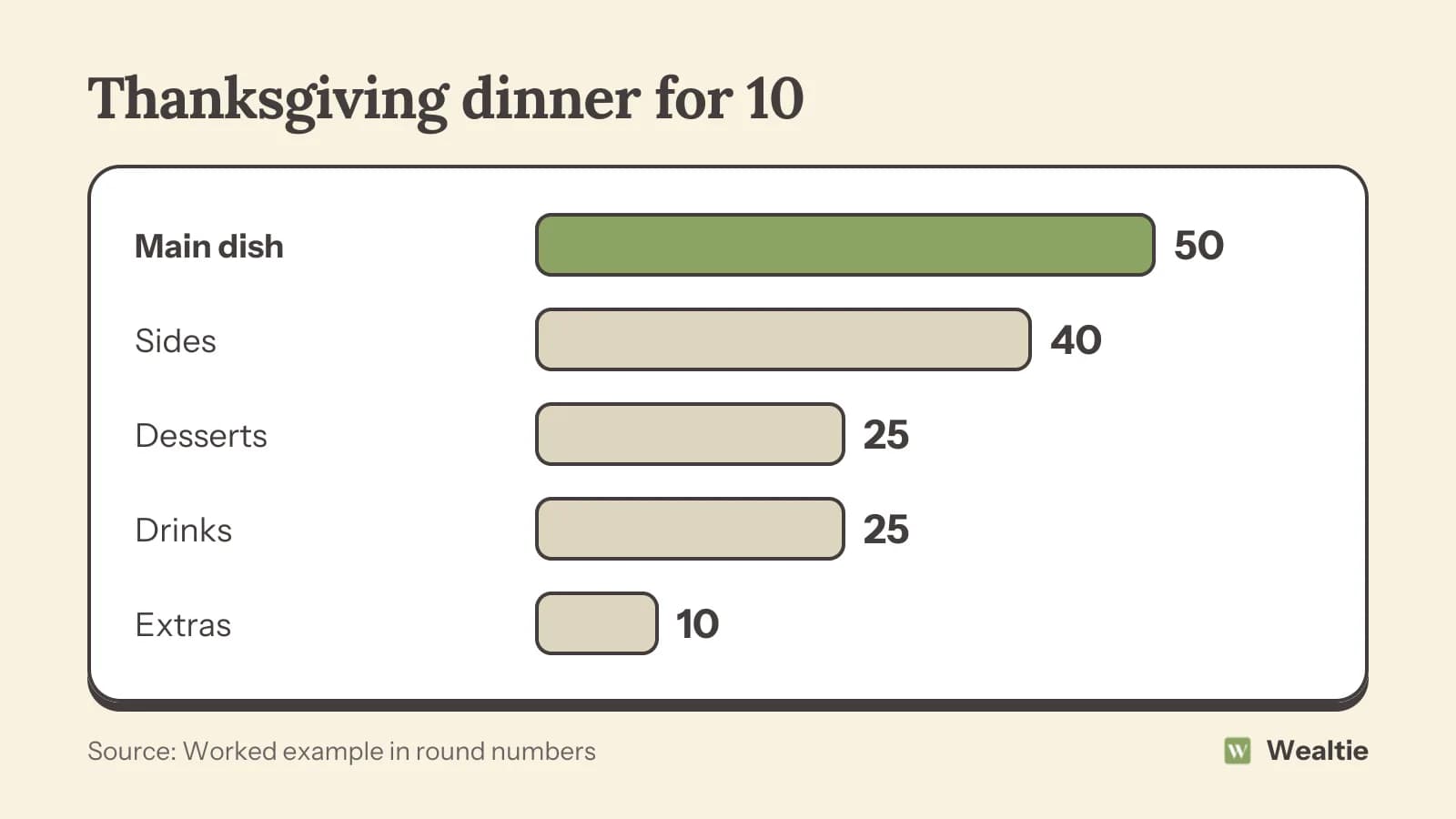
That's 15 a head, with guests bringing some of the sides and desserts. If the host buys everything, the total is higher. Your figures depend on local prices and your menu.
How should you plan the menu?
Around the main dish, with a few simple sides. Pick one main and size it to the number of guests, with a little extra for leftovers. Add four or five sides, like potatoes, a vegetable dish, stuffing, a salad and bread, rather than ten. Choose seasonal vegetables, which are cheaper and taste better at this time of year.
A shorter menu is easier to cook, cheaper and creates less waste. Making some dishes a day ahead, like desserts or stuffing, spreads the work and lets you use oven space better on the day, which matters if you've only got one oven. Most people remember the company and a couple of favourite dishes, not how many dishes there were.
How much food do you need?
Less than many hosts buy. Plan the main dish by weight per person, with a little extra for leftovers, and allow for several sides, since guests take smaller portions of each when there's a choice. Desserts are often over-catered, since people are full by then, so two desserts for ten is usually plenty. Write down quantities on your shopping list, which stops the "just in case" extras that end up in the bin. If you're unsure, ask a relative who's hosted before what they made and how much was left.
Should guests bring dishes?
Yes, it's common and most guests are happy to help. Ask each guest or family to bring one dish, and be specific, so you don't end up with four pies and no vegetables. A shared list in a group message works well. The host can cover the main dish and one or two sides.
If some guests can't cook, they can bring drinks, bread or ice. Borrowing extra chairs, plates and serving dishes from guests saves buying or renting them for one meal.
How do you save at the shop?
Plan the menu, check what you've got, and shop from a list. Buy staples, like flour, butter and potatoes, when they're on offer in the weeks before. Supermarket own-brand works well for most ingredients. Buying the main dish early, when prices are lower, and keeping it frozen can help, as long as you leave enough time to thaw it safely.
Skip extras you don't need, like themed decorations and specialty ingredients for a single dish. A few candles and a tidy table are enough. Check your cupboards for spices and baking basics before you shop, since holiday recipes often call for things you bought last year and still have.
How do you avoid waste?
Plan portions for the number of guests and make a plan for leftovers. Leftovers can make several meals: sandwiches, soups and pies. Ask guests to bring containers so they can take some home. Freeze what you won't eat in a few days. How to reduce food waste has more ideas.
What about travel?
If you're travelling for Thanksgiving, add travel to the total. It's often the biggest cost of the holiday. Book early, since prices rise close to the date, and consider travelling on less busy days. How to save money on flights covers the details.
How do you keep the whole season on track?
Thanksgiving is the start of a busy, expensive few weeks, with Black Friday and the holidays close behind. Give each event its own line in your budget, so they don't blur into one big overspend. The Christmas budget and the Black Friday budget cover the rest of the season.
How do you track Thanksgiving costs in Wealtie?
Log the shopping in a Groceries or Holidays category, so your expense categories show what the dinner came to. A monthly limit in the budget tracker shows what's left for the rest of November. If family members are sharing costs, a shared account lets everyone see and split them, with the owner on Pro and others on any plan.
Questions people ask
About 150 for 10 people in a worked example when guests bring some dishes, or 15 a head.
Set a total, plan one main dish with a few simple sides, ask guests to bring a dish each and shop from a list.
Yes, it's common. Ask each guest for one specific dish so the menu's covered without duplicates.
Plan portions for your guests, ask them to bring containers for leftovers and freeze what you won't eat in a few days.
This article is general information, not financial, tax or legal advice. Your situation is your own; check the numbers that apply to you before you act on them.