Budgeting: Takeaway spending: what two meals a week cost a year
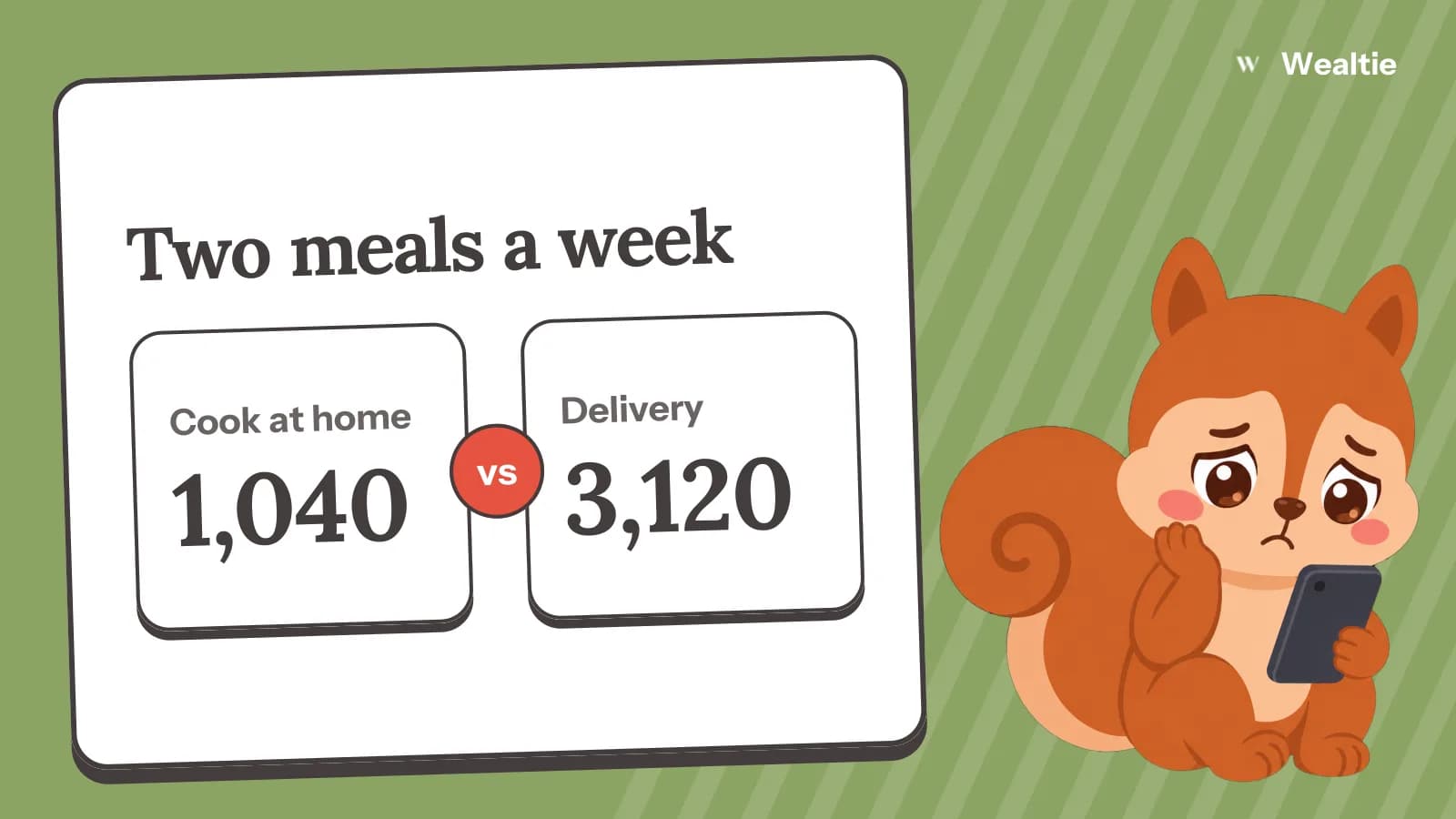
Takeaway spending adds up quietly, because delivery fees, service charges and tips sit on top of the food. In a worked example, two delivery meals a week cost 3,120 a year, while cooking the same meals costs about 1,040.
 By Wealtie Team · 3 min read
Key takeaways
- Takeaway spending grows through fees, service charges and tips on top of the food.
- Two delivery meals a week can cost thousands a year.
- Collecting your order, cooking a fake-away or setting a limit all cut the cost.
- Tracking takeaways for a month shows the real total.
How much does takeaway spending add up to?
Ordering a takeaway is easy, especially after a long day. A few taps and dinner arrives. But takeaway spending adds up faster than most people realise, because the price of the food is only part of the bill. Delivery fees, service charges, small-order fees, tips and the temptation to add a side or dessert all push the total higher.
Here's a worked example of one delivery order for two people, in round numbers that work in any currency:
| Part of the bill | Cost |
|---|---|
| Food | 22 |
| Delivery fee | 3 |
| Service fee | 2 |
| Tip | 3 |
| Total | 30 |
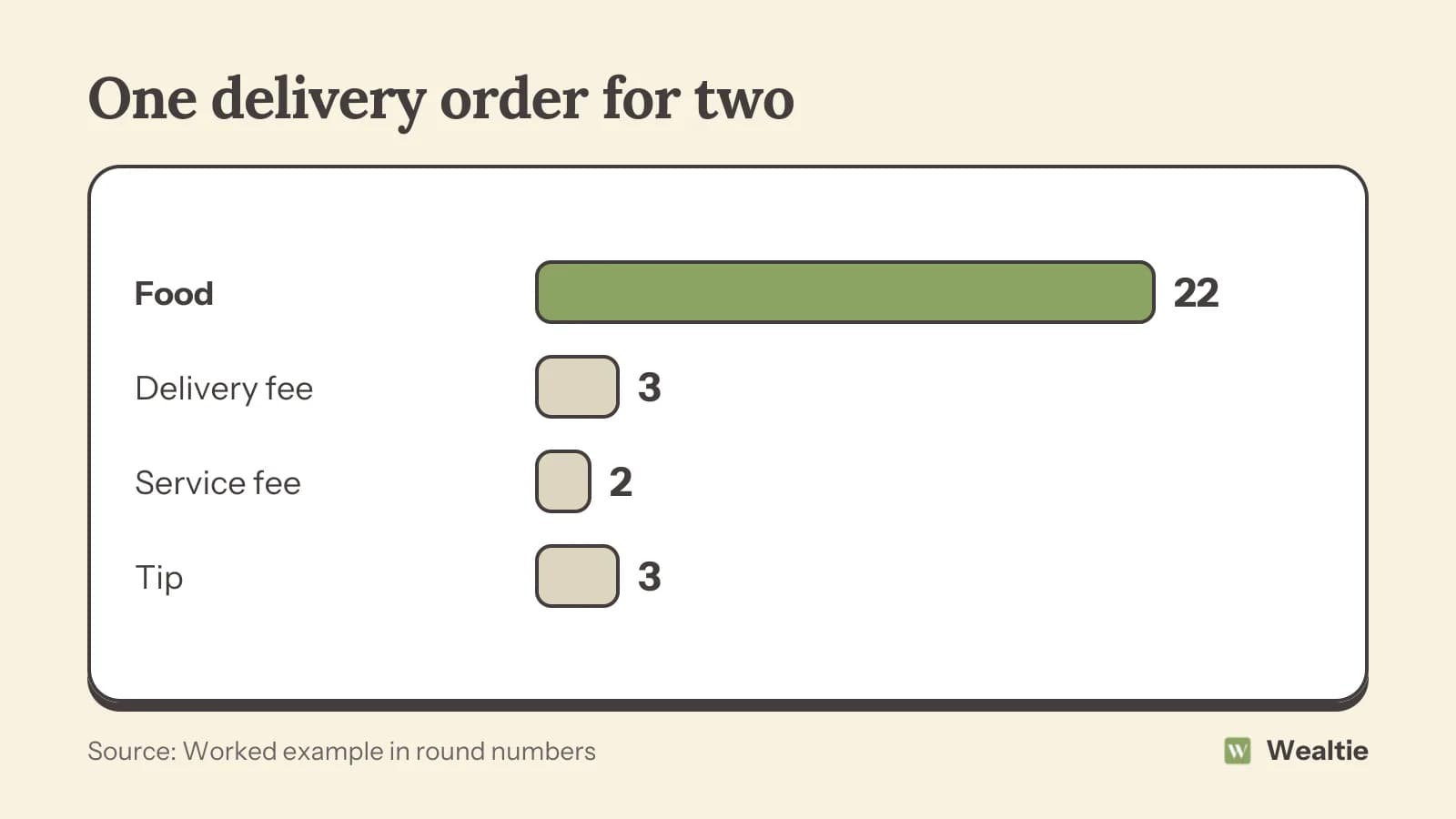
That's 30 for one meal. Two orders a week comes to 60, or 3,120 over a year. Cooking similar meals at home might cost around 10 each time, or 1,040 a year. The difference is more than 2,000, enough for a holiday or a solid start on an emergency fund.
Why does delivery cost so much more?
Fees on top of the menu
Delivery and service fees can add several units to every order, and they're easy to overlook at checkout.
Higher menu prices
Some restaurants charge more on delivery apps than in person, to cover the app's commission.
Minimum orders
Small-order fees or minimum spends push you to add extra items you didn't plan to buy.
Easy repeat ordering
Saved cards, reorder buttons and notifications make it effortless to order again. That removes the pause that might make you cook instead.
Promotions that keep you ordering
Discounts and free delivery offers can make an order feel like a bargain, even when it costs more than cooking.
How can you spend less on takeaways?
Collect instead of delivering
Picking up your order skips the delivery and service fees, and often the tip. In the example, collecting two meals a week would cost about 2,288 a year instead of 3,120.
Set a weekly or monthly limit
Decide how many takeaways fit your budget, like one a week, and stick to it. One a week in the example costs 1,560 a year, half of two.
Make a fake-away
Many takeaway favourites, like curries, pizza, stir-fries and burgers, are easy to make at home for a fraction of the price. Cooking extra and freezing portions gives you a quick dinner on tired nights.
Plan easy meals for busy days
Takeaways often happen when there's nothing quick in the house. Keeping a few simple meals ready, like pasta, eggs or freezer meals, removes the reason to order. How to plan meals on a budget covers building a weekly plan.
Turn off app notifications
Promotions and reminders are designed to make you order. Turning them off, or deleting the app, adds friction.
Make takeaways a planned treat
Choosing a takeaway night, like Friday, makes it something to look forward to rather than a default when you're tired.
Are meal kits a cheaper alternative?
Meal kits sit between takeaways and cooking from scratch. They're usually cheaper than delivery but more expensive than buying your own ingredients. Are meal kits worth it? covers when they make sense.
How do you see your real takeaway spending?
Most people underestimate how often they order. Looking back through a month of bank statements or app order history shows the real number. Many people are surprised to find it's twice what they guessed. Seeing the yearly total is often enough to change the habit, much like with daily coffee. How much do you spend on coffee? shows how small habits add up the same way.
It's also worth checking whether takeaway spending has crept up over time. A habit that started as a weekly treat can become a few times a week without anyone noticing. Lifestyle creep covers how spending rises gradually.
It helps to think about why you order. For many people, takeaways happen when they're tired, stressed or short of time, not because they're craving a particular meal. If that sounds familiar, the fix may be as simple as a stock of quick dinners, a slow cooker meal ready when you get home or a rule that you cook on weeknights and order at the weekend. Changing the situation is often easier than relying on willpower at the end of a long day.
Sharing the job of cooking helps too. If one person always cooks, takeaways often fill the gap on the nights they can't face it. Taking turns, cooking together or batch cooking on a Sunday spreads the effort and makes home-cooked meals the easy option.
None of this means giving up takeaways completely. A meal you enjoy and plan for is good value. The aim is to make it a choice, not a habit.
How can Wealtie help you track takeaways?
Give takeaways their own expense category in Wealtie, separate from groceries and eating out, and log each order. Set a monthly budget for it, and you'll see how much is left before you tap order, which makes it easier to stick to your limit.
Questions people ask
Often more than they think. In a worked example, two delivery meals a week at 30 each cost 3,120 a year.
Delivery and service fees, tips, higher menu prices on apps and minimum orders all add to the cost of the food itself.
Collect instead of delivering, set a weekly limit, keep quick meals at home, make fake-aways and turn off app notifications.
Yes. In a worked example, cooking similar meals at home cost about 10 each, compared with 30 for a delivered takeaway for two.
This article is general information, not financial, tax or legal advice. Your situation is your own; check the numbers that apply to you before you act on them.