Saving: Are subscription boxes worth it?
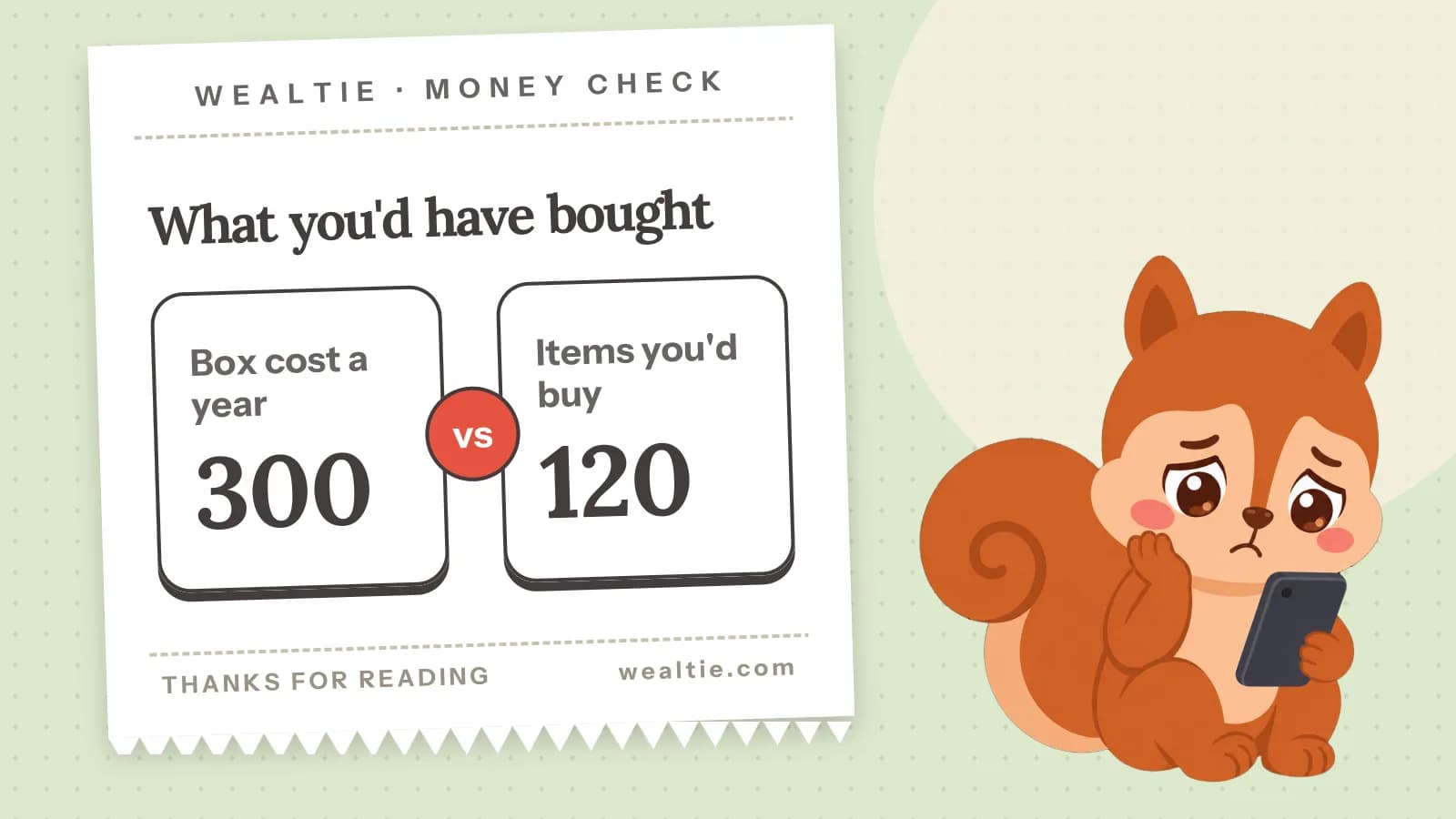
Are subscription boxes worth it? Only when you'd buy most of what's inside anyway, and in a worked example a 25 box costs 300 a year, while the items you'd have bought are worth about 120.
 By Wealtie Team · 3 min read
Key takeaways
- Subscription boxes are worth it only when you'd buy most of the contents anyway.
- In a worked example, a 25 box costs 300 a year, but the items you'd have bought are worth about 120.
- Shop value isn't the same as value to you; unwanted items are a cost.
- Review boxes every few months, and cancel or pause ones you don't use.
Are subscription boxes worth it?
Only if you'd buy most of what's inside anyway. Subscription boxes send a selection of products each month, like beauty items, snacks, books, toys or hobby supplies. They can be fun to open and a way to try new things. But a box is a regular cost that renews automatically, and its value depends on how much of the contents you use.
The question to ask is not what the box is worth in the shops, but what it's worth to you. Many people sign up during a promotion and keep paying long after the excitement of opening it has faded.
How do you work out the real value?
Here's a worked example for a box that costs 25 a month, in round numbers that work in any currency:
| Over a year | |
|---|---|
| Cost of the box | 300 |
| Shop value of contents | 420 |
| Value of items you'd have bought anyway | 120 |
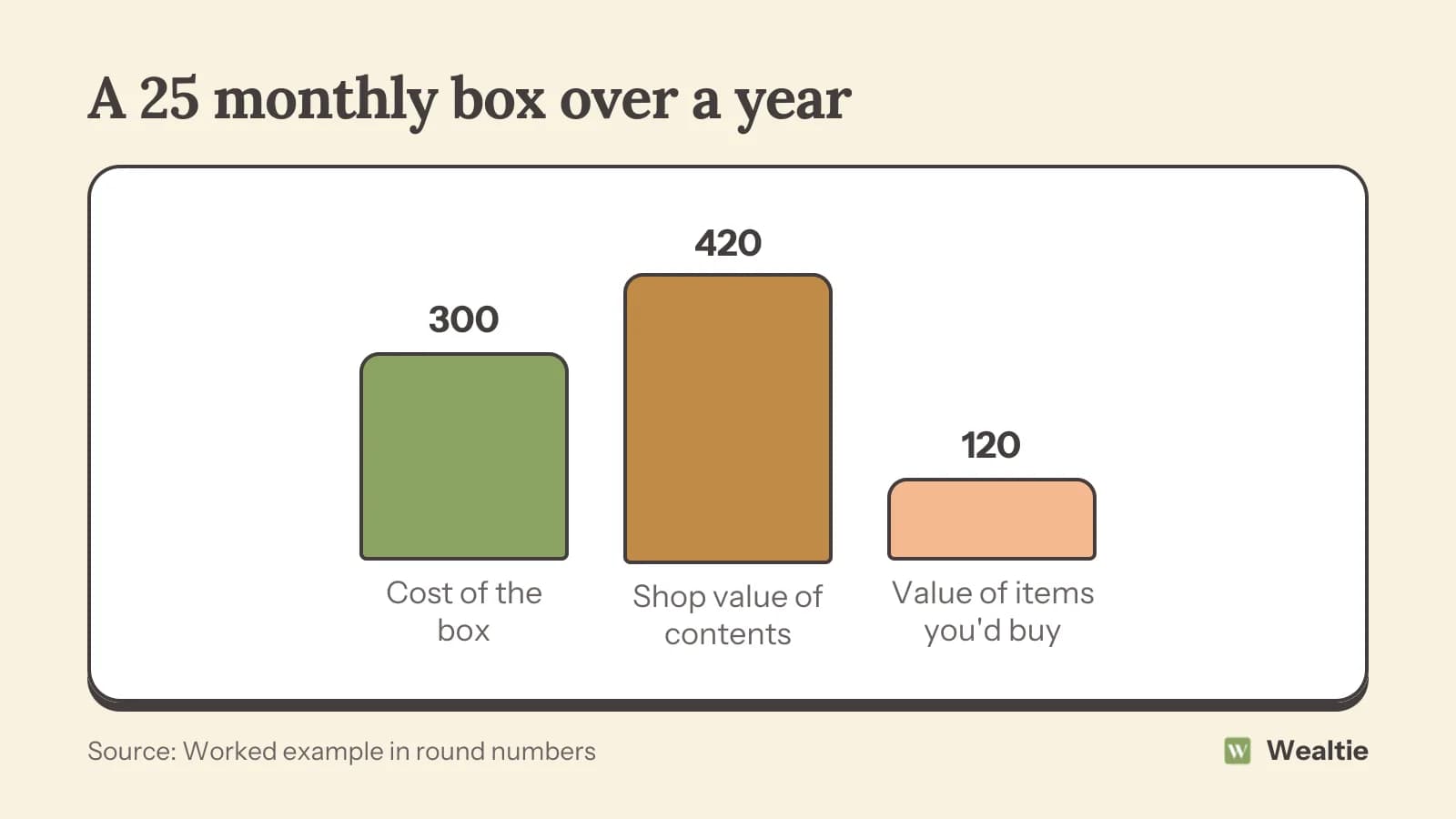
The box looks like a bargain, since the contents are worth 420 in the shops. But if you'd only have bought 120 of those items yourself, you've spent 300 to get 120 of value, plus some things you didn't need. Your own figures depend on the box and how much you use.
Shop value isn't your value
Boxes often advertise the total shop price of the contents. That figure only matters if you'd have paid it. Items you don't use, give away or leave in a drawer aren't a saving; they're part of the cost. A quick test: after each box, write down which items you used within a month. After three boxes, the list tells you the box's value.
When is a subscription box worth it?
A box can be good value when:
- You use most of what arrives each month
- It replaces things you'd buy anyway, at a lower total price
- It saves you time or trips to the shops in a way you value
- It's a planned treat or gift, within your budget
Some people use a box for a few months to try new products, then cancel and buy only their favourites. Others choose boxes that let them pick items each month, which cuts down on unwanted products.
What are the hidden costs?
A few catch people out:
- Automatic renewal, which keeps charging after you've lost interest
- Introductory prices that rise after the first box
- Delivery charges added on top of the box price
- Clutter, from items you didn't choose and won't use
- Extra spending, when the box encourages you to buy full-size versions or add-ons
Subscriptions are designed to be easy to start and easy to forget. How to cut subscription costs has a simple review method.
Check how to cancel before you sign up
Some boxes make cancelling harder than signing up, with phone-only cancellation or notice periods. Read the terms first, and set a calendar reminder a few days before each renewal if you're unsure whether to keep it.
How do you keep subscription boxes under control?
Set a few rules for yourself:
- Keep one box at a time, if any
- Write down the renewal date and price when you sign up
- Review each box every three months: what did you use?
- Pause or skip months when you don't need anything
- Cancel if you're using less than half of what arrives
If a box has built up unused items, selling or giving them away clears space and can recover a little money. How to sell things you don't use has tips.
Are boxes good gifts?
They can be, for someone who'll enjoy them. A fixed-length gift subscription, like three months, avoids the renewal problem. Check whether it renews automatically for the recipient, and choose a box that fits their interests rather than a generic one. A one-off box, bought without a subscription, gives the same surprise without any ongoing cost.
What are the alternatives?
If you like the surprise, a small monthly treat budget lets you choose something yourself. If you want to try new products, samples, swaps with friends and libraries for books or toys offer variety for less. How to stop impulse buying helps if boxes have become a habit you'd like to break.
How do you track subscription boxes in Wealtie?
Set up each box as a recurring transaction with the bill tracker, so you can see what it costs each month and over a year. Give subscriptions their own line in your expense categories, so they're easy to review together and cancel when they stop earning their place.
Questions people ask
Only if you'd buy most of the contents anyway. In a worked example, a 25 box costs 300 a year for about 120 of useful items.
Sometimes, but only for items you'd buy. Products you don't use make the box more expensive, not cheaper.
Keep one at a time, note the renewal date, review every three months and pause or cancel when you're not using them.
They can be. Choose a fixed-length gift that doesn't auto-renew, matched to the person's interests.
This article is general information, not financial, tax or legal advice. Your situation is your own; check the numbers that apply to you before you act on them.