Income & freelancing: How to read your payslip, line by line
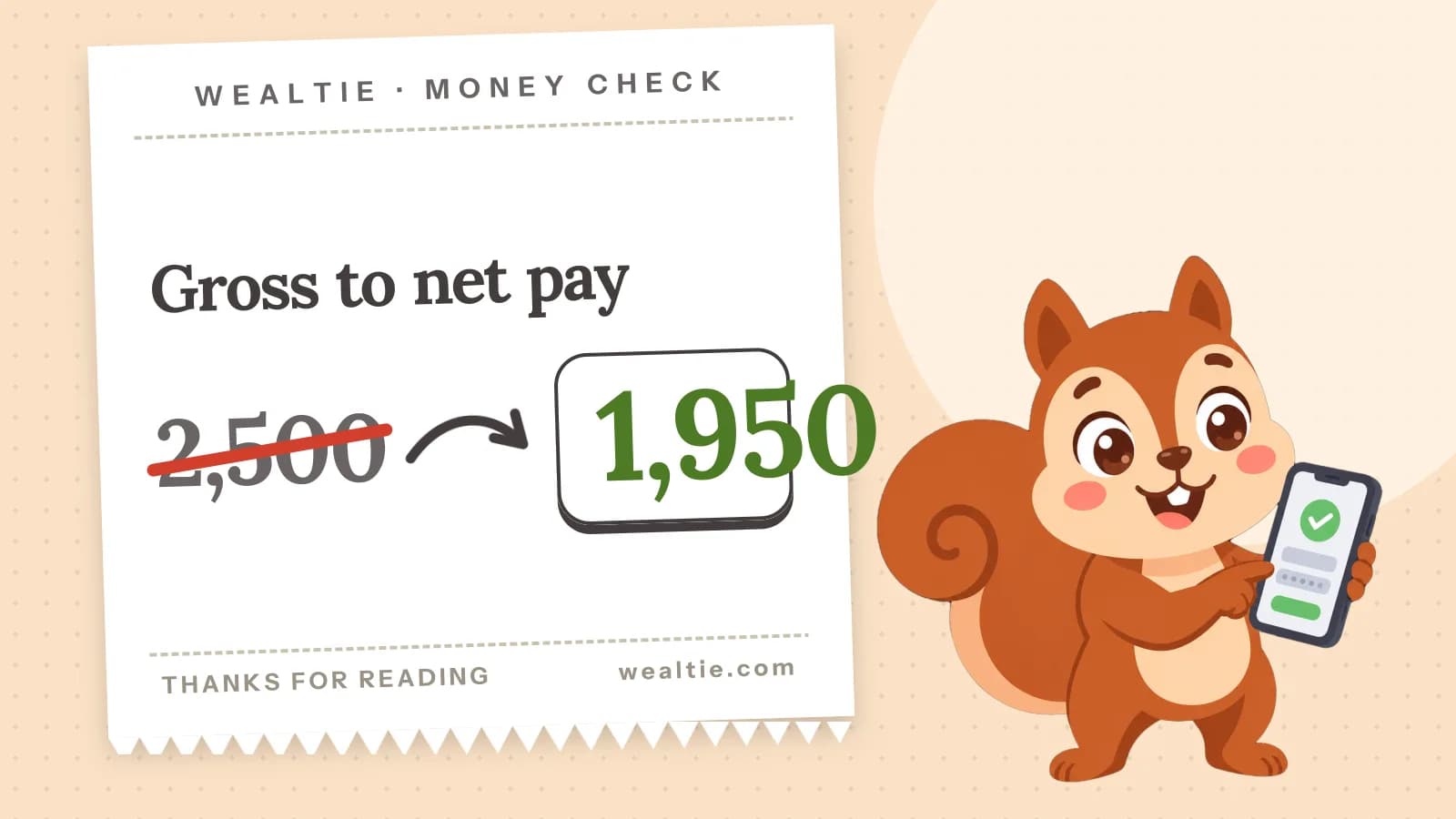
To read your payslip, start with gross pay, check each deduction like tax and pension, and confirm net pay matches what reached your account. In a worked example, gross pay of 2,500 becomes 1,950 take-home after 550 of deductions.
 By Wealtie Team · 3 min read
Key takeaways
- To read your payslip, start with gross pay, check each deduction and confirm net pay.
- In a worked example, gross pay of 2,500 becomes 1,950 after 550 of deductions.
- Check your hours, rate, tax code or tax details and pension each month.
- Keep your payslips, since you may need them for loans, renting or tax.
How do you read your payslip?
Work from top to bottom: what you earned, what was taken off and what you received. A payslip can look confusing, with codes and abbreviations, but it follows the same basic pattern almost everywhere. Once you know where to look, checking it takes only a minute or two. Learning to read your payslip helps you spot mistakes, understand where your money goes and plan your budget around your real take-home pay. It takes a few minutes a month and can catch errors that would otherwise cost you money.
Names for deductions differ between countries, but the ideas are the same.
What are the main parts of a payslip?
Most payslips include the following, though the layout varies:
- Your details: name, employee number and sometimes a tax reference
- Pay period and date: the period the pay covers and when it was paid
- Gross pay: what you earned before deductions, including any overtime or bonuses
- Deductions: tax, social contributions, pension and other amounts taken off
- Net pay: what you receive in your account, often called take-home pay
- Year-to-date totals: what you've earned and paid so far this tax year
How does gross pay become net pay?
Here's a worked example, in round numbers that work in any currency:
| Amount | |
|---|---|
| Gross pay | 2,500 |
| Income tax | 300 |
| Social contributions | 150 |
| Pension | 100 |
| Net pay | 1,950 |
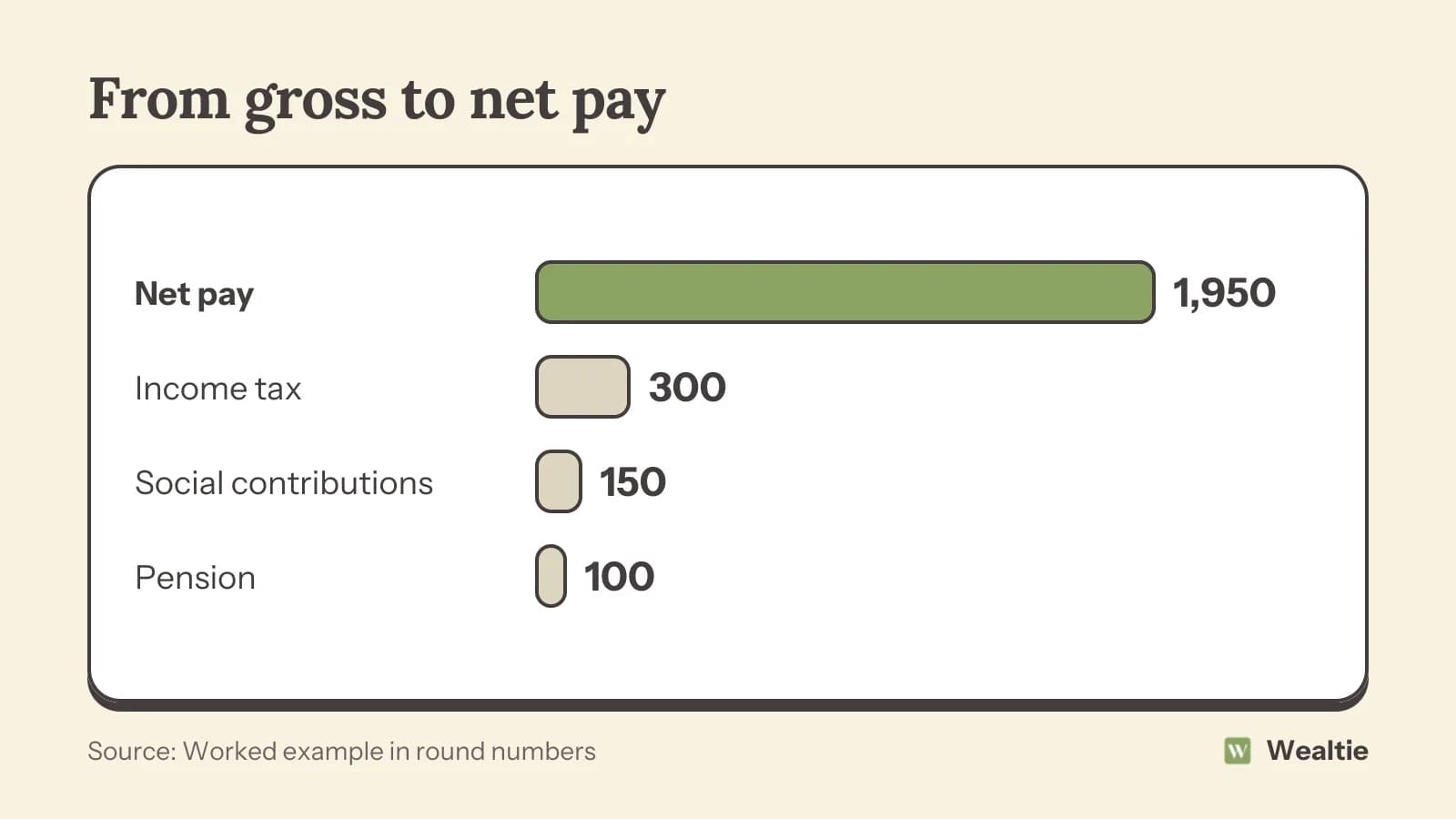
In this example, 550 of deductions take gross pay of 2,500 down to 1,950. Your own deductions depend on your income, where you live and the schemes you're in. Year-to-date totals help you check that tax is building up as expected across the year. If your pay jumps in one month, like with a bonus, tax that month may be higher too. Gross vs net income explains the difference in more detail.
What deductions might you see?
Common deductions include the following, though not everyone will see all of them:
- Income tax, based on your earnings and tax allowances
- Social contributions, which fund state pensions and benefits in many countries
- Pension contributions, to a workplace pension
- Student loan repayments, in some countries, once you earn above a threshold
- Other deductions, like union fees, charity giving or benefit schemes
How to budget with student loan repayments covers one of the less obvious deductions. If you don't recognise a deduction, ask; it might be a scheme you signed up for and forgot.
What should you check each month?
A quick check catches mistakes early:
- Are your hours and pay rate correct?
- Is overtime, holiday pay or any bonus included properly?
- Do your tax details, like a tax code where used, look right?
- Is your pension contribution what you agreed?
- Does net pay match what arrived in your bank account?
If something looks wrong, ask your payroll or HR team, ideally in writing so there's a record. Mistakes happen, and catching them quickly makes them easier to fix. Keeping your own note of hours worked, especially if you do shifts or overtime, makes checking easy.
When pay changes
Pay can vary from month to month with overtime, shift patterns or bonuses. Budgeting on your lowest typical month, and saving the extra from bigger ones, keeps your plan steady.
Why should you keep your payslips?
You may need them to apply for a mortgage, a loan or a rental, to check your tax, or to claim benefits. Lenders and landlords often ask for the last three months, so having them ready speeds things up. Many employers provide payslips online; download and save them somewhere safe, since you may lose access if you change jobs. Keeping your year-end tax summary is useful too. A simple folder on your computer, named by year, makes payslips easy to find.
How does your payslip help with budgeting?
Budget on net pay, not gross. Many people plan their spending around their salary figure and then wonder why money runs short; the difference is the deductions on your payslip. Your take-home pay is what you can spend and save. If your pay changes, your budget should change with it. Checking your payslip each month keeps your budget accurate, and noticing the pension and tax you're paying helps you see the bigger picture of your finances.
When you start a new job
Your first payslip at a new job may look different, with emergency tax, a part month or a different pay date. Check it carefully, and ask payroll if anything looks off. Temporary tax issues often correct themselves over the following months.
How do you track your pay in Wealtie?
Log your net pay in the income tracker each payday, and set a monthly income goal based on your typical take-home pay. Track spending in your expense categories, so you can see how your pay is used each month.
Questions people ask
Start with gross pay, check each deduction like tax, social contributions and pension, then confirm net pay matches what you received.
Gross pay is what you earn before deductions. Net pay is what you receive after them.
Your hours and rate, overtime or bonuses, tax details, pension contribution and that net pay matches your bank account.
You may need them for a mortgage, loan, rental, tax check or benefit claim.
This article is general information, not financial, tax or legal advice. Your situation is your own; check the numbers that apply to you before you act on them.