Income & freelancing: How to budget with tips when your income changes every shift
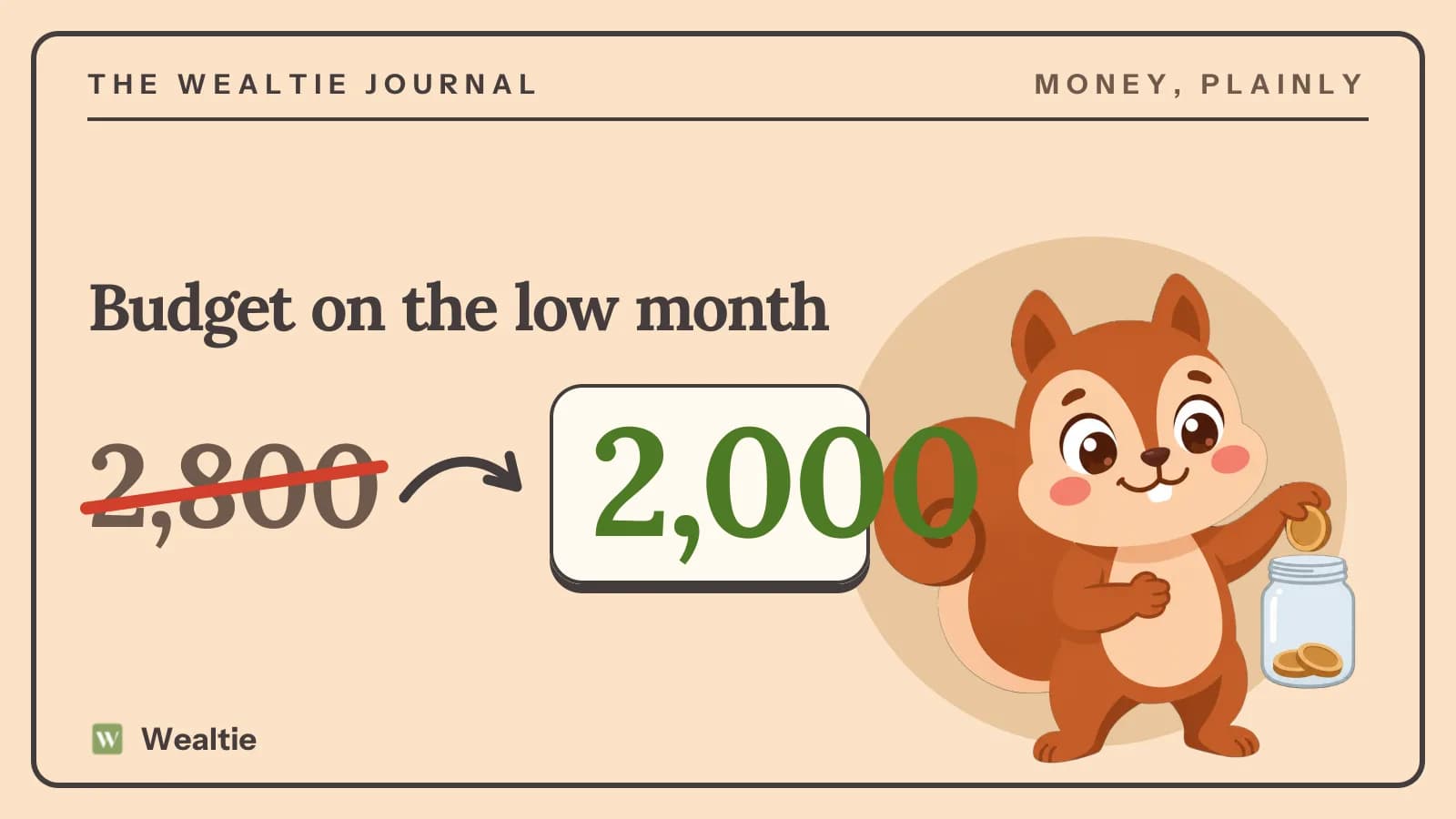
To work out how to budget with tips, plan your bills on base pay plus your lowest typical tips, then move everything above that into a separate pot. In a worked example, that means budgeting on 2,000 a month while earning between 2,000 and 2,800.
 By Wealtie Team · 3 min read
Key takeaways
- Budget on base pay plus the tips you get in a slow month, not an average one.
- In a worked example, base pay of 1,400 and tips of 600 to 1,400 mean planning on 2,000.
- Move tips above the slow-month level into a separate pot to cover quiet weeks and goals.
- Tips are usually taxable income, so keep records and check how they're taxed where you live.
How do you budget with tips?
Plan your bills on the money you can count on, and treat the rest as extra. The money you can count on is base pay plus what you make in tips in a slow month. Anything above that goes into a separate pot.
This works because your rent doesn't care whether the restaurant was busy.
What should you plan on?
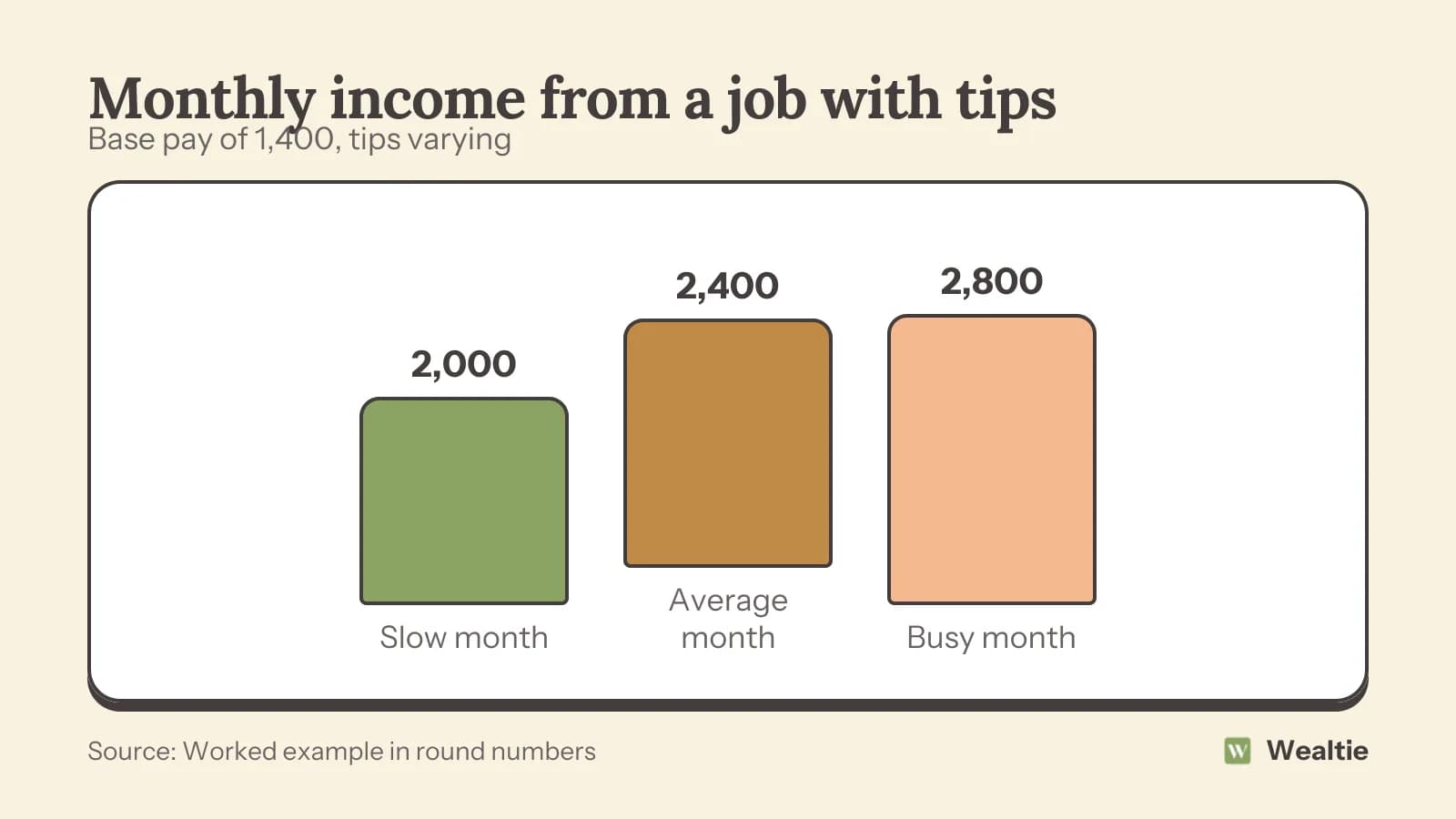
Your slow months. Go back over three to six months of pay and tips and find the lowest typical month. Leave out one-offs, like a week off sick, but keep the quiet season. Here's a worked example in round numbers that work in any currency:
| Month | Base pay | Tips | Total |
|---|---|---|---|
| Slow | 1,400 | 600 | 2,000 |
| Average | 1,400 | 1,000 | 2,400 |
| Busy | 1,400 | 1,400 | 2,800 |
If you're new to the job, ask colleagues what a quiet month looks like, and use a cautious guess until you've got three months of your own records. Write down tips per shift as well as per month. A Friday night can bring more than three weekday lunches, and that tells you which shifts to ask for.
Build your budget on 2,000. Rent, bills, food, transport and debt payments all need to fit in that. If they don't, the issue is your fixed costs, and the guide on how to budget on irregular income has more on that situation.
What do you do with the extra?
Move it into a separate pot the day you get it. In an average month, that's 400. In a busy one, 800.
The pot does three jobs, in order:
- Covers any month that comes in below 2,000
- Builds an emergency fund
- Pays for goals, like a holiday or a car
Don't raise your fixed costs after a run of busy months. A higher rent based on summer tips will be hard to pay in February.
Once the pot holds a month's worth of your budget, you've got a buffer for the slowest season. After that, the extra can go to goals.
Should you budget weekly or monthly?
Weekly, if your bills are spread out and you're paid weekly. Each week, set aside a share of your rent and bills before you spend anything. With rent of 900 a month, that's about 210 a week.
Whichever you pick, move the bill money on the same day each week or month so it becomes routine. A separate account for bills makes it harder to dip into by accident.
Monthly works if most bills land on the same day and you can keep cash aside without spending it. Weekly or monthly budget compares the two.
How do you handle cash tips?
Count them at the end of each shift and write the total down. Then bank them, or keep them in an envelope that isn't your wallet. Cash in a wallet gets spent without being counted.
If you're paid tips on a card or through payroll, check your payslip each time so you know what came in, and ask for a breakdown if it isn't clear. Tracking cash the same way as your card has a system for the cash side.
Do you have to pay tax on tips?
Usually, yes. In many countries tips count as taxable income, though the rules on how they're reported differ. Keep a daily record of what you received, and check your tax authority's guidance or your employer's process. If tax isn't taken out automatically, set some aside from each week's tips. If you share tips through a pool or with kitchen staff, record what you keep, since that's your income.
How do you prepare for the slow season?
Look at your past year and mark the months that were slowest. If January and February are always quiet, start filling the pot in October.
If a slow stretch is longer than your pot can cover, plan for it: extra shifts in busy months, a second job for the quiet ones, or lower costs. A sinking fund works for seasonal gaps the same way it works for yearly bills.
How do you track tips in Wealtie?
Log base pay and tips as separate income entries, and the income tracker shows the month's total against your goal. Add a separate account for the pot and move the extra into it as a transfer, which isn't counted as spending. Set your monthly limit in the budget tracker to your slow-month figure. On Pro, budgets and income goals can run weekly.
Questions people ask
Plan your bills on base pay plus the tips you earn in a slow month, and move anything above that into a separate pot for quiet weeks and goals.
Often, yes, if you're paid weekly. Set aside a share of rent and bills every week before spending anything.
Move it into a separate pot the day you get it, to cover slow months first, then an emergency fund, then goals.
Usually, yes, in many countries, though the reporting rules differ. Keep a daily record and check your tax authority's guidance.
This article is general information, not financial, tax or legal advice. Your situation is your own; check the numbers that apply to you before you act on them.