Budgeting: How to stop using credit cards and what to do instead
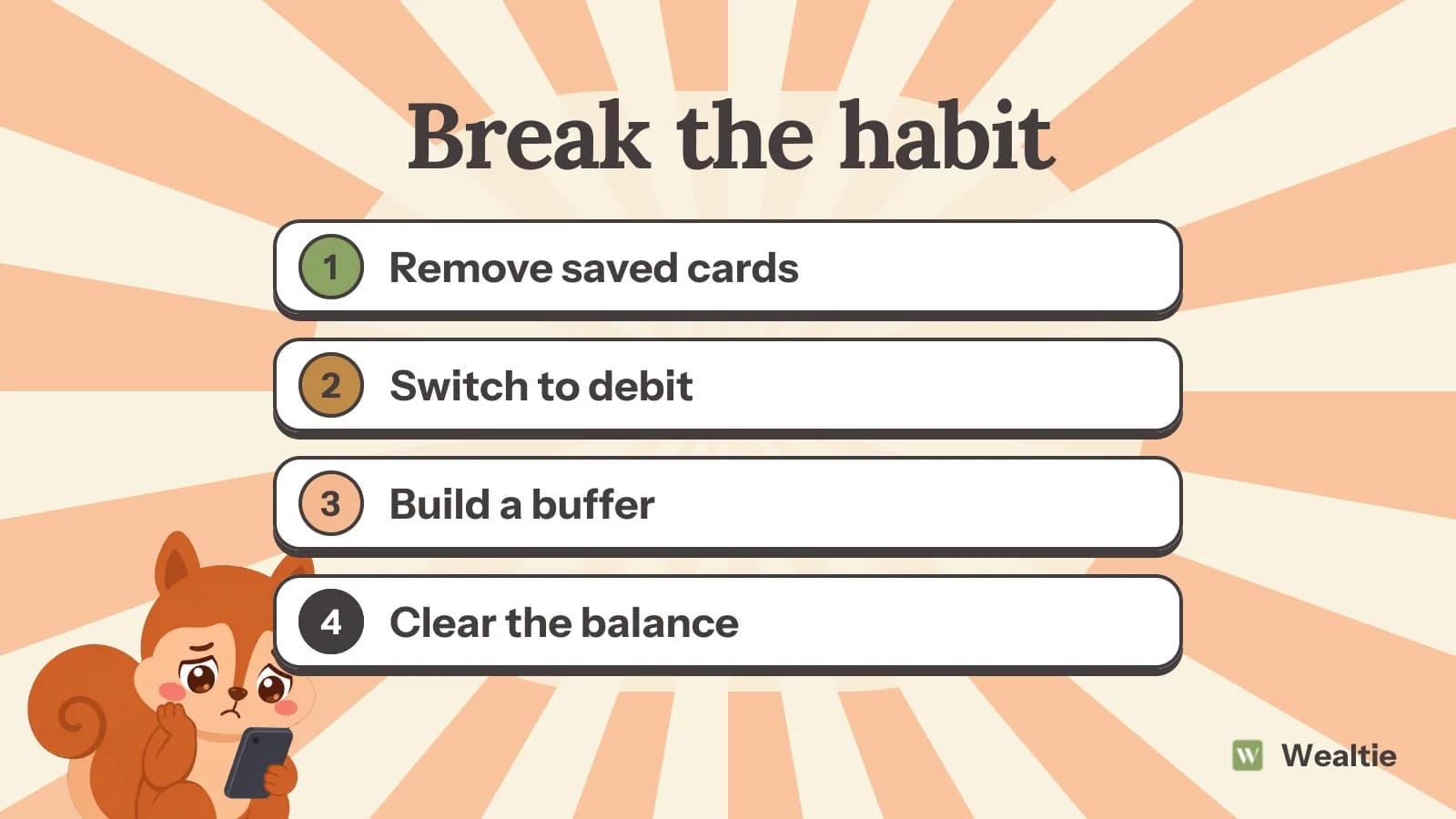
To stop using credit cards, take them out of your wallet and saved payment details, switch everyday spending to debit, and build a small emergency fund so surprises don't go on credit. Then clear the balance with a fixed monthly payment.
 By Wealtie Team · 3 min read
Key takeaways
- Remove credit cards from your wallet, phone and saved payment details, so using them takes effort.
- Switch everyday spending to a debit card, so you only spend money you have.
- A small emergency fund stops surprises from going back on credit.
- Keep the account open if it helps your credit record, but stop using it, unless closing it suits you better.
How do you stop using credit cards?
Make them harder to use, give yourself a better option, and deal with the reasons you reached for them. Most people use credit cards out of habit, convenience or because there's no other money when a surprise comes. Fix all three and the card stops being the default.
How do you make cards harder to use?
Add friction:
- Take credit cards out of your wallet and leave them at home, or somewhere awkward
- Remove them from your phone's wallet and from saved payment details on shopping sites
- Turn off one-click buying where you can
- Unsubscribe from offers that encourage spending
It sounds small, but having to find a card and type in the number gives you a moment to decide whether you need the purchase. If you've got several cards, keep one, ideally the one with the lowest rate, and put the rest away.
What should you use instead?
A debit card. It spends money you already have, so you can't spend more than is in the account. Pair it with a monthly budget so you know how much is available. Some people use cash for a while for the categories that tend to get out of hand. How to make a budget walks through setting one up.
If you used a credit card for its protection on large purchases, like a fridge or flights, you can decide to use it only for those, and pay it off in full the same day. Many people find a clear rule like that easier than an outright ban.
Why do you need an emergency fund?
Because surprises are the main reason people go back to credit. A car repair or a broken phone with no savings ends up on the card. A small fund, even 500, means you can pay for those without borrowing. How to build an emergency fund has the steps.
Keep it in a separate account so it doesn't get spent. Build it while you clear the balance, so you're protected sooner. A small cushion first, then focus on the debt, then grow the fund.
How do you clear the balance?
Pick a fixed monthly payment and stick to it. A balance of 2,000 paid at 200 a month takes about a year, depending on the rate. If you've got more than one card, the debt snowball or avalanche helps you choose an order. Should you pay your credit card in full explains what carrying a balance costs.
Set up the payment as automatic on the day after payday, so it always goes out. Mark milestones, like paying off the first 500, which helps you keep going. Telling a partner or friend about the goal makes it easier to stick to.
Should you close the card?
It depends on you. Closing an account can affect your credit record in some systems, because it reduces your available credit and the length of your history. Keeping it open but unused, with a zero balance, can avoid that. If the temptation's too strong, closing it may be the better choice. Check how it works where you live. If you keep it and your issuer closes inactive accounts, use it now and then for a small purchase you pay off immediately.
What about rewards and protection?
Rewards only pay off if you clear the balance every month and don't spend more to earn them. If you're trying to stop using credit, rewards aren't a reason to keep going. Interest on even a small balance for a month or two can cancel out a year of rewards.
What if you need credit for something important?
Plan for it. Most big costs can be saved for in advance, like a car, a holiday or furniture. Divide the price by the months until you need it, and move that amount to a separate pot each payday. If you're tempted at a till by store credit, wait 48 hours before deciding. If credit is unavoidable, compare the total cost of options and have a plan to repay it.
How do you stay off credit cards in Wealtie?
Set a monthly limit in the budget tracker based on what's in your account, and log debit spending as you go. Budget Health warns you mid-month if your pace would take you over, which is the moment people often reach for a card. The expense tracker page covers logging.
Questions people ask
Remove it from your wallet, phone and saved payment details, switch to a debit card for everyday spending, and build a small emergency fund for surprises.
Not always. Closing it can affect your credit record in some systems, so keeping it open but unused may be better, unless the temptation's too strong.
A debit card, paired with a monthly budget, so you only spend money you have.
Build a small emergency fund, even 500, so surprises can be paid without borrowing.
This article is general information, not financial, tax or legal advice. Your situation is your own; check the numbers that apply to you before you act on them.



