Budgeting: What to do when you go over budget: a ten-day plan
When you go over budget, work out how much and where, cover the gap from a category with money left or from next month's budget rather than a new debt, and change the number that was wrong. One month over is information, not failure; the budgets that get abandoned are the ones nobody adjusts.
 By Wealtie Team · 3 min read
Key takeaways
- Start with the exact amount and the categories that ran over; 'I overspent' is too vague to fix.
- Cover the gap from categories with money left this month first, then from next month's budget, and only then from savings.
- If the same category runs over three months in a row, the budget number is wrong and needs to go up, with something else coming down.
- A one-off overspend, like a repair or a gift, belongs in a sinking fund next year, not in a tighter monthly budget.
- Checking the budget mid-month, not at the end, turns most overspends into adjustments you make while there's still time.
What should you do when you go over budget?
Work out exactly how much and where, cover the gap without new debt, and change the number that was wrong. In that order, over the next ten days.
Going over budget isn't the end of the budget. It's the first time the budget has told you something you didn't already know. What matters is what you do in the next week or so, before the overspend turns into a reason to stop budgeting altogether.
Day 1: how much did you go over, and where?
Get the exact figure and the categories. "I overspent" can't be fixed; "groceries were 90 over and eating out 110 over" can.
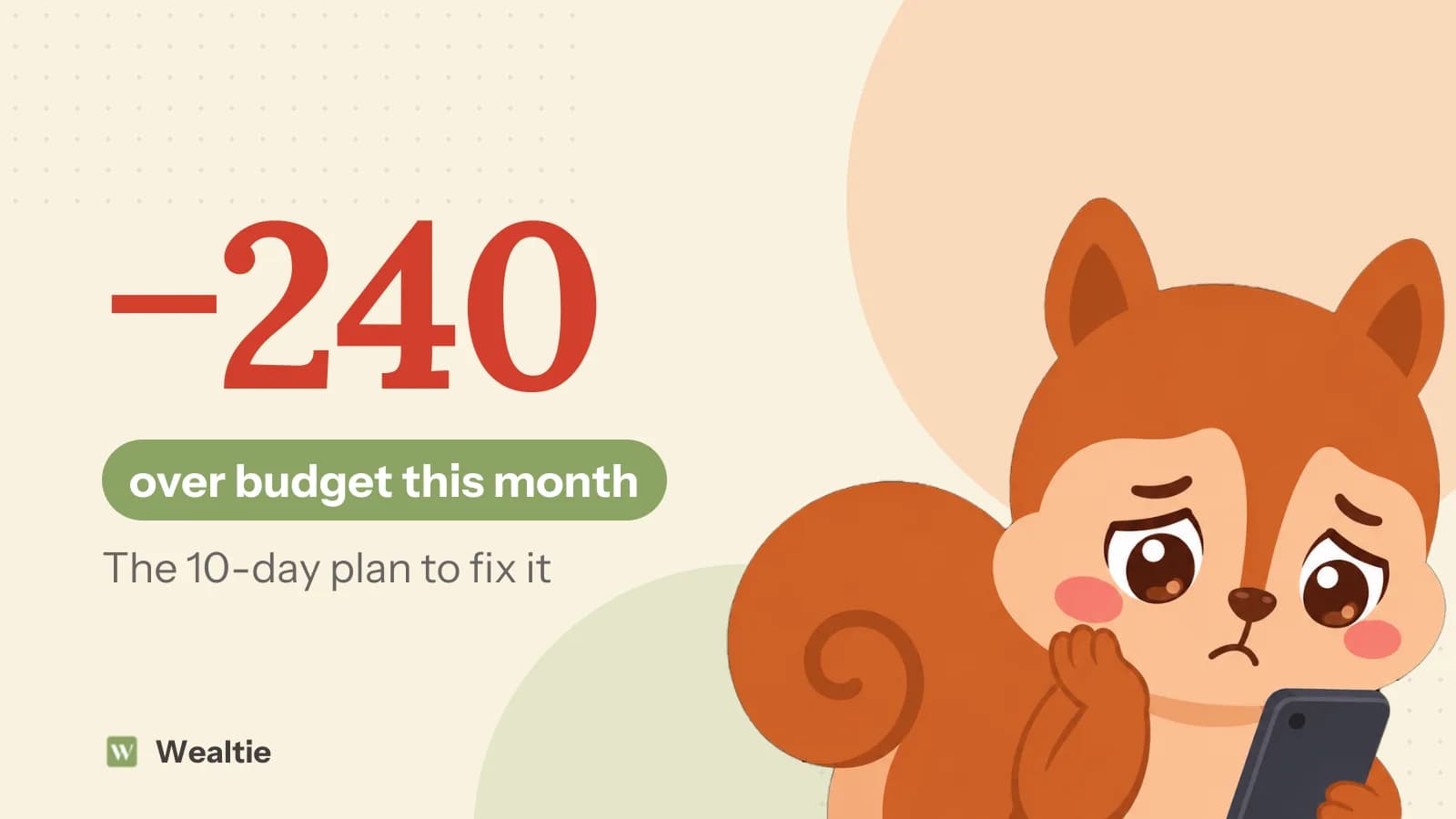
Here's a worked example in round numbers, the same in any currency. The monthly budget was 3,000 and spending came to 3,240.
| Category | Budget | Spent | Difference |
|---|---|---|---|
| Groceries | 450 | 540 | −90 |
| Eating out | 150 | 260 | −110 |
| Transport | 200 | 180 | +20 |
| Personal spending | 200 | 180 | +20 |
| Gift (not in the budget) | 0 | 40 | −40 |
| Everything else | 2,000 | 2,040 | −40 |
| Total | 3,000 | 3,240 | −240 |
Now you know it's 240, and most of it is two categories plus a gift nobody planned for. That's a different problem from "I'm bad with money", and a much easier one to fix.
Days 2 to 3: how do you cover the gap?
From categories with money left this month first, then from next month's budget, and from savings only if it was a real emergency.
- This month's leftovers. Transport and personal spending have 40 between them. Move it across.
- Next month's budget. The remaining 200 comes off next month, spread across a few categories so no single one is squeezed to nothing.
- Savings, as a last resort. Only for a genuine emergency: something unplanned, necessary and urgent. And only with a plan to put it back.
What you don't do is leave it on a credit card to deal with later. A 240 overspend carried at interest becomes a bigger overspend next month.
Days 4 to 7: which numbers were wrong?
Look at each category that ran over and ask whether this month was unusual or the budget was unrealistic.
- Unusual: a birthday, a guest staying, a one-off repair. The budget was fine; the month wasn't. Next year, a sinking fund handles it.
- Unrealistic: the same category runs over most months. The budget number was a wish. Raise it, and lower a category that keeps finishing with money left, so the total stays the same.
In the example, the gift is unusual. Eating out at 260 against 150 is probably unrealistic, unless it was a one-off. Check the last three months before deciding.
Days 8 to 10: what changes for next month?
Write next month's budget with the corrected numbers and a mid-month check in the calendar.
Most overspends happen in the second half of the month, when the budget's already gone and nobody looked. A check on the 15th turns the same overspend into an adjustment: you see eating out at 180 with two weeks to go and decide what to do while there's still time. How to stop overspending covers the habits that help in the weeks in between.
Also add a small line for the costs that don't fit anywhere. Even 50 a month for "irregular" keeps one forgotten gift from blowing the whole budget.
What if you keep going over budget?
Then the budget needs more changing than the spending. Three months over in a row means the total is too low for the life you're living, or the categories don't match how you spend.
Start again from what you actually spent in the last three months, not what you'd like to spend. Set each category at that average, then cut one or two by a realistic amount. A budget you keep at 3,200 is worth more than one you abandon at 2,900. Why most budgets fail goes through the five usual reasons and the fix for each, and how to make a budget rebuilds one from take-home pay.
How do you keep going after a bad month?
Count the months you stay inside the budget, not the months you don't, and make a bad month cost as little as possible.
Wealtie's budget streaks count every month you stay within your budget, with nine badges along the way. Go over and the streak resets, and that's the whole penalty: no lost history, no red marks on old months. Budget Health, part of your budget, warns you mid-month if your spending pace will take you over, which is the moment the 240 could still have been 40.
Questions people ask
Find the exact amount and the categories, cover the gap from categories with money left or from next month's budget, and change the number that was wrong. Then check mid-month next time, while you can still adjust.
Only as a last resort, and only if the overspend was a real emergency. For ordinary overspending, take it from other categories this month or next month's budget, so savings stay for what they're for.
Yes, especially in the first few months, while the numbers are still guesses. A budget usually takes two or three months of adjusting before the amounts match how you actually spend.
Raise the amount for the category that always runs over and lower one that always has money left. Add a monthly amount for irregular costs, and check your spending pace in the middle of the month.
Pay it from your emergency fund if you have one, and refill it over the next few months. If you don't have one, spread the cost over the next two or three budgets instead of cutting one month to nothing.
This article is general information, not financial, tax or legal advice. Your situation is your own; check the numbers that apply to you before you act on them.