Budgeting: How to spring clean your finances
To spring clean your finances, clear out what you don't need, like unused subscriptions and old accounts, organise your paperwork, and update your budget for the months ahead. A weekend afternoon is enough to make your money simpler and easier to manage.
 By Wealtie Team · 3 min read

Key takeaways
- Spring cleaning your finances means clearing out, organising and refreshing your money plans.
- In a worked example, cancelling unused subscriptions and switching two bills saves 50 a month.
- Closing old accounts and organising paperwork makes money easier to manage.
- Selling things you don't use can add to savings at the same time.
What does it mean to spring clean your finances?
It means giving your money the same treatment as a cluttered cupboard: clear out what you don't need, organise what's left and make it easier to use. Over time, finances collect clutter, like subscriptions you've forgotten, old accounts with small balances, paperwork in piles and a budget that no longer fits your life. A spring clean makes everything simpler.
You don't need to do it in spring, but the idea of a fresh start helps. A weekend afternoon is usually enough.
How do you clear out subscriptions and bills?
List every regular payment and ask whether you still need it. Cancel subscriptions you don't use, and check whether any bills could be cheaper. Here's a worked example of monthly savings, in round numbers that work in any currency:
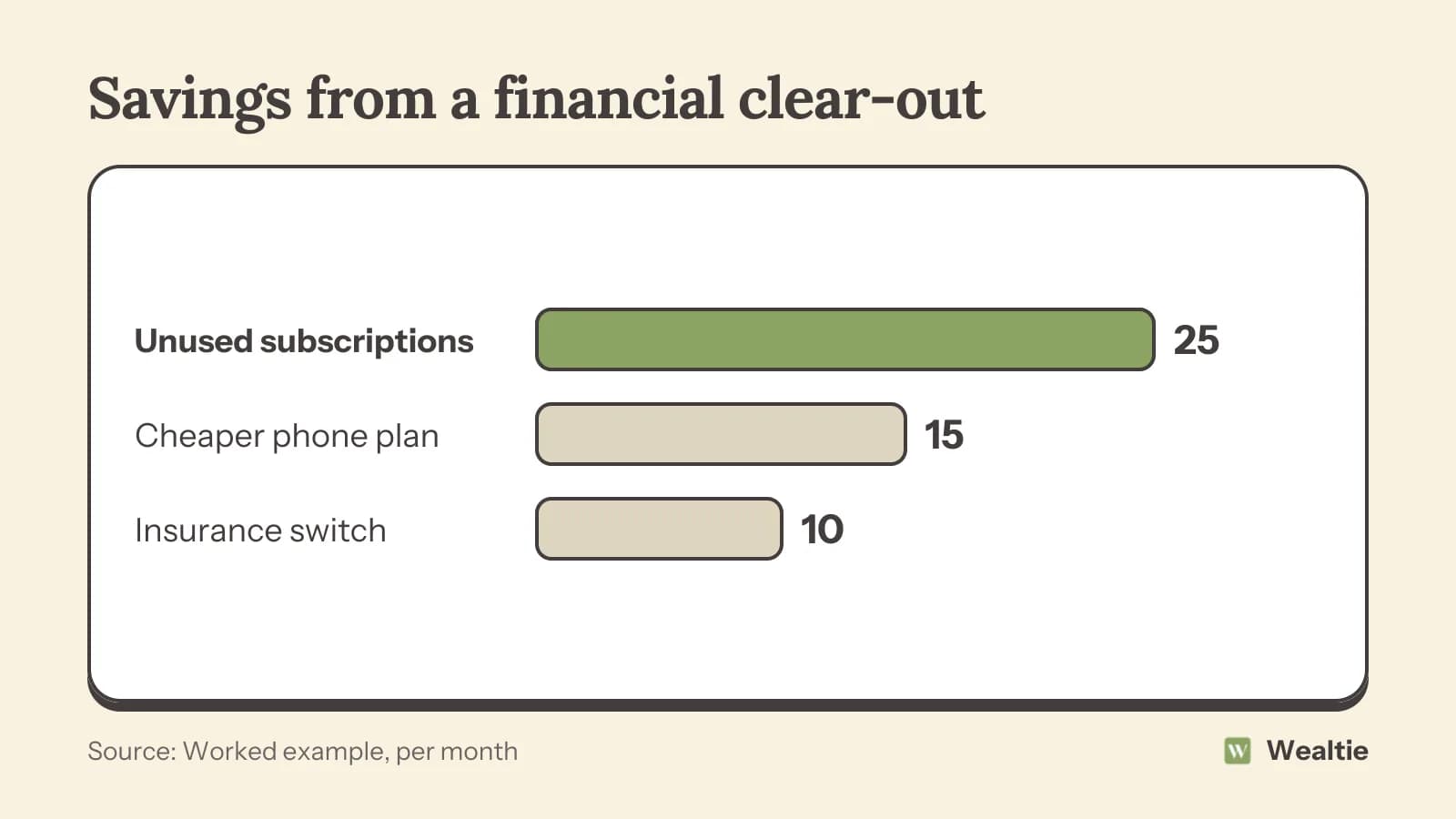
In this example, the clear-out saves 50 a month, or 600 a year. Your own savings depend on what you find. Bank and card statements from the last three months are the quickest way to find every regular payment. How to cut subscription costs and how to negotiate your bills have more tips.
How do you tidy up accounts?
Fewer accounts are easier to manage. Look for:
- Old bank accounts with small balances you could close
- Store cards or credit cards you no longer use
- Savings accounts paying little interest, which could be moved
- Online accounts with saved cards you don't shop with
Before closing a credit card, consider how it might affect your credit score, especially if it's one of your oldest accounts. Remove saved cards from shopping sites you rarely use, which also reduces impulse buying. Moving small balances into one savings account also makes it easier to see how much you have.
Check security while you're there
Update weak passwords on financial accounts, turn on two-step sign-in where available and check that your contact details are current, so you receive security alerts.
How do you organise financial paperwork?
Create a simple system. Keep important documents, like your will, insurance policies, tax records, pension statements and loan agreements, in one place, either a folder or a secure digital folder. Shred or delete what you don't need, but check how long you must keep tax records where you live. Going paperless for bills and statements reduces clutter. Scans of important documents, stored securely, help if originals are lost.
Make a list of accounts
Write down every account you have, with the provider and what it's for. Keep it somewhere safe and tell someone you trust where it is. It makes your own life easier and helps your family if they ever need to find things.
How do you refresh your budget?
Check that your budget still matches your life. Has your income changed? Have costs like rent, energy or food gone up? Are there categories you never use, or spending that doesn't fit any category? Update the amounts based on what you've spent over the last few months. If a category has been over every month, it may need a bigger amount, not more willpower. How to organise your bills helps you see regular costs in one place.
How do you declutter your home for money?
Combine a home clear-out with a financial one. Clothes, electronics, furniture and household items you don't use can be sold, and the money added to savings or used to pay off debt. How to sell things you don't use has tips on getting a good price. Giving away what doesn't sell, rather than storing it, keeps the space clear.
How do you set a fresh plan?
Finish by setting one or two goals for the months ahead, like building your emergency fund, paying off a card or saving for a holiday. Move the money you've freed up by cancelling subscriptions straight into that goal, so the savings don't disappear into everyday spending. Small, specific goals, like adding 50 a month to savings, are easier to keep than vague ones. Put a reminder in your calendar to check in again in a few months.
Check insurance and beneficiaries
While you're organising, check that insurance policies still fit your needs and that beneficiaries on pensions and life insurance are up to date, especially after big life changes.
How do you spring clean your finances in Wealtie?
Review your accounts and archive or remove ones you've closed, so your totals stay accurate. Check your recurring transactions in the bill tracker and remove any you've cancelled. Tidy your expense categories, and export your data as a CSV backup if you'd like a copy for your records.
Questions people ask
Cancel unused subscriptions, close old accounts, organise paperwork, refresh your budget and set a goal for the months ahead.
In a worked example, cancelling unused subscriptions and switching two bills saves 50 a month, or 600 a year.
Think about your credit score first, especially for your oldest cards. Close those with fees you don't need.
Check the rules where you live, since tax records often need keeping for several years. Keep insurance and loan papers while they're active.
This article is general information, not financial, tax or legal advice. Your situation is your own; check the numbers that apply to you before you act on them.