Budgeting: What to do if you spend more than you earn
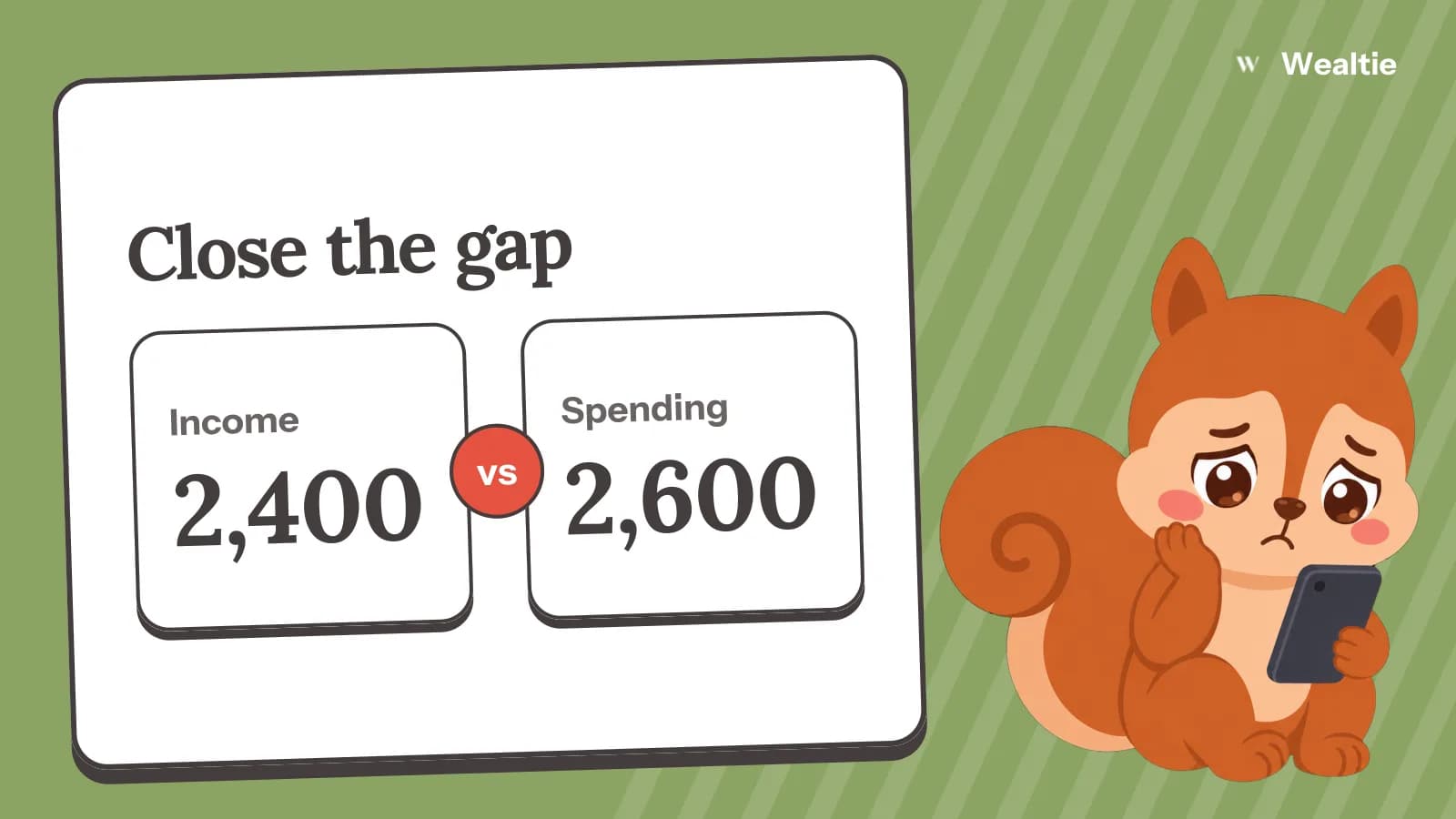
If you're spending more than you earn, the first step is to measure the gap, then stop it growing while you work on costs and income. In a worked example, a household spending 2,600 on an income of 2,400 closes a 200 gap with a few changes, before it turns into debt.
 By Wealtie Team · 3 min read
Key takeaways
- Spending more than you earn usually shows up first as a growing card balance or overdraft.
- In a worked example, a 200 monthly gap closes with a few changes across several categories.
- Cut flexible spending first, then review fixed bills, then look at income.
- Get free debt advice early if the gap has already turned into debt you can't manage.
How do you know you're spending more than you earn?
Often, the signs come before you look at the numbers. Your card balance grows each month, you dip into your overdraft before payday, savings slowly shrink, or you use credit for everyday costs like groceries. Spending more than you earn is common, and it can happen gradually as prices rise or habits change. The sooner you spot it, the easier it is to fix.
How do you measure the gap?
Add up what comes in and what goes out over a typical month. Use your bank and card statements, not your memory, since small purchases are easy to forget. Here's a worked example, in round numbers that work in any currency:
| Amount | |
|---|---|
| Monthly income after tax | 2,400 |
| Monthly spending | 2,600 |
| Gap | 200 |
A 200 gap might not sound like much, but over a year it's 2,400 of new debt or lost savings. Knowing the exact figure turns a vague worry into a problem you can solve. Include irregular costs too, like yearly subscriptions or car repairs, by dividing them by twelve, since they're often what tips a month into the red.
How do you stop the gap growing?
Pause anything non-essential while you make a plan. That might mean a short spending freeze on shopping, takeaways and treats for a couple of weeks. It isn't a long-term budget, but it stops the gap widening while you work out where to cut. Tell anyone you share costs with, so you're working on it together. The bare-bones budget shows how to work out the minimum you need each month.
If you've been using credit to cover the gap, try to stop adding to card balances. How to stop using credit cards has practical steps.
Where should you cut first?
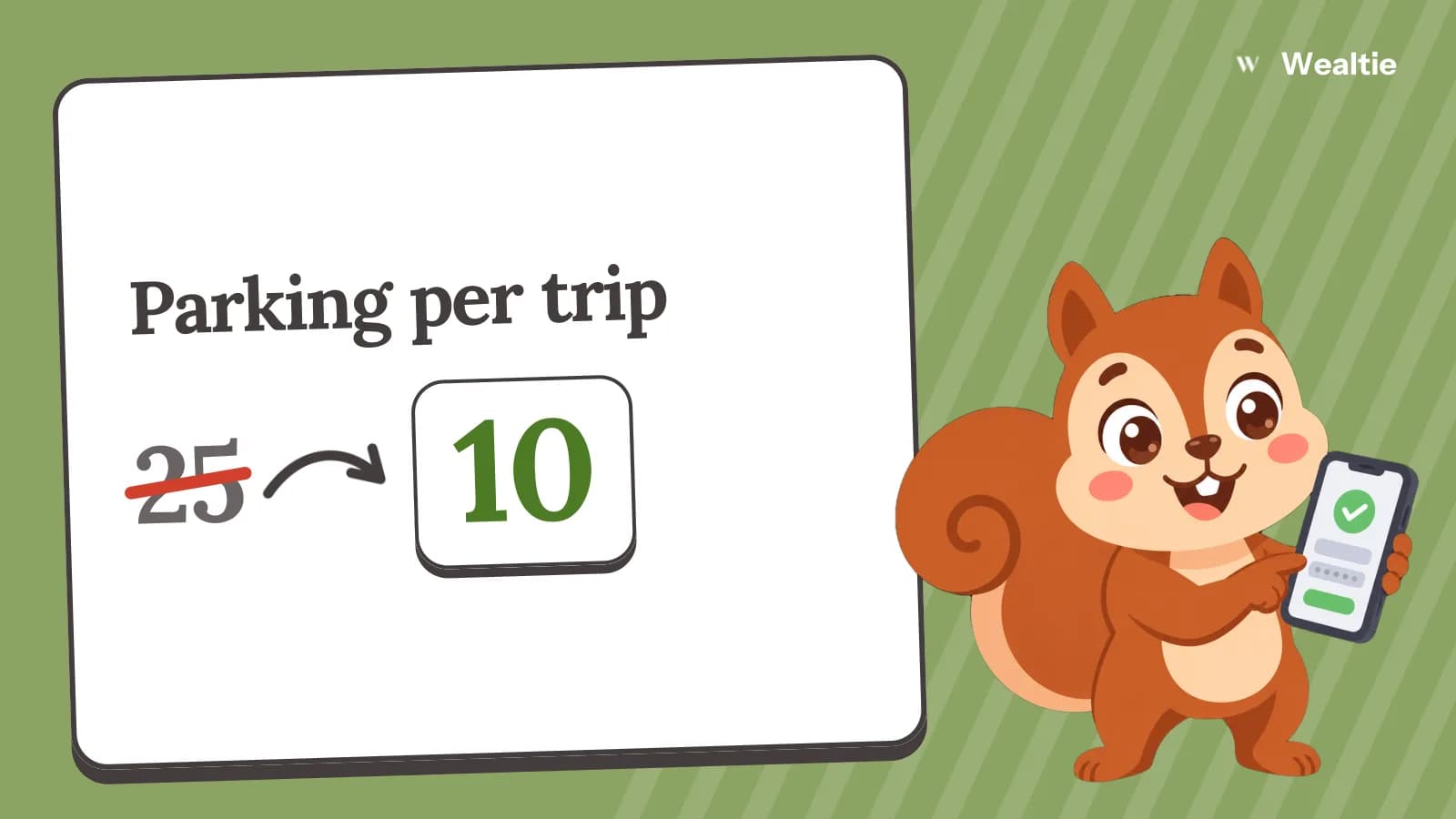
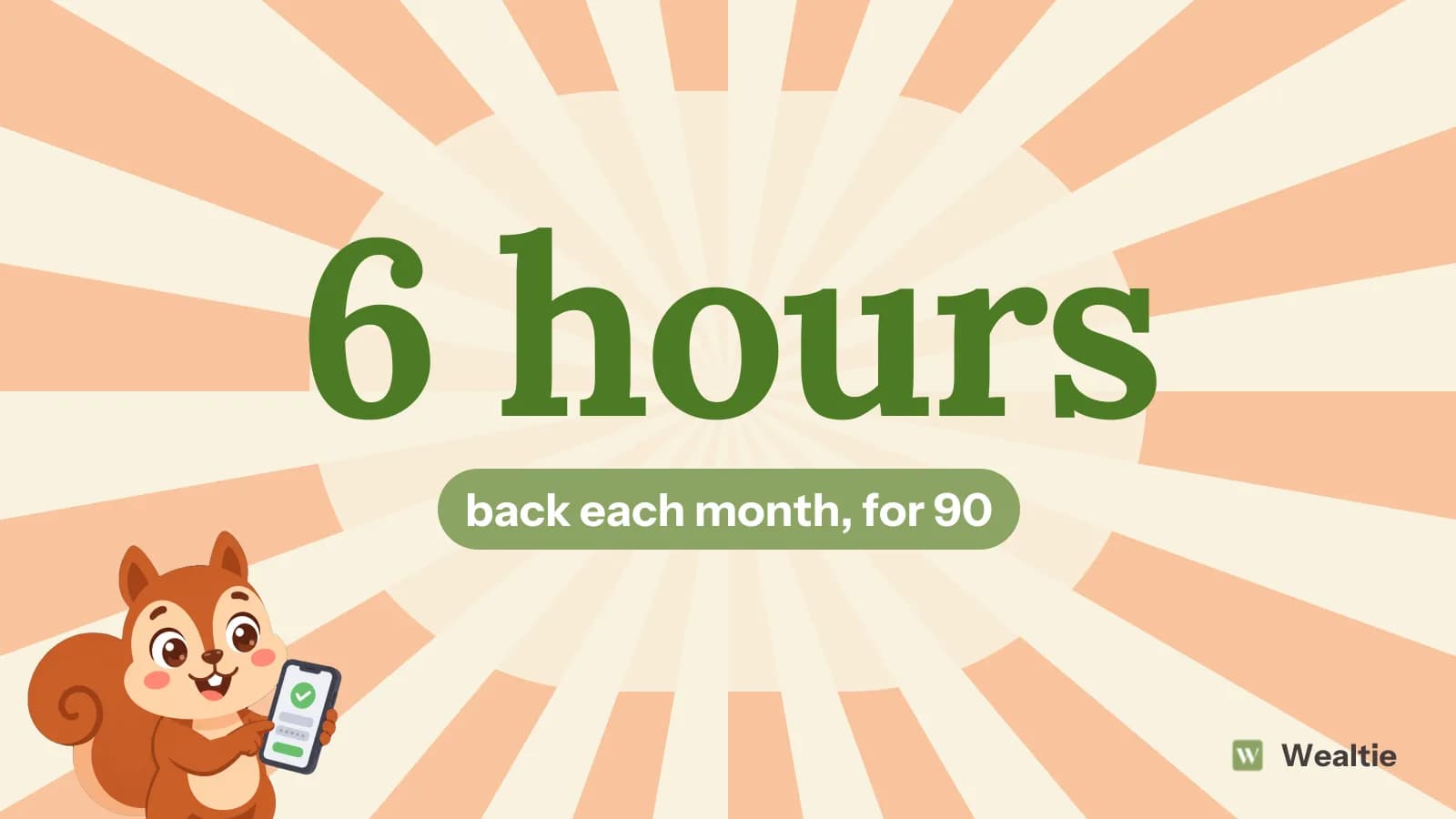
Start with flexible spending, then fixed bills, then bigger changes. Here's how the 200 gap closes in the worked example:
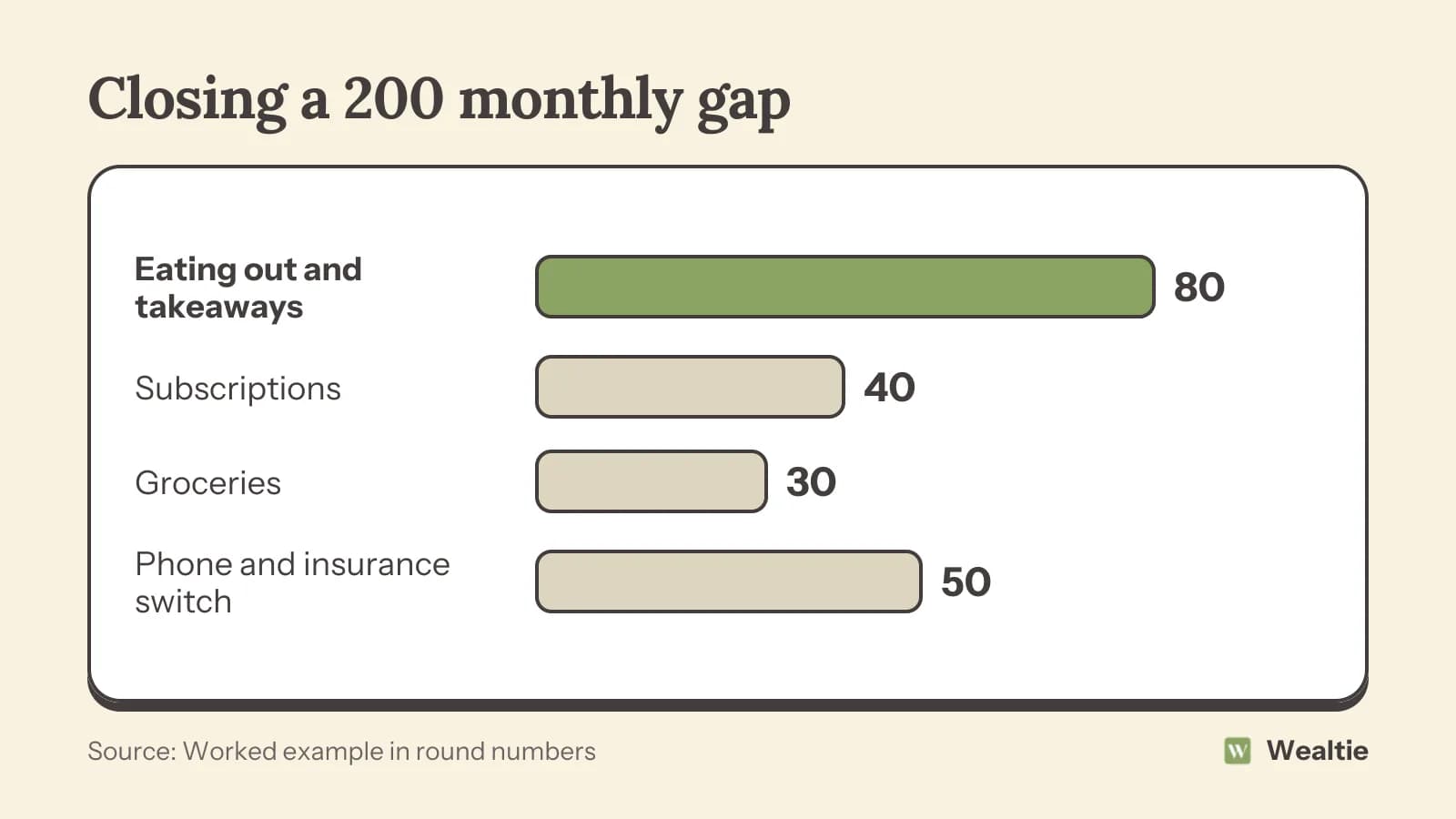
No single change closes the gap, but four smaller ones do. Your own cuts will depend on where your money goes.
Flexible spending
Eating out, takeaways, shopping, entertainment and subscriptions are the quickest to change. Look at what you spent last month in each category and set a lower limit. How to stop overspending has ideas for making limits stick.
Fixed bills
Phone contracts, insurance, energy and internet can often be cheaper. Compare deals at renewal, switch if you find better value and ask your current provider for a lower price. How to negotiate your bills has tips.
Bigger changes
If the gap is large, you may need bigger decisions, like a cheaper car, a different phone plan, a lodger or a move. These take time but can close a gap that small cuts can't. Weigh each one against the gap: a change that saves 200 a month closes it entirely.
Can you increase your income?
Sometimes, and it helps to look at both sides. Ask about a pay rise or extra hours, check whether you're claiming any benefits or tax credits you're entitled to, sell things you don't use or take on a small side income. Even a modest increase reduces how much you need to cut.
Check for money you're missing
It's worth checking for money you may be owed: tax refunds, unclaimed benefits, refunds for cancelled services or old accounts with small balances. Some people also find they've been paying for insurance or warranties twice. Small recoveries won't close a gap alone, but they help.
What if the gap has already become debt?
Deal with it early. List your debts with their balances, interest rates and minimum payments. Keep paying at least the minimum on everything, and contact lenders if you can't, since many offer help if you ask before missing a payment. If you're in your overdraft, how to get out of your overdraft has a step-by-step plan.
If debt feels unmanageable, free debt advice services can help you make a plan and talk to lenders. Getting advice early gives you more options.
How do you stay on track once the gap is closed?
Check in weekly for the first few months. A short look at your spending each week shows whether the new limits are holding. Once spending is below income, start a small buffer for unexpected costs, so the next surprise doesn't put you back in the red. When you get a pay rise, put at least part of it towards savings before your spending grows to match.
How do you track spending against income in Wealtie?
Log income and spending as they happen, and set a monthly limit in the budget tracker. Budget Health shows whether you're on pace or spending faster than planned. Your expense categories show where the money goes, so you can see which cuts are working.
Questions people ask
Measure the gap, pause non-essential spending, cut flexible costs first, review fixed bills and look for ways to raise income.
Go through last month's bank and card statements and add up spending by category.
Flexible spending like eating out, shopping and subscriptions, then fixed bills like phone, insurance and energy.
Keep paying minimums, contact lenders before missing payments and get free debt advice if it feels unmanageable.
This article is general information, not financial, tax or legal advice. Your situation is your own; check the numbers that apply to you before you act on them.