Multi-currency & travel: How to save money on hotels without staying somewhere grim
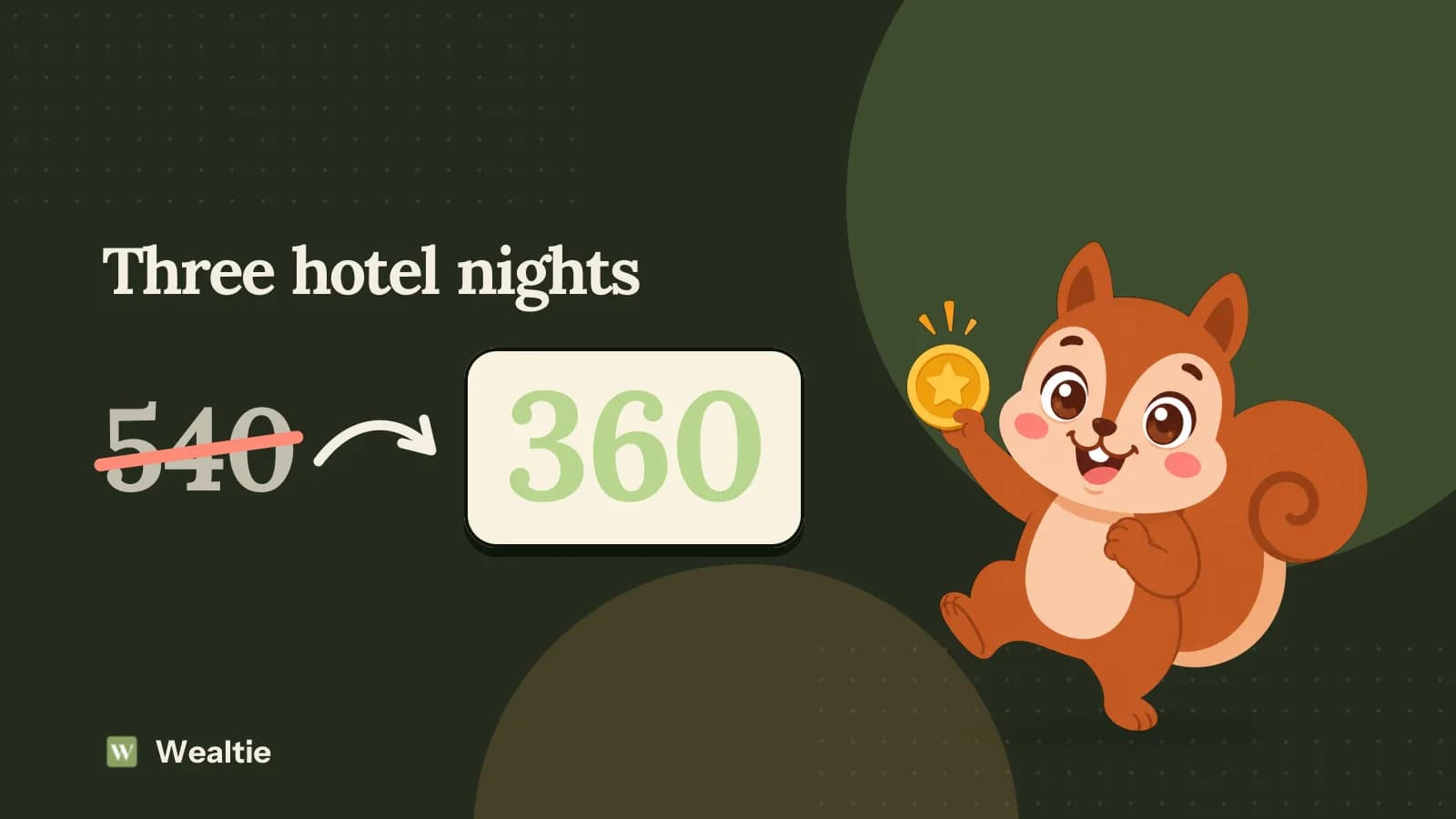
To save money on hotels, compare the total price including taxes and fees, check booking direct, stay a little outside the centre near good transport, and travel off-peak. In a worked example, three nights drop from 540 to 360.
 By Wealtie Team · 3 min read
Key takeaways
- Compare the total price, including taxes and fees, not the headline nightly rate.
- Off-peak dates and staying near good transport outside the centre usually save the most.
- Booking direct with the hotel can sometimes be cheaper or come with extras.
- In a worked example, three nights drop from 540 to 360.
How do you save money on hotels?
Compare like with like, choose your dates and location carefully, and check what's included. Hotel prices change a lot depending on when you stay, where, and how you book. The cheapest headline price isn't always the cheapest stay once taxes, fees and extras are added.
Where does the saving come from?
Here's a worked example of three nights in a city, in round numbers that work in any currency:
| Change | Saved |
|---|---|
| Moving dates to off-peak | 90 |
| Staying near a metro stop outside the centre | 60 |
| Booking direct with the hotel | 30 |
| From 540 to | 360 |
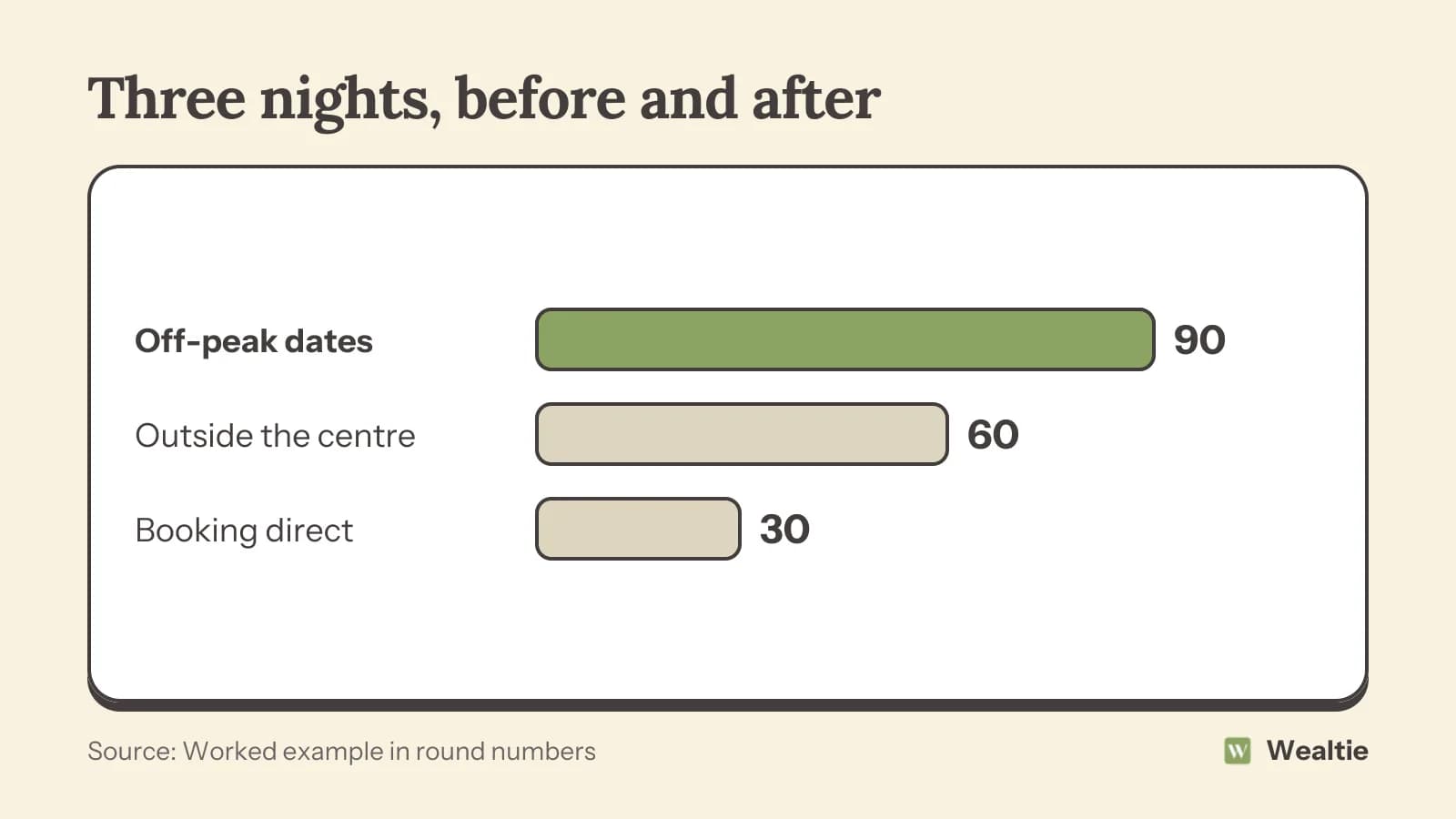
The hotel in this example was just as comfortable. The changes were about timing, location and where the booking was made. Before booking, decide what matters to you, like a quiet room, a good shower or being close to the station, and filter for those, so you're comparing hotels you'd be happy in.
Is a hotel the cheapest option?
Not always, especially for longer stays or groups. An apartment with a kitchen can cost less per night for a family and saves on meals. A guesthouse or small hotel often costs less than a big chain for a similar room. For a short business trip or a solo weekend, a well-located hotel can still be the best value once you count convenience and transport. Compare a couple of options for your trip before deciding.
How do you compare prices fairly?
Look at the total, not the nightly rate. Some sites show prices before taxes, cleaning or resort fees, and some cities charge a tourist tax on arrival. Add everything up for the whole stay, and compare that. Check whether breakfast, parking or wi-fi are included, since paying for them separately can add a lot.
Read the cancellation terms too. A slightly higher refundable rate can be worth it if your plans might change. Recent reviews are worth more than the star rating, since they show how the hotel is now. Look for comments about noise, cleanliness and whether the photos match the rooms.
When should you book?
It depends on the destination and season, so watch prices for a while if you can. For busy dates, like holidays and big events, booking early is usually safer. For quieter periods, prices sometimes drop closer to the date. A refundable booking lets you lock in a price and switch if you find something better.
Midweek stays are often cheaper in leisure destinations, while business-heavy cities can be cheaper at weekends.
Where should you stay?
Close enough to what you want to see, but not necessarily in the busiest spot. Hotels a short walk or transport ride from the centre often cost less and are quieter. Count the cost and time of getting around, so a cheaper hotel doesn't cost more in taxis. A hotel near a train or metro station often gives the best balance of price and convenience, especially if you're arriving from the airport.
Is booking direct cheaper?
Sometimes. Hotels may offer a lower price, free breakfast, a better room or more flexible cancellation if you book on their own website or by phone. Check the hotel's own price after finding it on a comparison site. Loyalty schemes can add perks if you stay with the same chain often. For longer stays, ask about a lower rate for a week or more, since many hotels offer one.
What other options are there?
Depending on the trip:
- Apartments with a kitchen, which suit longer stays and families
- Guesthouses and smaller hotels, often cheaper than big chains
- Hostels with private rooms, for a basic, cheap option
- Staying with friends or family, if that's possible
For a few nights in a city, the city break budget puts accommodation alongside the other costs.
What about extras during the stay?
Minibars, room service, hotel breakfasts and parking can add up quickly. A breakfast from a café nearby is often cheaper than the hotel's. Check parking costs before arriving, since city hotels can charge a lot. Use a card with low foreign fees when paying abroad.
How do you track hotel costs in Wealtie?
Log hotel stays in a Travel category, in the currency you paid, so your expense categories show the trip's full cost. Each account keeps its own currency, and totals are converted into your display currency at each day's rate. The multi-currency budget app covers 68 currencies on the Free plan.
Questions people ask
Compare total prices including taxes and fees, travel off-peak, stay near good transport outside the centre and check booking direct.
Sometimes. Hotels may offer a lower price or extras for booking on their own site, so check after comparing.
Early for busy dates and events. For quieter periods, prices sometimes drop closer to the date, so a refundable booking gives flexibility.
Taxes, cleaning or resort fees, tourist taxes on arrival, parking, breakfast and minibar charges.
This article is general information, not financial, tax or legal advice. Your situation is your own; check the numbers that apply to you before you act on them.