Budgeting: Skip hire cost: sizes, permits and cheaper options
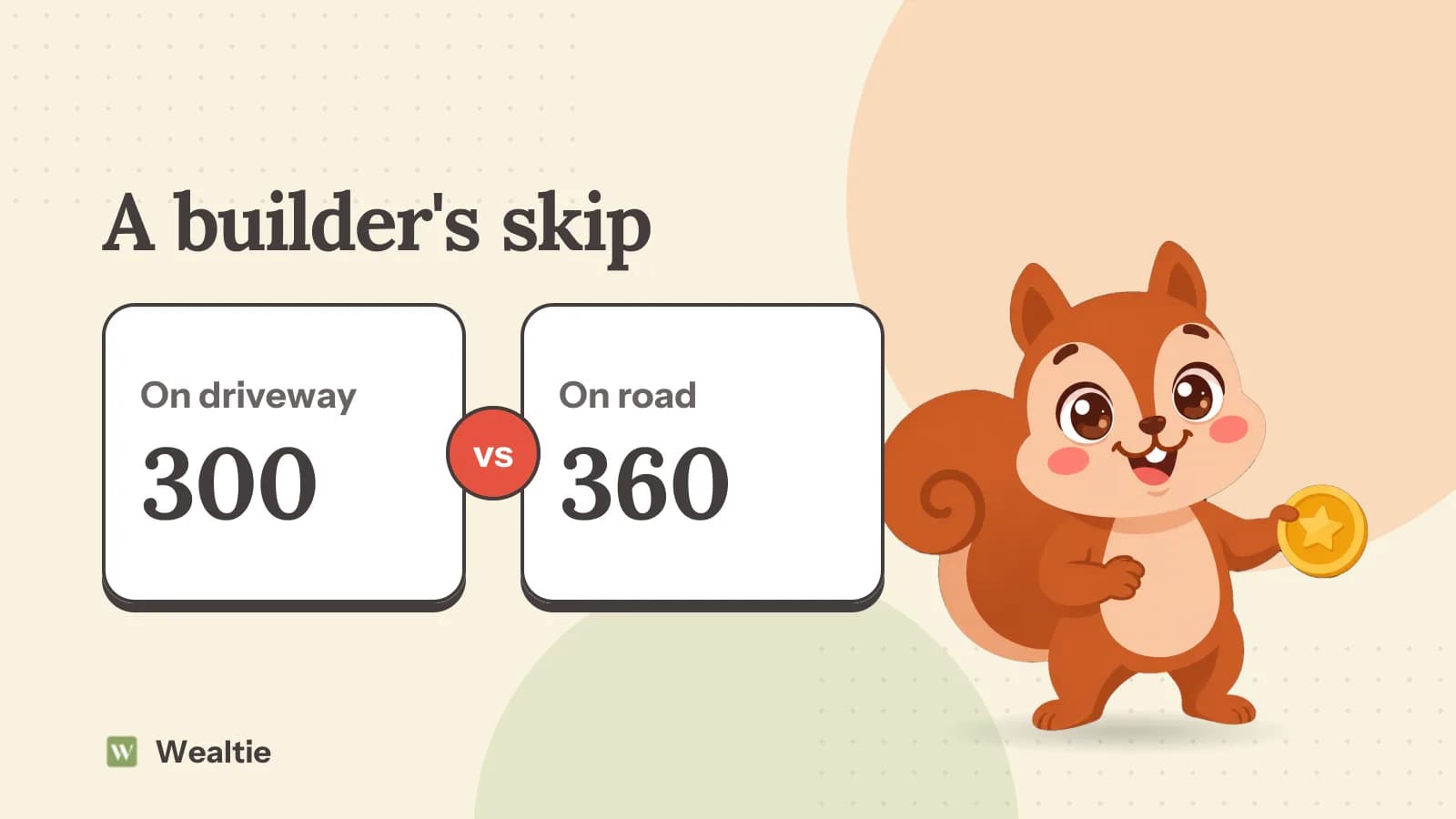
Skip hire cost depends on the size of the skip and whether it needs a permit to sit on the road. In a worked example, a builder's skip on a driveway costs 300, while the same skip on the road with a permit costs 360.
 By Wealtie Team · 3 min read
Key takeaways
- Skip hire cost depends on size, location and whether you need a road permit.
- A permit adds cost if the skip sits on a public road.
- Some items can't go in a skip and cost extra to dispose of.
- Bag skips, council collections and recycling centres can be cheaper.
How much does skip hire cost?
A skip is a large container for rubbish from building work, garden clearances, decluttering or moving house. Skip hire cost depends mostly on the size of the skip, how long you need it, where you live and whether it needs to sit on a public road, which usually means paying for a permit.
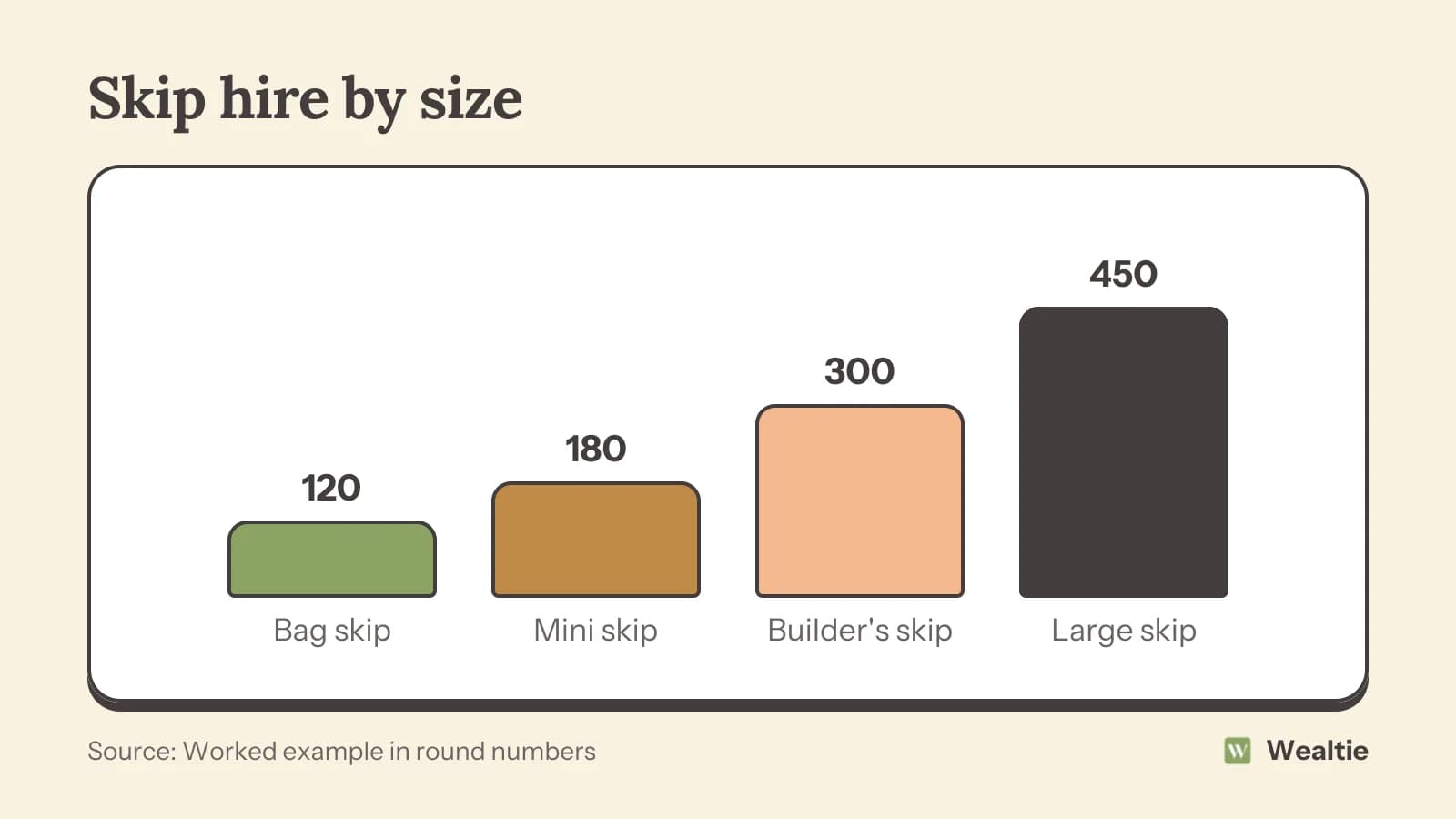
Here's a worked example of typical prices, in round numbers that work in any currency:
| Skip size | Cost |
|---|---|
| Bag skip | 120 |
| Mini skip | 180 |
| Builder's skip | 300 |
| Large skip | 450 |
If the skip goes on a public road rather than your driveway, a permit might add around 60, bringing a builder's skip to 360. Prices vary a lot by area and company, so compare a few local firms.
Which size do you need?
Bag skips
Large heavy-duty bags that are collected when full. They suit small jobs and homes without space for a skip.
Mini skips
Good for small garden clearances or a bathroom refit.
Builder's skips
The most common size, suitable for kitchen refits, house clearances and larger garden projects.
Large skips
For major renovations or commercial jobs. They usually need more space and may not fit on a driveway.
Choosing a skip that's too small means paying for a second one. Choosing one that's too big wastes money. Describing the job to the skip company helps them recommend the right size.
What extra costs should you know about?
Road permits
If the skip goes on a public road, you'll usually need a permit from the local authority, often arranged by the skip company for a fee. Lights or cones may also be required.
Overloading
Skips must not be filled above the top. Overfilled skips may not be collected or may cost extra.
Banned items
Many items can't go in a general skip, including fridges, electronics, tyres, batteries, paint, gas bottles and asbestos. They need separate disposal, which may cost extra.
Extra days
Hire periods are usually a week or two. Keeping the skip longer may cost more.
What are cheaper alternatives?
Recycling centres
If you can transport rubbish yourself, local recycling centres often take household waste for free or a small charge.
Council bulky waste collections
Many councils collect large items like furniture for a modest fee.
Sell or give away
Furniture, building materials and garden items in good condition can be sold or given away rather than thrown out. How to sell things you don't use covers selling quickly.
Bag skips
For small jobs, a bag skip is often cheaper and doesn't need a permit if it fits on your property.
Man-and-van clearance
For mixed items or awkward access, a licensed clearance service may be cheaper than a skip because they do the loading. Make sure they're licensed to carry waste where required.
How do you plan skip hire into a project?
Add skip hire to your project budget from the start, since it's easy to forget. For renovations, plan when you'll need the skip so it isn't sitting unused. How to plan a home renovation budget covers other costs to plan for, and how to plan a kitchen renovation budget covers one of the most common projects that needs a skip.
Loading a skip carefully helps you get the most from it. Break down large items, flatten boxes and put heavy, bulky items in first, with smaller rubbish filling the gaps. A well-packed skip can hold much more, which can save you hiring a second one. Some people find that sorting rubbish into recycling, items to sell and items to give away before the skip arrives means a smaller skip will do.
Think about where the skip will go. It needs a flat, solid surface and enough space for the lorry to drop it off and collect it. If your driveway is narrow or sloped, ask the skip company for advice. Protecting the driveway with boards can prevent damage, since heavy skips can crack some surfaces.
Neighbours sometimes add rubbish to skips left on the road overnight. Covering the skip or asking for a lockable skip can help, and you're responsible for what goes in it.
If you're sharing a skip with a neighbour who's also clearing out, splitting the cost can make a bigger skip cheaper for both of you, as long as you agree how to share the space.
Finally, keep the receipt and waste transfer note if you're given one. It shows the waste was disposed of legally, which protects you if there's ever a question about fly-tipping.
How can Wealtie help you track project costs?
Log skip hire, permits and disposal fees in a home project expense category, and set a budget for the project. Seeing all the small costs together helps you avoid going over.
Questions people ask
In a worked example, a mini skip cost about 180 and a builder's skip about 300, with a road permit adding around 60.
Usually only if the skip is placed on a public road. Skips on your own driveway don't normally need one.
Fridges, electronics, tyres, batteries, paint, gas bottles and asbestos usually can't go in a general skip.
Recycling centres, council bulky waste collections, bag skips and selling or giving away items can all cost less.
This article is general information, not financial, tax or legal advice. Your situation is your own; check the numbers that apply to you before you act on them.