Budgeting: How to plan a kitchen renovation budget
A kitchen renovation budget needs to cover cabinets, worktops, appliances, labour and a contingency for surprises. In a worked example, a mid-range kitchen costs about 15,000, and keeping the same layout is one of the biggest ways to save.
 By Wealtie Team · 3 min read
Key takeaways
- A kitchen renovation budget covers cabinets, worktops, appliances, labour and a contingency.
- In a worked example, a mid-range kitchen costs about 15,000.
- Keeping the same layout avoids moving plumbing and electrics, which saves a lot.
- Set aside a contingency for surprises found once work starts.
How do you plan a kitchen renovation budget?
Decide what you want to change, get quotes, then add a contingency for surprises. A kitchen is often the most expensive room to renovate, because it combines cabinets, worktops, appliances, plumbing, electrics and skilled labour. Without a clear budget, costs can creep up as you add upgrades along the way.
Start by deciding whether you need a full replacement or a refresh. Sometimes new doors, worktops and paint give most of the effect for a fraction of the cost.
What does a new kitchen cost?
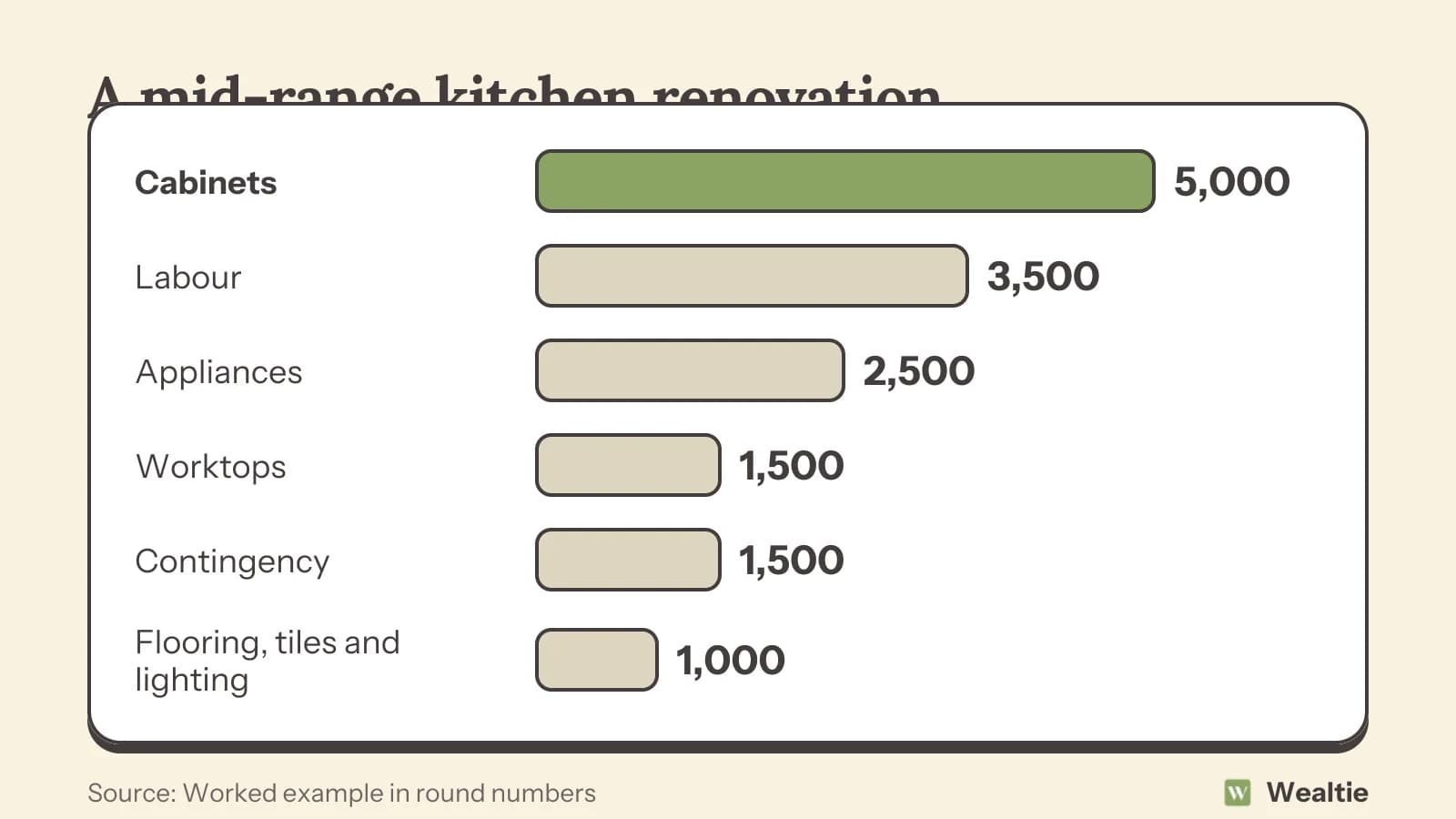
Here's a worked example for a mid-range kitchen, in round numbers that work in any currency:
| Cost | Amount |
|---|---|
| Cabinets | 5,000 |
| Labour and fitting | 3,500 |
| Appliances | 2,500 |
| Worktops | 1,500 |
| Contingency | 1,500 |
| Flooring, tiles and lighting | 1,000 |
| Total | 15,000 |
Your costs depend on the size of the kitchen, the materials you choose and where you live. A small kitchen with budget units can cost much less, while a large kitchen with high-end materials can cost much more.
Where can you save on a kitchen?
The biggest savings come from a few decisions:
- Keep the layout. Moving the sink, cooker or gas supply means moving plumbing and electrics, which adds a lot to the cost.
- Refresh instead of replace. If cabinets are sound, new doors, handles and worktops can transform a kitchen for much less.
- Choose mid-range materials. Laminate worktops and flat-pack units have improved a lot and cost far less than stone and bespoke cabinets.
- Keep appliances that work. Replace only what needs replacing.
- Buy ex-display or second-hand. Showroom kitchens and second-hand units can be good value. How to buy second-hand has tips.
A refresh example
In a worked example, replacing doors, handles and worktops, adding new lighting and painting the walls costs about 4,000, against 15,000 for a full renovation. If the layout works for you, a refresh is often the best value. Painting existing cabinets is another low-cost option, if they're solid wood or a paintable finish.
How do you get quotes?
Get at least three detailed quotes from fitters, ideally from recommendations. Make sure each quote covers the same work, so you can compare fairly. Ask what's included, such as removing the old kitchen, plastering, tiling, electrics and waste disposal. Check reviews, ask for references and agree a payment schedule tied to stages of the work, rather than paying most upfront. Ask whether the fitter is insured, and whether electrical and gas work will be done by people qualified to do it where you live.
Why do you need a contingency?
Because surprises are common. Once the old kitchen comes out, fitters may find damp, old wiring, uneven floors or pipes that need moving. A contingency, set aside before you start, means you can deal with these without cutting back on the finish or borrowing. In the worked example, it's 1,500.
If you don't need it, you can use it for a final upgrade or keep it in savings. Choosing all materials before work starts also helps, since decisions made in a hurry mid-project tend to cost more.
What about living without a kitchen?
Plan for a few weeks without a working kitchen. Eating out and takeaways during that time can add up quickly. Setting up a temporary kitchen with a microwave, kettle and toaster in another room, and batch cooking meals to freeze before work starts, keeps costs down. A couple of weeks of extra takeaways for a family can add a few hundred to the total, so include it in the budget.
How do you pay for a kitchen renovation?
Saving ahead is cheapest. Divide your budget by the months until you start and set that aside. A 15,000 kitchen saved over three years is about 420 a month. If you're borrowing, compare the full cost of finance, including interest. The home renovation budget covers paying for larger projects, and a sinking fund helps you save steadily.
Does a new kitchen add value?
It can make a home more appealing to buyers, but you won't always get the full cost back when you sell. Renovate mainly for your own use and enjoyment, and avoid over-spending compared with the value of homes nearby. If you're planning to sell soon, a refresh often makes more financial sense than a full renovation.
How do you track renovation costs in Wealtie?
Add a savings account for the renovation and move money into it each month as a transfer, which isn't counted as spending. During the work, log each payment in a home improvement category in your expense categories, so you can compare spending against your budget as you go. A monthly limit in the budget tracker keeps everyday spending steady.
Questions people ask
In a worked example, a mid-range kitchen costs about 15,000, including cabinets, worktops, appliances, labour and a contingency.
Keep the layout, refresh instead of replace, choose mid-range materials and keep appliances that still work.
Enough to cover surprises like damp or old wiring. In a worked example, 1,500 on a 15,000 kitchen.
Often, if the layout works. In a worked example, a refresh costs about 4,000 against 15,000 for a full renovation.
This article is general information, not financial, tax or legal advice. Your situation is your own; check the numbers that apply to you before you act on them.