Budgeting: How much do dance classes cost? A budget for adults and kids
The cost of dance classes depends on how often you go, whether you pay per class or by the term, and extras like shoes, outfits and shows. In a worked example, a year of weekly adult classes costs about 450.
 By Wealtie Team · 3 min read

Key takeaways
- The cost of dance classes depends on how often you go and how you pay.
- In a worked example, a year of weekly adult classes costs about 450.
- Paying by the term is usually cheaper than paying per class.
- For children, shows, exams and costumes can add a lot to the bill.
How much do dance classes cost?
Dance classes can be an affordable way to stay active, meet people and learn something new. The main cost is the classes themselves, paid per session, by the term or through a monthly membership at a studio. On top of that, you'll need suitable shoes and clothes, and, especially for children, there may be show tickets, costumes and exam fees. In a worked example, a year of weekly adult classes costs about 450.
Prices vary with the style of dance, the studio, the teacher's experience and where you live. Private lessons, such as those many couples book before a wedding, cost more per hour.
What does a year of dance classes cost?
Here's a worked example for weekly adult classes, in round numbers that work in any currency:
| Item | A year |
|---|---|
| Term fees | 360 |
| Dance shoes | 60 |
| Clothing | 30 |
| Total | 450 |
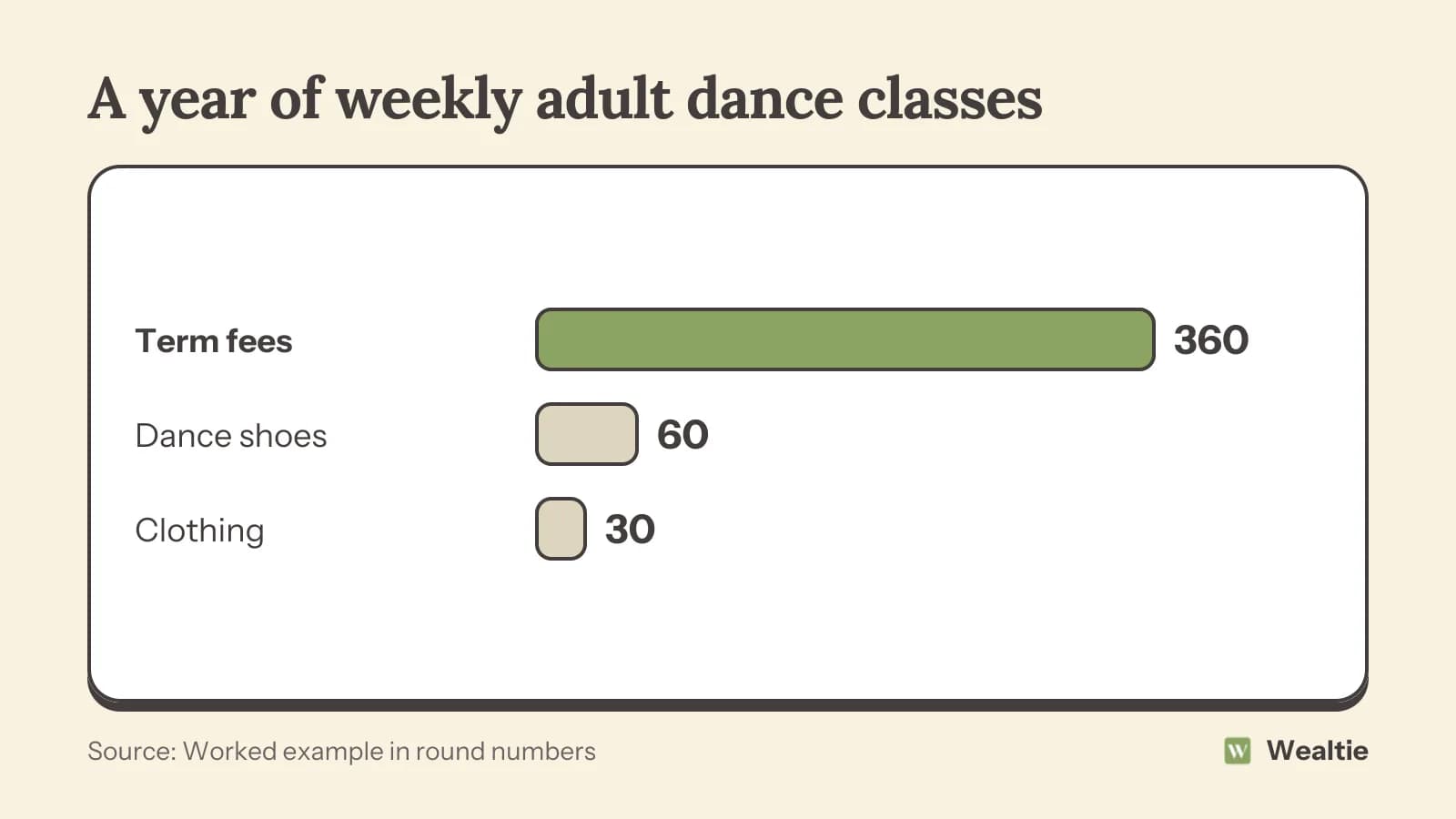
The term fees are three terms of twelve weeks at 10 a class. Paying 12 a class as a drop-in instead would cost 432 for the same classes, with the added risk of skipping more often.
What are the main costs of dance classes?
Class fees
Many studios sell classes by the term, paid upfront, which works out cheaper than dropping in. Some offer monthly memberships with unlimited classes. Drop-in classes cost more but give flexibility, which is useful while you try different styles.
Shoes
Some styles, like ballet, tap and ballroom, need special shoes. Others, like street dance or Zumba, only need trainers. Ask the teacher before buying, since the wrong shoes are a waste of money. Many studios sell second-hand shoes from older students at a fraction of the price.
Clothing
Comfortable clothes you can move in are fine for most adult classes. Some studios, especially for children, ask for a uniform in specific colours.
Private lessons
One-to-one lessons help with a specific goal, like a first dance or a competition. They cost more, so many people book a few alongside cheaper group classes.
What else adds to the cost of dance classes?
For children, the extras can add up quickly. End-of-year shows often mean buying costumes and tickets for family. Exams in some styles have entry fees. Competitions bring entry fees, travel and sometimes new outfits. In a worked example, a show, costume and exam together add about 130 a year. Ask the studio for a list of expected extras at the start of the year, so you can budget for them. Adults face fewer extras, but social dances, workshops and weekend events are tempting once you're hooked. Pick one or two a year that you'd most enjoy.
How can you save on dance classes?
- Try a free or taster class: many studios offer one before you commit.
- Pay by the term: cheaper than dropping in each week.
- Look at community classes: community centres and colleges often charge less than private studios.
- Ask about family or sibling discounts: common for children's classes.
- Buy shoes and costumes second-hand: children outgrow them fast, and many studios run swap schemes.
- Follow free videos at home: good for practice between classes or for trying a style first.
- Choose fewer, better classes: one class a week you love beats three you attend half-heartedly.
Watch for extras creep
Studios sometimes add optional extras, like extra rehearsals, competitions or branded clothing. Decide in advance which ones are worth it for you or your child. How to save money on kids' activities covers this in more detail.
Is a dance studio membership worth it?
If a monthly membership includes unlimited classes, work out how many you'd need to take for it to beat paying by the term. If you'll go two or three times a week, it's often good value. If you'll go once, a term pass is usually cheaper. The same thinking applies to gym memberships and yoga classes.
Dance as your exercise
Many people find dance replaces a gym membership, since it builds fitness and is more fun for them. If you're paying for both and only using one, it may be time to drop the other. How to save money on a hobby has more ways to keep costs in check.
How do you track dance class costs in Wealtie?
Add term fees or a membership as recurring transactions, so they log themselves on their date. Put shoes, outfits and show costs in their own expense categories, and set a budget for them, so extras don't catch you out.
Questions people ask
In a worked example, a year of weekly adult classes costs about 450, including term fees, shoes and clothing.
Usually, yes. Paying by the term costs less per class than dropping in, and it helps you keep going.
Shows, costumes, exam fees, competitions and sometimes a uniform. In a worked example, these add about 130 a year.
Try a taster class, pay by the term, look at community classes, ask about sibling discounts and buy shoes second-hand.
This article is general information, not financial, tax or legal advice. Your situation is your own; check the numbers that apply to you before you act on them.