Using Wealtie: How to set a weekly budget in Wealtie if you think in weeks
To set a weekly budget in Wealtie, choose the weekly period when you set up your budget, which is available on Pro. It suits people paid weekly or anyone who finds a month too long to manage, and the limit is your monthly spending divided by about 4.3.
 By Wealtie Team · 3 min read
Key takeaways
- Budgets and income goals in Wealtie can run daily, weekly, monthly, quarterly or yearly on Pro; Free has monthly.
- A weekly budget suits people paid weekly or who find a month too long to manage.
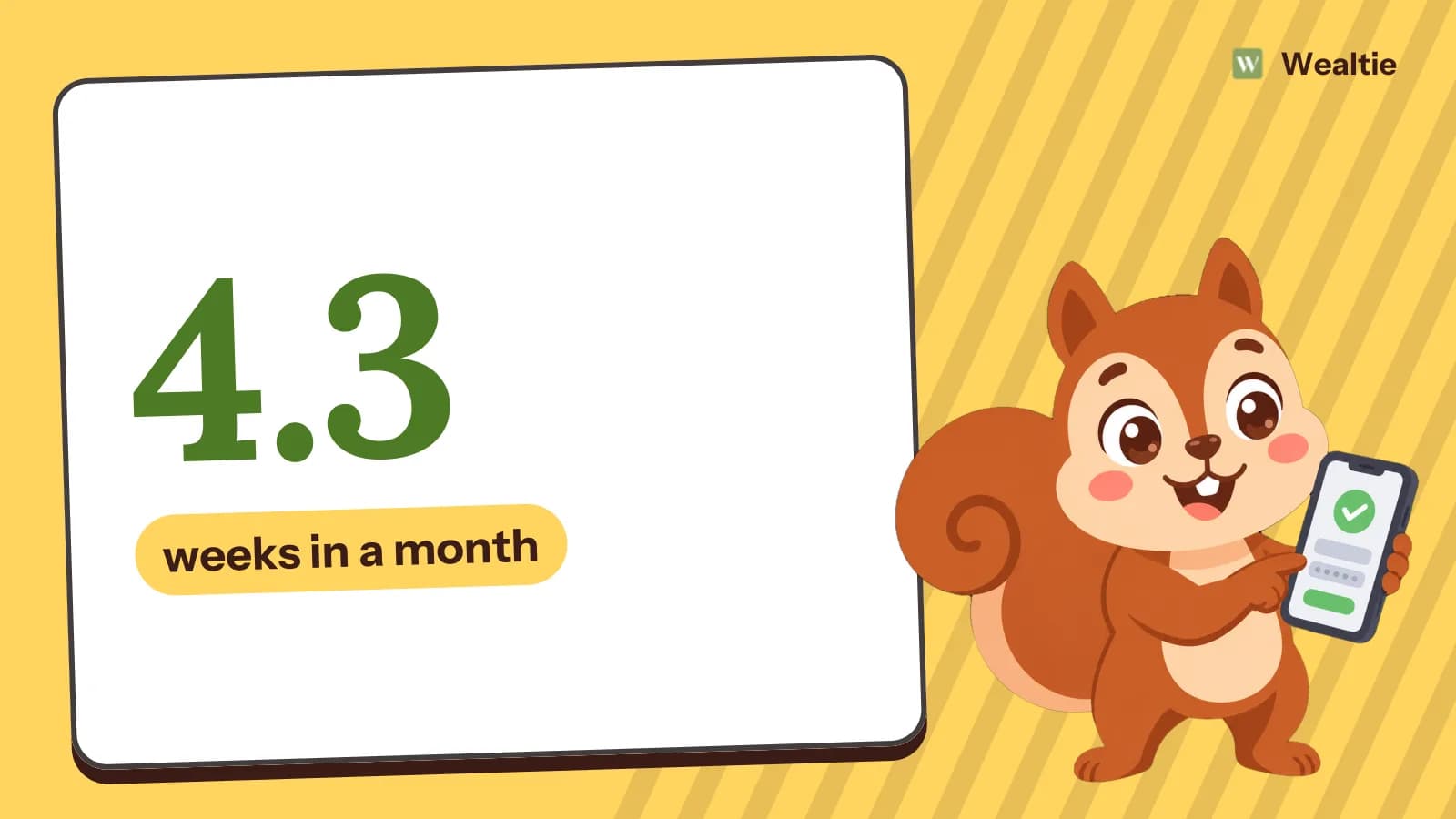
- To set the amount, divide your monthly spending money by about 4.3.
- Budget Health compares your spending with how much of the week has passed, and streaks count completed weeks.
How do you set a weekly budget in Wealtie?
When you set up your budget, choose Weekly as the period instead of Monthly. On Pro, budgets and income goals can run daily, weekly, monthly, quarterly or yearly. On Free, the budget is monthly.
You have one budget and one income goal, each with its own period, and you can change the amount whenever your situation changes. So a weekly budget takes the place of a monthly one, and you choose the period that suits how you think about money.
Who does a weekly budget suit?
People for whom a month is too long to keep in view. That often means:
- People paid weekly, whose money arrives in weekly amounts
- Anyone who tends to overspend early in the month and run short at the end
- People who do a weekly shop and think in weekly costs
- Students or anyone on a tight, regular allowance
- Shift workers whose pay changes from week to week
If you're paid monthly and your big bills are monthly, a monthly budget might suit you better, with a weekly figure in your head for day-to-day spending. Weekly or monthly budget compares the two.
How do you pick the weekly amount?
If you're paid weekly, start from one week's take-home minus your weekly share of bills and savings. Otherwise, start from your monthly spending money, after rent, bills and savings, and divide by about 4.3, since a month has a little more than four weeks. In round numbers that work in any currency, 900 a month is about 210 a week.
Should the weekly budget include rent and bills? Usually not, if they're monthly. Paying rent in one week would make that week look terrible. Keep the weekly budget for everyday spending, like groceries, eating out, transport and fun, and handle monthly bills separately with recurring transactions.
You can split the weekly limit into category shares, such as groceries and eating out, which fill separately as you spend. Setting category budgets in Wealtie shows how.
How does Budget Health work on a weekly budget?
The same way as on a monthly one, but over a week. It compares how much of the limit you've used with how much of the week has passed, and warns you if your pace would take you over. On a Wednesday, if you've spent most of the week's limit, you'll see it while there are still several days to adjust.
Check it on the same day each week, like Wednesday, so you've still got half the week to adjust. That shorter loop is the main reason people choose weekly. A warning on day three is easier to act on than one on day sixteen. Budget Health explained has more on how the warning works.
How do streaks work on a weekly budget?
A streak counts completed periods inside the budget. On a weekly budget, each week you finish inside the limit adds to the count, so the streak grows faster than on a monthly one. The badge thresholds are period counts too, so a weekly budget reaches them in weeks rather than months.
A week that goes over resets the current count, but your longest streak is kept, so one bad week isn't the end of it. Editing the budget amount doesn't touch the streak. The count only moves when a period closes. Budget streaks explains the rest.
What about the income goal?
The income goal has its own period, so you could have a weekly budget and a monthly income goal, or both weekly. If you're paid weekly, a weekly income goal shows each week's pay against your target. If you're freelance and paid irregularly, a monthly income goal might make more sense.
How do you handle a week with a big expense?
Plan it outside the weekly budget if you can. Annual bills, birthdays and holidays can go in a separate savings pot and be paid from there, so they don't wreck one week. How to budget for annual expenses shows how. If a big expense does land in one week, accept that week as a one-off and carry on with the next. If you're on Free, you can still keep a weekly figure in your head alongside the monthly budget.
The full list of periods and what's included is on the budget tracker page, and the budgeting habit page covers streaks.
Questions people ask
Yes, on Pro. Budgets and income goals can run daily, weekly, monthly, quarterly or yearly; on Free, the budget is monthly.
Divide your monthly spending money, after rent, bills and savings, by about 4.3. For example, 900 a month is about 210 a week.
Usually not, if it's paid monthly. Keep the weekly budget for everyday spending and handle monthly bills with recurring transactions.
Yes. Each completed week inside the limit adds to your streak, so it grows faster than on a monthly budget.
This article is general information, not financial, tax or legal advice. Your situation is your own; check the numbers that apply to you before you act on them.