Income & freelancing: Why freelancers should separate business and personal money
Freelancers who separate business and personal money find it much easier to see what they earn, set aside tax and keep records. In a worked example, splitting each payment into business, tax and personal accounts shows that a 3,000 month leaves 1,800 to live on.
 By Wealtie Team · 3 min read
Key takeaways
- When you separate business and personal money, it's easier to see what you earn, set aside tax and keep records.
- In a worked example, a 3,000 month leaves 1,800 to live on after tax and costs.
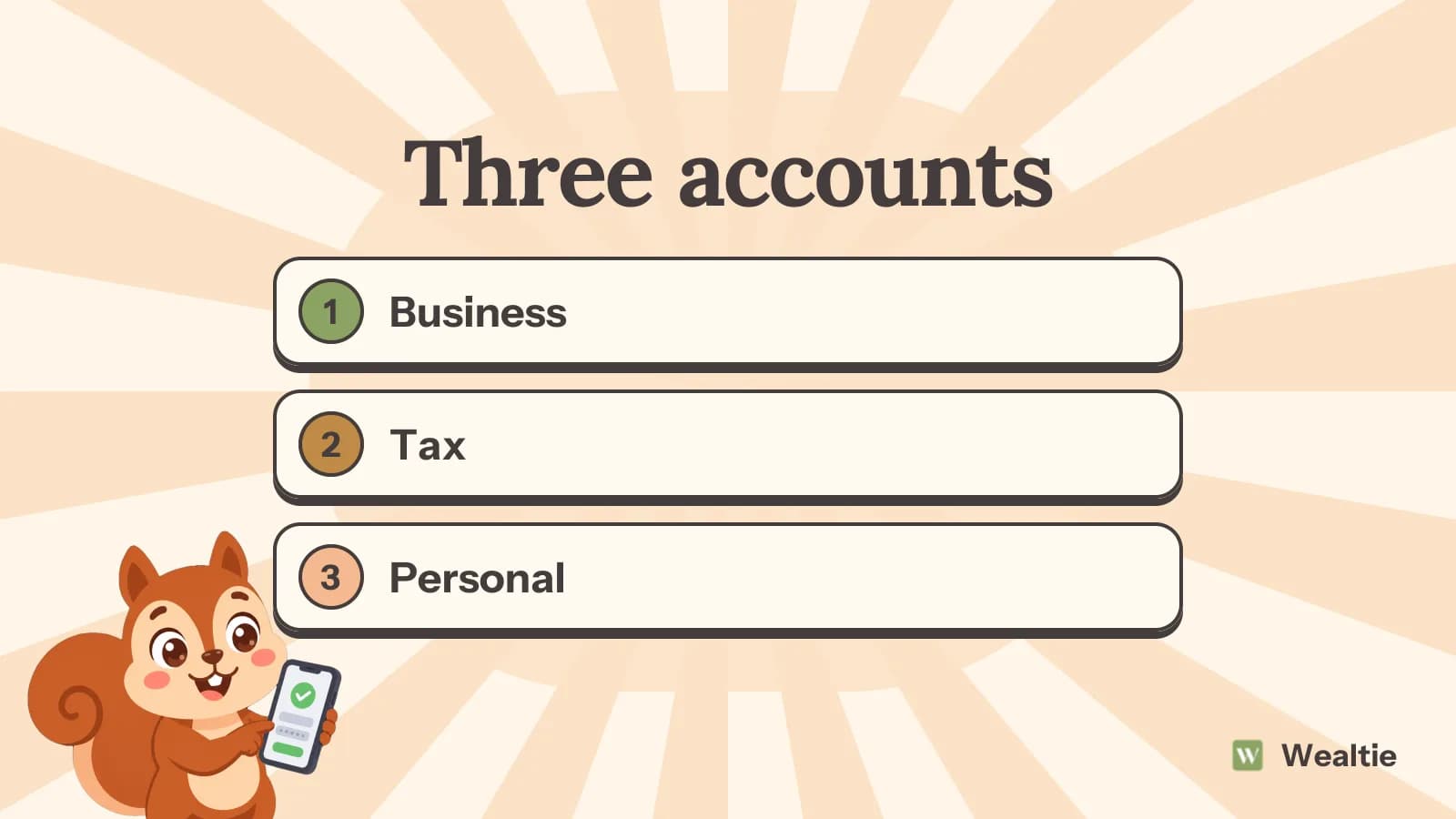
- A simple setup uses three accounts: business, tax and personal.
- Pay yourself a regular amount from the business account, rather than spending from it directly.
Why separate business and personal money?
Because mixing them makes everything harder. When client payments, business costs and personal spending all flow through one account, it's difficult to see what your business earns, how much tax to set aside or what you can afford to spend. At tax time, you have to sort through months of transactions to find business costs. Separating them gives you clarity all year.
Even if you're a sole trader and the law doesn't require a separate account, it's one of the most useful habits a freelancer can build.
What are the benefits?
- Clear profit. You can see what the business earns after costs.
- Easier tax. Business costs are in one place, ready for your records.
- Better budgeting. Your personal budget is based on what you pay yourself, not on your gross income.
- Faster tax returns. Less time sorting transactions, and lower accountant fees if you use one.
- Fewer mistakes. You're less likely to spend money meant for tax or claim personal costs by accident.
- A professional look. Clients pay into an account in your business name, if you choose one.
How should you set up your accounts?
A simple setup uses three accounts:
- Business account: where client payments arrive and business costs are paid.
- Tax account: where you move a share of every payment for tax.
- Personal account: where you pay yourself, and from which you run your household budget.
Here's a worked example of a 3,000 month, in round numbers that work in any currency:
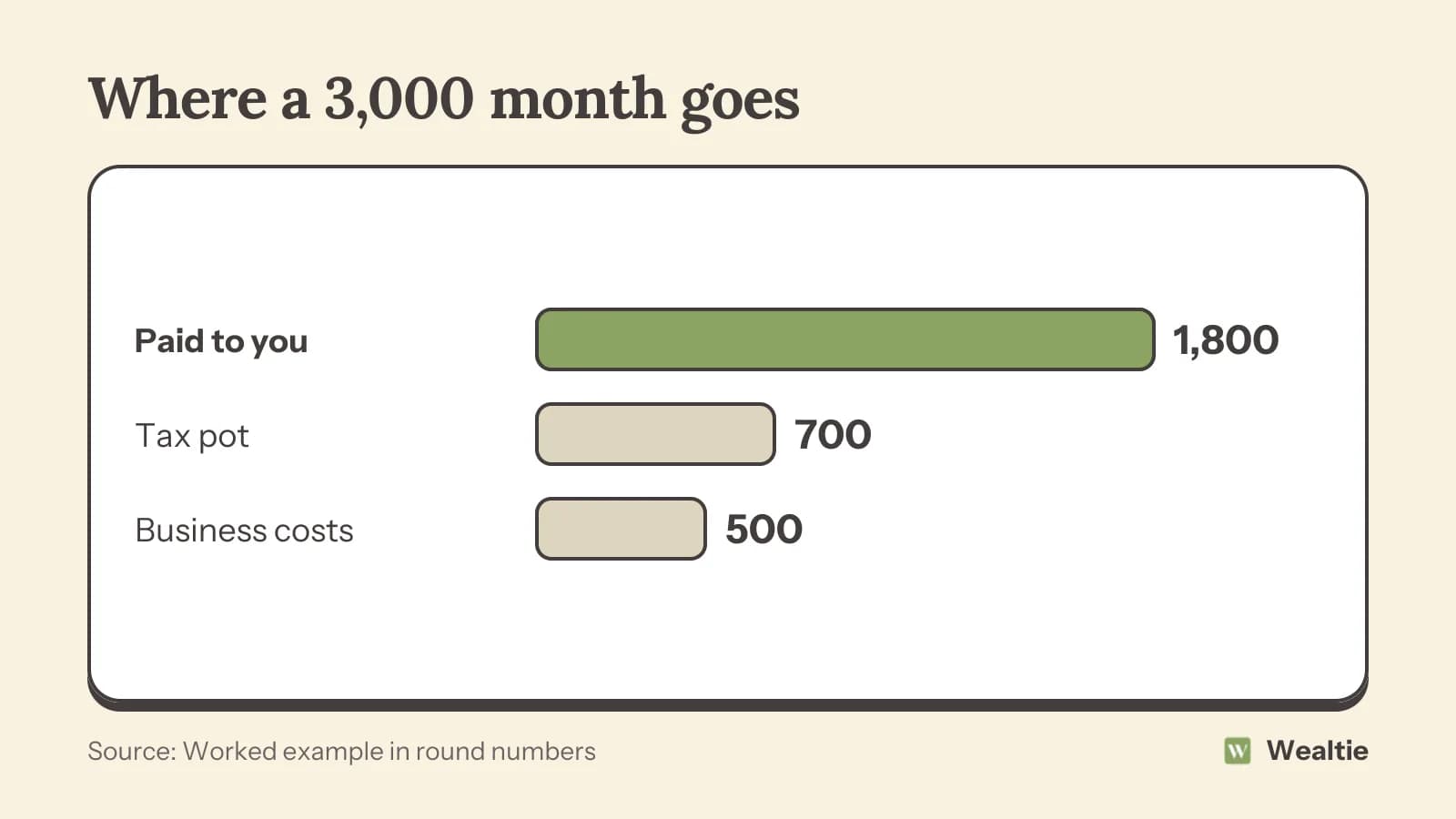
In this example, 700 goes to the tax pot and 500 covers business costs, leaving 1,800 to pay yourself. Knowing that figure is what makes personal budgeting work. How to set aside money for taxes covers how much to put in the tax account.
Do you need a business bank account?
It depends on where you live and how your business is set up. Companies usually need one, while sole traders may be allowed to use a second personal account. Check the rules and any fees. A separate personal account used only for business can be enough to start with.
How do you pay yourself?
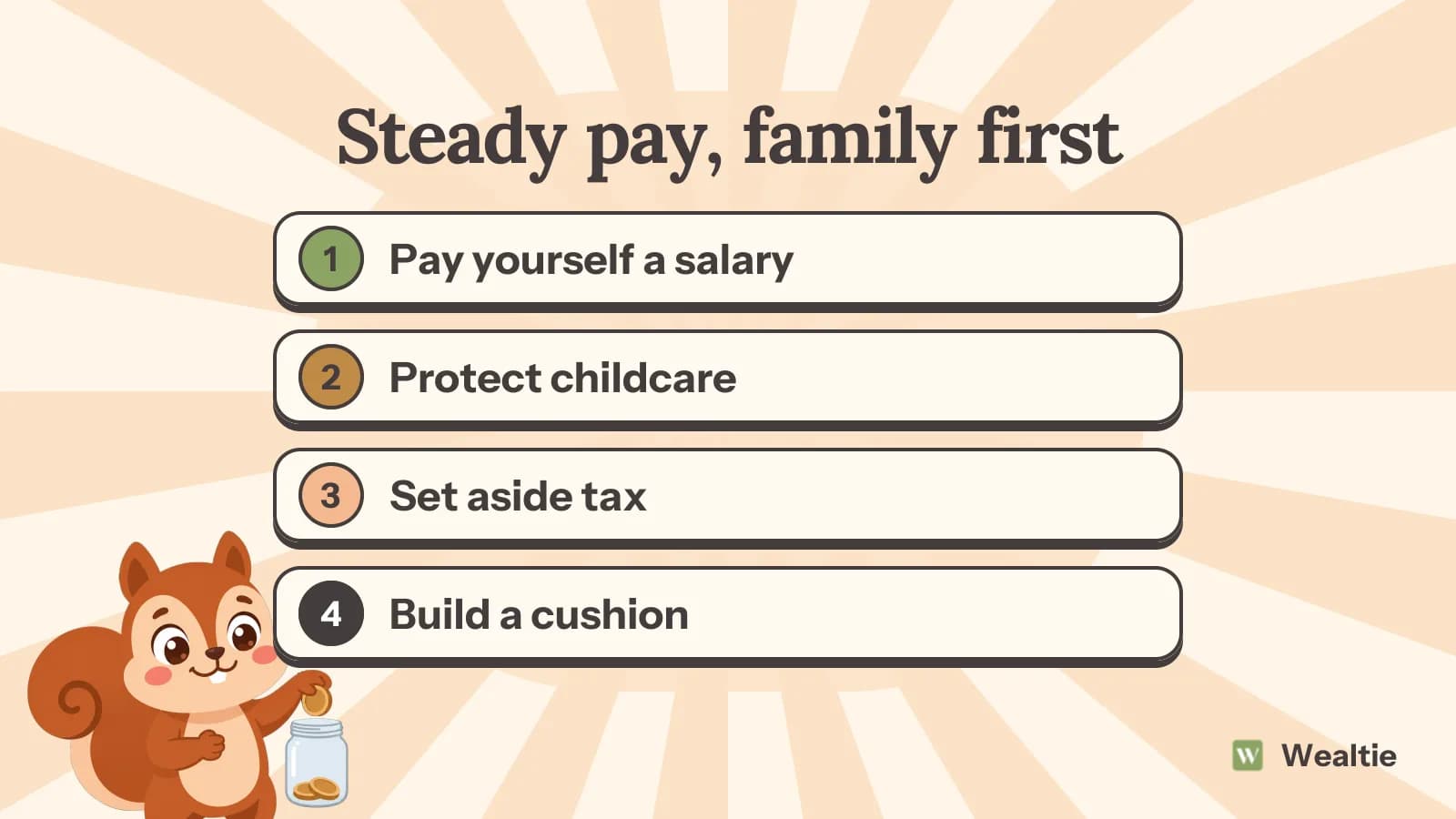
Move a regular amount from the business account to your personal account, like a salary. Paying yourself the same amount on the same day each month, even if income varies, makes your personal budget much easier to plan. In good months, the extra stays in the business account as a buffer. In quiet months, the buffer keeps your pay steady. How to pay yourself a salary as self-employed covers this in more detail.
Choosing the amount
Look at your income over the last six to twelve months, take off tax and business costs, and choose a monthly pay that's a little below the average. That leaves room for quiet months and lets your buffer grow in busy ones.
What counts as a business cost?
Costs you have only because of your work, like software, equipment, a share of phone costs, travel to clients and professional fees. Pay these from the business account. Personal costs, like groceries or holidays, come from your personal account. If something is both, like a phone used for work and home, follow your local tax rules on how to split it. The self-employed expenses list covers common business costs.
What if you've been mixing money already?
Start fresh from today. Open the new accounts, update your payment details on invoices and move business subscriptions to the business account. For past months, you may need to go through statements to separate business costs for your tax return. It takes some effort once, but it's much easier from then on. A monthly reminder to check that nothing personal went through the business account keeps it clean.
What about clients who pay in other currencies?
If clients pay in another currency, you might keep a separate account in that currency, so you're not converting every payment straight away. Track the value in your main currency for tax and budgeting. Many freelancers convert money when rates suit them, rather than on every payment. Keep a record of the exchange rate used for each payment, since you may need it for tax.
How do you track separate accounts in Wealtie?
Add your business, tax and personal accounts in Wealtie, and record moving money between them as transfers, which aren't counted as spending. Log client payments in the income tracker and business costs in their own expense categories, so your profit and personal budget are both clear. Each account can keep its own currency, with totals converted into your display currency.
Questions people ask
Not always by law, but separating business and personal money makes tax, records and budgeting much easier. Check the rules where you live.
A simple setup uses three: business, tax and personal.
Move a regular amount from the business account to your personal account, like a salary, on the same day each month.
Start fresh with separate accounts, and go through past statements once to separate business costs for tax.
This article is general information, not financial, tax or legal advice. Your situation is your own; check the numbers that apply to you before you act on them.