Income & freelancing: Self-employed expenses list: what you can claim, US and UK
This self-employed expenses list covers the usual business costs you can claim: office costs, travel, staff, stock, insurance, premises, marketing, subscriptions and training. In the US, an expense must be both ordinary and necessary.
 By Wealtie Team · 3 min read

Key takeaways
- HMRC lists office costs, travel, clothing, staff, stock, financial costs, premises, marketing, subscriptions and training as allowable expenses for the self-employed.
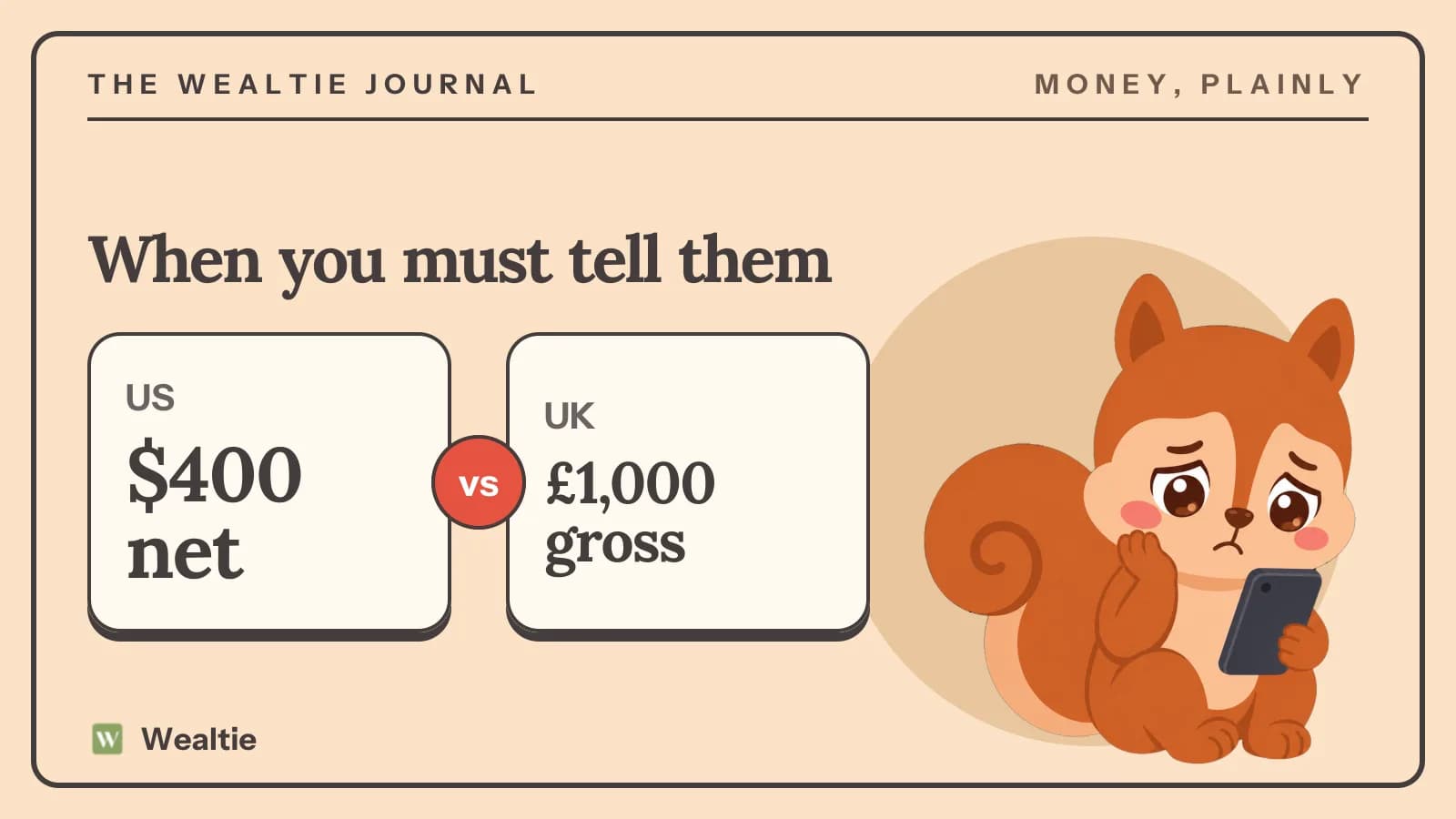
- In the UK, you can't claim expenses if you use your £1,000 trading allowance.
- The IRS says a business expense must be both ordinary and necessary to be deductible.
- Money you take from the business for personal use isn't an expense, and neither is the personal part of a mixed cost.
- Claiming £10,000 of expenses on a £40,000 turnover leaves £30,000 of taxable profit, in HMRC's own example.
What's on a self-employed expenses list?
The costs of running your business. HMRC's guidance for the self-employed names these categories for the UK:
| Category | HMRC's examples |
|---|---|
| Office costs | Stationery, phone bills |
| Travel | Fuel, parking, train or bus fares |
| Clothing | Uniforms |
| Staff | Salaries, subcontractor costs |
| Things you buy to sell on | Stock, raw materials |
| Financial | Insurance, bank charges |
| Business premises | Heating, lighting, business rates |
| Advertising and marketing | Website costs |
| Subscriptions | Trade or professional journals |
| Training | Refresher courses related to your business |
HMRC introduces this list with the word "including", so other business costs can qualify. If you're not sure, its guidance is to contact HMRC.
What counts as a business expense in the US?
The IRS applies a test instead of a fixed list. In Publication 334, it says that to be deductible, a business expense "must be both ordinary and necessary".
An ordinary expense is one that's "common and accepted in your field of business". A necessary one is "helpful and appropriate for your business", and it doesn't have to be indispensable.
Common examples include software, advertising, business insurance, and legal and professional fees such as an accountant's. Publication 334 also covers the business use of your home. Schedule C is where sole proprietors report these, and its line items are a useful checklist.
How do expenses reduce your tax?
You pay tax on profit, and expenses lower profit. HMRC's own example: "if your turnover is £40,000 and you claim £10,000 in allowable expenses, you'll only pay Income Tax on the remaining £30,000".
That's different from saying the £10,000 comes back to you. The saving is the tax you'd have paid on it. If your tax rate on that money is 20%, £10,000 of expenses saves about £2,000, and you've still spent the other £8,000. So claim what's genuine, and don't buy things for the deduction.
What can't you claim?
Personal spending, and the personal share of anything you use both ways. HMRC says allowable expenses "do not include money taken from your business for personal use".
So what you pay yourself isn't an expense, in the UK or as a sole proprietor in the US. A phone used half for work needs splitting, and only the business part counts. Everyday clothes generally don't qualify, which is why HMRC's example is uniforms. Check the rules for capital items like a laptop or a van, because they can be handled differently from everyday costs.
Should you use the trading allowance or claim expenses?
In the UK, you can pick one. HMRC says you can't claim expenses if you use your £1,000 trading allowance. If your costs are less than £1,000, the allowance usually comes out ahead. If they're more, claiming them does. Tracking side income helps if you're only starting out.
What records should you keep?
A record of every cost, with the date, the amount, what it was for and a receipt or invoice. Tax authorities can ask to see them, and it's easier to keep them as you go than to reconstruct a year in January.
Take a photo of paper receipts on the day, since they fade. Keep business money in a separate bank account if you can, because a statement with only business items on it does half of the work for you. If you share costs like broadband with your home, write down how you worked out the business share, so you can show it later.
Ask an accountant if your situation's complicated. Their fee is usually a claimable expense too, as Publication 334 notes for accountants' fees in the US.
How do you budget for these costs?
Treat them as part of your income calculation. If you know business costs run at about 400 a month, count only what's left after them when you plan what you'll take home. How to set aside for taxes comes next, and the guide on how to budget on irregular income puts it together.
How do you keep track of expenses in Wealtie?
Give business costs their own expense categories, or use a separate account for the business. Export your records as CSV files in a ZIP when you need them for your accountant, and that's included on every plan.
Wealtie's a budgeting app and not accounting or tax software, so it won't work out what's allowable. On Pro, you can scan a receipt and save its details with the expense tracker so you've got a record of the purchase. Keep the original receipts where the rules require them.
Questions people ask
In the UK, HMRC lists office costs, travel, clothing such as uniforms, staff, stock, financial costs, premises, marketing, subscriptions and training. In the US, an expense must be both ordinary and necessary.
Yes, for the business share. HMRC lists phone bills as an office cost, but you can only claim the part that's used for business.
No. HMRC says you can't claim expenses if you use your £1,000 trading allowance, so pick whichever saves more tax.
Yes, you should keep a record of every cost, with a receipt or invoice where possible. Tax authorities can ask to see them.
Sources
- Expenses if you're self-employed · HM Revenue & Customs · checked 9 November 2026
- Publication 334, Tax Guide for Small Business · Internal Revenue Service · checked 9 November 2026
This article is general information, not financial, tax or legal advice. Your situation is your own; check the numbers that apply to you before you act on them.